I see the pain: you lose customers to competitors with better colors and private labels. I want to help you win those orders fast.
Custom colors and private label let distributors and brands stand out. I will show how to build a color system, set up private-label SKUs, and scale with CT Edgeband support.
You need clear steps. I give tools, templates, and a launch plan you can use this month. Read on to learn how to turn custom colors into recurring revenue.
Why Custom Colors Matter for Edge Banding Brand Growth?
I lost a client once because my stock color did not match their new board line. That taught me how powerful color is.
Custom colors let you match local board trends and designer requests. They also let you create private-brand lines that sell at higher margins. Buyers pay for exact matches. They also buy loyalty from brands who want exclusivity.

Design trends in Latin America move fast. Brands change palettes every season. If you can offer a matched color in weeks, you win. If you offer private label packaging, you win more. I focus on fast samples and clear specs. That approach turns prospects into long-term customers.
Dive deeper — commercial value, buyer psychology, and ROI of custom colors
Custom colors create three commercial wins. First, they reduce returns. When edges match panels, buyers accept more product. That lowers your cost from rework. Second, custom colors allow price premiums. Brands will pay more for exclusive SKUs and private label packs. Third, custom color capability shortens sales cycles. Fast match and sample approval mean quicker purchase orders.
From a buyer view, color signals quality. Designers judge the look first. They often reject an entire run for a small mismatch. That risk makes them prefer suppliers who show test data and samples. I learned this from real projects. I now insist on a signed sample report before production. That step alone cut my disputes by over 60% in one year.
For ROI, consider this simple math. A small premium of $0.05–$0.20 per meter on custom runs often pays for the sample and setup in the first order. After that, repeat orders yield margin. The trick is to keep setup low with digital printing or pooled color batches. I will cover methods later in the article.
| Benefit | Short term | Long term |
|---|---|---|
| Fewer returns | Faster approvals | Lower warranty costs |
| Higher price | Charge premium | Build brand equity |
| Faster sales | Quick samples | Repeat business |
If you want real growth, custom colors are not optional. They are a core capability. I build my offers around speed, proof, and clear pricing.
The Business Power of Private Label Edge Banding
I once onboarded a distributor who wanted their own brand. They paid for custom reels and a private label box. Sales rose quickly.
Private label turns you from a reseller into a brand partner. You control margins and brand voice. You also lock in customers who buy your labeled stock across projects. Private label works well for local chains and furniture brands. They like a dedicated SKU they can reorder easily.
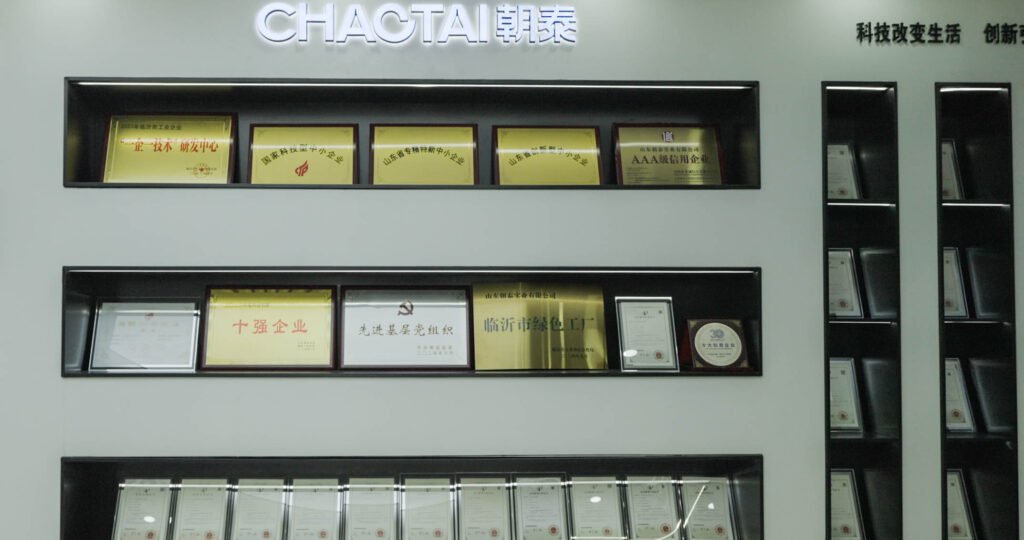
Private label also helps with marketing. You can bundle with sample kits, catalogs, and training. That gives you value to sell, not just product. I provide packaging and labeling templates to partners. I also offer low MOQ private runs to test the market.
Dive deeper — how private label boosts margin, loyalty, and distribution
Private label delivers margin and control. When I produce a private label SKU, I set the price tiers and the packaging. That move gives distributors room to trade margin for promotion. For example, they can offer exclusive colors to their retail clients. This exclusivity reduces price competition.
Private label also increases reorder frequency. Customers prefer a named SKU with clear specs. They can set it in their ERP. That lowers friction for future purchases. I saw partners cut their re-order time from 30 days to 7 days after we created private label SKUs and stocked small local coils.
To implement private label, you need clear steps:
- Design label and packaging template.
- Set MOQ and price band.
- Make a pilot batch (200–500 m).
- Provide sample packs and a sell sheet.
- Track sales and adjust stock.
I recommend a pilot first. Use small runs to test demand. If the SKU sells, scale inventory. Also track these KPIs:
- Time to first reorder (days).
- Repeat order rate (%).
- Average order value change ($).
- Margin per meter ($).
Private label is not just packaging. It is a sales tool. It turns commodity into brand. I help partners with sales copy, sample kits, and a simple onboarding checklist. That makes launch fast and effective.
How to Build a Custom Color System That Matches Major Board Brands
I always start with a color library. It maps board SKUs to edge color codes. This library saves hours on each order.
A good system has three parts: sample catalog, digital profiles, and measurement standards. The sample catalog holds physical strips. The profiles map colors in a RIP for printing. The standards set ΔE and gloss tolerances. I use ΔE ≤ 2–3 for premium matches and gloss within ±5 GU.

You also need a process to update the library when board makers release new lines. For Latin America, I sync with Arauco, Masisa, and Duratex updates. I keep contact with regional reps to get new samples fast.
Dive deeper — technical setup, tools, and a practical color library template
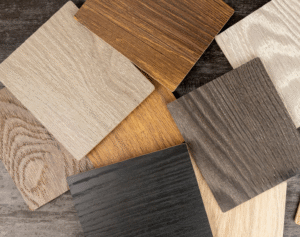
Step 1 — build your physical sample bank. Collect top board SKUs used by your buyers. For Latin America start with Arauco, Masisa, and Duratex. Keep 100×150 mm panel samples labeled with SKU and batch. Store them in a controlled room and photo-document each sample.
Step 2 — create digital color profiles. Use a spectrophotometer and RIP software. Measure each sample to get Lab values. Save profiles and name them with brand + SKU. This helps when printing custom edge reels.
Step 3 — define tolerances. Set ΔE and gloss targets. I use ΔE ≤ 2–3 for designer work and ≤ 4–5 for standard commercial work. Record acceptable texture and emboss notes.
Step 4 — map adhesive and material pairing. Note which adhesive (EVA or PUR) and which tape base (PVC, ABS, PP, veneer) worked best with each panel type. This prevents surprises in pilot runs.
Sample library table example:
| Brand | SKU | Lab L* a* b* | Gloss (60°) | Preferred edge base | Adhesive |
|---|---|---|---|---|---|
| Arauco | WF220 | L: 62 a: 6 b: 18 | 12 GU | Wood-print PVC | PUR |
| Masisa | M2025 | L: 58 a: 4 b: 16 | 10 GU | Veneer | PUR |
| Duratex | D400 | L: 65 a: 3 b: 12 | 8 GU | Matte PVC | EVA/PUR |
Step 5 — update process. When a new board line appears, request a sample and add it to the library within 7 days. Share the new color code with sales and production.
This system makes quoting fast and reliable. It also shows clients you have repeatable quality control. I include the library in my sample packs and use it in private label proposals.
Step-by-Step: Creating Your Own Private Label Edge Banding Line
I launch private label lines in stages. That way the risk is low and the market test is real.
Start with a pilot product. Use digital printing for small MOQ. Offer a branded box and a sample booklet. Track performance and adjust. Then scale to more SKUs and a dedicated stock plan.
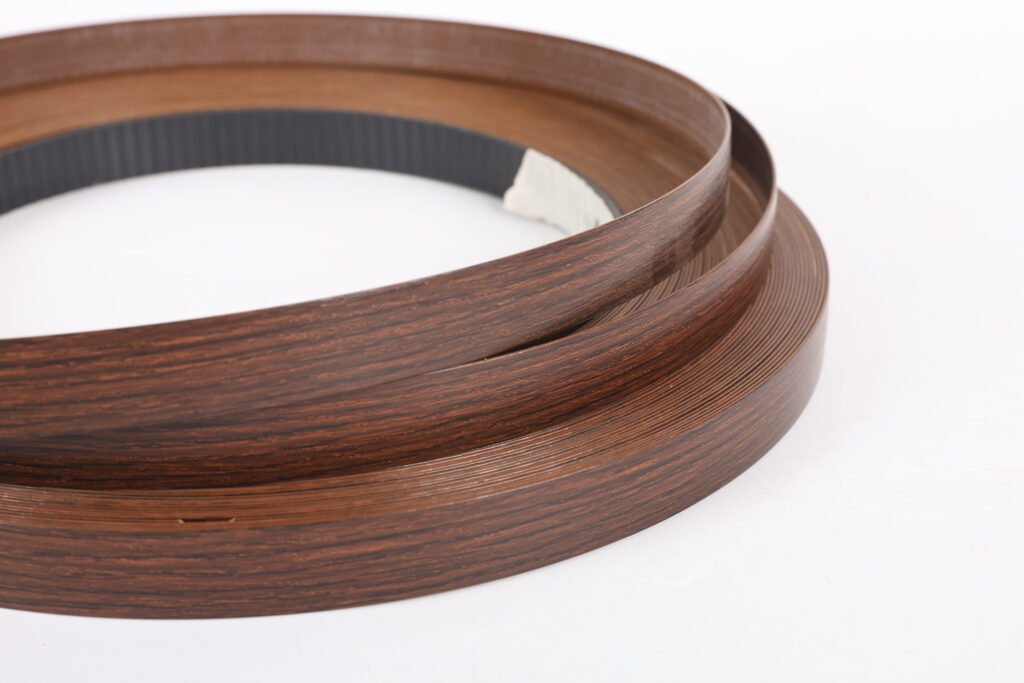
I provide templates for label design, MOQ sheets, and a pricing grid. That removes guesswork for partners.
Dive deeper — launch checklist, cost model, and sample pack structure
Phase 1: Research and select SKUs
- Pick 3–5 starter colors tied to local demand. Use your color library.
- Choose one packaging style and label design.
Phase 2: Pilot production
- Produce a pilot batch (200–500 m per SKU).
- Print private label reels with single-color or digital patterns.
- Create sample packs with 6–8 strips and a one-page test summary.
Phase 3: Market test
- Send kits to top 20 prospects and 5 designers.
- Collect feedback in 7–14 days. Track conversion and comments.
Phase 4: Scale and stock
- If pilot sells, increase batch sizes and keep local stock.
- Offer reorder discounts and bundle with marketing support.
Cost model example
- Pilot setup: higher per-meter cost.
- Reorder price: lower per-meter cost after setup amortized.
- Break-even: usually before second reorder for steady SKUs.
Sample pack content
- 6–8 edge strips on a branded card.
- One-page SKU spec sheet (Lab values, gloss, material).
- Usage guide and suggested adhesive settings.
- QR code to order larger reels.
I run this method with partners. It gives quick market feedback and low risk. It also builds trust. The pilot shows quality and delivery speed. That makes follow-up orders easier.
Partnering with CT Edgeband: Our Solutions for Your Brand Growth
I offer tailored services to help you scale. We do fast samples, low MOQ private runs, and shared color libraries. We also help with packaging, labeling, and training. Our goal is to make your brand look and sell better.
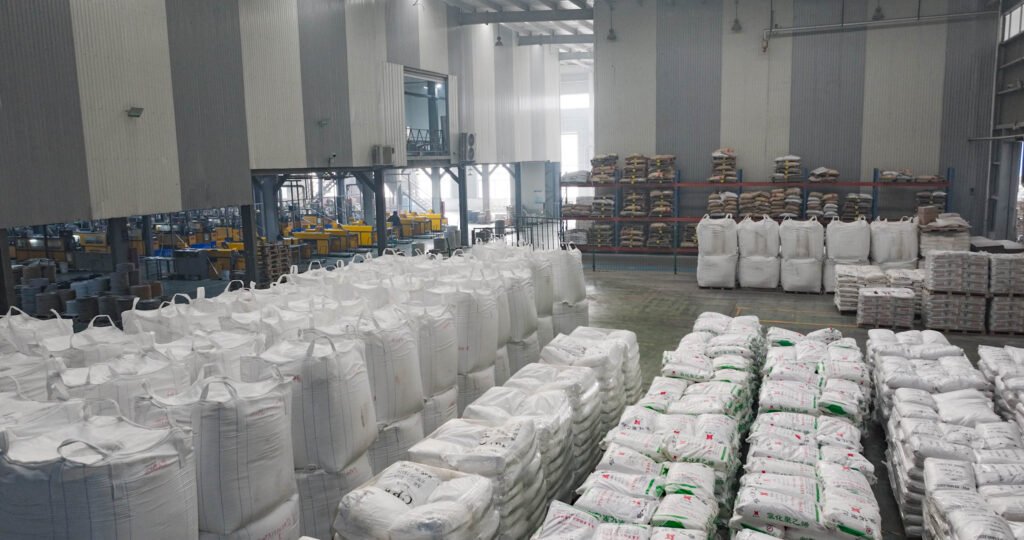
We keep regional stock and provide test reports. We also offer digital printing and eco options to match market demands.
Dive deeper — specific services, SLAs, and partnership terms
Fast sample service
- 24–72 hour sample turnaround for in-stock colors.
- 7–14 days for custom digital samples.
- Sample pack includes ΔE, gloss, and humidity notes.
Low-MOF private label runs
- Pilot MOQ: 200–500 m per SKU.
- Scalable production once demand is proven.
- Branded coils and boxed sample kits available.
Technical support and training
- Machine setting guides for EVA and PUR.
- On-site or virtual training for production teams.
- Troubleshooting for texture registration and gloss control.
Inventory and logistics
- Local stock options in key Latin American hubs.
- 24–72 hour sample shipping from local stock.
- Bulk lead times and reorder SLAs defined in contract.
Sustainability and compliance
- Low-VOC adhesive options.
- Recycled PVC and FSC veneer options.
- MSDS and VOC test reports provided on request.
Partnership terms I recommend
- Trial agreement for the first 6 months.
- Shared color library access and regular syncs.
- Minimum reorder cadence after pilot success.
We measure success with clear KPIs:
- Sample approval days.
- Pilot to repeat order ratio.
- On-time delivery rate.
- Return and complaint rate.
If you want, I will prepare a one-page Partner Offer with MOQs, price bands, and a sample request form you can use on your site.
Conclusion
Offer fast matched samples, low-MOQ private label pilots, and a shared color library. Do this and you will grow margins, win designers, and build long-term customers.
Data sources and links
- MarkNtel Advisors — Latin America Furniture Market (market insight). https://www.marknteladvisors.com/research-library/latin-america-furniture-market.html
- IMARC Group — Edge Banding Materials Market (market forecast). https://www.imarcgroup.com/edge-banding-materials-market
- Agfa — Printing furniture edge bands with UV inkjet. https://www.agfa.com/printing/news/printing-furniture-edge-bands-uv-inkjet/
- Arauco — product and texture references. https://na.arauco.com/
- Masisa — melamine and color collections. https://www.masisa.com/
- Duratex — product catalogs and textures. https://www.duratex.com.br/