

Introduction
Choosing the correct edge banding thickness and width is an important decision for furniture manufacturers, distributors and panel processors.
The wrong edge banding size can cause:
- Poor furniture appearance
- Weak edge protection
- Higher production costs
- Difficult processing during manufacturing
For example, using a thin edge banding solution for heavy-use furniture may affect durability, while choosing an oversized thickness for standard furniture may increase unnecessary material costs.
So how do manufacturers choose the right PVC edge banding thickness and width?
This guide explains common edge banding sizes, thickness options and selection methods based on different furniture applications.

Why Edge Banding Thickness Matters for Furniture Production?
Edge banding thickness directly affects furniture appearance, durability and production efficiency.
When choosing edge banding thickness, manufacturers usually consider:
- Furniture application
- Panel thickness
- Production process
- Target market requirements
- Cost expectations
Different thickness options provide different performance advantages.
Generally:
- Thin edge banding is suitable for cost-sensitive furniture
- Medium thickness is commonly used for residential and office furniture
- Thick edge banding provides better protection for premium applications
Therefore, understanding edge band thickness helps manufacturers avoid unnecessary costs while maintaining product quality.
PVC Edge Banding Thickness Options Explained
PVC edge banding is available in different thickness ranges to meet various furniture manufacturing requirements.
Common PVC edge banding thickness options include:
| Thickness | Application | Features |
|---|---|---|
| 0.4mm-0.6mm | Economy furniture, standard panels | Cost-effective, flexible |
| 1mm | Residential furniture, cabinets, office furniture | Most commonly used option |
| 2mm | Premium furniture, high-impact applications | Better protection and durability |
| 3mm | Special applications requiring stronger edge protection | Maximum thickness option |
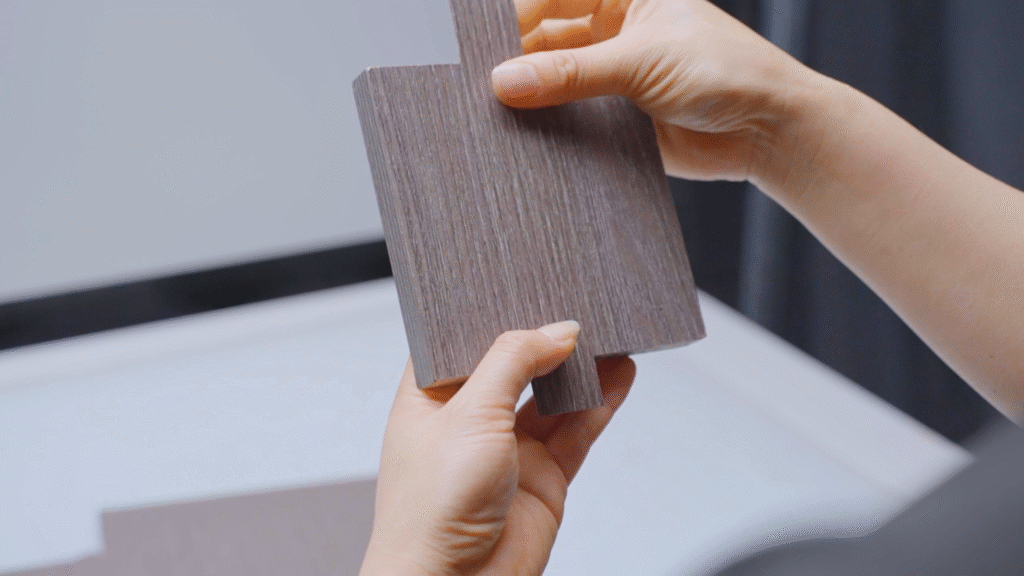
0.4mm-0.6mm PVC Edge Banding
Thin edge banding is commonly used for:
- Economy furniture
- Large-volume production
- Cost-sensitive markets
Advantages:
- Lower material cost
- Easy processing
- Suitable for standard furniture panels
For distributors serving price-sensitive markets, thinner PVC edge banding can provide a competitive solution.
1mm PVC Edge Banding
1mm edge banding is one of the most widely used specifications in furniture manufacturing.
It is commonly applied to:
- Kitchen cabinets
- Office furniture
- Residential furniture
- Commercial furniture

Advantages:
- Good balance between cost and durability
- Suitable for most automatic edge banding machines
- Provides a clean finished appearance
For many furniture manufacturers, 1mm is the standard choice.
2mm PVC Edge Banding
2mm edge banding is usually selected for higher-end furniture applications.
It provides:
- Better impact resistance
- Stronger edge protection
- Premium appearance
Common applications include:
- Luxury furniture
- Hotel furniture
- Commercial projects
- High-use environments
How to Choose the Right Edge Banding Width?
Besides thickness, width is another important specification.
The correct width depends mainly on:
- Panel thickness
- Edge processing requirements
- Furniture design
- Production method
Common PVC edge banding widths include:
| Panel Application | Common Width |
|---|---|
| Small panels | 18mm-30mm |
| Standard furniture panels | 35mm-45mm |
| Cabinet and commercial furniture | 50mm-100mm |
| Special customized panels | Customized width |
Professional suppliers usually provide flexible width options according to customer requirements.
Standard Edge Banding Sizes: Thickness and Width Chart
Different markets have different requirements for edge banding sizes.
A common specification range is:
| Thickness | Width Range | Typical Application |
|---|---|---|
| 0.3mm-0.6mm | 12mm-45mm | Standard furniture |
| 1mm | 18mm-60mm | Cabinets and office furniture |
| 2mm | 20mm-100mm | Premium furniture |
| 3mm | Customized | Special applications |
For example, CT Edge Band Supply provides PVC edge banding from:
- Thickness: 0.3mm-3mm
- Width: 12mm-630mm
This allows manufacturers and distributors to select suitable specifications for different markets.
How Do Distributors Choose the Best Edge Banding Size for Their Market?
For distributors, choosing the right product range is not only about quality, but also about market demand.
Before purchasing, distributors should consider:
1. Local Furniture Production Style
Different regions have different furniture preferences.
For example:
- Residential furniture markets usually require 1mm thickness
- Premium furniture markets may prefer 2mm thickness
- Economy furniture markets may focus on thinner options
2. Customer Production Requirements
Furniture factories usually care about:
- Processing compatibility
- Color availability
- Stable supply
- Consistent quality
A reliable supplier should provide multiple specifications instead of only standard sizes.
3. Inventory Efficiency
For distributors, stocking the right sizes can reduce inventory pressure.
Popular specifications usually include:
- 1mm thickness
- Standard widths
- Popular wood grain colors
- Frequently used solid colors
Working with a supplier that supports flexible production can help distributors respond faster to market changes.
How to Choose a Reliable PVC Edge Banding Supplier?
The specification is important, but supplier capability is equally important.
A professional PVC edge banding supplier should provide:
Stable Thickness Control
Small thickness differences can affect:
- Edge appearance
- Machine processing
- Final furniture quality
Professional manufacturers should have strict quality control during production.
Flexible Customization Capability
Different markets require different designs.
A capable supplier should support:
- Custom colors
- Wood grain matching
- Different thickness options
- Special width requirements
For unique projects, custom edge banding solutions help furniture manufacturers create differentiated products.
Reliable Production Capacity
Large-scale furniture manufacturers and distributors need suppliers who can provide:
- Stable production
- Consistent batches
- Short lead times
This reduces supply chain risks.
Why Choose CT Edge Band Supply for PVC Edge Banding?
CT Edge Band Supply provides customized PVC edge banding solutions for furniture manufacturers and distributors worldwide.
Our capabilities include:
- 10,000+ colors and patterns
- Thickness from 0.3mm to 3mm
- Width from 12mm to 630mm
- Custom color matching service
- Stable large-scale production capacity
Whether you need standard PVC edge banding sizes or customized specifications, CT Edge Band Supply helps you find the right solution for your market.

Conclusion
Choosing the right PVC edge banding thickness and width directly affects furniture quality, production efficiency and market competitiveness.
For most furniture manufacturers:
- 1mm edge banding is a popular standard choice
- 2mm edge banding suits premium applications
- Thin edge banding works well for cost-sensitive projects
For distributors, selecting the right product range and working with a reliable supplier can help reduce inventory risks and improve customer satisfaction.
Understanding edge banding thickness, width and sizes is the first step toward building a successful furniture supply chain.
If you still have doubts about how to select the width and thickness of edge banding after reading this article, you can click the links below for more details:
PVC Edge Banding: https://edgebandct.com/products/pvc/
ABS Edge Banding: https://edgebandct.com/products/abs/
Data sources
- Egger (edge banding products and common sizes). (LEDGEBAND)
https://ledgeband.com/collections/egger-color-matching-pvc-edge-banding - Richelieu (catalog of common widths). (Richelieu Hardware)
https://www.richelieu.com/ca/en/category/surfaces-panels-and-edgebanding/edgebanding/1001772 - TECE (PVC edgebanding technical data sheet; roll lengths and available widths). (TECE | The Edgebanding Company)
https://tece.com.tr/images/downloads/en/TDS_PVC.pdf - REHAU (technical data for polymer edgebands and processing notes). (REHAU)
https://www.rehau.com/downloads/886866/edgeband-technical-data-sheet.pdf - Industry guides and supplier catalogs (general uses, thickness ranges). (ltedgeband.com)
https://www.ltedgeband.com/news/the-ultimate-guide-to-edge-banding.html
https://charterindustries.com/products/pvc-edgebanding/