
I used PAS: Edges that fail in wet rooms cause call-backs and wasted time. (11 words)
PVC edgeband is a reliable choice for bathrooms and kitchens when you combine the right material, adhesive (PUR), and proper sealing/processing. I show what works and how I test for moisture performance.
I have worked on kitchen and bathroom projects. I know which failures repeat. I will walk you through causes, material choices, adhesives, and field practices. Read on and you will get practical checks you can use on the next job.
Why Moisture Resistance Matters for PVC Edgebanding in Wet Areas?
I used PAS: Water at the edges invites swelling, delamination, and unhappy clients. (11 words)
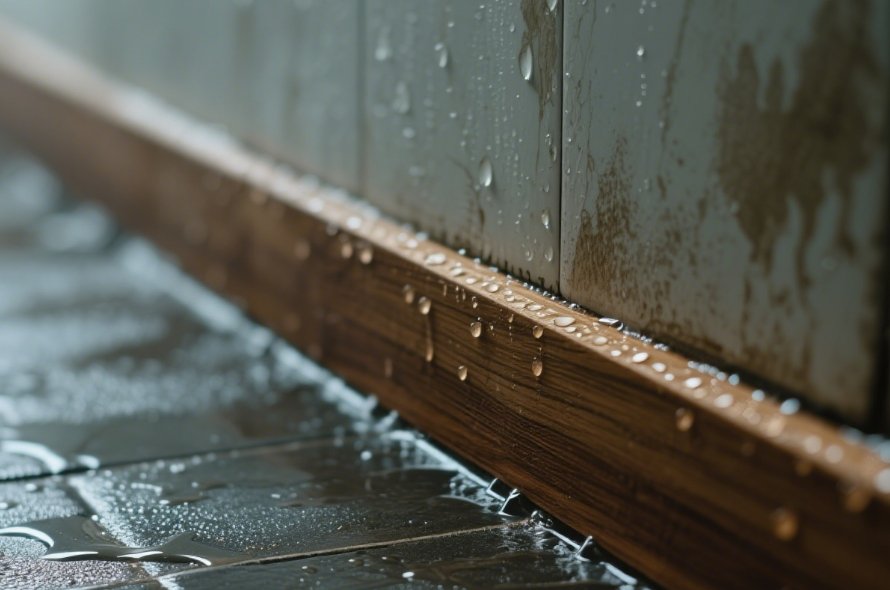
Moisture reaches edges first. The wrong edge or glue lets water in. That causes swelling, loose edges, and unsightly gaps. You must choose materials and methods that resist moisture.
Dive deeper
I break the problem into how water enters, what fails, and what you must control.
How water reaches edges
- Splashing and condensation wet the cabinet front and top.
- Leaks from plumbing wet the cabinet top or the inside.
- Poor sealing at seams or end panels lets moisture wick into panels and adhesive lines.
What fails first
- Adhesive bond can weaken when it is not moisture-resistant or when application is poor.
- Edge lift or delamination occurs where the bond is weak or the edge is not fully pressed during cooling.
- Panel core swelling occurs when moisture reaches the MDF or particleboard core through a gap.
What to control on every job
- Material choice. PVC edgeband is inherently moisture resistant on the surface. Use PVC grades designed for wet areas. Technical data from major suppliers show PVC edges resist common cleaning agents and moisture exposure.
- Adhesive selection. For wet areas, I use moisture-curing PUR hot-melt adhesives rather than standard EVA. PUR bonds cure into a crosslinked polymer and give better heat and moisture resistance. This reduces edge lift in kitchens and baths.
- Processing discipline. Proper temperature, correct pressure, and full trimming are essential. Gaps after trimming are common when settings are wrong.
Quick checklist I use on site
| Check | Target |
|---|---|
| Edge material | PVC (wet-grade) or uPVC where needed |
| Adhesive | PUR hot-melt (moisture-curing) |
| Machine settings | Manufacturer recommended temp/pressure |
| Sealing | End caps, silicone at vulnerable seams |
I always run a small wet-test sample. I soak the joint edges and then check bond strength and appearance after 48–72 hours. That test shows me if the combination of edge, glue, and process holds up before I scale to a full order.
How PVC Edgeband Performs Compared to Other Materials in High-Humidity Conditions?
I used PAS: Picking the wrong polymer risks late failures. That hurts reputation. (12 words)
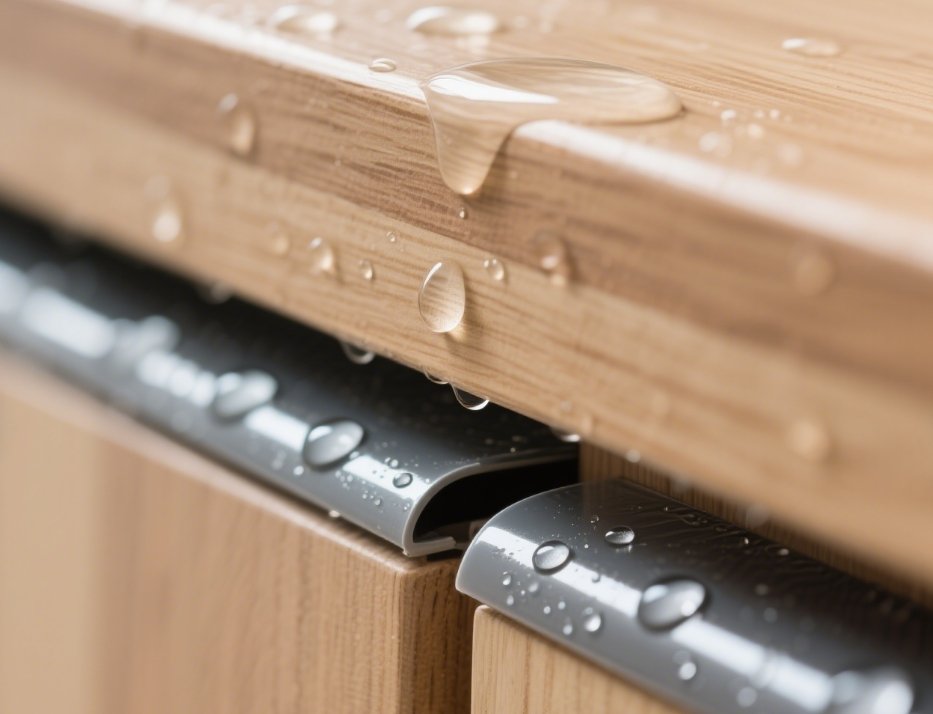
PVC offers strong surface water resistance and chemical resistance. Some alternatives like ABS and PET have good qualities too, but PVC is usually the most cost-effective for wet rooms.
Dive deeper
I compare the common edge materials and how they behave in kitchens and bathrooms. I focus on PVC, ABS, PET and solid or laminated wooden edges.
PVC (polyvinyl chloride)
- Surface resistance: PVC is non-porous. It resists water and most household cleaners. Supplier technical sheets report resistance to 24-hour exposure to domestic cleaning agents.
- Cost: PVC is economical and widely available in many decors and woodgrains.
- Flexibility: PVC can be extruded thin and applied to various edge radii.
ABS (acrylonitrile butadiene styrene)
- Water performance: ABS is generally good with moisture but some grades show more sensitivity than PVC. ABS can offer higher impact resistance and slightly better environmental profiles in some cases. For long, continuous wet exposure, PVC tends to be more proven in many markets.
PET (polyethylene terephthalate)
- Properties: PET edges are chemically resistant and stable. They have lower shrinkage and can be used where thermal stability matters. They are less common in some markets but are a good alternative when chemical resistance or recycling concerns matter.
Wood/veneer edges
- Not ideal for wet zones: Wood absorbs moisture unless fully sealed. Even sealed, wood edges risk swelling at the glue line.
Practical comparison table
| Material | Moisture resistance | Best for | Notes |
|---|---|---|---|
| PVC | High | Bathrooms, kitchens | Economical, wide colors |
| ABS | Moderate-High | High-impact areas | Good impact resistance |
| PET | High | Chemical/heat stable needs | Less common, good thermal properties |
| Wood/veneer | Low | Dry interiors only | Needs full sealing |
I usually recommend PVC with PUR glue for typical domestic bathrooms and kitchens. For extreme conditions (outdoor kitchens or constant steam rooms), use uPVC grades or consult the panel and edge supplier for specific product lines and certificates.
Key Features to Look for in Waterproof PVC Edgebands?
I used PAS: Not all PVC edges are equal. Cheap film can fail quickly in wet rooms. (12 words)
Choose PVC edgebands that list chemical resistance, low shrinkage, primer coating for adhesion, and compatibility with PUR adhesives. Check supplier technical data sheets.
Dive deeper
I list the material and processing features I check before I buy.
1. Surface and chemical resistance
Look for a datasheet that shows resistance to cleaning agents and household chemicals. Reputable suppliers test edges against 24-hour exposure to common cleaners. That matters because bathroom and kitchen cleaners are harsh.
2. Dimensional stability and shrinkage
Edges should have low shrinkage under heat and moisture. High shrinkage causes gaps after application. Supplier specs often list shrinkage and Vicat softening point. Low shrinkage values are better.
3. Back-coating or primer
A factory applied primer or universal coating on the back of the edgeband improves adhesion. Some PVC products (e.g., RAUKANTEX) come with a reverse primer that works with standard hot-melt adhesives and improves bond reliability.
4. Compatibility with PUR adhesives
If your plan is PUR bonding, confirm the edgeband is compatible. PUR needs proper wetting and the right primer or back coating to form a strong chemical bond. Many technical notes specify recommended adhesive types.
5. Finish and color stability
Matt or textured finishes help hide water marks. Suppliers often list lightfastness values. Choose decors with tested light and stain resistance for longevity.
| Feature | Why it matters |
|---|---|
| Chemical resistance | Survives cleaners and soap |
| Low shrinkage | Avoids gaps and lifting |
| Back primer | Improves adhesive bond |
| PUR compatibility | Best long-term moisture resistance |
| Finish | Hides marks and maintains look |
Before a big order, I request technical datasheets and a physical sample. I run a wet-exposure test (spot clean + spray) and a 48–72 hour soak on a test panel. If the edge and bond pass, I approve production.
Best Practices for Applying PVC Edgebands in Kitchens and Bathrooms?
I used PAS: Even the best materials fail if applied wrongly. That causes rework and wasted time. (13 words)
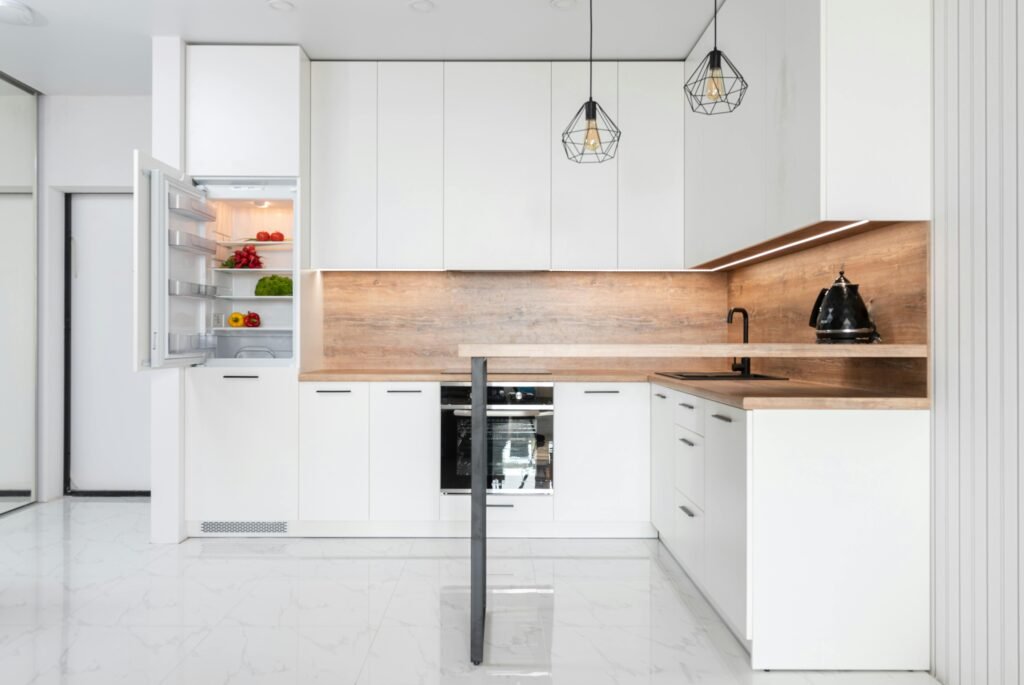
Use correct adhesive (PUR), set machine parameters per supplier, seal end cuts, and test samples under wet conditions before installation.
Dive deeper
I share the step-by-step actions I take on every job.
Materials and tools
- Edgeband: Wet-grade PVC with back primer.
- Adhesive: PUR hot melt with recommended open time and temp.
- Machine: Well-calibrated edgebander or manual iron for small runs.
- Sealing: Clear silicone for vulnerable seams and end caps where possible.
Application steps I follow
- Prepare substrate. Make sure panel edges are clean and square. Remove dust and loose fibers.
- Set adhesive and machine. Use PUR temperature and open-time guidelines from the adhesive maker. Check pressure and feed speed. PUR requires a dry ambient environment but cures with moisture in air.
- Press and cool fully. Allow the adhesive to cure under the recommended pressure/time. Do not trim while still hot.
- Trim and finish. Use sharp knives and fine abrasives. Check seams, corners, and end cuts for gaps.
- Seal end cuts. Apply a thin bead of sanitary silicone at undersides and vulnerable joints. For furniture close to showers or sinks, seal the bottom inside joint to stop wicking.
- Perform a soak test. Before shipment or installation, I run a 48-72 hour damp test on a sample cabinet, then inspect for lift, discoloration, or substrate swelling.
Troubleshooting common problems
| Problem | Likely cause | Fix |
|---|---|---|
| Edge lift | Wrong adhesive or low pressure | Use PUR, raise pressure/temp |
| Gaps at ends | Insufficient overhang or poor trimming | Add overhang, re-trim with correct setup |
| Discoloration | Incompatible cleaners or finish | Test cleaners, choose resistant finish |
I also give clients simple care notes. They should avoid leaving standing water on edges and use recommended cleaners. That preserves the bond and appearance.
Real-World Case Insights: Durable Edgeband Solutions for Modern Wet-Area Furniture?
I used PAS: Theory is good, but proof wins orders. Show samples that survive real wet use. (14 words)
I share examples where PVC + PUR + sealing delivered durable results in kitchens and bathrooms. I also show where shortcuts failed.

Dive deeper
I describe two short cases I have used as templates for clients. Names and sensitive details are omitted. These are practical patterns you can copy.
Case A — Residential bathroom vanity (success)
- Spec: PVC matt edgeband, 1.0 mm thickness, RAUKANTEX back primer; PUR adhesive; silicone seal at bottom joint.
- Process: I used correct machine heat, moderate feed speed, and full pressure. After trimming, I sealed the inner bottom joint with sanitary silicone. I ran a 72-hour spray/soak test.
- Result: No lift, no swelling, no visible stains after three months in regular use. The client reported no issues and praised the finish.
Case B — Kitchen island (partial failure due to shortcut)
- Spec: Thin PVC edgeband, EVA adhesive used to save cost, minimal end sealing.
- Process: Fast line speed and quick shipment. No soak test.
- Outcome: After heavy use and frequent spills, edge lift appeared near sink side. The EVA bond softened over time. I recommended a rework with PUR and full sealing. The rework cost exceeded initial savings. This shows why adhesive choice and testing matter.
Lessons learned I apply every time
- Don’t save money on adhesive in wet environments. PUR is worth the cost.
- Do a wet exposure test for high-risk projects.
- Seal vulnerable seams even on cabinets that are not directly wet.
These real examples help me sell the right spec to clients. The extra steps reduce call-backs and return costs. They also build my reputation for reliability.
Conclusion
Use wet-grade PVC, bond with PUR, seal end cuts, and always run a wet test before full delivery. That avoids failures in kitchens and bathrooms. (23 words)
Data sources and links
- REHAU — Edgeband technical data (resistance, cleaning tests). https://www.rehau.com/downloads/886866/edgeband-technical-data-sheet.pdf. (rehau.com)
- REHAU — RAUKANTEX PVC product specification (primer and processing). https://www.rehau.com/downloads/490388/raukantex-pvc.pdf. (rehau.com)
- PUR adhesive suppliers and guides — PUR hot melt for edgebanding. https://www.hotmelt.com/collections/application-edgebanding. (Hotmelt.com)
- Bestin Group — PUR edge banding definitive guide (application best practices). https://www.bestingroup.com/pur-edge-banding-the-definitive-guide/. (bestingroup.com)
- Industry overviews on PVC edgeband uses (benefits and wet-area guidance). https://pvcdecorativefilm.com/pvc-edge-banding-vs-traditional-edge-banding/. (pvcdecorativefilm.com)