

I see the shipping problem: buyers get a surprise when reels don’t fit or containers hit weight limits. I give a practical method so you can estimate roll counts and avoid costly mistakes.
A container’s capacity for PVC edgeband depends on two limits: volume (CBM) and payload (kg). Decide your roll dimensions, box/pallet packing, and then check both limits. Below I show the formulas, step-by-step examples, pallet vs floor loading, and tips to squeeze more without breaking rules.

This article walks you from container specs to real counting. I show how to calculate both volume-limited and weight-limited scenarios, give example tables for common roll sizes, and share practical packing tips I use when negotiating with factories and freight forwarders.
Understanding Internal Dimensions and Load Limits of 20FT and 40HQ Containers?
I’ve seen people assume every container holds the same. That costs them, either in unused space or overweight surcharges.
A standard 20-ft (GP) and a 40-ft high-cube (40HQ) have reliable internal dimensions and payloads you must check. Use internal length × width × height to get usable CBM. Also check the maximum payload (cargo weight) to avoid legal/road limits and extra fees. I always verify both with the carrier before loading.

Dive deeper: exact internal numbers, usable CBM, and weight limits you should use
Here are the commonly used internal specs I use for planning. Real units can vary slightly by manufacturer and region, so I confirm with the carrier or container owner for a specific booking.
- Typical 20-ft internal (approx): L 5.90 m × W 2.35 m × H 2.39 m → ~33.1 CBM (usable). Max payload often ~28,000 kg gross capacity minus tare ≈ ~28,000 kg cargo (but check line).
- Typical 40-ft High Cube internal (40HQ) (approx): L 12.03 m × W 2.35 m × H 2.70 m → ~76 CBM usable. Max payload often ~28,600 kg (cargo capacity varies by container tare and operator).
Important practical notes I use:
- Usable CBM is smaller than raw box volume because you must allow for pallet gaps, door clearance, and safe stacking. Plan ~95–98% of theoretical CBM for compact floor loading, and ~80–90% for palletized loads.
- Road/rail limits: inland weight limits on routes may reduce allowable container payload. Ask your forwarder for allowed gross weight to destination.
- Door opening: confirm door width/height if you are loading long pallets or crates through the doors. 40HQ door height is higher (good for tall stacks).
Bottom line: always compute both CBM and payload. The lower limit of the two is the real capacity for your load.
How PVC Edgeband Roll Size, Thickness, and Packing Method Affect Container Capacity?
Small changes to roll length, core size, or how you box them change how many rolls fit a container. I always model packing before I book.
Key variables are roll outer diameter (OD), core (ID), roll length, roll weight, individual box or coil packaging, and whether you palletize. Decide these first. Then apply either a volume method (CBM) or a weight method (kg) to get the estimate.

Dive deeper: formulas and practical examples you can use right away
I use two parallel calculation flows. I always present both because one will be limiting.
- Volume method (space-limited)
- Measure or estimate the packed dimensions of one roll (boxed or shrink-wrapped): length (L), width (W), height (H) in meters.
- Compute one box CBM = L × W × H.
- Estimate how many such boxes fit by CBM:
floor(container_usable_CBM × packing_efficiency / box_CBM). packing_efficiencyaccounts for wasted space: use 0.95 for tight floor-loading, 0.85 for palletized loads, or 0.80 for mixed loads.
Example (conservative): if a boxed roll = 0.40 m × 0.40 m × 0.20 m → box_CBM = 0.032 m³. For 40HQ usable CBM 76 m³ and palletized efficiency 0.85 → usable ~64.6 m³ → 64.6 / 0.032 ≈ 2018 boxes.
- Weight method (weight-limited)
- Get the gross weight (kg) of one boxed roll.
max_rolls_by_weight = floor(container_max_payload_kg / roll_weight_kg).
Example: if each boxed roll = 12 kg and 40HQ payload = 28,600 kg → 28,600 / 12 ≈ 2383 rolls.
- Real capacity = min(volume_limit, weight_limit). In my experience with edgeband, volume is often the limiter for compact rolls and weight may limit when rolls are heavy (thicker PVC, long lengths, heavy pallets). You must check both.
- Palletized vs floor loading
- Palletized: easier to handle, usually 80–90% CBM efficiency, predictable pallet counts (11 EPAL pallets for 20ft; 25 for 40HQ typical). Use pallet footprint to compute how many boxes per pallet.
- Floor-loading (no pallets): can fit more items if rolls are well packed and stable, but it requires good lashing and handling gear.
I always request from suppliers a packing list with box dimensions and gross weight per box. If they cannot provide this, I treat estimates as high risk.
(References for packing logic and CBM: container spec pages, and TECE / industry technical sheets on roll packaging.)
20FT vs 40HQ Capacity Breakdown: Roll Quantity Estimates by Common Sizes?
I make practical example tables so you can see ballpark counts fast. I state clear assumptions so you can adapt them.
Below I give example estimates for common roll packings (300m, 200m, 100m rolls) using conservative boxed dimensions and weights. These are examples. Use your supplier’s actual box dims/weights for final numbers.

Dive deeper: example assumptions, calculations, and tables
Assumptions I use for the examples (conservative and easy to adapt):
- Packed box per roll (typical shrink + inner core + small carton): 0.40 m × 0.40 m × 0.20 m → 0.032 m³ per roll box.
- Gross weight per packed roll:
- 300 m roll (thin ~0.45 mm) ≈ 12 kg per box.
- 200 m roll (0.8 mm) ≈ 10 kg per box.
- 100 m roll (1.5–2 mm) ≈ 8 kg per box.
(Note: these weights are example proxies. Your real roll weight depends on width, thickness, and core size.)
- Container usable CBM (practical): 20ft → ~28–30 m³ usable (after pallet gaps); 40HQ → ~64–68 m³ usable (palletized). I use 20ft = 28 m³ and 40HQ = 64 m³ for our packing-efficiency assumptions.
Volume-limited counts (CBM / box_CBM)
- Box CBM = 0.032 m³.
- 20ft: 28 / 0.032 ≈ 875 boxes.
- 40HQ: 64 / 0.032 ≈ 2000 boxes.
Weight-limited counts (payload / box_weight) — using typical payloads: 20ft payload ≈ 28,000 kg, 40HQ ≈ 28,600 kg:
- 300 m roll @12 kg: 20ft ≈ 2333 rolls by weight, 40HQ ≈ 2383 rolls by weight.
- 200 m roll @10 kg: 20ft ≈ 2800 rolls by weight.
- 100 m roll @8 kg: 20ft ≈ 3500 rolls by weight.
Realistic container limits (min of volume & weight):
- 300 m roll (0.032 m³, 12 kg): 20ft → min(875 by volume, 2333 by weight) = ~875 rolls. 40HQ → min(2000, 2383) = ~2000 rolls.
- 200 m roll (same box CBM but 10 kg): 20ft → ~875 rolls (volume limits). 40HQ → ~2000 rolls.
- 100 m thicker roll (same CBM, 8 kg): same volume limits dominate → ~875 (20ft) and ~2000 (40HQ).
Notes on palletized loading
If the supplier packs rolls in boxes and stacks them on pallets, and each pallet holds e.g., 36 boxes (as seen in some technical pack sheets), then pallets per container matter:
- 20ft typical pallet capacity ~11 euro pallets → 11 × 36 = 396 boxes (if 36/ pallet). That is less than raw CBM due to pallet footprint and stacking height.
- 40HQ typical pallet capacity ~25 euro pallets → 25 × 36 = 900 boxes.
This shows why showing both palletized and floor-loaded numbers is crucial. If your supplier uses heavy pallets or tall stacks, palletized capacity may be much lower than the raw CBM estimate.
Practical takeaway: run the exact calculation with your supplier box dims and pallet pattern. I always ask suppliers to give me: box dims, boxes per pallet, pallets per container, gross weight per pallet. Then I calculate both limits and choose the lower as my booked capacity.
Pallet Loading vs Floor Loading: Which Holds More Rolls in Real Shipments?
I test both methods depending on destination and handling. Floor loading gives more space, but palletizing is safer and cheaper to handle.
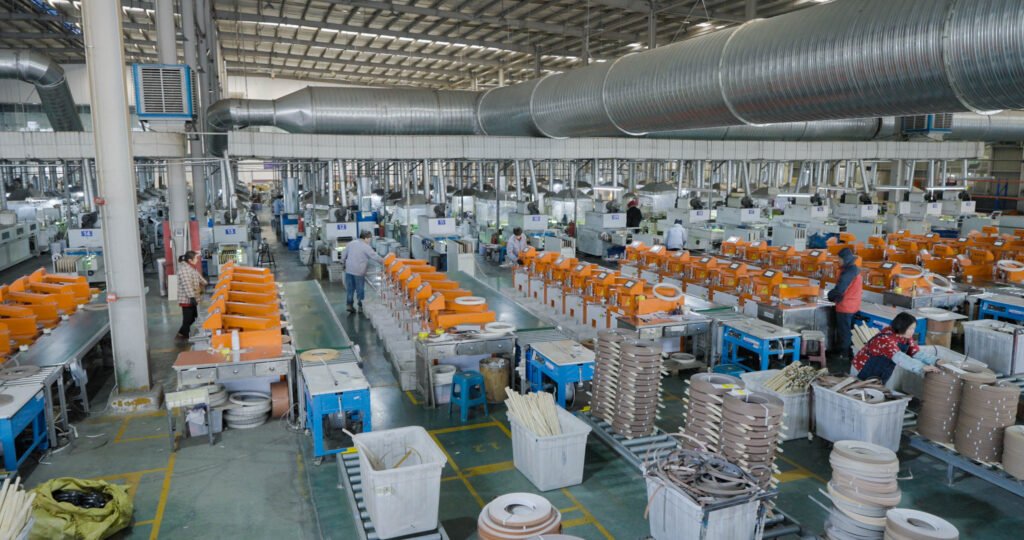
Floor loading (coils directly stacked) can increase usable CBM up to 10–30% vs palletized loads. Palletized loads are easier for customs, warehouses, and local handling. Choose based on cargo fragility, palletization rules at destination, and insurance.
Dive deeper: pros/cons, math, and when to pick which method
Floor loading (bagless / palletless)
- Pros: better space utilization; fewer gaps; more rolls per container by CBM.
- Cons: needs careful lashing, higher risk of damage during lift/landing, harder to handle at destination (needs forklifts and lash points). Not always allowed for certain importers who expect palletized loads.
Palletized loading
- Pros: standardized handling, easier inspections, lower damage claims, more acceptable for large importers and retailers.
- Cons: pallet footprint waste reduces total CBM efficiency; pallets add tare weight and cost.
Example (using earlier box CBM = 0.032 m³):
- Palletized efficiency (practical) ~0.80 of container CBM → 40HQ usable ~64 m³ → ~2000 boxes × 0.80 = 1600 effective boxes (pallet gaps).
- Floor-loaded tight stacking might reach 0.95 efficiency → 76 × 0.95 / 0.032 = 2256 boxes (if you can cram and secure).
My rule of thumb: if the buyer’s warehouse accepts pallets and wants predictable handling, use palletized shipping and plan for the lower counts. If the buyer can handle bulk coils and you have strong lashing and insurance, ask the supplier about floor-loading to maximize quantity per container. Document the method in the sale contract and in the packing list.
Also note: pallet counts are commonly used in bookings. Freight forwarders and shipping lines prefer palletized loads because it’s easier to plan stowage and weight distribution.
Tips to Maximize Container Utilization Without Exceeding Weight or Space Limits?
I use simple packing rules that save meters and avoid fines. These are the checks I run before I confirm a container.
Ask for box dims and pallet pattern, calculate CBM and weight, compare both limits, choose floor vs pallet method, and consider mixed packing for heavy/light SKUs. Use good strapping, dunnage, and avoid dense stacks that exceed floor bearing.

Dive deeper: my operational checklist and negotiation tips with suppliers
- Require supplier’s packing list early. Box dims, boxes/pallet, pallets/container, gross pallet weight. If they cannot provide it, push for a trial pack photo.
- Run both CBM and weight calculations. Use the smaller result.
- Consider mixed stacking: heavier pallets on the floor center, lighter around. This lets you approach both weight and space limits safely.
- Negotiate packaging: ask supplier to reduce carton void space, use tighter pack patterns, or change core diameter to reduce OD. Small changes to core reduce box_CBM.
- Ask about coil orientation: laying rolls longwise vs standing changes wasted space. Ask supplier to orient boxes to fit more into container length.
- Document acceptance: sign off on pallet and box photos before shipping. Keep a “golden sample pallet” for dispute resolution.
- Check local road/port weight limits to avoid fines on destination delivery. Your forwarder must confirm allowed gross weight for truck/permit.
- Use pre-shipment inspections (PSI) to confirm actual packing matches invoice and packing list.
These steps cut surprises. For big orders I repeat a trial container (or part-container) to confirm the math before full booking. It costs less than reworking a full container.
Conclusion
Count by both CBM and payload, always use actual box/pallet specs from your supplier, and pick palletized vs floor-loading according to handling and risk. Run a trial pack to confirm final numbers.
Data sources and further reading
- Hapag-Lloyd — Container specifications (40′ high cube internal dimensions and payload). (hapag-lloyd.com)
https://www.hapag-lloyd.com/en/services-information/cargo-fleet/container/40-standard-high-cube.html - iContainers / iContainers help — 20-ft container dimensions and usable capacity notes. (iContainers)
https://www.icontainers.com/help/20-foot-container/ - BWS / Container specifications — 40′ Dry High Cube data and payload figures. (bws.net)
https://www.bws.net/toolbox/container-specifications/40-foot-dry-high-cube - TECE — Technical data sheet for PVC edgebanding (example pallet and roll packing references). (TECE | The Edgebanding Company)
https://tece.com.tr/images/downloads/en/TDS_PVC.pdf - Homag — Edgeband material calculator (useful for roll OD/length math). (homag.com)
https://www.homag.com/en/machines/edge-banders-tenoners/edgeband-material-remaining-length-calculator