
I see this problem often: suppliers promise the world, but parts fail later. I want to save you time and mistakes.
Top answer: A top-tier PVC edgeband manufacturer delivers consistent specs, traceable QC, predictable lead times, technical support, and verified capacity — not just a low price.

I’ve worked with factories and buyers. I will walk you through what to expect and how to verify it. Keep reading to avoid costly surprises.
What Defines a Top-Tier PVC Edgeband Manufacturer Today?
I used to trust glossy brochures. I learned to look for hard facts fast.
Short answer: A top-tier maker shows documented quality systems, modern extrusion lines, stable raw-material sourcing, sample traceability, and clear lead-time data.

Dive deeper
A top-tier manufacturer has several visible, verifiable traits. I break them into five checkpoints you can check before you buy.
1) Equipment and capacity
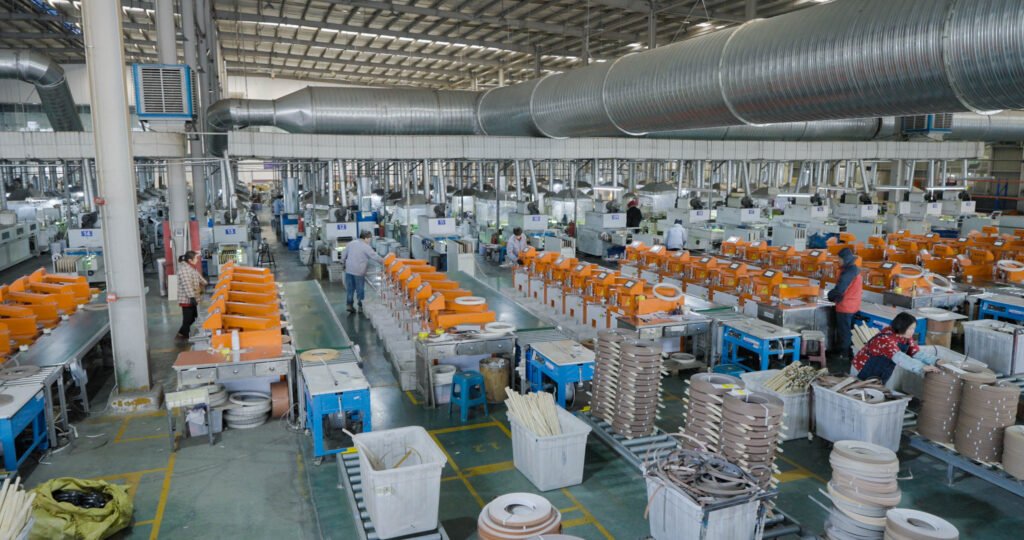
- Modern extrusion lines and edge-finishing machines let a factory hit tight tolerances. Older machines mean wider variation. I ask for photos and line speeds. If they refuse, that is a red flag. Factory capacity information should match their lead-time claims. Reports from industry guides explain why machine condition matters.
2) Raw materials and formula control
- High-quality PVC edgeband uses stable PVC compounds, pigments, and impact modifiers. Suppliers should name resin types (PVC grade), additives, and glue compatibility (EVA, APAO, PA, PUR). If they can’t name the glue types their edgeband works with, they are hiding risk. Technical data sheets from known brands show recommended adhesive types.
3) Quality management and traceability
- Top factories have batch numbers, QC records, and sample logs. They keep records for raw-material COA, incoming inspection, in-process checks, and final inspection. Ask for a sample trace report for your first order. If they cannot produce it, expect inconsistent batches. Industry guides and case studies show these QC steps reduce defects.
4) Testing and standards
- A top supplier runs peel/adhesion and peel-strength tests, color-fastness, thickness tolerance checks, and surface finish checks. Ask which standards they use and for recent test results. Common standards include ASTM/EN tests for peel and adhesion. Request the actual values, not just “passed.”
5) Communication and lead time honesty
- The best suppliers give realistic lead times, MOQ, and clear sample timelines. They report stock vs custom timelines. If a supplier constantly changes lead times, they are not top-tier. Practical guides emphasize predictable lead times as a hallmark of reliable suppliers.
| Checkpoint | What I ask for | Why it matters |
|---|---|---|
| Equipment & capacity | Photos, rated output, lead-time record | Ensures volume & repeatability |
| Raw materials | Resin grade, COA for pigments | Affects durability & color match |
| QC & traceability | Batch reports, inspection logs | Helps trace defects |
| Testing | Peel strength, colorfastness data | Confirms real performance |
| Lead times | Stock vs custom timelines | Supports production planning |
Key Quality Standards Buyers Should Expect in Every Order?
I used to accept vague promises. Now I ask for test numbers.
Short answer: Expect adhesion/peel test data, dimensional tolerances, color-match reports, and adhesive compatibility statements for every order.

Dive deeper
Quality standards are not just labels. They are measurable values you can verify. I focus on the tests and tolerances that matter most.
Adhesion / peel strength
- Peel strength measures how well the edgeband bonds to the panel. Ask for results from recognized tests such as ASTM D903 (peel/stripping strength) or EN/ISO adapted methods used in furniture testing. Strong peel numbers show proper primer/application and compatible adhesive. Without these numbers, you are guessing.
Dimensional tolerances
- Thickness, width, and straightness need documented tolerances. Common thicknesses range 0.4–3.0 mm depending on use. Ask for ± tolerances and actual measured ranges from recent batches. Good suppliers maintain +/-0.05 mm or similar tight control for key sizes.
Surface and color consistency
- Color-match reports and lightfastness tests show whether the edgeband will match laminated panels over time. Manufacturers should provide color codes and Delta E values if possible. They should also specify surface finish (matte, gloss, wood pore) and finish tolerance.
Adhesive compatibility and processing instructions
- Good suppliers list compatible hot-melt adhesives (EVA, APAO, PA, PUR) and recommended application temperatures/pressures. They may include curing times and machine settings. This reduces on-site trial errors and ensures reliable bonding. Technical data sheets often include these guidelines.
Environmental and safety data
- Material safety (RoHS-like restrictions), VOC data, and recycling notes help you meet local rules. Top-tier suppliers give COAs and safety documentation on request.
When I review quotes, I compare these concrete numbers side-by-side. If a supplier gives only “high adhesion” without a test value, I mark their quote as weak.
How Leading Manufacturers Ensure Consistent Production and On-Time Delivery?
I once lost a project to late shipments. I now demand proof of process control.
Short answer: Leading manufacturers use documented process parameters, daily QA checks, buffer stock, and clear production planning to hit delivery dates.

Dive deeper
Consistency comes from controlling inputs and process. I look at three concrete areas.
Standardized process parameters
- Top factories set and log extrusion temperatures, line speeds, cooling rates, and cutter settings. They keep these in SOPs. This reduces batch-to-batch differences. Studies show that glue temperature, glue dosage, and feed rate strongly influence peel strength. Ask for the SOP excerpt that covers your product.
In-process checks and control charts
- Good manufacturers run periodic checks (thickness, width, peel samples) and keep control charts. This shows trends and allows early correction. I ask for examples of control charts or a recent in-process QC log. If they can share anonymized logs, it tells me they monitor quality, not just inspect at the end.
Inventory buffers and realistic scheduling
- Leading plants maintain buffer stock for common sizes and plan production runs to avoid frequent changeovers. They publish stock vs made-to-order timelines. A supplier who promises same-day for custom colors is likely overpromising. Practical sourcing guides recommend separating stocked SKUs and custom SKUs and planning accordingly.
Essential Technical and After-Sales Support You Should Receive?
I expect help beyond shipment. Good support saves rework.
Short answer: Expect technical setup guidance, troubleshooting, replacement policy, and clear warranty terms. A supplier who helps during first runs reduces failure risk.
Dive deeper
Technical support is part of the product. I push for four supports.
1) Pre-shipment samples plus machining notes
- Ask for machined samples and a one-page machining guide: glue type, temp, speed, and trimming settings. This cuts trial time on your production line.
2) Start-up support
- Top suppliers offer video calls, on-site support, or local tech partners to help during first runs. This prevents bonding errors. If they refuse, plan for in-house trial time.
3) Clear defects policy
- Get the replacement and return policy in writing. Define acceptable defect rates and remedy timelines. Good suppliers will accept replacement for verified defects within a set window.
4) Warranty and traceability
- Warranty should cover adhesive failure and delamination, with clear steps for claim handling. Traceable batch numbers help investigate root causes quickly. I always ask suppliers to confirm their process for handling claims.
How to Verify a Manufacturer’s Real Capability Before You Place an Order?
I never sign a large PO without proof. You shouldn’t either.
Short answer: Verify by requesting samples, lab test reports, factory photos, recent QC logs, and client references. If possible, do a small pilot order.

Dive deeper
Verification is low-cost insurance. I use a small checklist you can copy.
Pre-checklist you can use
- Recent production photos and line specs.
- Sample with batch number and test report (peel strength, thickness, color).
- Copy of their QC checklist and one sample inspection report.
- Client references (same region or same product).
- Small pilot order (1–2 weeks lead) with agreed acceptance criteria.
If a supplier declines any of these, I treat their quote as high risk. If they agree and deliver all items, I feel confident to scale.
Conclusion
I expect clear specs, test data, traceable QC, realistic lead times, and helpful support from top-tier PVC edgeband makers.
Data sources and links
- Vlaović Z. Strength, Durability, and Aesthetics of Corner Joints and Edge Bonding in Furniture Design. MDPI Applied Sciences. (paper on edge bonding tests). https://www.mdpi.com/2076-3417/14/22/10285 (MDPI)
- ASTM D903 — Peel or Stripping Strength of Adhesive Bonds (testing standard overview). https://www.instron.com/en/testing-solutions/astm-standards/astm-d903. (Instron)
- Optimization of edge banding process parameters — BioResources / NCSU (study on glue, temperature, feed rate effects). https://bioresources.cnr.ncsu.edu/resources/optimization-of-edge-banding-process-parameters-used-for-particle-board-and-medium-density-fiberboard/ (BioResources)
- REHAU edgeband technical data sheet (example of manufacturer specs and testing). https://www.rehau.com/downloads/886866/edgeband-technical-data-sheet.pdf (瑞好)
- Bestin / Edge banding completed guide (industry guide on production and QA). https://www.bestingroup.com/edge-banding-completed-guide/ (bestingroup.com)