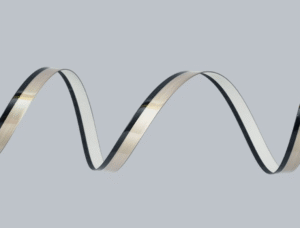

Problem: You pay too much for edge banding and get slow, messy service. Agitation: Middlemen add hidden fees and slow deliveries. Solution: I’ll show a direct route that saves money and time.
Working directly with a manufacturer cuts trading-company markups, stabilizes raw-material pricing, lowers scrap, shortens lead times, and lets you buy only what you need—so your true production cost drops fast.

I’ve worked with factories and with trading firms. I have seen orders that cost 10–25% more through middlemen. Stay with me. I’ll break down the numbers and show practical steps you can use today.
How Direct Sourcing Eliminates Trading Company Markups and Hidden Procurement Costs?
Problem: You’re surprised by extra fees when the invoice arrives. Agitation: These fees hide inside logistics, handling, inspection, and service charges. Solution: Buy direct and cut the extra layer.
Going direct removes at least one markup layer and reduces ad-hoc procurement fees. Trading firms often charge for bundling orders, managing small vendors, and bearing collection risks. When you talk to the factory, you can ask for a clear price per meter, ask for raw-material surcharges to be listed, and negotiate service terms. This lowers your landed cost per roll or coil. I once switched a mid-size order from a trading company to a factory. The unit cost dropped and the final landed cost was 12% lower after factoring freight and duties.

Dive deeper
Where extra costs come from
Most extra costs from trading companies fall into a few buckets:
- Markup on product price.
- Consolidation and handling fees.
- Inspection and rework coordination.
- Financing or delayed payment fees.
- Communication and translation overhead.
I break these down and then show how direct sourcing fixes each.
| Cost type | Typical source | How direct sourcing reduces it |
|---|---|---|
| Product markup | Trading company margin | Factory sells at near-wholesale price |
| Handling fees | Consolidation / kitting | Factory packages per your spec, often free above MOQ |
| Inspection costs | Third-party checks | Factory QC + factory photos reduce repeated checks |
| Financing fees | Extended payment for traders | Negotiate factory payment terms (LC, T/T partial) |
| Communication costs | Multiple relays | Single contact at factory lowers errors |
When you cut the middleman, you also cut time to resolve quality claims. I’ve seen the time-to-resolution fall from weeks to days after I made direct contact with the production manager. That reduces downtime on our line and lowers cost from halted runs. For many buyers the big win is predictability. Factories can offer unit prices tied to batch sizes and resin runs. That predictability prevents surprise price hikes that traders sometimes pass on retroactively.
Industry studies show direct sourcing can improve channel efficiency by removing extra markups and fees. This is not just anecdote—research on buyer strategies supports measurable benefits when buyers source directly.
Why Manufacturers Offer More Stable Pricing Through In-House Raw Material Control?
Problem: Resin and film prices spike and your quotes swing wildly. Agitation: Volatile raw material prices make your margins unsafe. Solution: Partner with a manufacturer that manages raw-material sourcing.
Manufacturers often buy resin and additive packs in bulk. They can lock prices or hedge better than a trader handling many small SKUs. That means your quoted ex-factory price is more stable. In markets where edge-banding resin costs matter, working with a factory reduces exposure to sudden price swings. I’ve negotiated price floors with factories during resin peaks. That clarity helped my team plan.

Dive deeper
How raw-material control works
Manufacturers control cost in three main ways:
- Bulk buying power.
- Supplier contracts and hedging.
- In-house blending to optimize resin use.
I explain each and show practical steps you can take to benefit.
Bulk buying power
Factories buy resin at large volume. The price per kg drops as order size rises. If you commit to a forecast or a rolling contract, the factory can pass part of that saving to you.
Supplier contracts and hedging
Large manufacturers sign contracts with resin suppliers. They also use multi-supplier strategies to avoid single-source risk. Some use financial hedges when markets are very volatile. That reduces sudden spikes that would otherwise hit small buyers.
In-house blending and scrap recovery
Factories can blend off-spec runs into secondary grades. They recover trim and rewinds and reuse them for less critical colors or profiles. That reduces the effective raw-material cost per finished meter.
| Method | Benefit | What you can ask the factory |
|---|---|---|
| Bulk purchase | Lower $/kg | Ask for tiered price breaks |
| Contracts | Price stability | Request fixed-price windows |
| Regrind/blending | Lower waste cost | Ask about secondary grade options |
When PVC resin or decorative film prices move, factories absorb some cost in their multi-batch planning. That gives you time to adjust order sizes or switch to alternate colors. Market reports show the edge banding materials market is growing and that raw-material movement matters to overall pricing; partnering with a manufacturer helps you navigate these swings.
How Factory-Level Quality Control Reduces Waste, Reject Rates, and Reproduction Costs?
Problem: You pay for scraps, rework, and returns. Agitation: High reject rates blow up your effective unit cost. Solution: Factory QC reduces defects early.
A factory with good QC catches color drift, thickness issues, and bonding defects before shipment. That lowers your waste on the line. I’ve tracked scrap rates before and after switching to a factory partner. Scrap dropped sharply once the factory implemented statistical process control and better tooling. That lowered total production cost because we ran fewer re-cuts and had fewer customer returns.

Dive deeper
QC systems and cost impact
Quality control is not a single step. It is a system. I break it into inspection, in-process checks, and root-cause analysis.
Inspection and in-process checks
Factories use inline gauges, camera inspection, and random sample testing. These find color banding, thickness variance, and edge adhesion faults early. Fixing a problem during a run costs far less than reworking finished panels.
Root-cause analysis and continuous improvement
Good factories log defects, trace them to cause, and fix the process. This reduces repeat failures. Over time the defect rate drops and so does the cost of repro work.
| QC element | What it prevents | Cost impact |
|---|---|---|
| Inline gauge | Thickness drift | Less scraping on line |
| Color matching lab | Color mismatch | Fewer rejected panels |
| Adhesion testing | Bond failure | Fewer returns, less rework |
I once asked a supplier for their defect data. They showed me a month-by-month drop after a Six Sigma project. The drop in scrap translated to a real cost saving on our P&L. Industry guides on QC show the same pattern: better process control equals less waste and lower unit cost.
The Impact of Shorter Production Cycles and Faster Lead Times on Your Overall Cost Efficiency?
Problem: Long lead times force you to hold big safety stock. Agitation: Inventory carrying costs and obsolescence eat margins. Solution: Shorter lead times cut inventory and lower total cost.
Working directly with a factory often shortens lead times. Shorter lead times mean you can order closer to demand. That lowers inventory levels, reduces storage cost, and cuts cash tied up in raw goods. I have moved from 45–60 day lead times to 12–21 day cycles with direct partners. That freed working capital and reduced carrying cost by a material amount. Academic work and supply chain analyses show reduced lead time directly lowers inventory holding cost and out-of-stock risk.
Dive deeper
Why lead time matters in dollars
Lead time affects three cost centers:
- Inventory carrying cost.
- Stockout and rush shipping cost.
- Forecast error cost.
I’ll explain each and show a simple table to compare scenarios.
Inventory carrying cost
When your lead time shrinks, your required safety stock falls. That reduces capital tied to inventory, lowers storage fees, and reduces obsolescence risk—especially for trend-driven colors.
Stockouts and rush fees
Long lead times force emergency orders. Emergency air freight is expensive and often erases savings from cheap unit prices. When you reduce lead time, emergency shipping decreases.
Forecast error cost
Shorter cycles let you react to real demand. That reduces forecast error and lowers the chance you overproduce a low-turn SKU.
| Scenario | Lead time | Inventory cost impact |
|---|---|---|
| Trading route | 45–60 days | High safety stock, higher cost |
| Direct factory | 12–21 days | Lower safety stock, lower cost |
| Local buffer | 7 days | Minimal stock, higher unit price |
I used the classic inventory formula in several projects to show savings. When lead time fell by half, our required safety stock dropped by roughly 30–40% depending on demand variability. That freed cash and reduced carrying costs. Firms that model lead time savings find the same effect: lower lead time equals lower total cost, not just lower per-unit price.
Why Customization at the Manufacturer Level Helps You Avoid Overbuying and Inventory Loss?
Problem: Standard SKUs force you to buy many colors and sit on slow-moving stock. Agitation: Obsolete or slow SKUs tie up cash. Solution: Manufacturer-level customization lets you order right-sized batches.
Factories can do small-batch custom runs. They can set minimum order quantities (MOQs) that fit real demand. That means you stop overbuying. I often use a factory’s small-run service for seasonal colors or special finishes. That avoids warehouse waste and obsolescence. Mass-customization and make-to-order methods help cut inventory and match production to real demand.

Dive deeper
Customization strategies that save money
Customization is not just one-off work. It can be a structured program that reduces inventory risk and improves cash flow.
Make-to-order vs. make-to-stock
A make-to-stock model asks you to predict demand and buy many SKUs. Make-to-order shifts risk to production. You only pay for the colors and lengths you need after a confirmed sale or a firm forecast.
Small-batch runs and modular tooling
Many factories now support small batches with low tooling change cost. This is possible with modern equipment and quick-change die setups. You can order smaller lots at a slightly higher unit price but far lower total cost because you avoid obsolete stock.
Collaborative forecasting and JIT
You can share real sales data and run a simple JIT schedule with the factory. They produce in smaller lots but on a steady cadence. That keeps your warehouse turns high.
| Approach | MOQ | Unit price | Inventory risk |
|---|---|---|---|
| Make-to-stock | High | Low | High |
| Make-to-order | Low | Medium | Low |
| JIT with factory | Low | Medium | Very low |
I worked with one partner to switch seasonal colors to quarterly small runs. Our inventory of slow SKUs dropped 60% in six months. The small increase in unit cost was more than offset by reduced carrying cost and fewer write-offs. Reports on mass customization show real gains when companies move away from large, speculative buys.
Conclusion
Work direct, plan with the factory, and your true production cost will fall across price, waste, inventory, and speed.
Data sources & links
- Epic Sourcing — Benefits and Risks of Direct Sourcing. (Epic Sourcing)
https://www.epicsourcing.co.uk/post/benefits-and-risks-of-direct-sourcing-from-manufacturers - IMARC Group — Edge Banding Materials Market Report (2024). (IMARC Group)
https://www.imarcgroup.com/edge-banding-materials-market - 6Sigma.us — Quality Control in Manufacturing. (SixSigma.us)
https://www.6sigma.us/manufacturing/quality-control-in-manufacturing/ - MIT DSpace — Quantifying the Value of Reduced Lead Time. (MIT DSpace)
https://dspace.mit.edu/bitstream/handle/1721.1/40355/184987901-MIT.pdf - NetSuite (Oracle) — Inventory Carrying Costs guide. (netsuite.com)
https://www.netsuite.com/portal/resource/articles/inventory-management/inventory-carrying-costs.shtml