

Leading paragraph
Unstable delivery, quality issues, and constant surprises keep hurting edgeband distributors. These problems look small, but they quietly damage margins, trust, and long-term growth.
Snippet paragraph
Edgeband distributors can build a more predictable supply chain by controlling quality consistency, choosing reliable manufacturers, and using standardization to reduce uncertainty in inventory, delivery, and customer commitments.

Transition paragraph
I have worked with distributors who felt busy every day but never felt safe. Orders kept moving, but risks kept stacking up. To fix this, we need to look at where unpredictability really starts.
Why Supply Chain Unpredictability Is a Major Risk for Edgeband Distributors?
Leading paragraph
Most distributors think supply chain problems are normal. Delays, complaints, and rework slowly become part of daily work, even though they quietly raise costs.
Snippet paragraph
Supply chain unpredictability is a major risk because it increases hidden costs, weakens customer trust, and makes it harder for edgeband distributors to plan inventory and cash flow.

Dive Deeper
Supply chain risk for edgeband distributors does not usually appear as one big failure. It appears as many small issues. Late deliveries. Color mismatches. Thickness deviation. Unstable adhesion. Each issue looks manageable. Together, they create constant pressure.
From my experience, unpredictability hurts distributors in three clear ways.
Inventory pressure grows over time
When delivery dates shift or quality varies, safety stock increases. Distributors order more than needed to protect themselves. This ties up cash and warehouse space. According to Deloitte’s supply chain research, excess inventory is one of the top cost drivers caused by uncertainty.
Customer trust becomes fragile
Furniture factories and workshops depend on stable materials. When edgeband quality changes, their machines need adjustment. Their output slows down. Even if the problem comes from upstream, the distributor takes the blame. Over time, customers look for safer suppliers.
Planning becomes reactive, not strategic
Unpredictable supply chains force distributors to react instead of plan. Forecasts lose meaning. Promotions feel risky. Expansion gets delayed. McKinsey has shown that companies with unstable supply chains struggle to scale, even when demand exists.
For edgeband distributors, predictability is not a luxury. It is a foundation. Without it, every growth plan stands on weak ground.
How Inconsistent Edgeband Quality Disrupts Inventory and Order Planning?
Leading paragraph
Quality problems rarely stop at quality. In edgeband distribution, small physical differences quickly turn into planning chaos.
Snippet paragraph
Inconsistent edgeband quality disrupts inventory and order planning by forcing distributors to hold extra stock, split batches, and deal with unexpected returns or customer complaints.

Dive Deeper
Many distributors focus on price and lead time when sourcing edgeband. Quality is assumed to be stable. This assumption often causes the biggest planning failures.
Edgeband inconsistency usually shows up in a few key areas.
Dimensional variation
Small changes in thickness or width affect edge banding machines. Factories need to adjust settings. This costs time. When customers complain, distributors must isolate which batch caused the issue. Inventory that looks the same on paper becomes risky in reality.
Color and surface mismatch
Color drift between batches creates dead stock. One batch sells fast. Another sits still. Inventory turnover drops. According to industry studies, color mismatch is one of the main reasons for edgeband returns in furniture production.
Adhesion performance
When adhesion strength changes, customers face delamination problems after processing. These issues often appear late. By the time feedback arrives, distributors may have already shipped the same batch to other customers.
All these factors break normal inventory logic.
| Quality Issue | Inventory Impact | Planning Consequence |
|---|---|---|
| Thickness variation | Batch separation | Higher safety stock |
| Color inconsistency | Slow-moving stock | Poor demand forecast |
| Adhesion instability | Returns and claims | Emergency reorders |
From my view, quality consistency is not a technical detail. It is a planning tool. Stable quality allows distributors to treat inventory as numbers again, not as risks.
The Role of Reliable Manufacturers in Building a Predictable Edgeband Supply Chain?
Leading paragraph
A distributor’s supply chain is only as stable as the factory behind it. No system can fix an unstable source.
Snippet paragraph
Reliable manufacturers build predictable edgeband supply chains by controlling raw materials, processes, and batch consistency, which reduces uncertainty for distributors downstream.

Dive Deeper
Many distributors believe reliability means fast delivery. I see it differently. Reliability starts long before shipping.
A reliable edgeband manufacturer shows stability in three layers.
Raw material control
PVC resin, pigments, and additives directly affect performance. Reliable factories use stable suppliers and fixed formulas. They do not change materials to chase short-term cost savings. According to McKinsey, raw material instability is a key cause of downstream supply chain disruption.
Process discipline
Consistent extrusion speed, temperature control, and cooling systems matter. When factories lack standard operating procedures, batch variation increases. Distributors then carry the risk without knowing it.
Data transparency
Good manufacturers track batches. They record parameters. When issues appear, they can trace causes. This shortens problem resolution time and protects distributors from repeated failures.
The difference becomes clear over time.
| Manufacturer Type | Short-Term Cost | Long-Term Risk |
|---|---|---|
| Price-driven supplier | Lower | High |
| Process-driven supplier | Slightly higher | Low |
| Data-driven partner | Stable | Lowest |
From my own experience, choosing a reliable manufacturer is not about finding the cheapest option. It is about buying predictability. This predictability is what allows distributors to grow without fear.
How Standardization and Batch Consistency Improve Supply Chain Forecasting?
Leading paragraph
Forecasting fails when products behave differently each time. Standardization gives numbers real meaning.
Snippet paragraph
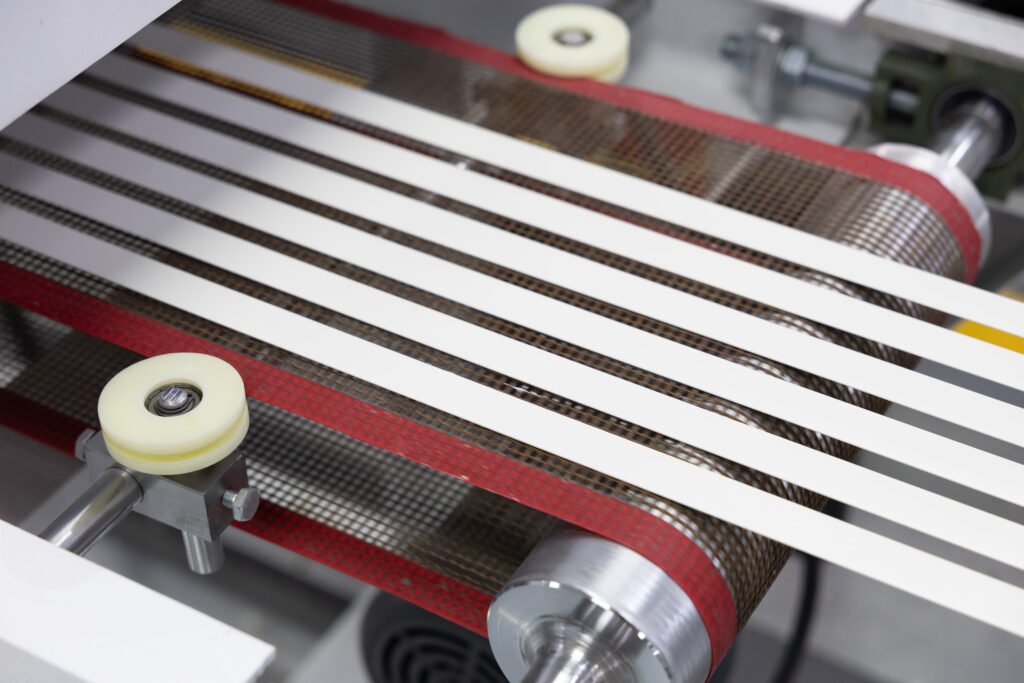
Standardization and batch consistency improve supply chain forecasting by reducing variability, which allows edgeband distributors to predict demand, inventory turnover, and delivery schedules more accurately.
Dive Deeper
Forecasting depends on patterns. Patterns only exist when products behave the same way over time. This is where standardization becomes powerful.
SKU behavior becomes stable
When one SKU performs the same across batches, sales data becomes reliable. Distributors can trust historical numbers. This improves reorder timing and quantity decisions.
Inventory turnover improves
Batch consistency reduces slow-moving stock caused by quality differences. Products rotate normally. Cash flow becomes easier to manage. According to Deloitte, standardization is a key driver of inventory efficiency in manufacturing supply chains.
Communication with customers becomes clearer
When performance is stable, distributors can make firm promises. Lead times feel safer. Customers adjust their own plans with more confidence.
The impact looks simple, but it is deep.
| Without Standardization | With Standardization |
|---|---|
| High safety stock | Lean inventory |
| Reactive reorders | Planned reorders |
| Frequent complaints | Stable feedback |
From my view, standardization is not about limiting flexibility. It is about removing unnecessary variation. Once variation drops, forecasting finally works as intended.
Practical Steps Edgeband Distributors Can Take to Reduce Supply Chain Uncertainty?
Leading paragraph
Predictability does not come from theory. It comes from daily choices and clear rules.
Snippet paragraph
Edgeband distributors can reduce supply chain uncertainty by setting quality benchmarks, auditing manufacturers, using batch tracking, and aligning inventory strategy with product consistency.

Dive Deeper
Reducing uncertainty does not require a full system rebuild. It requires discipline.
Here are practical steps I believe matter most.
Define non-negotiable quality standards
Distributors should document thickness tolerance, color deviation limits, and adhesion requirements. These standards must be shared and enforced. This filters out unstable suppliers early.
Require batch identification
Each shipment should be traceable. Batch codes allow faster problem isolation. This protects both distributors and customers.
Test before scaling
Before committing to volume, test consistency across multiple batches. One good sample is not enough. Stability over time matters more.
Align inventory strategy with risk
High-risk products need smaller batches. Stable products deserve deeper stock. This approach balances availability and safety.
| Action | Purpose |
|---|---|
| Quality benchmarks | Reduce variation |
| Batch tracking | Faster issue control |
| Multi-batch testing | Validate stability |
| Risk-based inventory | Lower cash pressure |
From my experience, predictability is built step by step. Each rule removes a layer of uncertainty. Over time, the supply chain becomes calm instead of stressful.
Conclusion
Predictable supply chains are built on consistent quality, reliable partners, and simple standards. When uncertainty drops, edgeband distributors gain control, confidence, and room to grow.
Data Sources & References
- McKinsey & Company – Risk, resilience, and rebalancing in global supply chains
https://www.mckinsey.com/capabilities/operations/our-insights - Deloitte – Supply Chain Resilience and Inventory Management Insights
https://www.deloitte.com/global/en/issues/operations/supply-chain.html - Harvard Business Review – Why Supply Chains Fail and How to Fix Them
https://hbr.org/topic/supply-chain-management