

Furniture manufacturers often lose time, money, and trust because of unstable edge banding quality. I have seen projects delayed, panels rejected, and clients complain because of one wrong supplier choice.
To choose the right PVC edge banding supplier, I focus on material standards, color consistency, production stability, and real long-term cost, not just the unit price.
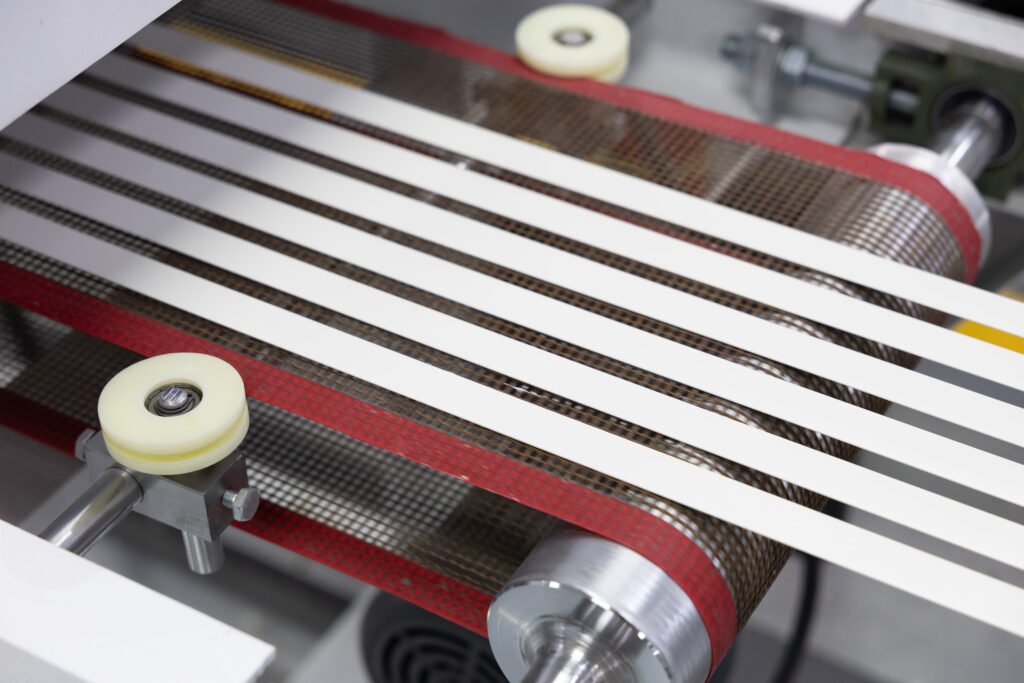
I have worked with many furniture factories and distributors. Over time, I learned one simple truth. Edge banding looks small, but it decides the final feeling of the furniture. If you are choosing a supplier now, this guide will save you from many hidden problems.
Why Choosing the Right PVC Edge Banding Supplier Matters for Furniture Quality?
Furniture quality often fails at the edges, not the panels. I have seen good boards ruined by poor edge banding that cracked, faded, or peeled off too early.
The right supplier protects furniture quality by ensuring stable bonding, clean edges, and long-term durability across different machines and climates.

How does edge banding affect finished furniture?
Edge banding is not decoration. It is protection. It seals the board. It hides defects. It also affects how customers touch and judge the product.
Common quality risks from poor suppliers
| Problem | What I see in factories | Result |
|---|---|---|
| Low PVC density | Soft edges, dents | High return rate |
| Poor glue compatibility | Edge lifting | Rework cost |
| Color instability | Batch color shift | Client complaints |
| Weak heat resistance | Deformation | Warranty claims |
I once worked with a factory that changed suppliers to save a few cents per meter. Within three months, their export order faced rejection. The edges turned white after sanding. The glue line was visible. They lost much more than they saved.
Why edge banding quality reflects the supplier, not luck
Many buyers think defects come from machines or workers. I disagree. In most cases, the root cause is material control at the supplier level.
A serious supplier controls raw PVC resin, calcium content, plasticizer ratio, and extrusion temperature. A trader does not.
When I choose a supplier, I assume the edge banding will be blamed if something goes wrong. So I only work with suppliers who design their product for real factory conditions, not lab tests.
Key Technical Standards to Evaluate in a PVC Edge Banding Supplier?
Many suppliers say their edge banding is “standard quality.” I never accept this sentence. I ask for clear technical standards and real test results.
A reliable PVC edge banding supplier must meet clear material, tolerance, and performance standards that match furniture production needs.

Which technical standards really matter?
Not all specs matter equally. I focus on a few key points that affect daily production.
Core technical indicators I always check
| Indicator | What I ask | Why it matters |
|---|---|---|
| Density | ≥ 1.35 g/cm³ | Strength and sanding result |
| Thickness tolerance | ±0.05 mm | Stable feeding |
| Shrinkage rate | Low after heating | Clean corners |
| Impact resistance | Tested at low temp | Transport safety |
| Heat resistance | ≥ 90°C | Hot climates |
I also check whether the supplier follows ISO 9001 for quality control. It does not guarantee perfection, but it shows process awareness.
Why calcium content and formulation matter
Some suppliers reduce cost by adding too much calcium carbonate. On paper, thickness looks correct. In reality, the edge banding becomes brittle.
I always ask one direct question. “What is your calcium ratio?” Honest factories answer. Traders avoid it.
Testing is not optional
I prefer suppliers who allow third-party testing or share internal test reports. When a supplier hides data, I treat it as a warning sign.
In my experience, technical discipline is the line between long-term partners and short-term problems.
How to Assess Color Matching and Surface Finish Consistency?
Color issues cause the fastest complaints. I have never seen a customer forgive a color mismatch, even if the furniture works well.
I assess color matching by checking batch consistency, light stability, and surface texture under real production and lighting conditions.
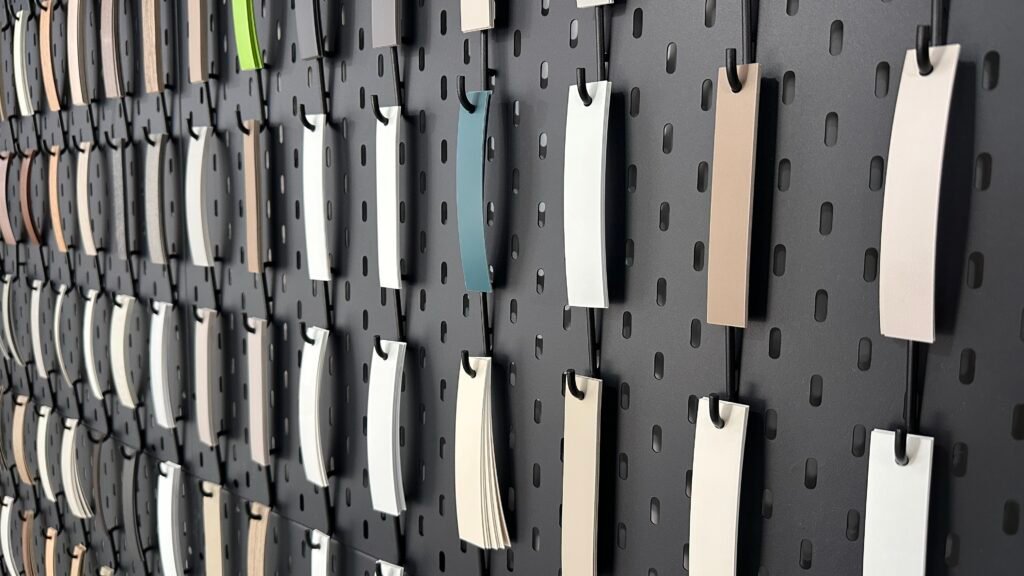
Color matching is more than visual comparison
Many buyers compare samples by eye. I never rely only on that. Lighting changes everything.
What I test before approving color
| Test | Method | Purpose |
|---|---|---|
| Delta E | Color meter | Objective comparison |
| UV aging | Light exposure | Fade resistance |
| Sanding test | Real machines | Edge whitening |
| Glue line check | After bonding | Visual finish |
I once had a supplier whose samples were perfect. After mass production, the color shifted slightly warmer. Under showroom lights, the difference was obvious. That order almost failed.
Surface finish consistency matters just as much
Gloss level, texture, and feel must match the board. A mismatch makes furniture look cheap.
I divide surface finishes into clear categories. High gloss, matte, super matte, wood grain, and embossed. Each needs different control.
Why batch control is critical
A good supplier controls batches. A weak one mixes materials to save time.
I always ask how they manage batch numbers and color recipes. If they cannot explain it simply, I do not proceed.
Production Capacity, Lead Time, and Supply Stability: What Manufacturers Must Check?
A good product means nothing if it arrives late. I learned this the hard way during peak seasons.
I evaluate suppliers by their real production capacity, lead time accuracy, and ability to supply consistently under pressure.

Capacity is not what sales claims
Many suppliers exaggerate capacity. I prefer to see machines, shifts, and output records.
Questions I always ask suppliers
| Question | Why I ask |
|---|---|
| How many extrusion lines? | Real output check |
| Daily output per line? | Planning accuracy |
| Peak season lead time? | Risk control |
| Stock policy? | Emergency orders |
I once relied on a supplier who promised 7-day delivery. During peak season, it became 20 days. My client did not care about excuses.
Lead time stability beats short lead time
I prefer a stable 15-day lead time over an unstable 7-day promise. Production planning depends on reliability.
I also check how suppliers handle raw material shortages. Good ones have backup sources. Weak ones wait.
Long-term supply partnership mindset
A real manufacturer thinks long term. They invest in molds, color systems, and inventory planning.
If a supplier only talks about price, I know they will disappear when problems come.
Comparing Price vs. Long-Term Cost When Selecting a PVC Edge Banding Supplier?
Price is the easiest number to compare and the most dangerous one to follow.
I compare suppliers based on total cost, including waste, rework, downtime, and customer complaints, not just price per meter.

Why low price often means high cost
Cheap edge banding often creates hidden losses.
Hidden costs I calculate
| Cost type | Example |
|---|---|
| Waste | Rejected edges |
| Labor | Rework time |
| Machine | Extra adjustment |
| Claims | Customer returns |
In one case, a factory saved 5% on edge banding price. Their rework rate increased by 12%. The math was clear.
How I evaluate supplier pricing
I ask suppliers to quote stable prices over time, not one-time offers. I also check if pricing changes with color or finish.
A transparent supplier explains pricing logic. A risky one avoids details.
Long-term cooperation value
I prefer suppliers who grow with me. They help improve matching, reduce waste, and solve problems fast.
In my experience, the best suppliers are not the cheapest. They are the most predictable.
Conclusion
Choosing a PVC edge banding supplier is about control, not luck. I focus on standards, consistency, supply stability, and long-term cost to protect furniture quality.
Data Sources & References
- ISO 9001 Quality Management Systems
https://www.iso.org/iso-9001-quality-management.html - PlasticsEurope – PVC Material Information
https://plasticseurope.org - Woodworking Network – Furniture Manufacturing Insights
https://www.woodworkingnetwork.com - European Panel Federation – Furniture and Panel Industry Data
https://europanels.org - UL Solutions – Plastics Testing and Certification
https://www.ul.com