

Many factories overlook storage and handling, then face peeling, warping, or discoloration in their edge banding rolls. These issues cost time and money.
Proper storage and careful handling directly impact edge banding quality, from raw rolls to finished furniture. Even small mistakes can lead to defects that affect adhesion, surface, and appearance.

Over years of working with distributors and factories, I have seen that most quality problems happen after production, during storage or transport. Understanding proper storage and handling can prevent most of these defects.
Why Proper Storage Conditions Are Critical for Edge Banding Quality?
Improper storage is often invisible until products fail. Many managers ignore temperature, light, and humidity.
Edge banding quality depends on stable storage conditions. Temperature swings, humidity, or sunlight exposure can cause curling, whitening, or loss of adhesion.

Dive deeper Paragraph:
I always check how rolls are stored before approving shipments.
Temperature Control
PVC and ABS edge banding are sensitive to heat.
| Condition | Effect on Edge Banding |
|---|---|
| High temperature | Softening, warping |
| Low temperature | Brittle rolls, cracking |
| Fluctuating | Adhesion weakening |
Humidity Management
Excess moisture can damage rolls and packaging.
| Humidity Level | Effect |
|---|---|
| Above 70% | Surface whitening, swelling |
| Below 30% | Brittleness, micro-cracks |
| Stable 40–60% | Safe storage |
Light and UV Exposure
Direct sunlight accelerates aging.
| Exposure | Result |
|---|---|
| Direct sun | Color fade, surface gloss loss |
| Fluorescent light | Minor effect if prolonged |
| Controlled indoor light | Maintains color and finish |
Proper storage reduces defects before rolls even reach production.
How Temperature, Humidity, and Sunlight Affect PVC and ABS Edge Banding?
Many believe edge banding is robust. In reality, environmental factors alter physical properties and appearance.
Temperature, humidity, and light exposure affect flexibility, adhesion, surface gloss, and color consistency in both PVC and ABS edge banding.

Dive deeper Paragraph:
I look for three major environment impacts: mechanical, surface, and chemical changes.
Mechanical Changes
High heat or moisture can change roll shape.
| Factor | PVC | ABS |
|---|---|---|
| Heat >40°C | Softening, sag | Slight softening |
| Low <10°C | Cracking risk | Brittle edges |
| Moisture >70% | Curling | Swelling |
Surface Appearance
Gloss and color suffer under poor conditions.
| Factor | Effect |
|---|---|
| Sunlight | Fading, yellowing |
| High humidity | Whitening or haze |
| Uneven temperature | Spot discoloration |
Adhesion and Glue Performance
Environmental stress impacts glue effectiveness during processing.
| Condition | Outcome |
|---|---|
| Warped or curled rolls | Poor bonding |
| Moisture absorption | Glue separation |
| Thermal stress | Micro-adhesion failure |
Understanding these factors helps plan storage and transport to avoid production issues.
What Handling Mistakes Cause Edge Banding Defects During Transport and Warehouse Operations?
Even well-stored rolls can be damaged by poor handling. Many defects happen while moving, stacking, or unpacking.
Dropping rolls, overstacking, improper forklifts, or rough transport can cause curls, dents, surface scratches, and adhesion problems.

Dive deeper Paragraph:
I always train warehouse staff and transport teams on safe handling.
Transport Damage
Rolls shift or fall during transit.
| Mistake | Effect |
|---|---|
| Dropping rolls | Dents, deformation |
| Loose packing | Curling, scratches |
| Overloaded truck | Adhesion and surface stress |
Warehouse Stacking
Improper stacking is a major risk.
| Mistake | Result |
|---|---|
| Too high stacks | Squashed bottom rolls |
| Uneven stacking | Edge distortion |
| Mixed sizes | Wrinkling, misalignment |
Forklift and Manual Handling
Rough movement creates small but costly defects.
| Action | Issue |
|---|---|
| Dragging rolls | Scratches |
| Forklift prongs misaligned | Cuts or dents |
| Rapid rotation | Curling, surface stress |
Training and simple SOPs prevent most handling damage.
How to Inspect and Prepare Stored Edge Banding Before Use?
Even well-stored rolls need pre-use checks. Ignoring them risks product failure.
Inspection and preparation detect hidden curling, color variation, or adhesion issues and allow correction before processing.

Dive deeper Paragraph:
I follow a three-step inspection: visual, dimensional, and pre-conditioning.
Visual Inspection
Check surface and roll appearance.
| Check | Purpose |
|---|---|
| Color consistency | Detect fading or whitening |
| Surface scratches | Prevent defects in furniture |
| Roll ends | Ensure proper alignment |
Dimensional Check
Confirm width, thickness, and curl.
| Check | Tool | Tolerance |
|---|---|---|
| Width | Gauge | ±0.05 mm |
| Thickness | Caliper | ±0.02 mm |
| Curl | Manual | Minimal roll distortion |
Pre-Conditioning
Allow rolls to stabilize before processing.
| Method | Benefit |
|---|---|
| Room temperature acclimate | Reduces curl |
| Flattening under weight | Ensures straight feeding |
| Moisture check | Prevents adhesion failure |
These simple steps minimize production downtime and rejects.
Best Practices for Warehouse Management to Maintain Edge Banding Quality
Consistent warehouse procedures prevent most quality issues. Many defects are avoidable with proper policies.
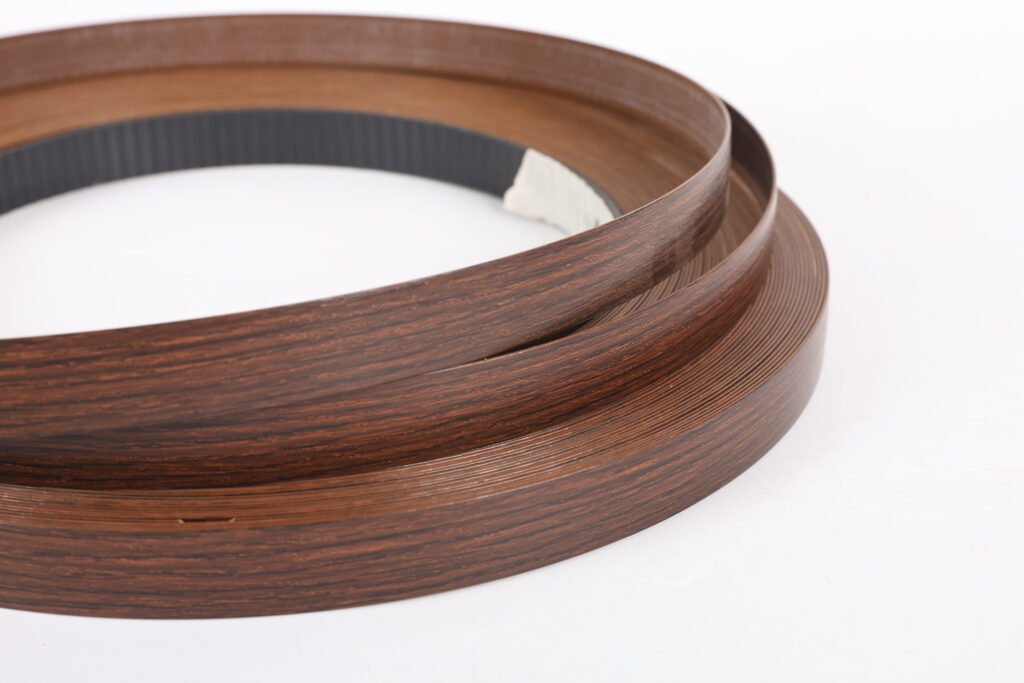
Organized storage, environment control, SOPs, and staff training ensure edge banding quality from warehouse to production.
Dive deeper Paragraph:
I focus on four pillars: environment, stacking, handling, and documentation.
Controlled Environment
| Action | Target |
|---|---|
| Temperature | 20–25°C stable |
| Humidity | 40–60% |
| Light | Avoid direct sunlight |
Proper Stacking
| Practice | Reason |
|---|---|
| Max 1.5 m high | Prevent bottom roll crushing |
| Same type/width together | Reduce misalignment |
| Flat, level surfaces | Avoid curling |
Handling Procedures
| Procedure | Benefit |
|---|---|
| Train staff | Reduce mistakes |
| Use proper equipment | Protect rolls |
| Standard packing | Prevent transport damage |
Documentation and Inspection
| Step | Purpose |
|---|---|
| Track storage date | FIFO system |
| Record inspections | Trace issues |
| Pre-use check | Ensure quality |
Well-managed warehouses reduce defects, save money, and improve customer satisfaction.
Conclusion
Edge banding quality depends on proper storage, careful handling, and pre-use inspection. Attention to these steps prevents defects and ensures consistent production performance.
Data Sources & References
- PlasticsEurope – PVC and ABS Data: https://plasticseurope.org
- ISO – International Organization for Standardization: https://www.iso.org
- Woodworking Network – Edge Banding Best Practices: https://www.woodworkingnetwork.com
- Furniture Today – Manufacturing & Quality: https://www.furnituretoday.com
- European Committee for Standardization (CEN): https://www.cen.eu