Many buyers lose money because their PVC edge banding supplier suddenly fails. Orders delay. Colors change. Quality drops. I have seen this problem too many times.
To find a stable PVC edge banding manufacturer for bulk orders, I focus on financial strength, production capacity, quality control systems, export experience, and long-term cooperation mindset. I verify data, not promises.

When I source bulk PVC edge banding, I do not only compare price. I look at long-term risk. A cheap supplier can become the most expensive mistake. Let me explain how I judge stability step by step.
Why Stability Matters When Choosing a PVC Edge Banding Manufacturer?
Many buyers only care about price. Then the factory delays shipment. Then complaints come. Then customers leave. I have faced this pain before.
Stability matters because bulk orders require consistent quality, steady supply, and predictable lead time. Without stability, even small defects or delays can damage long-term business relationships and brand reputation.
What Stability Really Means in Manufacturing
I do not define stability as “big factory”. I define it with data and behavior.
1. Financial Stability
A factory with unstable cash flow may:
- Delay raw material purchase
- Stop production suddenly
- Reduce quality to save cost
According to the World Bank, small and medium manufacturers often face liquidity pressure during economic downturns. This directly affects delivery reliability.
2. Production Consistency
PVC edge banding must match in:
- Color
- Thickness tolerance
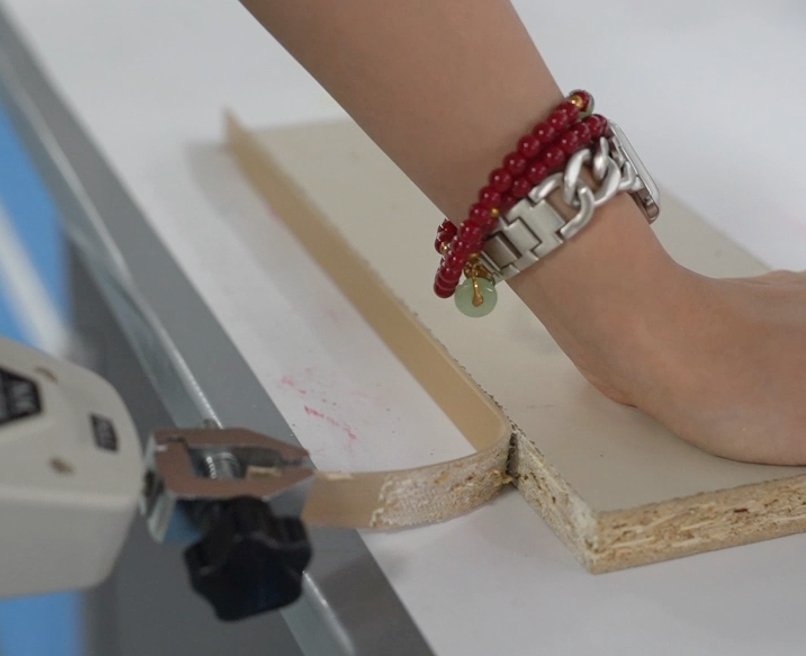
- Glue adhesion
- Impact resistance
The International Organization for Standardization (ISO) highlights that process control reduces defect rates by standardizing operations. A stable factory usually follows ISO-based systems.
3. Supply Chain Security
PVC raw materials depend on resin supply. The Statista reports that global PVC production capacity exceeded 60 million metric tons in recent years, but regional shortages still occur due to logistics and energy costs.
I always ask myself one question:
If I place a 5-container order every month, can this factory survive market changes?
Stability vs. Low Price
| Factor | Unstable Supplier | Stable Manufacturer |
|---|---|---|
| Price | Very low | Competitive but reasonable |
| Lead Time | Changes often | Predictable |
| Quality | Inconsistent | Standardized |
| Risk | High | Controlled |
| Long-term Cost | Hidden losses | Sustainable profit |
I always choose controlled risk over short-term savings.
Key Criteria to Evaluate a Reliable PVC Edge Banding Supplier?
Many factories look similar on the website. Photos look clean. Machines look new. But real reliability needs proof.
I evaluate a reliable PVC edge banding supplier by checking certifications, export records, production equipment, client structure, and communication efficiency. I test both their data and their attitude.

1. Certifications and Standards
I check for:
- ISO 9001 certification
- REACH compliance
- RoHS compliance
The European Chemicals Agency enforces REACH regulations. Many EU buyers require strict chemical limits. A factory that understands this market usually has stronger compliance awareness.
2. Export Experience
Export data shows maturity. I ask:
- Which countries do you export to?
- How many containers per month?
- Do you handle OEM projects?
The International Trade Centre shows that experienced exporters have lower shipment dispute rates because they understand documentation and logistics.
3. Client Structure
If a factory serves:
- Distributors
- Furniture manufacturers
- Large wholesalers
It shows diversified risk. If they depend on one client, that is a warning sign.
4. Equipment and Automation
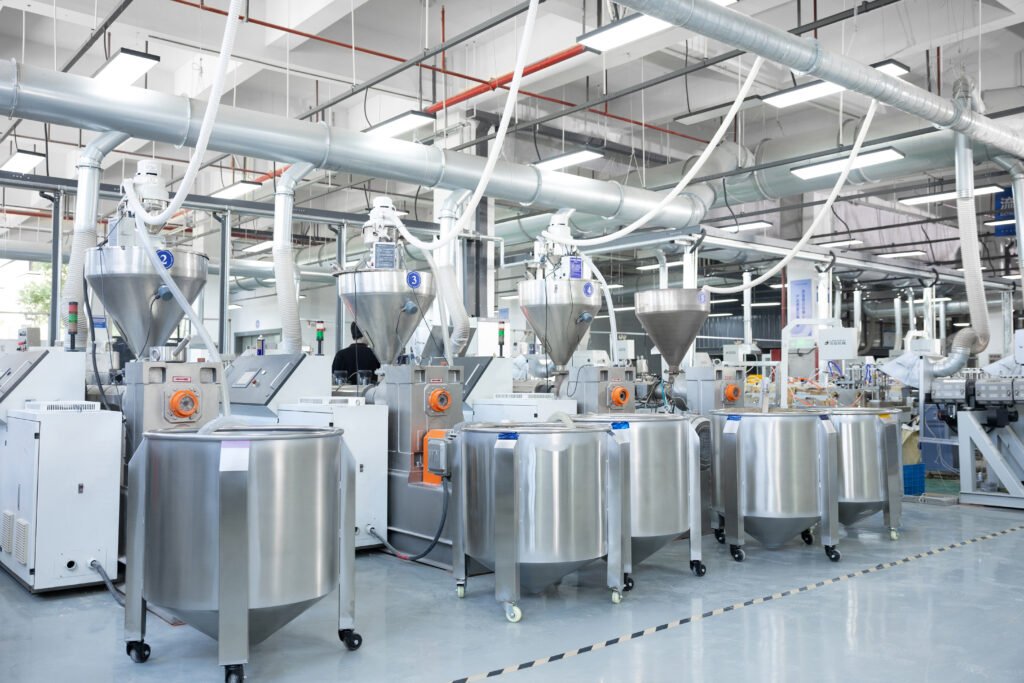
Modern extrusion lines reduce defects. Manual trimming increases error.
| Evaluation Area | What I Check | Why It Matters |
|---|---|---|
| Extrusion Lines | Quantity & Age | Determines output stability |
| Color Mixing System | Automated or Manual | Affects color consistency |
| Testing Lab | Impact & adhesion tests | Controls defect rate |
| Warehouse | Inventory system | Ensures fast delivery |
I do not trust words. I ask for videos. I ask for live factory calls.
How to Verify Production Capacity and Quality Control Systems?
Factories often claim large capacity. But I verify with math.
I verify production capacity by calculating machine output, shift hours, and order cycle time. I verify quality control by checking inspection records, lab equipment, and defect tracking systems.

Step 1: Calculate Real Capacity
If one extrusion line produces 300 kg per hour, and it runs 20 hours per day:
300 kg × 20 hours = 6000 kg per day
If they have 5 lines:
6000 kg × 5 = 30,000 kg per day
Now I compare this with their claimed monthly output.
The Plastics Industry Association states that equipment utilization rate in plastics manufacturing usually ranges between 70%–85%. If a factory claims 100% usage, I question it.
Step 2: Check Quality Control System
I ask for:
- Incoming raw material inspection records
- In-process thickness control reports
- Final inspection checklist
ISO-based systems require documented procedures. The International Organization for Standardization clearly defines traceability as a key quality element.
Step 3: Defect Rate Transparency
I ask directly:
What is your monthly complaint rate?
If they avoid this question, I become careful.
| QC Element | Weak Factory | Strong Factory |
|---|---|---|
| Thickness Tolerance | ±0.2 mm | ±0.05 mm |
| Color Difference | Visible variation | Controlled by batch |
| Adhesion Test | Not tested | Standard test each batch |
| Record Keeping | No archive | Digital tracking |
I once rejected a supplier because they could not show me one year of inspection records.
Red Flags to Avoid When Sourcing PVC Edge Banding in Bulk?
Some warning signs are clear. Some are hidden. I learned this through experience.
I avoid suppliers who change prices frequently, refuse factory audits, lack export documents, or give unclear answers about raw materials and quality testing. These signs usually indicate deeper instability.

1. Frequent Price Changes
PVC price fluctuates. That is normal. But extreme price changes every week show weak purchasing control.
The ICIS reports that PVC resin prices move with energy costs, but serious manufacturers hedge risk through long-term contracts.
2. No Clear Raw Material Source
If a supplier cannot tell:
- Which PVC resin brand they use
- Whether they use recycled materials
- What plasticizers they add
I see risk.
3. No Audit Acceptance
A stable factory allows:
- Third-party audit
- Video inspection
- Sample testing
If they refuse, I step back.
4. Over-Promise on Lead Time
If production cycle is 15 days, and they promise 5 days, I know something is wrong.
| Red Flag | Possible Risk |
|---|---|
| Extremely Low Price | Low-grade material |
| No Certification | Compliance risk |
| No Long-term Clients | Business instability |
| Poor Communication | Future conflict |
I prefer slow and stable over fast and risky.
Building a Long-Term Partnership with a Trusted PVC Edge Banding Factory?
Finding a factory is step one. Building trust is step two. I focus on cooperation, not transactions.
I build long-term partnerships by sharing forecasts, agreeing on quality standards, setting clear contracts, and maintaining open communication. Stable cooperation reduces cost and increases mutual growth.

1. Share Forecast Plans
If I give monthly forecasts, the factory plans raw material purchase better. This stabilizes cost.
The McKinsey & Company research shows that supply chain collaboration can reduce inventory cost by up to 20%.
2. Define Quality Standard Clearly
I define:
- Thickness tolerance
- Color master sample
- Packaging method
- Pallet requirement
Clear rules reduce dispute.
3. Use Annual Framework Agreement
I prefer:
- Locked price formula
- Agreed adjustment mechanism
- Penalty clause
4. Build Communication Rhythm
I schedule:
- Monthly production review
- Quarterly quality review
- Annual strategic meeting
| Partnership Action | Result |
|---|---|
| Forecast Sharing | Stable raw material cost |
| Quality Standard Agreement | Lower complaint rate |
| Annual Contract | Predictable pricing |
| Regular Meetings | Stronger trust |
I do not look for the cheapest factory. I look for the most stable partner.
Conclusion
I always choose data over promises. Stability protects my bulk orders. Careful evaluation builds long-term success.
Data Sources
- World Bank – Manufacturing and SME Financial Stability Reports
https://www.worldbank.org - International Organization for Standardization (ISO) – Quality Management Principles
https://www.iso.org - Statista – Global PVC Production Capacity Data
https://www.statista.com - European Chemicals Agency (ECHA) – REACH Regulation
https://echa.europa.eu - International Trade Centre (ITC) – Trade Map Database
https://www.trademap.org - Plastics Industry Association – Industry Capacity Reports
https://www.plasticsindustry.org - ICIS – PVC Market Intelligence
https://www.icis.com - McKinsey & Company – Supply Chain Collaboration Research
https://www.mckinsey.com