

Many distributors sell the same edge banding products as their competitors, so they often compete on price instead of building a stronger market position.
Private label PVC edge banding can give distributors more control over product positioning, packaging, customer relationships, and margins when the right manufacturer and product strategy are used.

I see private label as more than putting a distributor’s logo on a package. A real private label strategy means building a product range that customers can recognize and buy again. The distributor controls the market-facing brand, while the manufacturer provides production and technical support. For PVC edge banding distributors, this model can create a different way to compete.
Why Is Private Label PVC Edge Banding Becoming an Opportunity for Distributors?
I have noticed that many distributors sell similar colors, similar specifications, and similar packaging, which makes it difficult to give customers a strong reason to stay.
Private label PVC edge banding gives distributors a way to create a distinct product range, control how products are presented, and build a brand around specific customer needs.
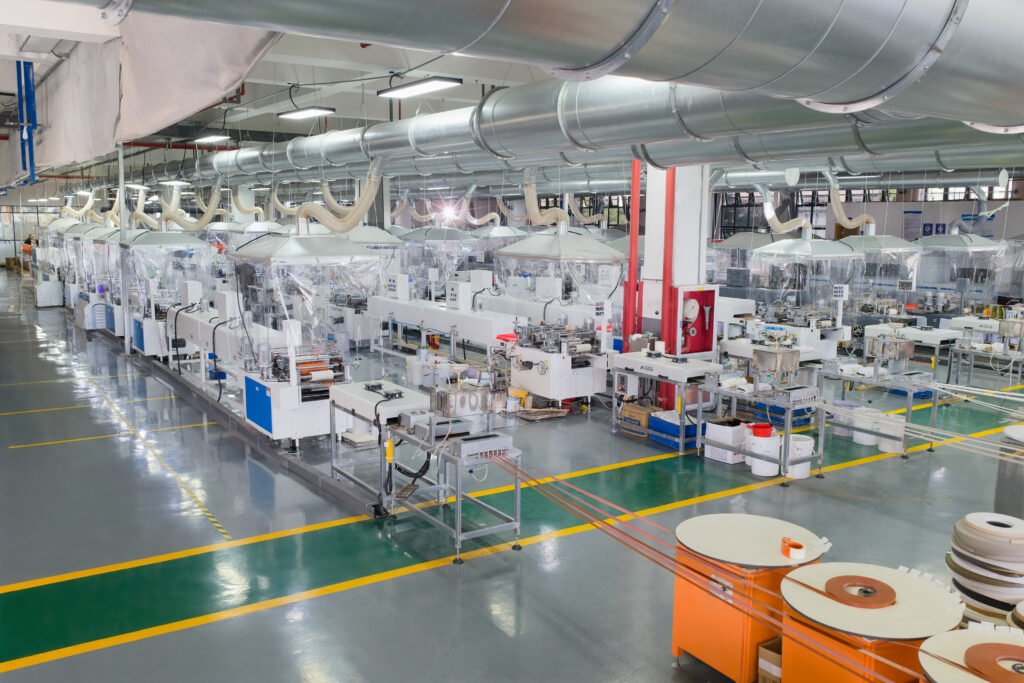
Why Does Product Differentiation Matter?
I think differentiation is becoming more important as edge banding becomes easier for customers to compare.
A furniture manufacturer may compare price, width, thickness, color, delivery time, packaging, and quality before placing an order. If two distributors offer almost the same product, price can become the easiest comparison.
Private labeling changes this comparison.
The distributor can create a defined product range with its own product names, packaging, color codes, and sales materials. The customer can then start asking for the distributor’s brand instead of asking for a generic PVC edge banding product.
I do not think private labeling automatically creates a better product. The product still needs stable quality and suitable specifications. However, private labeling can make a distributor’s offer easier to recognize.
EGGER provides a useful example of how edge banding can be treated as part of a larger product system. Its Finish Match System connects decorative boards, laminates, and edge banding through coordinated colors, textures, and finishes.
This tells me something important. Customers do not always buy edge banding as an isolated plastic strip. They often buy a finishing solution that needs to work with the board and furniture design.
Why Can Distributors Benefit From Their Own Brand?
A distributor with a private label can control several parts of the customer experience.
| Area | Standard resale model | Private label model |
|---|---|---|
| Product identity | Manufacturer’s brand | Distributor’s brand |
| Packaging | Supplier-controlled | Distributor-controlled |
| Product naming | Often generic | Custom product names |
| Customer relationship | More product-focused | More brand-focused |
| Differentiation | Limited | Higher potential |
| Marketing | Based on supplier materials | Distributor can create its own system |
| Product portfolio | Often supplier-led | Distributor can define the range |
I would not recommend private labeling to every distributor. A distributor needs enough repeat demand to justify the work involved.
A distributor that sells only occasional small orders may gain little from private labeling. A distributor that already serves furniture manufacturers, cabinet companies, panel processors, or regional dealers may have a better opportunity.
The real opportunity comes when the distributor can turn repeated customer demand into a stable product line.
Can Private Label PVC Edge Banding Help Distributors Increase Profit Margins?
I do not see private labeling as a guaranteed way to make more money. I see it as a way to create more control over pricing, product positioning, and customer relationships.
Private label PVC edge banding can support higher margins when distributors combine the right product mix, purchasing volume, packaging, service, and brand positioning instead of competing only on unit price.

Where Can Additional Margin Come From?
I would look at the complete business model rather than only the factory price.
For example, a distributor may buy a standard product and sell it with a small markup. Another distributor may build a private label range around high-demand colors, stable specifications, better packaging, and local stock.
The second distributor is selling more than the material itself.
The customer may value easier identification, faster ordering, consistent specifications, and reliable availability. These factors can support a different pricing strategy.
The margin equation also includes more than the selling price.
Gross Margin = Selling Price − Product Cost − Packaging − Logistics − Other Direct Costs
A private label product can have a higher selling price, but the distributor must also consider packaging, artwork, samples, inventory, certification requirements, marketing, and possible development costs.
Does Private Label Reduce Price Competition?
I think this is one of its strongest potential benefits.
When a distributor sells an identical manufacturer’s product, customers can often compare it with another distributor’s product. The distributor then has less control over the comparison.
A private label product creates a different reference point.
| Business factor | Generic resale | Private label |
|---|---|---|
| Price comparison | Usually easy | Can be less direct |
| Brand recognition | Supplier’s brand | Distributor’s brand |
| Product positioning | Limited | More flexible |
| Packaging | Standard | Custom |
| Customer loyalty | Often product-based | Can become brand-based |
| Margin control | More limited | Potentially stronger |
However, I would not use private labeling simply to hide a higher price. Customers still care about performance.
A furniture manufacturer will notice color problems, inconsistent dimensions, poor adhesion, scratches, and unstable supply. A stronger brand can actually increase the damage caused by poor quality because customers associate the problem with the distributor.
That is why I think margin should come after quality.
ISO 9001 focuses on establishing, maintaining, and continually improving a quality management system. It also emphasizes monitoring, measurement, analysis, and evaluation of performance.
For me, that is directly connected to private labeling. When a distributor puts its own name on a product, it also takes more responsibility for the customer’s experience.
What Should Distributors Look for in a Private Label PVC Edge Banding Manufacturer?
I would not choose a private label manufacturer only because the quotation is low. A weak factory can create quality problems that damage the distributor’s brand.
I look for stable production, color development ability, specification control, flexible customization, quality systems, packaging support, and communication before choosing a private label PVC edge banding manufacturer.
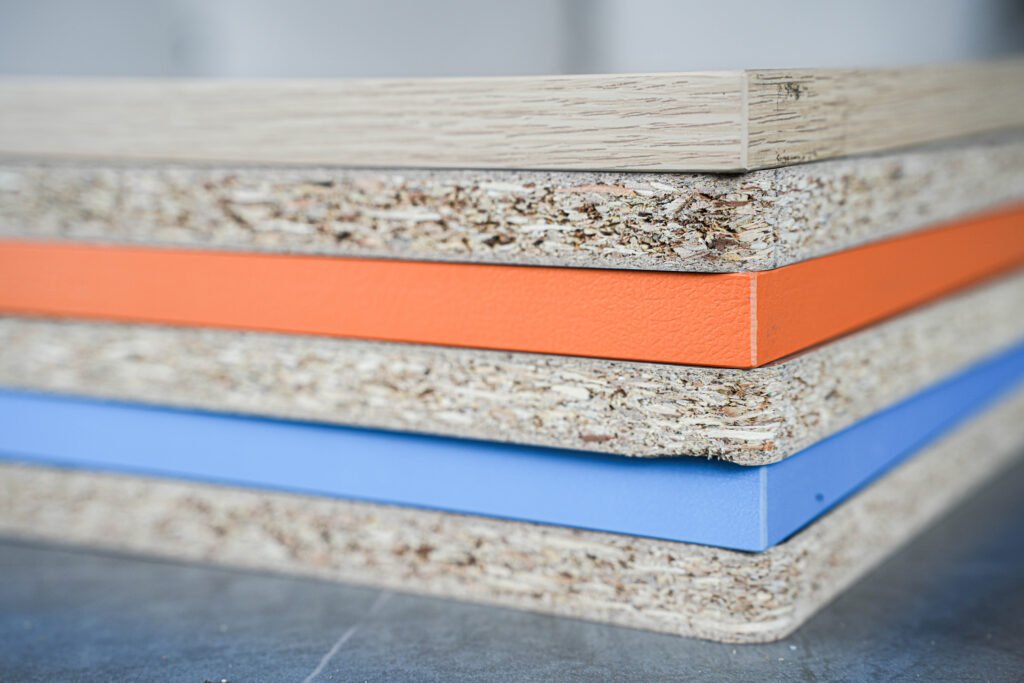
Can the Manufacturer Support Real Customization?
I think distributors should first ask what “private label” actually means.
Some suppliers may only offer a logo sticker and standard packaging. That may be enough for a small test, but it is not the same as building a real private label product line.
I would ask whether the manufacturer can support:
- Custom packaging
- Custom labels
- Custom product codes
- Custom colors
- Custom widths
- Custom thicknesses
- Surface finish options
- Color matching
- Sample development
- Technical documentation
Color matching is especially important for furniture-related products. EGGER states that color-matching selections should be checked using original samples, rather than relying only on reproduced images.
This is a useful lesson for distributors. A digital image may help with initial communication, but a physical sample can be much more reliable when a customer approves a color.
What Quality Controls Should I Check?
I would ask the manufacturer how it controls production rather than only asking whether it has “good quality.”
I want to understand how the factory manages raw materials, color consistency, dimensions, surface quality, production inspection, and batch records.
| Manufacturer factor | Why I care |
|---|---|
| Quality management system | Shows whether processes are formally managed |
| Raw material control | Helps maintain product consistency |
| Color control | Reduces color-related complaints |
| Dimensional control | Supports stable processing |
| Production inspection | Finds defects before shipment |
| Sample approval | Creates a reference for mass production |
| Batch traceability | Helps investigate problems |
| Technical support | Helps solve processing issues |
ISO 9001 is useful here because its requirements cover planning, operation, performance evaluation, and continual improvement.
I would also request samples before placing a large private label order. I would test the samples with the customer’s actual panels and production process when possible.
A supplier may have excellent laboratory results, but the distributor still needs to know how the product performs in the real application.
Does Production Capacity Matter?
Capacity matters because a private label brand needs consistency over time.
If a distributor builds a product around one factory and that factory cannot maintain supply, the distributor may face stockouts. The problem then reaches the distributor’s customer.
I would therefore ask about production capacity, normal lead times, peak-season capacity, raw material availability, and backup plans.
The cheapest supplier is not always the cheapest business partner.
How Can Distributors Build a Private Label PVC Edge Banding Product Line?
I would not start with hundreds of SKUs. I would start with the products that customers actually ask for and expand after demand becomes clear.
A distributor can build a private label PVC edge banding line by selecting core colors and specifications first, then adding finishes, custom colors, packaging, and special products based on customer demand.

Which Products Should I Launch First?
I would divide the product line into three levels.
The first level should contain core products. These products should have steady demand and simple specifications.
The second level can contain design-focused products such as special woodgrain finishes, matte surfaces, high-gloss surfaces, or other popular textures.
The third level can contain custom products for larger customers.
This structure helps me avoid creating a large inventory before demand is proven.
| Product level | Purpose | Typical strategy |
|---|---|---|
| Core | Stable sales | Stock key colors and sizes |
| Design | Product differentiation | Add popular finishes |
| Custom | Customer-specific demand | Produce based on orders |
EGGER’s current decorative collection shows how a coordinated product system can combine boards, laminates, and edge banding across multiple finishes.
I would apply the same idea at a distributor level, but on a smaller scale.
How Should I Build the SKU System?
I think SKU management is one of the most important parts of private labeling.
Each product should have a clear code that identifies the material, color, surface, width, thickness, and possibly batch.
For example, a distributor could create a system such as:
Brand – Material – Color – Finish – Width – Thickness
The exact system can be different, but the logic should remain simple.
A good SKU system helps the distributor communicate with customers, control inventory, create quotations, and reorder products.
Should I Stock Everything?
I would avoid that approach.
Too many SKUs can create slow-moving inventory. A private label strategy should improve the business, not fill the warehouse with products that customers rarely buy.
I would first study customer orders and identify:
- The most frequently requested colors.
- The most common widths.
- The most common thicknesses.
- The fastest-moving furniture applications.
- The products that customers repeatedly ask to customize.
Then I would build the initial product line around these patterns.
This approach also gives the distributor better information when negotiating with the manufacturer.
What Are the Risks of Private Label PVC Edge Banding and How Can Distributors Avoid Them?
I think private labeling creates opportunities, but it also transfers more responsibility to the distributor.
The main risks include excessive inventory, inconsistent quality, supplier dependence, color mismatch, unclear specifications, and weak demand. I reduce these risks through samples, testing, smaller launches, clear specifications, and supplier evaluation.

Can Inventory Become a Problem?
Yes. I think inventory is one of the biggest risks.
A distributor may become excited about creating a complete private label catalog and order too many colors and specifications. The result can be slow-moving stock.
I would start with a smaller number of high-demand SKUs and expand based on actual sales.
I would also separate stock products from order-based products.
| Inventory type | Recommended approach |
|---|---|
| High-demand colors | Keep regular stock |
| Medium-demand colors | Keep controlled stock |
| Low-demand colors | Order when needed |
| Custom colors | Produce against confirmed demand |
| Special specifications | Confirm demand before stocking |
This approach can reduce the amount of working capital tied up in inventory.
How Can I Reduce Supplier Risk?
I would avoid depending on one supplier without a clear quality and supply plan.
A private label relationship should include written specifications. The distributor should define the approved color, dimensions, packaging, labeling, and quality requirements.
I would also keep approved samples as references.
If the distributor changes factories later, the approved sample can help define what the replacement product needs to match.
How Can I Protect the Brand?
I think brand protection starts with quality control.
The distributor should approve samples before mass production. The distributor should also define what happens when a batch does not meet the agreed specification.
A simple supplier evaluation system can include:
- Product consistency
- Delivery performance
- Complaint rate
- Response speed
- Sample accuracy
- Packaging quality
- Production capacity
- Documentation
- Corrective action
ISO 9001 places strong emphasis on customer focus, process control, performance evaluation, and continual improvement.
I would use the same thinking when evaluating a private label supplier.
The distributor should not ask only, “How much does this factory charge?”
I would ask, “Can this factory help me protect my brand for the next three to five years?”
That question changes the supplier selection process completely.
Conclusion
Private label PVC edge banding can be a strong opportunity when distributors combine product differentiation, stable quality, controlled inventory, and a reliable manufacturing partner.
Data Sources
- ISO — ISO 9001: Quality Management Systems — Requirements
Quality management, process control, performance evaluation, customer focus, and continual improvement.
ISO 9001 Official Page - EGGER — Edge Banding
Information on matching edge banding, decorative surfaces, colors, textures, and product systems.
EGGER Edge Banding - EGGER — PVC Edge Banding
PVC edge banding applications, workability, furniture applications, and technical documentation.
EGGER PVC Edge Banding - EGGER — Finish Match System
Information on coordinating decorative boards, laminates, and edge banding by color, texture, and finish.
EGGER Finish Match System - EGGER — Decorative Collection 26+
Current information on decorative boards, laminates, edge banding, finishes, and coordinated product collections.
EGGER Decorative Collection