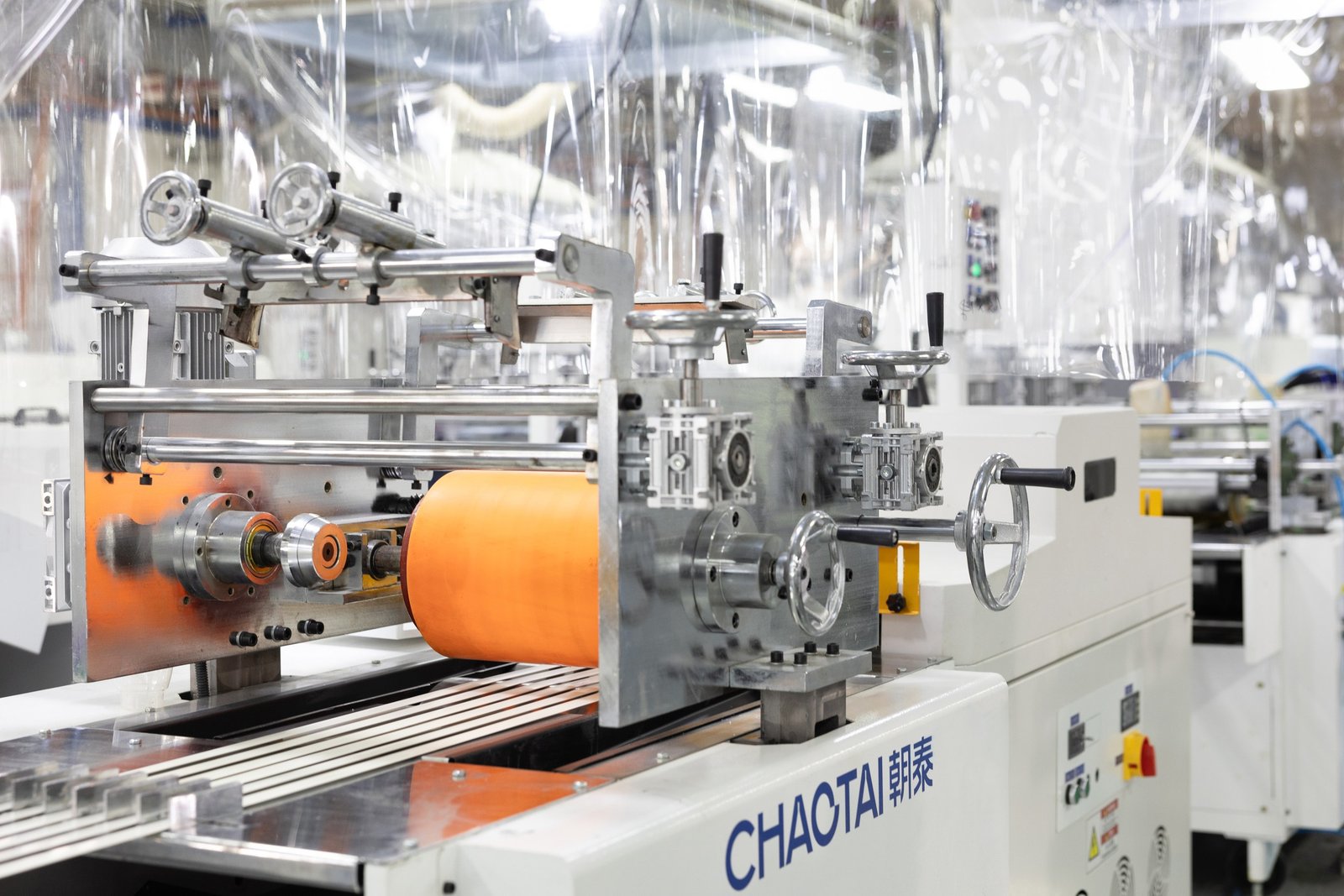
Custom edge banding tooling can improve production efficiency, but the initial investment can also increase manufacturing costs. Many furniture manufacturers invest in custom tooling before they have enough orders to support it.
I believe custom edge banding tooling makes financial sense only when the long-term savings and production benefits can cover the initial investment.
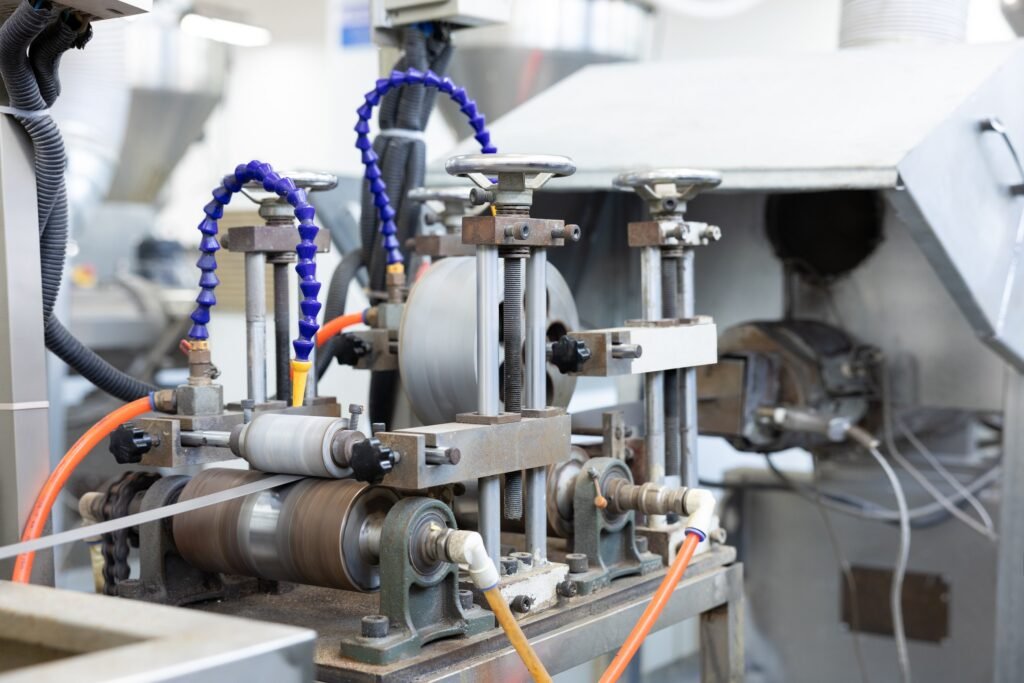
Furniture manufacturers need to look beyond the tooling price when they make this decision. I would compare the total development cost, production volume, material waste, labor requirements, and expected order frequency. These factors help me understand whether custom tooling can create real financial value or simply add another fixed cost to the production process.
What Factors Determine the Cost of Custom Edge Banding Tooling?
Custom tooling does not have a fixed price. I have seen that the final cost depends on the tooling design, production requirements, technical specifications, and the level of customization. A low initial quotation does not always mean a low total investment.
I would first identify every cost involved before comparing different suppliers. This helps me avoid unexpected expenses during development and production.
Tooling Design and Development Costs
I consider design and development the first part of the investment. A standard edge banding specification may use existing production equipment. However, a custom specification may require a new extrusion die, a modified embossing roller, or other dedicated custom tooling.
The cost depends on the technical requirements. For example, a manufacturer that needs a special edge banding profile may require more design work than one that only needs a different surface pattern.

I would ask the tooling supplier to clarify the following points:
- Does the project require completely new tooling?
- Can the existing die or roller be modified?
- Does the supplier charge separately for engineering and testing?
- How many design revisions are included?
- Who owns the tooling after payment?
Tooling ownership is important. I would not invest in a custom die without knowing whether I can use it for future orders or transfer it to another production facility.
Material, Manufacturing, and Maintenance Costs
The tooling material also affects the total cost. Precision tooling needs to maintain its shape and dimensions under repeated production conditions. The supplier may use different steel grades, surface treatments, and manufacturing processes depending on the expected production volume.
I would also include maintenance in my calculation. Tooling can wear over time, and some components may need polishing, repair, or replacement. A tooling solution with a lower purchase price may become more expensive if it requires frequent maintenance.
What Should I Include in the Total Tooling Budget?
I use the following table to organize the investment:
| Cost category | What I need to check |
|---|---|
| Design and engineering | Technical drawings and development fees |
| Tooling manufacturing | Steel, machining, and precision processing |
| Testing and sampling | Trial production and sample approval |
| Equipment modification | Changes to existing production equipment |
| Maintenance | Cleaning, repair, and replacement |
| Downtime | Production time lost during installation or testing |
| Logistics | Transportation, installation, and delivery |
I would not treat all these costs as separate expenses if the supplier already includes them in one quotation. Instead, I would check the quotation carefully to avoid double counting.
For example, if a custom tooling project costs $12,000, I would not automatically use $12,000 as my total investment. If testing, equipment modification, and installation add another $3,000, my actual initial investment becomes $15,000.
This is an illustrative calculation, not a standard market price. Actual tooling costs depend on the project and supplier.
When Do Furniture Manufacturers Need Custom Edge Banding Tooling Instead of Standard Specifications?
I do not believe every furniture manufacturer needs custom edge banding tooling. Standard specifications can meet many production requirements, and they usually help manufacturers avoid additional development costs.
However, standard products may not always match the technical and visual requirements of a furniture project. This is where I would consider custom tooling.
When Standard Edge Banding Is No Longer Enough
I would first compare the existing edge banding specifications with the actual requirements of the furniture panels.
Standard PVC edge banding is available in many common thicknesses, widths, colors, and surface finishes. For many cabinet and furniture applications, these specifications are sufficient.
However, I may need custom tooling when a project requires:
- Special edge banding profiles that standard tooling cannot produce.
- Unique surface embossing or decorative patterns.
- Special cross-sectional dimensions.
- A particular edge shape for a specific furniture design.
- Consistent production of a unique specification over repeated orders.
I would also distinguish between product customization and tooling customization. A different color or thickness does not always require a new die. The manufacturer may already have suitable equipment and only need to adjust production parameters.
This distinction matters because I do not want to invest in new tooling when a simple production adjustment can achieve the same result.
How Do Custom Specifications Affect Production Costs?
I would look at the relationship between customization and production efficiency.
If a manufacturer frequently changes between different specifications, the production team may spend more time adjusting equipment, cleaning production lines, and checking samples. These activities can increase setup costs and reduce available production time.
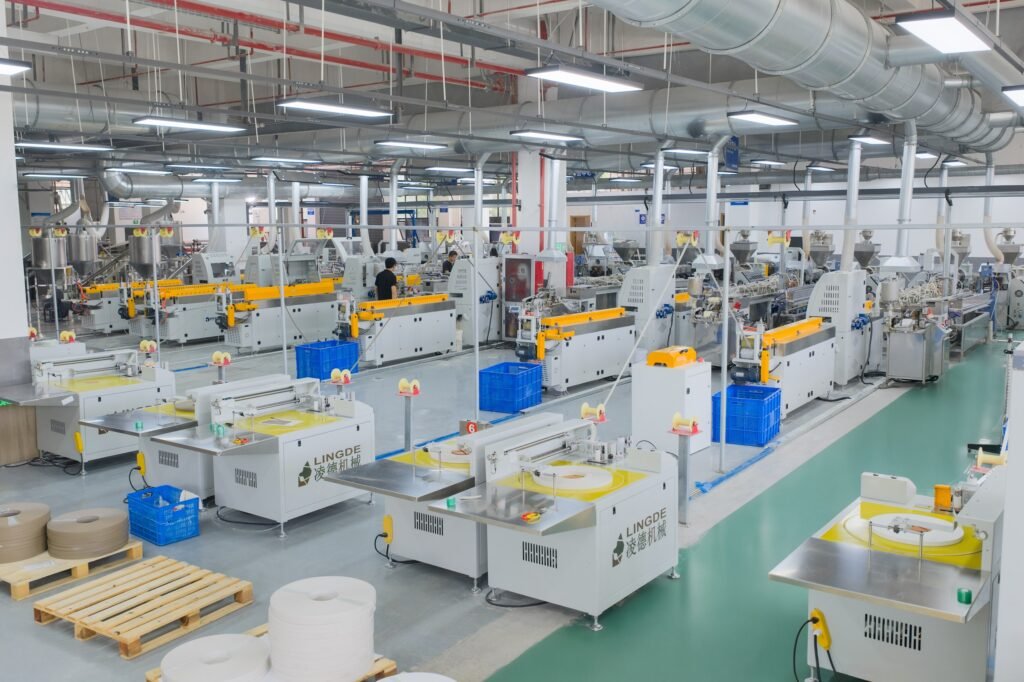
Custom tooling may help when a manufacturer repeatedly produces a special specification. It can reduce dependence on temporary adjustments and make the production process more consistent.
However, I would not assume that custom tooling always improves production speed. The actual result depends on the machine, material, production process, and operator experience.
Custom Tooling Should Solve a Real Production Problem
I would use the following comparison before making a decision:
| Production situation | My preferred solution |
|---|---|
| Standard thickness and width | Existing standard tooling |
| New color with an existing profile | Color and material adjustment |
| Special surface texture | Existing or custom embossing roller |
| Unique cross-sectional profile | Evaluate a custom extrusion die |
| Repeated orders with special dimensions | Consider dedicated tooling |
| One-time experimental order | Use existing tooling where possible |
My main concern is whether the customization solves a problem that happens repeatedly.
For example, a furniture manufacturer may receive a large order for a cabinet series that requires a special edge banding profile. If the customer plans to reorder the same product every quarter, custom tooling may be worth considering.
But if the customer only needs a small trial batch, I would prefer to test the market with an existing production solution first.
I also pay attention to product life cycles. Furniture designs can change, and a special profile may become outdated. A manufacturer should not invest in tooling just because one customer requests a new specification. I would first confirm the customer’s expected order quantity, product life cycle, and future purchasing plan.
How Can Manufacturers Calculate the ROI and Payback Period of Custom Edge Banding Tooling?
I believe the most important question is not how much custom tooling costs. It is how much money the tooling can save or generate over its useful life.
A manufacturer should calculate the expected return before approving the investment. I would compare the current production cost with the expected cost after introducing custom tooling.
Calculate the Total Financial Benefit
I would start by identifying the costs that custom tooling can reduce.
There are several possible sources of savings:
- Lower production costs: Dedicated tooling may reduce repeated equipment adjustments and production setup time.
- Less material waste: A more suitable production setup may reduce dimensional errors and rejected products.
- Lower labor costs: More stable production conditions may reduce manual adjustments and inspection work.
- Higher production efficiency: The right tooling may help manufacturers maintain a more consistent production process.
- Better product value: Special profiles and surface designs may help manufacturers offer products that are difficult to replace with standard alternatives.
However, I would only include savings that I can measure. For example, I would not claim that custom tooling reduces material waste by 10% without comparing actual production records.
Use a Simple ROI Formula
I use the following formulas to evaluate the investment:
Annual Net Benefit = Annual Cost Savings + Additional Gross Profit − Additional Annual Operating Costs
Payback Period = Initial Tooling Investment ÷ Monthly Net Benefit
ROI = (Total Net Benefit − Initial Investment) ÷ Initial Investment × 100%
For a more accurate comparison, I would use the same evaluation period for both the custom and standard production options.
Here is an illustrative example:
Assume a furniture manufacturer invests $15,000 in custom tooling. The tooling helps the factory save $1,500 per month in setup labor, material waste, and other measurable production costs. Annual maintenance and other additional costs are $2,000.
| Financial item | Amount |
|---|---|
| Initial tooling investment | $15,000 |
| Monthly production savings | $1,500 |
| Annual production savings | $18,000 |
| Annual additional operating costs | $2,000 |
| Annual net benefit | $16,000 |
| Monthly average net benefit | $1,333.33 |
| Estimated payback period | 11.25 months |
In this example, the manufacturer can recover the initial investment in approximately 11.25 months.
If the manufacturer expects to use the tooling for three years, the cumulative net benefit will be $48,000. After deducting the initial $15,000 investment, the net gain will be $33,000.
The simple three-year ROI is therefore:
ROI = ($48,000 − $15,000) ÷ $15,000 × 100% = 220%
These figures are assumptions for explaining the calculation. They are not industry averages or guaranteed savings.
Do Not Ignore the Time Value of Money
I would also consider the expected useful life of the tooling. A project that recovers its investment in one year is not automatically a good investment if the tooling becomes unusable shortly afterward.
For a larger investment, I would compare the net present value (NPV) of the expected future cash flows with the initial cost. NPV accounts for the fact that money received in the future is not worth exactly the same as money available today.
I would also compare the custom tooling option with the cost of continuing to use standard tooling. This gives me a more realistic view of the additional financial value created by customization.
Have a spec or project to discuss?
Send your panel, thickness, finish and volume. Our engineers reply with a matched color, sample plan and price — usually within 24 hours.
Request a Quote1,000+ stock colors · Swatches on request
What Production Volumes and Order Frequencies Justify Investing in Custom Tooling?
I do not think there is one universal production volume that makes custom edge banding tooling financially attractive. A factory producing 100,000 meters per month may still find custom tooling unnecessary if its standard specifications already meet customer requirements.
At the same time, a smaller factory may benefit from custom tooling if it receives stable, repeated orders for a special edge banding profile.
The key is not production volume alone. I would look at order frequency, product consistency, and the expected lifetime of the customer demand.
Calculate the Break-Even Production Volume
I would use the cost difference between standard and custom production to estimate the required volume.
The basic formula is:
Break-Even Volume = Initial Tooling Cost ÷ Savings Per Unit
For example, assume custom tooling costs $15,000. The manufacturer expects to save $0.03 per meter compared with the existing production method.
The break-even volume would be:
$15,000 ÷ $0.03 = 500,000 meters
This means the manufacturer needs to produce approximately 500,000 meters under the assumed cost structure to recover the initial tooling investment.
I would stress that the $0.03 saving is an illustrative assumption. The actual saving must come from a comparison of production records and supplier quotations.
Order Frequency Is Just as Important as Order Quantity
I would separate customers into three groups:
| Customer order pattern | Investment consideration |
|---|---|
| One-time order | Usually prioritize standard tooling |
| Repeated but unpredictable orders | Evaluate demand stability before investing |
| Regular monthly or quarterly orders | Custom tooling may be financially attractive |
A large one-time order may look attractive, but it does not always support a long-term tooling investment.
For example, a furniture factory may order 300,000 meters of a special edge banding product for one project. If the project ends after delivery, the tooling may remain unused.
Another factory may order 80,000 meters every quarter for several years. Even though its first order is smaller, its repeated demand may create a better investment opportunity.
Consider the Product Life Cycle
I would also ask how long the furniture design will remain in production.
Furniture manufacturers often change colors, surface textures, dimensions, and product designs to meet customer demand. A tooling investment tied to one short-term design may become a financial burden when the design changes.
The U.S. Bureau of Labor Statistics tracks productivity and output trends for furniture manufacturing. Its industry data show that production conditions can change over time. For example, its published 2025 data report a 4.1% decline in labor productivity for furniture and related product manufacturing.
I would not use this figure to predict the performance of an individual factory, but it reinforces why manufacturers should monitor actual production efficiency rather than assume that investment will automatically increase output.
Build a Demand Forecast Before Ordering Tooling
Before approving a project, I would collect at least the following information:
- Confirmed orders from existing customers.
- Expected monthly and quarterly demand.
- Historical reorder rates for similar products.
- Expected product design life.
- Possible demand from other customers.
- Estimated tooling maintenance and replacement costs.
I would give more weight to confirmed orders than to sales forecasts. A sales team’s expectation of future demand is useful, but it should not replace actual purchasing commitments.
In my opinion, custom tooling makes the most financial sense when a manufacturer has repeat demand, stable specifications, and enough production volume to recover the investment within a reasonable period.
What Risks Should Manufacturers Evaluate Before Investing in Custom Edge Banding Tooling?
I would never approve custom tooling based on the expected savings alone. Every tooling investment has risks, and some of them may not become visible until mass production starts.
A manufacturer needs to understand what could go wrong and how much those problems could cost.
Risk 1: Uncertain Customer Demand
The first risk I would evaluate is demand uncertainty.
A customer may request a special specification during product development but change the design before mass production. The customer may also reduce the order quantity or cancel the project.
In this situation, the manufacturer still needs to pay for tooling even though the expected production volume may never happen.
I would therefore ask customers to confirm their technical requirements and purchasing plans before starting tooling development.
For large investments, I would also consider a tooling deposit, a minimum order commitment, or an agreement that explains who pays for unused dedicated tooling.
Risk 2: Tooling Compatibility and Technical Problems
Custom tooling must work with the existing production equipment. A technically correct design may still create problems if the machine cannot support the required dimensions, temperature conditions, or production speed.
For edge banding manufacturers, I would check the relationship between the extrusion die, calibration system, cooling process, embossing equipment, and downstream cutting operations.
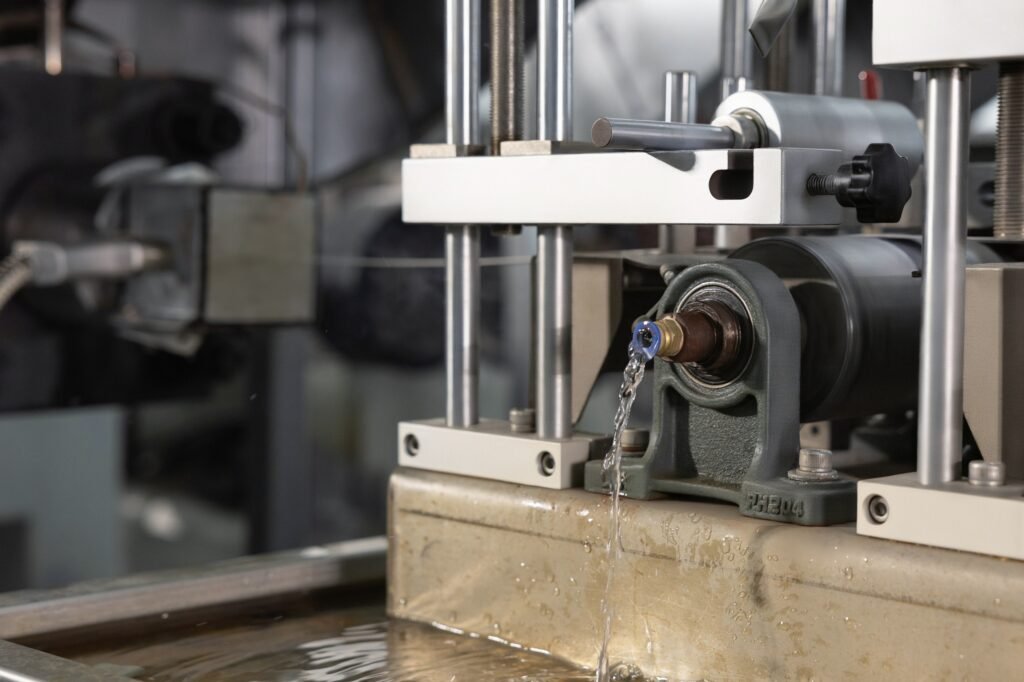
I would also request a trial production run before approving mass production.
The sample should be checked for:
- Dimensional accuracy.
- Surface appearance and texture.
- Thickness and width consistency.
- Edge quality and dimensional stability.
- Compatibility with the intended furniture application.
I would not approve tooling only because the first sample looks good. I would also check whether the product remains consistent during continuous production.
Risk 3: Maintenance and Tooling Ownership
I would confirm who is responsible for tooling maintenance and how repair costs are calculated.
A custom die may require maintenance after repeated production cycles. If the supplier does not provide clear maintenance terms, the manufacturer may face unexpected costs.
Tooling ownership is another important issue. I would request written confirmation of ownership, storage conditions, access rights, maintenance responsibilities, and transfer arrangements.
This is especially important when the manufacturer works with an external edge banding supplier. I would not assume that paying for custom tooling automatically gives me unrestricted rights to move or use it elsewhere.
Risk 4: Changes in Materials and Product Specifications
A custom tooling solution may be designed around specific raw materials and production conditions.
If the manufacturer changes the material formulation, product thickness, or production process, the original tooling may need further adjustment.
I would ask the supplier to explain which changes can be handled through normal production adjustments and which changes require new tooling.
| Risk | Possible financial impact | My recommended action |
|---|---|---|
| Customer cancels the project | Unused tooling investment | Confirm demand and payment terms |
| Machine incompatibility | Modification and downtime costs | Check machine specifications first |
| Unstable product quality | Rework and rejected products | Conduct trial production |
| Frequent maintenance | Higher operating costs | Confirm maintenance requirements |
| Design changes | Additional tooling expenses | Evaluate product life cycle |
| Ownership disputes | Limited access or transfer rights | Sign a clear tooling agreement |
I would also include a contingency budget in the investment plan. This does not mean that I expect problems to happen. It means that I want the project to remain financially manageable if additional testing or adjustments become necessary.
My approach is simple: I would rather spend more time checking the tooling requirements before production than discover expensive problems after a large order has already started.
Custom Colors and Profiles, Built to Your Panel
Send a panel sample or a profile drawing. We confirm the decor match, the tooling, MOQ and lead time before you commit to an order.
Explore Custom Matching
Conclusion
Custom edge banding tooling makes financial sense when repeat demand, measurable production savings, and a stable product life cycle justify the initial investment.
Data Sources and References
The following sources provide industry data and economic context for the article. The financial examples in this article are illustrative calculations, not figures taken from these publications.
- U.S. Bureau of Labor Statistics (BLS) – Furniture and Related Product Manufacturing
https://www.bls.gov/iag/tgs/iag337.htm
Industry productivity, labor costs, production trends, and establishment data. - U.S. Census Bureau – Annual Integrated Economic Survey
https://data.census.gov/table/AIESBASIC2024.AIES00BASIC
Manufacturing industry revenue, payroll, and economic statistics. - Federal Reserve Bank of St. Louis (FRED) – Furniture Manufacturing Output
https://fred.stlouisfed.org/series/IPUEN3371T300000000
Historical output data for household and institutional furniture and kitchen cabinet manufacturing. - U.S. Census Bureau – 2022 North American Industry Classification System (NAICS)
https://www.census.gov/naics/
Industry definitions and classification of furniture manufacturing activities.