
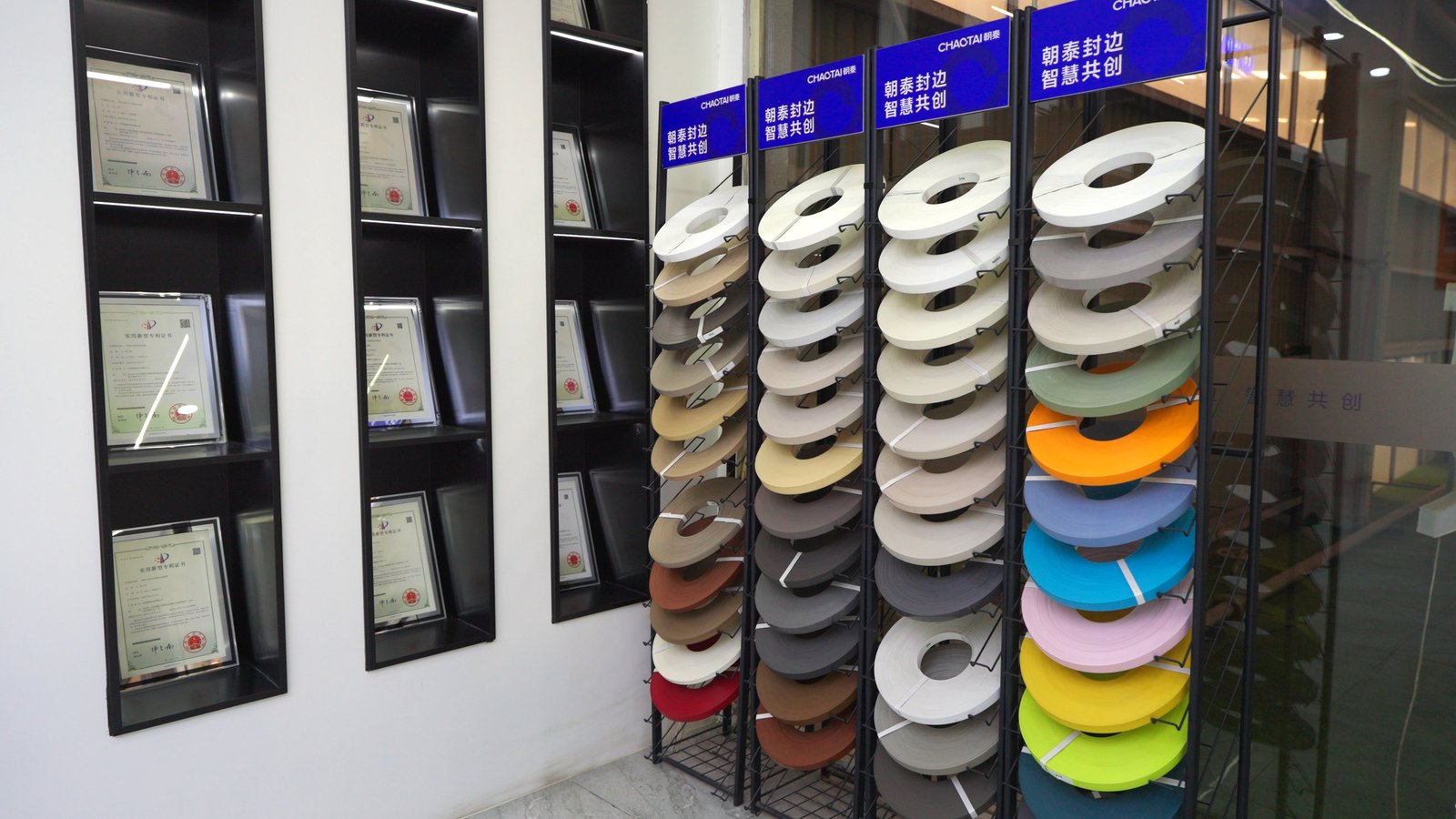
A single quality problem can turn an overseas edge banding order into an expensive dispute. Color differences, poor adhesion, and inconsistent dimensions can damage customer relationships and increase replacement costs.
I believe buyers can reduce quality claims by setting clear product specifications, checking the manufacturer’s quality control system, monitoring production, and keeping inspection records before shipment.
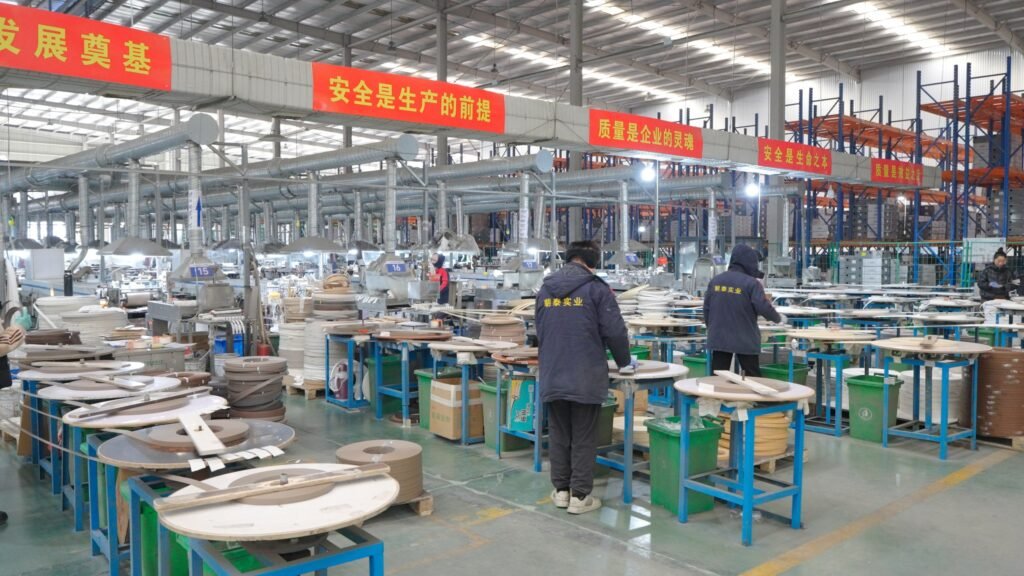
When I evaluate an overseas edge banding order, I do not focus only on the product price or the supplier’s sample. I also look at how the manufacturer controls quality throughout the production process. A sample may meet the buyer’s requirements, but mass production can still have problems if the factory does not control raw materials, production settings, and batch consistency. I would rather identify these risks before shipment than spend time discussing responsibility after the goods arrive.
What Are the Most Common Quality Issues When Sourcing Edge Banding from Overseas Manufacturers?
Overseas buyers often face quality problems that are difficult to identify from a product quotation or a small sample. A minor difference in thickness or color may become a serious issue when the factory receives thousands of meters of edge banding.
I would first identify the quality characteristics that can affect production, appearance, and the final furniture product.
Color and Surface Differences Between Samples and Mass Production
I consider color consistency one of the most important issues in edge banding procurement. Furniture manufacturers often need edge banding to match a specific decorative panel. Even a small color difference may become visible when the edge banding is installed next to the panel.
I would not rely only on visual comparisons under different lighting conditions. The buyer and manufacturer should agree on a reference sample and a suitable color measurement method.
Surface appearance also needs attention. PVC edge banding may have scratches, uneven embossing, gloss differences, stains, or other visible defects. These problems can affect the final appearance even when the product dimensions are correct.
Thickness and Width Tolerances
I would also check thickness and width consistency. Buyers usually specify the required dimensions according to their furniture panels and edge banding machines.
If the edge banding is too thick or too thin, the trimming process may not work as expected. If the width is inconsistent, the product may not cover the panel edge correctly.
I would ask the manufacturer to provide the agreed dimensional tolerances instead of accepting general descriptions such as standard thickness or standard width.
Adhesion and Back-Coating Problems
Poor adhesion can create serious problems during furniture production. Edge banding may peel away from the panel if the bonding conditions are not suitable or if the product has an inconsistent back-coating system.
However, I would not immediately blame the edge banding manufacturer whenever peeling occurs. Adhesion depends on several factors, including the edge banding surface, primer or back coating, adhesive type, machine temperature, feed speed, and pressure.
I would check whether the supplier has tested the product under conditions that match the buyer’s actual production process.
Physical Performance and Batch Consistency
I would also consider flexibility, impact resistance, and dimensional stability. These properties may affect how the edge banding performs during processing, transportation, and use.
| Quality issue | Possible impact on buyers | What I would check |
|---|---|---|
| Color variation | Visible mismatch with decorative panels | Approved color sample and color measurement |
| Thickness deviation | Trimming and fitting problems | Actual thickness and tolerance |
| Width deviation | Incomplete panel edge coverage | Width measurement |
| Surface defects | Poor furniture appearance | Visual inspection under agreed lighting |
| Poor adhesion | Edge peeling after application | Bonding tests under agreed conditions |
| Uneven embossing | Inconsistent surface appearance | Texture and gloss comparison |
| Batch inconsistency | Different results between deliveries | Batch records and retained samples |
I would separate product defects from application problems when investigating a quality claim. For example, an edge banding product may pass the supplier’s dimensional inspection but still fail during application because the furniture factory uses unsuitable adhesive settings.
This distinction matters because buyers and manufacturers need to identify the actual cause before deciding who is responsible for the problem. I would keep the approved sample, production records, and application conditions together so both sides can compare the same information.
How Should Buyers Evaluate an Overseas Edge Banding Manufacturer’s Quality Control System?
A supplier may show an ISO certificate, modern production equipment, and a large factory. However, these things do not automatically mean that every shipment will meet the buyer’s requirements.
I would evaluate the manufacturer’s actual quality control process instead of relying only on its company profile.
Check Whether the Manufacturer Has a Complete Quality Management System
I would first ask whether the manufacturer has a documented quality management system.
ISO 9001 is a useful reference because it covers quality management processes, customer requirements, process control, performance evaluation, and continual improvement. It helps manufacturers build a system that can deliver consistent products.
However, I would not treat an ISO 9001 certificate as proof that every edge banding product is qualified. The certificate shows that a management system has been assessed against the relevant requirements. Buyers still need to check actual product quality.
I would ask the supplier for the following information:
- A valid ISO 9001 certificate and its certification scope.
- Incoming raw material inspection procedures.
- Production process inspection records.
- Finished product inspection reports.
- Non-conforming product handling procedures.
- Corrective and preventive action records.
I would also check whether the certificate belongs to the actual manufacturing company and production site. A trading company may have a different quality management system from the factory that makes the products.
Evaluate the Factory’s Actual Testing Capabilities
I believe testing equipment is important, but equipment alone does not prove that a factory has good quality control.
I would check whether the quality team knows how to use the equipment and whether the factory keeps inspection records.
For PVC edge banding, I would pay attention to several testing areas:
| Testing area | Equipment or method | Purpose |
|---|---|---|
| Thickness | Digital thickness gauge | Check dimensional consistency |
| Width | Digital caliper or measuring device | Check product dimensions |
| Color | Spectrophotometer | Compare color differences |
| Surface | Visual inspection under controlled lighting | Identify scratches and appearance defects |
| Adhesion | Agreed bonding test procedure | Evaluate bonding performance |
| Physical properties | Relevant material testing equipment | Check agreed performance requirements |

For color control, I would ask whether the supplier uses instrumental measurements. ASTM D2244 provides procedures for calculating color differences from measured color coordinates. It also explains why buyers and sellers should agree on acceptable color tolerances and measurement conditions.
I would also ask the supplier to explain its testing frequency. A factory may have a spectrophotometer but only use it when a customer complains. That is different from checking color during regular production.
Check How the Factory Handles Quality Problems
I would ask the manufacturer to show me an example of how it handles a non-conforming batch.
A reliable quality system should identify the problem, isolate affected products, investigate the cause, and record the corrective action.
For example, if a PVC edge banding batch has inconsistent thickness, I would expect the quality team to check the production settings and inspect other products made under the same conditions.
I would also ask how the factory prevents the same problem from happening again.
In my opinion, the most useful question is not whether the factory has ever had quality problems. Every manufacturer can face production issues. I want to know whether the factory can identify problems early and control their impact before the products reach the buyer.
Do Not Evaluate Suppliers by Certificates Alone
I would combine document checks, factory audits, sample testing, and production record reviews.
| Evaluation method | What I want to confirm |
|---|---|
| Certificate review | Whether the quality system is independently certified |
| Factory audit | Whether actual production follows documented procedures |
| Equipment inspection | Whether testing tools match the product requirements |
| Sample testing | Whether the product meets agreed specifications |
| Record review | Whether the factory tracks inspection results over time |
I would give more attention to real production records than to marketing claims. A supplier that can explain its inspection process and provide traceable evidence gives me a better basis for making a purchasing decision.
What Quality Specifications Should Buyers Confirm Before Placing an Edge Banding Order?
Unclear specifications are one of the main reasons why buyers and manufacturers disagree about product quality.
A buyer may request high-quality PVC edge banding, but the supplier may understand this requirement in a different way. Words such as premium quality, good color matching, and strong adhesion do not provide enough technical information for mass production.
I would turn every important product requirement into a measurable specification before confirming the order.
Confirm Material and Dimensional Requirements
I would start with the basic product information.
For PVC edge banding, the purchase specification should identify the material, thickness, width, color, surface finish, and product structure.
I would avoid using general descriptions such as 1 mm edge banding without confirming the permitted dimensional tolerance.
For example, if a buyer needs 1.0 mm thickness, the supplier and buyer should agree on the acceptable range and the measurement method. The same applies to product width.
I would also confirm whether the product is PVC, ABS, or another material. Different materials may have different processing characteristics and performance requirements.
Establish Clear Color and Surface Standards
Color matching needs a reference that both parties can use.

I would provide an approved physical sample, a decorative panel reference, or a clearly identified color standard. If color measurement is required, I would also specify the measurement conditions and acceptable color difference.
ASTM D2244 is useful here because it provides methods for calculating color differences using instrumentally measured color coordinates. However, I would not assume that one universal ΔE tolerance works for every edge banding application. The buyer and supplier need to agree on the acceptable tolerance for the specific product.
I would also define the surface requirements:
- Gloss level or matte appearance.
- Embossing pattern and depth.
- Surface scratch acceptance criteria.
- Color consistency between production batches.
- Acceptable visual defects and inspection conditions.
A color measurement alone cannot describe every appearance difference. Gloss and texture can affect how two products look when they are placed next to each other.
Define Functional Performance Requirements
I would not stop at appearance and dimensions. Edge banding also needs to work correctly during furniture manufacturing.
The buyer should confirm the required back-coating or primer system, bonding compatibility, flexibility, and other relevant performance requirements.
For example, a manufacturer may use a particular hot melt adhesive and edge banding machine. The supplier should understand these conditions before recommending a product.
I would request an application test using the buyer’s actual or agreed production conditions. This is more useful than testing the edge banding under unrelated conditions and assuming the result will be the same.
Create a Written Product Specification Sheet
I would put all approved requirements into one document and attach it to the purchase order.
| Specification | Information to confirm |
|---|---|
| Material | PVC, ABS, or other material |
| Thickness | Nominal value and tolerance |
| Width | Required width and tolerance |
| Color | Approved physical sample or color reference |
| Surface | Gloss, matte, embossing, and texture |
| Back coating | Primer or coating requirements |
| Adhesion | Agreed bonding test and acceptance criteria |
| Packaging | Roll length, label, and protection requirements |
| Batch control | Batch identification and traceability |
I would also define how specification changes are approved. If the supplier needs to change raw materials, production settings, or surface treatment, the supplier should inform the buyer before making the change.
This step is important because an approved sample does not give the supplier permission to change the product without confirmation.
I would keep the approved sample and specification sheet as the common reference for future orders. Both parties should use the same version. This can reduce disagreements caused by outdated drawings, old samples, or different interpretations of product requirements.
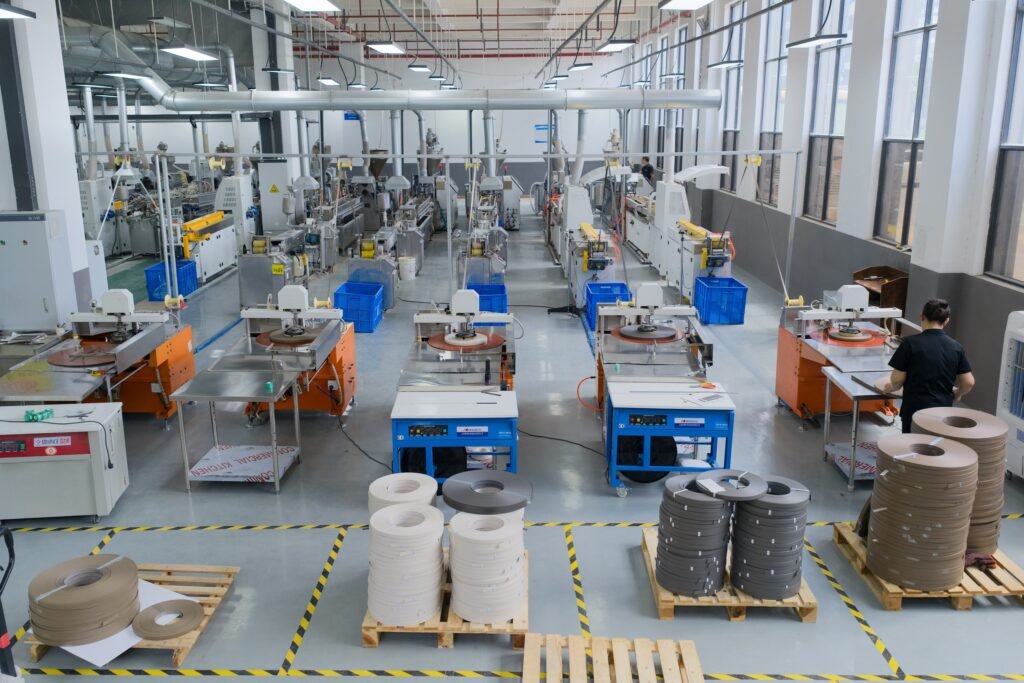
Have a spec or project to discuss?
Send your panel, thickness, finish and volume. Our engineers reply with a matched color, sample plan and price — usually within 24 hours.
Request a Quote1,000+ stock colors · Swatches on request
How Can Buyers Monitor Edge Banding Quality During Production and Before Shipment?
I would not wait until the goods arrive at the destination to check quality. At that point, the products may already be packed, shipped, and difficult to replace.
I prefer to divide quality control into several stages. Each stage should have a clear inspection purpose and a record that the buyer can review.
Stage 1: Check Raw Materials Before Production
I would ask the supplier to check incoming raw materials before starting production.

For PVC edge banding, raw material consistency can affect product appearance and physical performance. Changes in resin, pigments, fillers, and additives may influence the final product.
I would ask the manufacturer to keep raw material batch records and link them to the finished product batches.
This does not mean buyers need to inspect every raw material shipment themselves. The important point is that the manufacturer has a clear process for checking materials and identifying which production batches used them.
Stage 2: Approve the First Production Samples
I consider first-piece approval an important step.
Before mass production continues, the manufacturer should produce samples using the confirmed specifications and production conditions.
I would compare these samples with the approved reference in terms of:
- Thickness and width.
- Color and surface appearance.
- Embossing and gloss.
- Back-coating condition.
- Basic processing and bonding performance.
If the first samples do not meet the agreed requirements, I would ask the supplier to correct the production settings before continuing.
I would also keep a signed or otherwise clearly approved sample for later comparison.
Stage 3: Monitor Quality During Mass Production
A first-piece sample cannot represent the quality of an entire production batch.
I would therefore ask the factory to carry out regular inspections during production. The inspection frequency should depend on production volume, process stability, and the risk of the product.
For example, the factory may check dimensions at planned intervals and compare color and surface appearance with the approved sample. If a problem appears, the quality team should isolate the affected production period and investigate the cause.
I would also ask for inspection records that show the actual results instead of receiving a simple message saying that everything is normal.
Stage 4: Conduct Pre-Shipment Inspection
Before shipment, I would check the finished products and their packaging.
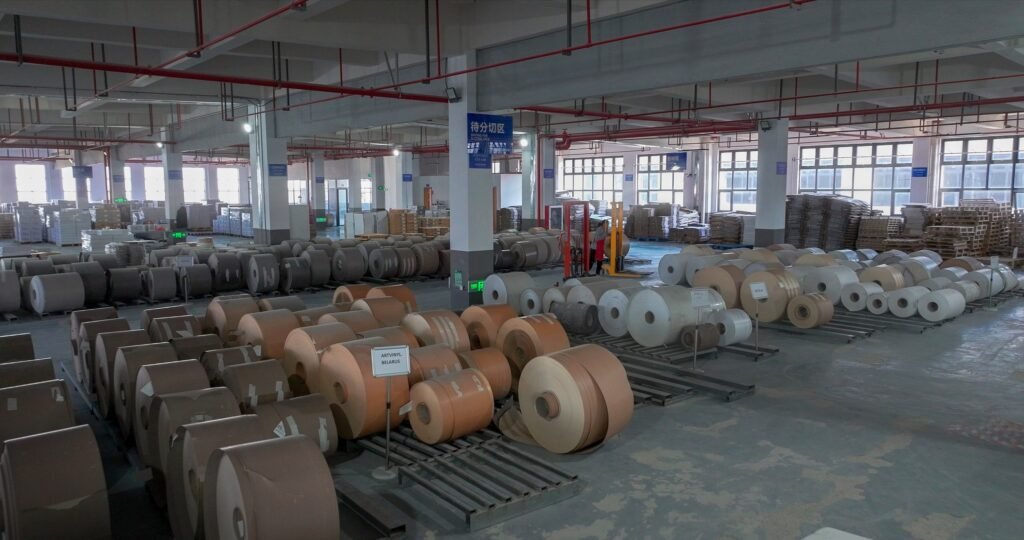
The inspection should cover product appearance, dimensions, roll quantity, labels, packaging condition, and batch identification.
For a large order, I would consider using an independent inspection company. This can be useful when the buyer cannot visit the overseas factory or when the order has a high financial value.
I would also make sure the inspection takes place after the goods are sufficiently ready. An inspection performed on a small number of unfinished rolls cannot confirm the condition of the complete shipment.
Build a Clear Inspection Timeline
| Production stage | Main inspection focus | Required evidence |
|---|---|---|
| Raw material receipt | Material identification and incoming quality | Incoming inspection records |
| First production | Sample approval and specification compliance | Approved first-piece sample |
| Mass production | Dimensions, color, and surface consistency | In-process inspection reports |
| Finished goods | Final product appearance and quantity | Finished product inspection report |
| Before shipment | Packaging, labels, and batch identification | Pre-shipment inspection report |
I would also agree on who is responsible for each inspection. The manufacturer should control quality during production, while the buyer can carry out additional checks or appoint a third-party inspector.
This division of responsibility helps avoid a common problem: both parties assume the other side has already checked the products.
What Inspection and Documentation Practices Help Prevent Quality Claims After Delivery?
A quality claim becomes difficult to resolve when the buyer cannot provide clear evidence. A buyer may find defects after opening the shipment, but the supplier may question whether the problem happened during production, transportation, storage, or furniture processing.
I would prepare inspection records and product documents before the goods leave the factory. These records help both parties understand what was produced, what was inspected, and what was delivered.
Use an Agreed Sampling Inspection Plan
I would establish an inspection sampling plan before mass production.
For large orders, checking every roll may not be practical. A sampling plan can help buyers inspect a representative number of products and make a consistent acceptance decision.
ISO 2859-1 provides acceptance sampling procedures for inspection by attributes. It includes sampling schemes based on Acceptance Quality Limit (AQL) and provides rules for accepting or rejecting production lots. The current 2026 edition also includes updated sampling guidance and switching rules.
However, I would not treat AQL as a guarantee that a shipment contains no defects. It is a statistical sampling method, not a promise of zero defective products.
I would agree on the following details with the supplier or inspection company:
- Inspection lot definition.
- Sample size and sampling method.
- Critical, major, and minor defect classifications.
- Acceptance and rejection criteria.
- Inspection level and applicable AQL values.
- Actions required when a lot fails inspection.
I would also define the inspection method for each defect. For example, a color mismatch may require a comparison with an approved sample, while a thickness problem requires a measuring instrument.
Keep Complete Quality Documentation
I believe documentation is one of the most useful tools for preventing disputes.
I would keep the purchase order, technical specification sheet, approved samples, production inspection reports, and final inspection report in one order file.
The documents should use the same product code, batch number, and specification version. This helps prevent confusion when a buyer orders several colors or dimensions in the same shipment.
I would prepare the following records:
| Document | What it proves |
|---|---|
| Purchase order | Agreed quantity, price, and delivery requirements |
| Technical specification sheet | Required product dimensions and performance |
| Approved sample record | Confirmed appearance and product reference |
| Raw material inspection record | Incoming material control |
| Production inspection report | Quality conditions during manufacturing |
| Final inspection report | Finished product inspection results |
| Packing list | Shipment quantity and packaging details |
| Batch identification record | Traceability of delivered products |
| Claim report | Defect evidence and corrective action |
I would also ask the supplier to provide photographs of the products and packaging before shipment. These photographs are not a replacement for inspection, but they can help establish the condition of the goods when they left the factory.
Define a Clear Quality Claim Procedure
I would not wait until a quality problem happens to discuss how claims should be handled.
The purchase agreement should explain how buyers report defects, what evidence they need to provide, and how the supplier will investigate the problem.
For example, if a buyer finds color variation after receiving PVC edge banding, I would collect:
- Photographs and videos of the affected rolls.
- Product labels and batch numbers.
- The approved reference sample.
- Actual color measurement results, if available.
- The quantity of affected products.
- Storage and application information.
- Relevant inspection records from the factory.
I would also agree on a reasonable claim notification period and a process for reviewing disputed samples.
The supplier should have a clear way to investigate the root cause. The supplier may need to compare retained samples, review production records, and check whether the issue is related to manufacturing or application conditions.
Use Batch Traceability to Reduce Disputes
I would make batch traceability a basic requirement for overseas orders.
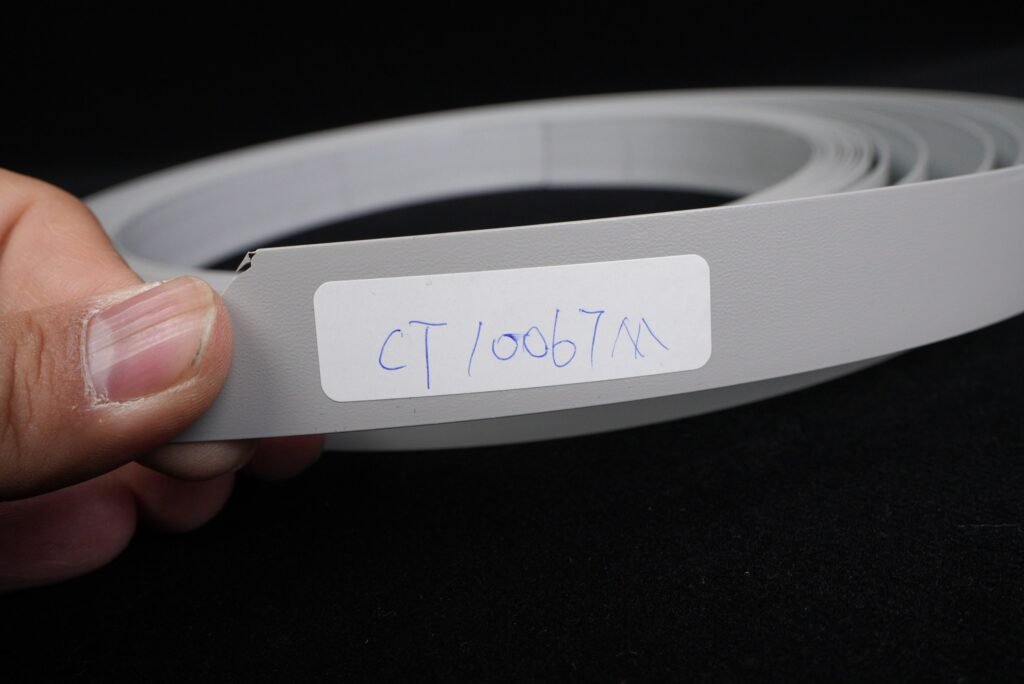
If a shipment contains several production batches, each batch should have an identifiable label. The manufacturer should be able to connect the finished product to its production date, raw material records, and inspection results.
This becomes especially important when only part of a shipment has a problem.
For example, if 20 rolls out of 500 have surface defects, the buyer and supplier should be able to identify the affected batch instead of treating the entire shipment as one unidentified group.
I would also keep retained samples from important orders. Both parties can use these samples as references when they need to investigate a later quality claim.
Agree on Responsibilities Before Shipment
I would include quality responsibility in the purchase agreement.
| Situation | Responsibility to clarify |
|---|---|
| Product does not meet approved specifications | Manufacturer’s product responsibility |
| Product is damaged during transportation | Carrier and insurance responsibility under agreed terms |
| Product is stored incorrectly after delivery | Buyer’s storage responsibility |
| Adhesion fails due to unsuitable machine settings | Application responsibility, subject to investigation |
| Batch color differs from the approved reference | Manufacturer’s responsibility if it exceeds agreed tolerance |
| Inspection finds non-conforming products | Agreed rework, replacement, or compensation procedure |
I would avoid using vague terms such as the supplier must provide good quality. The agreement should explain what counts as a defect and what action each party should take.
I would also distinguish between product quality and application performance. Edge banding manufacturers should be responsible for meeting the agreed product specifications, but they cannot automatically control every condition inside the buyer’s furniture factory.
When both parties agree on technical requirements, inspection methods, and claim procedures before shipment, they have a much better basis for resolving problems fairly.
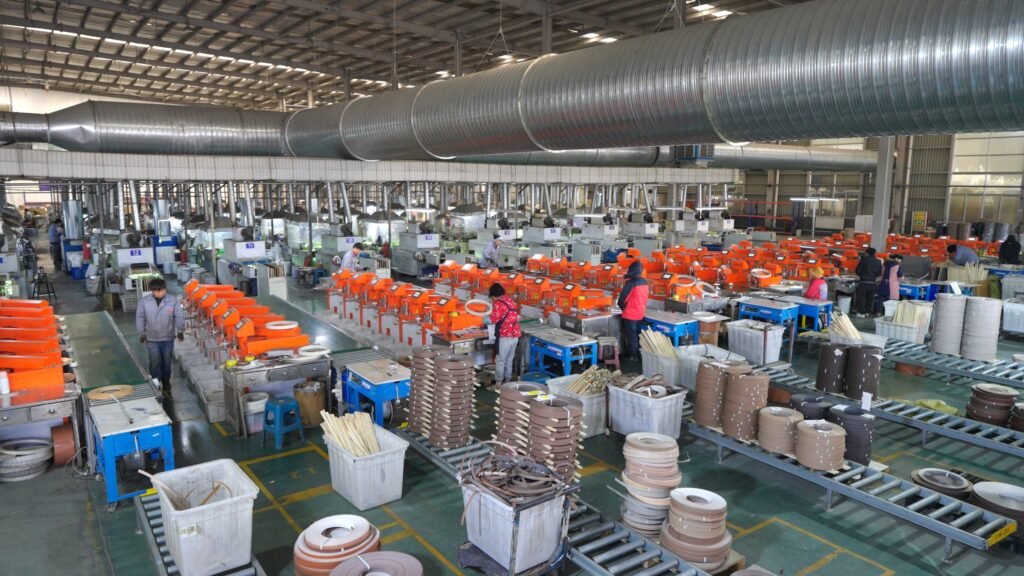
See the Inspection Process Behind Every Batch
Incoming material checks, first-article approval, AQL sampling and retained samples — the records we hand over with every shipment.
View Quality Control
Conclusion
Buyers can reduce edge banding quality claims by defining clear specifications, verifying supplier controls, inspecting every production stage, and keeping complete records before shipment.
Data Sources and References
The following sources support the quality management, color measurement, and sampling inspection methods discussed in this article.
- International Organization for Standardization (ISO) – ISO 9001: Quality Management Systems
https://www.iso.org/standard/9001
Reference for quality management processes, documented procedures, process control, and continual improvement. - International Organization for Standardization (ISO) – ISO 2859-1:2026, Sampling Procedures for Inspection by Attributes
https://www.iso.org/standard/2859-1
Reference for acceptance sampling, AQL inspection plans, and lot acceptance or rejection. - ASTM International – ASTM D2244: Color Differences from Instrumentally Measured Coordinates
https://store.astm.org/d2244-25.html
Standard practice for calculating color tolerances and color differences from instrumentally measured color coordinates. - International Organization for Standardization (ISO) – The Process Approach in ISO 9001:2015
https://www.iso.org/files/live/sites/isoorg/files/archive/pdf/en/iso9001-2015-process-appr.pdf
Guidance on process-based quality management, risk-based thinking, and production control. - International Organization for Standardization (ISO/CIE) – ISO/CIE 11664-1:2019
https://www.iso.org/standard/74164.html
Reference for standard colorimetric observers used in color measurement.