Pain: PVC gets a bad name for the environment.
Agitate: Many buyers avoid it without checking facts.
Solve: I show how PVC edgeband can be greener and why it matters.
Eco-friendly PVC edgeband means lower emissions, safer additives, and real recyclability across its life cycle. The right choices cut waste and meet buyer demands.

I want you to keep reading. I will explain what makes an edgeband green. I will show how to make and sell better products. I will give practical steps you can use today.
Understanding What Makes PVC Edgeband Eco-Friendly?
Pain: People say “eco” without detail.
Agitate: That makes claims weak and buyers wary.
Solve: I list clear attributes that make edgeband eco-friendly.
Eco-friendly edgeband starts with chemistry and ends with the waste stream. I check five things when I call a product green: raw material mix, stabilizers and additives, VOC and emissions, recyclability, and supply-chain energy use. Each point matters. Buyers and certifiers look for evidence on every item.
Raw materials and formulations
I prefer formulations with recycled PVC content or bio-based additives where possible. Recycled PVC lowers virgin polymer demand. Some manufacturers add regrind from production scrap. I check the percentage by weight. The higher the recycled content, the lower the embodied fossil carbon.
Safer stabilizers and additives
Old PVC used lead stabilizers. Today many suppliers use calcium-zinc (Ca-Zn) or organic stabilizers. These avoid heavy metals. I always ask for an additive declaration and a test report. Safer additives reduce health risk at production and disposal.
Low emissions and VOCs
I check VOC test results for printing inks and topcoats. Low-VOC formulations are better for indoor air quality. I also check odour ratings for finished rolls. Customers notice smell on site, so this matters for acceptance.
Recyclability and circularity
PVC is mechanically recyclable when separated and clean. I look for take-back or closed-loop programs. If a supplier can accept offcuts and reprocess them, that reduces landfill and raw material need.
Energy and carbon
I ask about the factory’s energy mix and waste handling. Lower energy and a plan to cut GHGs make the product more credible. I also prefer suppliers who publish LCA or progress reports.
These attributes form a checklist. If a product meets most items, I call it eco-friendly. I demand documents. Claims without data are meaningless.
Comparing Traditional and Eco-Friendly PVC Edgeband Materials?
Pain: Buyers want options but fear trade-offs.
Agitate: They worry eco means lower quality or higher cost.
Solve: I compare key properties and show where eco options fit.
I compare four areas: performance, cost, environmental footprint, and certification. I also compare to alternatives like ABS, PP, and paper/veneer edgebands.
Performance
Eco PVC can match traditional PVC on many properties. Modern stabilizers keep heat stability. Recycled content can change melt flow, but good compounding makes it stable. For abrasion, flexibility, and adhesion, eco PVC performs well in most furniture uses. I test samples before large orders.
Cost
Eco formulations can cost more per kg if they use special additives or higher-quality masterbatches. But recycling cutbacks and reduced waste can lower total cost. Also, premium buyers pay for documented sustainability. I weigh both material and system costs.
Environmental footprint
Life cycle studies show PVC can have similar or lower impacts than some alternatives in certain uses, when recycling and durable service life are counted. I look for LCA data from credible sources before making claims.
Certification and market demand
Eco PVC often carries verification from sector programs or suppliers. Programs like VinylPlus report industry recycling targets and progress. Some brands prefer non-chlorinated polymers like PP for certain markets. I align product choice with customer requirements and regional regulations.

Quick comparison table
| Aspect | Traditional PVC | Eco PVC | ABS/PP/Veneer |
|---|---|---|---|
| Durability | High | High (if well compounded) | Varies (veneer less durable) |
| Recyclability | Recyclable | Recyclable + take-back | ABS/PP recyclable; veneer biodegradable |
| Additives | May include heavy metals | Lead-free stabilizers | Different additives, lower chlorine |
| Cost | Lower base cost | Slightly higher raw cost | Varies widely |
I decide by testing. I ask for LCA, test sheets, and a trial order. That reduces risk and keeps buyers happy.
How Sustainable Manufacturing Reduces Environmental Impact?
Pain: Production can still be dirty even with green formulas.
Agitate: Good material alone is not enough.
Solve: I list manufacturing steps that cut impact and show real examples.
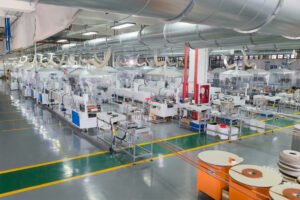
Sustainable manufacturing means less waste, smarter energy use, and planned recycling. I focus on five practical actions: energy efficiency, scrap management, solvent-free inks, water use control, and packaging.
Energy efficiency and process control
I track energy per kg produced. I tune extruders, use variable-speed drives, and optimize heating zones. Small gains add up. Lower energy reduces CO₂ and cost.
Scrap reduction and regrind
I separate clean production scrap and regrind it. I monitor off-cut rates. Reusing clean scrap reduces virgin demand. I also use sorting to keep printed scrap out of the feed where contamination hurts quality.
Low-VOC and solvent-free finishing
I favor water-based or UV-cured inks and coatings. These lower VOCs and speed up curing. They also reduce worker exposure and solvent waste.
Water and chemical use
I optimize cooling systems and use closed-loop water where possible. I treat and reuse process water. I limit chemical discharges and test effluent to stay within local rules.
Eco packaging and logistics
I cut excess packaging and use recycled cardboard and soy-based inks. I consolidate shipments to lower transport emissions. Smaller changes help buyers meet their procurement policies.
These manufacturing choices must be documented. I ask for energy and waste reports. I review them before long contracts.

The Role of Distributors and Manufacturers in Promoting Green Products?
Pain: Buyers rely on distributors for info.
Agitate: Some distributors sell eco claims without proof.
Solve: I outline actions both parties can take to promote genuine green products.
Distributors and manufacturers share responsibility. Distributors must vet products. Manufacturers must publish proof.
For manufacturers
I publish technical and sustainability data. That includes test reports, material declarations (RoHS/REACH where relevant), and any LCA summary. I run trials and support end-users with certification documents and take-back programs.
For distributors
I ask distributors to request supplier documents and to run small trials with customers. Distributors should label products clearly and avoid vague claims. I encourage them to offer alternatives and to guide customers on trade-offs.
Joint actions
We can run training for sales teams and create product kits with sample swatches and data sheets. We can also set up local take-back pilots to prove circularity. These pilots convince big buyers and create case studies.
Market pull and incentives
Retailers and OEMs increasingly demand proof. Some buyers will pay extra for verified low-VOC and documented recycled content. Distributors who present verified options win these orders.
I work with partners who share the same standards. That keeps the supply chain honest and opens new markets.
Future Trends: The Road Ahead for Eco-Friendly Edgebanding?
Pain: The market will keep changing.
Agitate: Falling behind on trends risks lost orders.
Solve: I map four trends I follow and act on now.
I watch four clear trends: circular programs, lead-free standardisation, alternative polymers, and transparency through LCA.
Circular economy and take-back
More companies join take-back and reprocessing programs. These lower net virgin demand and show real circularity. I recommend pilots for returns and clean scrap collection.
Lead-free and safer additives as standard
Calcium-zinc and organic stabilizers are becoming normal. I expect regulators and big brands to require them. I already source lead-free systems to avoid future disruption.
Shift to alternatives where needed
In some markets, ABS, PP, or paper-veneer edges gain share. I offer alternatives when customers ask. Choice helps win business but does not eliminate PVC’s role in many durable applications.
Transparency and verified LCA
Buyers ask for LCA summaries and verified numbers. I push suppliers to publish LCA data or third-party audits. This removes guesswork and speeds procurement approvals.
I act on these trends. I test new chemistry, pilot take-back, and ask for verified data. That keeps my products relevant and my customers satisfied.
Conclusion
I choose proven green steps: safer additives, recycling, lower emissions, and clear data. That builds trust and future-proofs our edgeband business.
Data sources and references
- VinylPlus — Recycling Options and Progress Report 2025. https://www.vinylplus.eu/circular-economy/recycling-options/ and https://www.vinylplus.eu/resources/progress-report-2025/
- European Commission — Life Cycle Assessment of PVC and principal competing materials (Final Report). https://ec.europa.eu/docsroom/documents/13049/attachments/1/translations/en/renditions/pdf
- REHAU — Sustainable edgeband take-back service (RAUKANTEX). https://www.rehau.com/group-en/raukantex-now-even-more-sustainable
- BioPlastic Solutions — BioEdge® Life Cycle Assessment (LCA) public report. https://transparencycatalog.com/assets/uploads/pdf/BioEdge_Final-Verified-LCA_public-version.pdf
- PlasticsIndustry / Technical articles on lead-free stabilizers and PVC trends. (Example) https://platinumindustriesltd.com/transition-from-pvc-lead-stabilizers-to-lead-free-pvc-stabilizers/
- Industry case blog on PVC edgeband sustainability and recycling practices. https://glowedgeband.com/blog/sustainability-furniture-pvc-edgeband-recycling-eco-benefits