

I faced this problem: big orders came with tight dates and hiccups. I learned the hard way how to fix it.
Large orders force factories to plan capacity, lock formulas, control color and gloss, secure raw material, and tighten packing and logistics. That is how they avoid delays and claims.

I will walk you through the steps factories take. I show what matters to buyers. I use clear checks you can ask suppliers to show.
What Large Export Orders Really Demand From an Edge Banding Factory?
I used to think big orders only ask for volume. That is partly true, but not the whole story.
Large export orders need consistent quality for many rolls. They need stable color, uniform gloss, and exact width. They need predictable lead times. They need traceable batch records. They also need export-ready packing and clear documentation. When these needs are not met, buyers pay extra for rework, express freight, and lost sales.

Dive deeper — requirements checklist for big export buyers
Large orders multiply small problems. I break the real demands into five practical areas: volume throughput, reproducibility, documentation, packaging, and legal/compliance.
Volume throughput. Factories must produce high meters per day and keep that pace. That means running multiple extrusion lines or dedicated shifts. I always ask for a supplier’s monthly capacity and typical utilization rate. If a factory reports capacity but runs at 90–95% utilization, they have little buffer for my order. Capacity planning guides cited in manufacturing best practices show why realistic buffer matters.
Reproducibility. Factories must reproduce the same color and gloss across many rolls. I require numeric color files (CIELAB) and gloss readings (GU) per batch. For color, I demand ΔE data and the illuminant used for measurement. Objective figures save time in disputes. Datacolor and other color vendors explain how to set sensible ΔE tolerances.
Documentation. Factories must keep batch records, material certificates, and QC logs. These records are vital during customs checks or warranty claims. I insist on sample retention and traceability from raw-material lot to finished roll.
Packaging for export. Large orders move in pallets and containers. Packaging must protect rolls from compression, moisture, and heat. Freight guidelines like those from major carriers show how improper palletizing increases damage risk. I require photos and packing specs before shipment.
Compliance. For some buyers, chemical certificates (RoHS, REACH) matter. Factories that export usually maintain these documents. I ask for them early.
If a supplier cannot show capacity numbers, ΔE reports, packing specs, and certificates, I treat them as unqualified for big export work.
How Factories Plan Capacity, Workforce, and Production Lines for Big Orders?
I once trusted verbal promises on capacity. I stopped after a missed shipment. Now I look for planning systems.
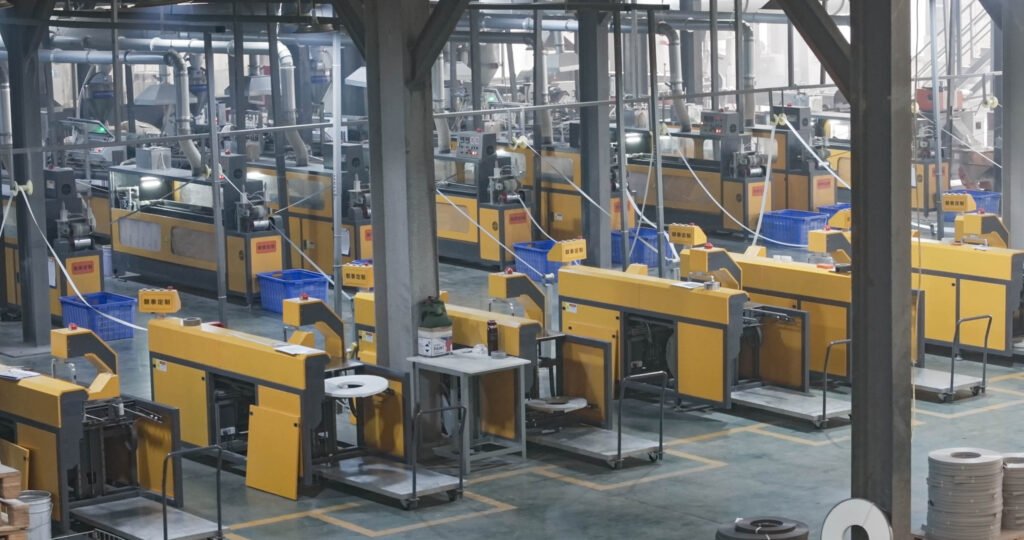
Good factories use production planning, capacity buffers, and shift strategies. They map orders to lines and to spare capacity. They schedule maintenance and hold contingency lines. They also plan workforce shifts and cross-training so a line can run even if one operator is sick. These tactics avoid single-point failures that cause delays.

Dive deeper — how I verify their planning is real
I check four things: published capacity, equipment redundancy, workforce planning, and changeover control.
Published capacity vs real throughput. I ask for nameplate capacity per line and recent monthly output. Equipment listings from extrusion suppliers show typical throughputs by model. I compare their claims to typical machine specs. If the math does not add up, I push back.
Equipment redundancy. A reliable factory has more than one usable line for the same SKU or a fast way to convert a second line. I ask about lead time to start a second line and spare parts availability. Redundancy lowers risk when a breakdown happens.
Workforce planning. I ask how many trained operators they have per shift and how they handle peak demand. Cross-trained technicians matter. I also ask whether overtime or extra shifts are feasible and how that affects quality.
Changeover and setup. Big orders often require long runs, but they sometimes need many SKUs in one shipment. I check their average changeover time and their method to lock settings. Quick, repeatable changeovers reduce waste and cost.
I only trust factories that can show a recent production schedule and actual output logs. These documents prove they are not overbooked.
Why Color Matching, Gloss Control, and Texture Stability Matter More at Large Volumes?
I learned that visual mismatch scales with volume. One bad roll is an annoyance. A hundred bad rolls is a crisis.
At large volumes, small color shifts show up across many panels and corners. Gloss differences stand out under shop lights. Texture inconsistency breaks uniform appearance across furniture lines. That is why factories use spectrophotometers, gloss meters, and regulated embossing systems. They lock ink recipes, top-coat formulas, and embossing tooling. Numeric control matters more as order size grows.

Dive deeper — the controls and tests I expect factories to run
I look for three controls: instrument checks, inline processes, and sample archives.
Instrument checks. Factories measure CIELAB values and compute ΔE (usually ΔE2000) against reference samples. They measure gloss in GU at 60° or other agreed angles. These measurements must be logged per roll or per batch. I require the measurement method and the illuminant (D65 is standard for daylight matching). Technical references on ΔE explain these conventions.
Inline process control. Factories use automated feeders, register controls for printing, and calibrated embossing rolls. They control coating ovens and UV curing to lock gloss. They log setpoints and deviations. Inline control reduces manual rework.
Sample archives and pre-shipment checks. Factories keep a sample roll from each batch for later dispute resolution. They also run final checks before packing. I request a pre-shipment measurement report and photos.
When I inspect suppliers, I ask to see printed ΔE logs, gloss-meter outputs, and embossing depth records. If they do not have that data, I treat the match as risky.
How Inventory, Raw Materials, and Formula Control Reduce Delays and Quality Drift?
I once had a supplier change their masterbatch mid-order to cut cost. The color shifted. I lost sales.
Factories that handle big exports maintain raw-material contracts and safety stock. They standardize resin grades, stabilizers, and masterbatches. They lock compound recipes and record lot numbers. They run accelerated aging tests to check color and gloss over time. This control reduces variance and supply shocks.

Dive deeper — practical inventory and formula controls I require
I audit four areas: material sourcing, safety stock, formula documentation, and stability testing.
Material sourcing and supplier qualification. I ask for SDS and supplier certificates for resin and masterbatches. I prefer factories that source from consistent suppliers. I also ask about lead times for resins. If their resin lead time is long, they must hold more safety stock.
Safety stock and purchase strategy. Factories for export keep buffer stocks for critical materials. They plan purchases around lead times and seasonal demand. I ask for their reorder point logic or ERP screenshots that show safety stock levels.
Formula documentation. I require a written recipe per SKU. The recipe should list resin grade, stabilizer system, plasticizer type, pigment masterbatch, and process temperature ranges. I also ask for change logs that show when a recipe changed and why.
Stability and aging tests. Good factories run accelerated UV and heat aging on new formulas. They can show color and gloss retention curves over 500–2000 hours. These tests show whether a formula will hold up during shipping and in different climates.
When a supplier shows me certificates, recipe logs, and aging data, I feel much safer putting a large order with them.
How Quality Inspection, Packaging, and Export Logistics Keep Orders On Time?
I never underestimated packing and shipping after the first damaged container arrived.
Quality inspection must be systematic. Factories set sampling plans and gate checks. Packaging must protect rolls from compression, moisture, and heat. Logistics must match container type, route, and seasonal risks. All three combined decide whether the order arrives on time and in spec.

Dive deeper — the final mile starts at the factory
I break this area into QC gates, packing specs, and export process.
QC gates. I expect in-line QC, end-of-line QC, and pre-shipment QC. In-line QC catches drift early. End-of-line QC inspects each roll or a statistical sample. Pre-shipment QC checks packed pallets and documents. I ask for QC checklists and actual reports.
Packing specs. Packaging must control roll orientation, cushion, and pallet stability. I use carrier packaging guides as a baseline. I require pallet photos, strapping method, corner protection, and humidity control for sensitive SKUs. Proper palletizing reduces container damage and claims.
Export process and documentation. Factories must prepare export documents: commercial invoice, packing list, COA (certificate of analysis), and any compliance certificates. I ask for an electronic pre-advice so I can coordinate customs and inland logistics.
Logistics coordination. I check whether the supplier uses regular freight forwarders and whether they offer booking windows. For big orders, I prefer suppliers that can arrange FCL bookings and share tracking. That reduces surprises.
I made this checklist part of my supplier contract. It saved me one late container and one major warranty case.
I prefer factories that show data, not promises. I favor partners with capacity, labs, and stable material sourcing.
Dive deeper — how I turn these checks into action
I do a staged qualification. First, I ask for basic documents: capacity numbers, machine list, and certificates. Second, I request sample runs with ΔE and gloss reports. Third, I do a medium trial order and audit packing. I lock tolerances and payment milestones in the PO. This approach reduced my late shipments and returns. It also made suppliers take consistent action to keep my business.
Conclusion
For large export orders, demand reproducibility. Insist on data, capacity, and export-grade packing. (14 words)
Data sources and links
- PVC edge banding extrusion machine specs and line examples — Jwell / Technic / Anda listings. (jwellextrusionmachine.com)
https://www.jwellextrusionmachine.com/Pvc-profile/jwell-pvc-edge-banding-extrusion-line
https://www.technicmachines.com/edge-band-extrusion-machine-line/
https://www.anda-machine.com/product/single-screw-pvc-edge-banding-production-extrusion-line.html - Manufacturing capacity planning and scheduling guides. (Katana)
https://katanamrp.com/manufacturing-capacity-planning/
https://machinemetrics.com/blog/manufacturing-capacity-planning - Delta E color tolerance best practices and measurement notes. (Datacolor)
https://www.datacolor.com/business-solutions/blog/best-practices-delta-e-tolerances/
https://formlabs.com/blog/color-accuracy-delta-e/ - Technical notes on extrusion cooling and raw-material stability. (SHARC)
https://www.sharcpm.com/product/plastic-pvc-edge-band-lab-extruder-machine/ - Packaging and freight handling best practices (carrier guidelines). (FedEx)
https://www.fedex.com/content/dam/fedex/us-united-states/services/FreightPackagingGuidelines.pdf