
I lost money once by trusting a cheap trader. I missed specs and delivery dates. I learned to compare factories and trading companies before I signed long contracts.
For long-term supply, manufacturers usually give better cost control and customization. Trading companies can give faster availability and simpler logistics. Which is best depends on your order size, quality needs, and risk tolerance.

I will walk you through the facts I check. I will show clear steps to decide. I use plain language and direct checks you can do on site or over email.
Key Differences Between PVC Edgeband Manufacturers and Trading Companies?
I once treated them as the same. I was wrong. I now ask different questions to each type.
Manufacturers make the product. Trading companies buy and resell. This changes price, control, and lead time.

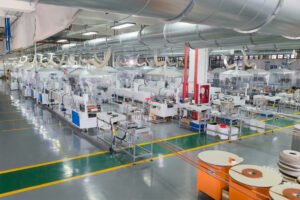
Manufacturers own machinery and raw material stock. They set production priorities. They can adjust formulation and process. That helps with custom colors and specs. They usually give lower per-unit prices at scale. They also need bigger orders to be cost effective.
Trading companies buy from one or more factories. They can offer many SKUs. They may hold stock for fast shipment. They add a margin. They handle paperwork and logistics. They often give easier payment terms or smaller MOQs. They act like a bridge when you need many different products quickly.
Quick comparison table
| Feature | Manufacturer | Trading company |
|---|---|---|
| Price per meter (large volume) | Lower | Higher (markup) |
| MOQ | Higher | Lower (stocked SKUs) |
| Lead time for custom runs | Longer | Shorter (if stocked) |
| Quality control | Direct, traceable | Varies by source |
| Flexibility (formulation) | High | Low to medium |
This basic split helps me frame follow-up questions when I vet a supplier.
How Production Control Affects Quality, Color Consistency, and Lead Times?
I buy color-matched edgeband. I need it to match panels across months. Production control is the key.
When a factory controls extrusion, dosing, printing, and QC, they can lock color recipes and run repeatable batches. That reduces Delta E drift and shortens corrective cycles.

Manufacturers can store raw material batches and record recipes. They can log temperature profiles and dosing numbers. That helps with repeatability. Trading companies may not have those records. They rely on their upstream factory to keep data.
Lead time depends on stock and production schedule. If a trading company holds stock, they can ship fast. If you need custom color or new tooling, the manufacturer will take time to set up. Typical sample lead time is a few days. Bulk production often takes two to four weeks, depending on order size and complexity. Always check the supplier’s stated lead times and MOQ.
What I ask to verify production control
- Do you keep color recipes and Delta E logs?
- Can you provide MSDS and resin batch records?
- What is your typical lead time for 1–2 FCL bulk orders?
- How do you handle color drift and corrective action?
If the supplier cannot show logs, I count that as a risk.
Cost Structure Comparison: Who Offers Better Long-Term Pricing Stability?
I care about landed cost over three years. I look beyond the first quote.
Manufacturers often provide better long-term price stability if you commit to volume. Trading companies add markups but can reduce up-front risk for small buyers.

Manufacturers’ cost drivers are raw material, labor, energy, and overhead. When you buy direct, you remove middleman margin. Over time, that saves money. Factories can also offer contract pricing and priority on raw material allocation in tight markets.
Trading companies add handling, storage, and profit. They may also provide credit, which softens cash flow. If you order small, a trading company can be cheaper in the short run. If you plan steady large orders, the factory usually wins on price.
Table: cost elements and buyer impact
| Cost element | Impact if buying from Manufacturer | Impact if buying from Trader |
|---|---|---|
| Raw material volatility | Factory can hedge or buy bulk | Trader passes higher costs + margin |
| MOQ effect | Higher MOQ lowers per-unit cost | Lower MOQ but higher per-unit price |
| Supply continuity | Factory can prioritize long-term contracts | Trader may shift between factories |
| Payment & credit | Usually stricter | Often more flexible |
I run a simple projection for five years. I compare per-meter price with expected order volume. That tells me which partner gives the best lifetime cost.
Risk Management: What Happens When There’s a Quality Issue or Urgent Reorder?
I had a blind run once. The edgeband had streaks. I needed a fast fix. The supplier response decided the outcome.
Manufacturers can usually trace batches and re-run production faster. Trading companies must contact their factory and may face delays. For urgent reorders, stocked inventory at a trader can save you, but only if the SKU matches.

When quality fails, I want root-cause data. I ask for production logs, QC images, and raw material batch numbers. A factory gives these faster. That lets me approve corrective runs or negotiate claim settlement.
For urgent orders, trading companies can ship immediately from stock if they have the right SKU. This works well for standard colors and sizes. But if you need an exact match, stocked rolls may not match your board. Then the only solution is a fast re-run at the factory.
Practical risk steps I use
- Keep a 1–4 week buffer stock of critical SKUs.
- Require traceability (batch number on each roll).
- Include acceptance criteria and rework terms in contracts.
- Run a pilot order before volume buys.
- Ask suppliers for inspection reports and photos before shipment.
This practical setup keeps my production lines running when things go wrong.
Choosing the Best Partner for Long-Term Supply: What Type of Supplier Fits Your Business?
I pick suppliers to match my volume, product mix, and service needs. There is no perfect answer for all buyers.
If you order large volumes, need custom colors, and want lower per-unit cost, lean to a manufacturer. If you buy small runs, need many SKUs fast, or prefer easier payments, a trading company may fit better.

I use this decision flow:
- Do I need custom colors or strict Delta E? → Manufacturer.
- Is my order small or varied? → Trading company or distributor.
- Do I want stable long-term prices? → Manufacturer with contract.
- Do I need fast replenishment and credit? → Trading company that stocks SKUs.
I always run a 100–300 meter pilot run. I add acceptance criteria for width, thickness, Delta E, and adhesion. I also ask for a clear MOQ and lead time. If the supplier resists a pilot order or data sharing, I treat that as a red flag.
Conclusion
I pick suppliers by matching my needs to their strengths. For long-term, predictable supply, factories usually win. For speed and small runs, traders can help.
Data sources and links
- Key Differences Between Trading Companies and Manufacturers — EasyImex. (Easy Imex)
https://easyimex.com/blog/key-differences-between-trading-companies-and-manufacturers/ - Typical Lead Times and MOQs for PVC Edge Banding — Alibaba / supplier guides. (Alibaba)
https://www.alibaba.com/price-comparison/pvc-edge-banding-producer - Wholesale PVC Edge Banding Import Guide — EdgeBandCT. (Edgebandct)
https://edgebandct.com/wholesale-pvc-edge-banding-what-distributors-should-know-before-importing/ - How Supplier Price is Determined (MOQ, discounts) — Gelato (pricing guide). (Gelato)
https://www.gelato.com/connect/blog/supplier-price - Manufacturer vs Trading Company: Practical Notes on Cost and Control — TrampJoy / case examples. (trampjoy.com)
https://www.trampjoy.com/industry_information-13/236.html