
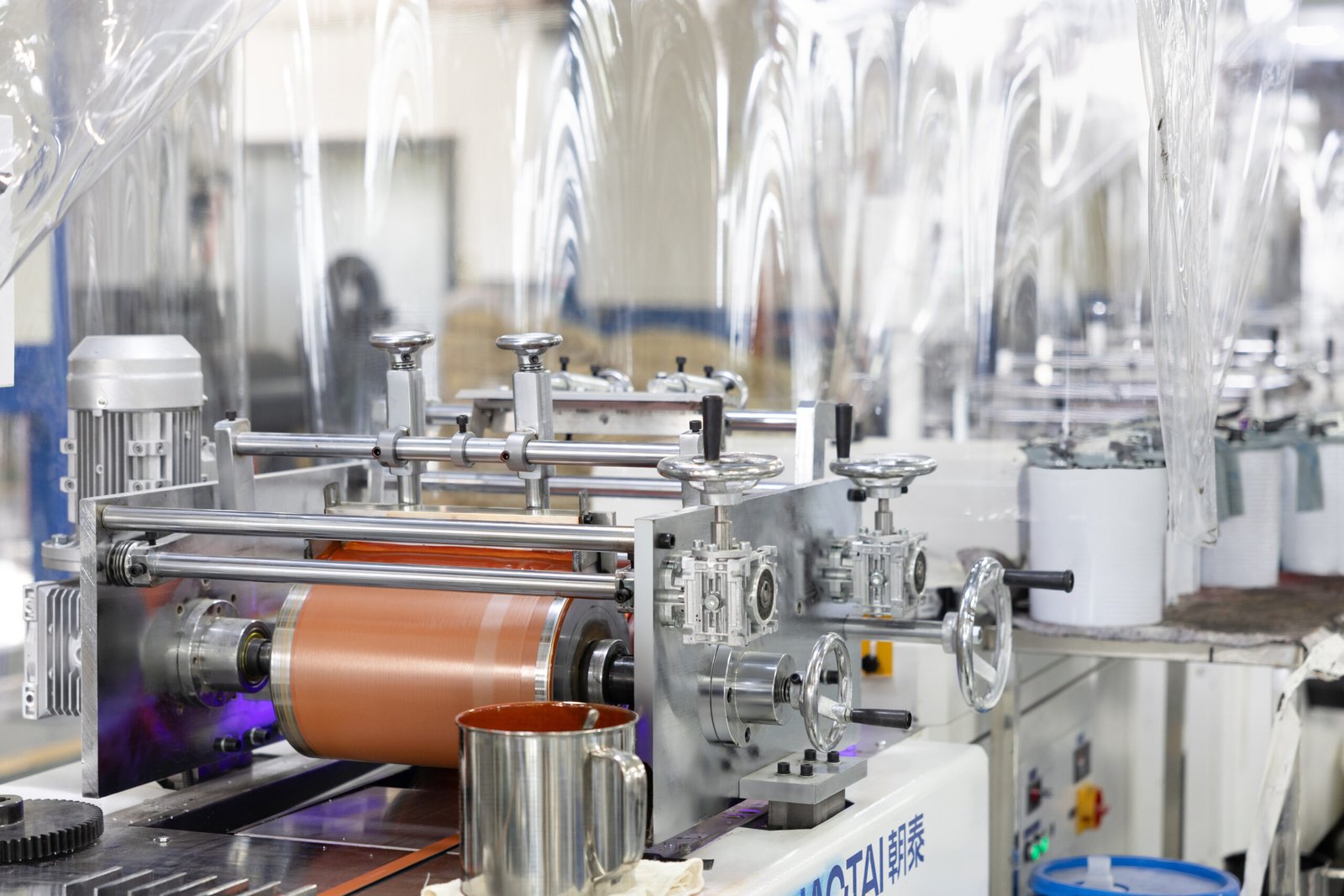
Problem: poor edge banding ruins a good cabinet.
Agitate: mismatched color, loose bond, and wobbling deliveries cost time and trust.
Solve: I’ll show how factory-scale production fixes these issues in practice.
Edge banding factories use controlled extrusion, surface treatment, and inline inspection to keep color, thickness, and adhesion consistent. I explain how machines, formulas, and QC stop variability before it reaches the customer.

I’ve worked with manufacturers and visited lines. I’ll walk you from raw mix to packed roll. You will see why industrial steps matter. Read on if you buy edge banding or manage production.
How Industrial-Scale Edge Banding Production Works From Start to Finish?
Problem: small shops make great samples but fail on repeat orders.
Agitate: buyers then face color shifts and wrong thickness across batches.
Solve: a clear, controlled production flow prevents that.
Edge banding production follows a set flow: raw mix → extrusion/calendering → surface finish (print/emboss/UV) → slitting → adhesive application or winding. Each step has parameters that factories lock down to reproduce results.

Dive deeper
I break the line into stages and explain what matters at each step.
1) Raw material mixing
I check the resin base (PVC or ABS), plasticizers, stabilizers, pigments, and additives. A factory uses batch formulas and weight-controlled feeders. That reduces variation. I have seen recipes kept in the ERP system. This is the first place to lose control if operators guess amounts.
2) Extrusion or calendering
The melt temperature, screw speed, and die design set thickness and roundness. Twin-screw extruders and three-calender lines are common for wide sheet production, which gets slit later. Factories log temperatures and speeds. Small changes make measurable differences in thickness and surface feel.
3) Surface treatment (printing, embossing, UV coating)
Print registration, ink mix, and UV cure energy affect color and gloss. Factories print on stable sheet webs before slitting. Using in-line UV coating lets factories lock a gloss level across the roll. I always ask for a process sheet showing print pass counts and cure settings.
4) Slitting and edge finishing
Slitters set widths and edge radii. Quality slitting keeps tolerance and prevents frayed edges. Single-extruded profiles can produce smoother radii but require precise tooling.
5) Post-processing and winding
Roll tension, winding pattern, and dust control matter. Factories control humidity and use filtered air to avoid dust trapping under adhesive layers.
6) Traceability and batch records
Good factories tag rolls with batch numbers, formula versions, and machine logs. This lets them trace a problem back to one shift or one additive batch. I insist on this when I audit a supplier.
Below is a table that summarizes the main risks and factory controls:
| Stage | Main risk | Factory control |
|---|---|---|
| Raw mix | Wrong pigment ratio | Weight feeders, batch log |
| Extrusion | Thickness drift | Temp/speed control, die check |
| Printing | Color mismatch | Ink recipes, registration marks |
| Slitting | Wrong width | Precision slitter, micrometer checks |
| Winding | Dust/tension faults | Clean room, tension sensors |
| Traceability | No root cause | Batch tags, machine logs |
Factories follow this flow to push variability out of the product. When each step has data and limits, repeats come out the same. For production readers: ask for process sheets and sample logs before you place a large order.
Key Machinery and Technologies That Guarantee Consistent Edge Band Quality?
Problem: machines differ. One plant’s line can beat another’s.
Agitate: if you buy by price alone, you may get older equipment and more defects.
Solve: modern extrusion, inline gauges, and automated finishers reduce human error.
Modern factories use twin-screw extruders, embossing rolls, gravure or digital printers, UV coaters, and precision slitters. They pair these with inline gauges and process control systems to log every run.

Dive deeper
I describe key machines and why each matters.
Extruder and calender
The extruder melts and mixes the compound. Twin-screw designs give better dispersion of color and additive packages. Calendering can create a sheet that then gets slit. The die shape determines edge radius and cross-section. I have checked die drawings during audits. Tight die tolerances are a sign of precision work.
Printing and UV finishing units
Print units control color and pattern repeat. Gravure systems work well for long runs with stable color. Digital printers are flexible for short runs or custom patterns. UV coaters set gloss and wear resistance. I look for consistent oven and UV lamp settings across shifts.
Slitters and winders
High-precision slitting maintains width to ±0.1 mm or better on many lines. Good winders manage tension to avoid telescoping. Machines with automatic edge-guides reduce operator touchpoints and errors.
Inline measurement technology
Thickness gauges, laser micrometers, and spectrophotometers run inline or at-line to catch problems fast. The best factories set alarms for out-of-spec events and automatically cut the roll back for rework. This lowers scrap rates and keeps customers happy.
Automation and MES integration
When machines feed data to the MES (Manufacturing Execution System), the factory can replay runs and find patterns. I prefer suppliers who share process logs. That transparency helps solve issues if they arise.
Below is a short table of machine roles:
| Machine | Role | Buyer question |
|---|---|---|
| Twin-screw extruder | Mix and shape | Is compound well dispersed? |
| Embossing roll | Texture | Is grain pattern consistent? |
| Gravure/digital printer | Color/pattern | How stable is color batch-to-batch? |
| UV coater | Surface protection | What gloss/hardness is achieved? |
| Slitter/winder | Final size/tension | Are widths and tensions logged? |
I judge factories by their automation level and measurement tools. More control equals more repeatability.
Why Standardized Raw Material Formulas Are Essential for Color and Performance Stability?
Problem: a slight recipe tweak gives a different color or lower bond strength.
Agitate: buyers get returns and rework when formulas change.
Solve: controlled formulas and incoming material checks keep properties stable.
Factories use written formulas and calibrated feeders. They also test incoming resins and pigments. This stops rogue raw materials from changing the finished product.

Dive deeper
Raw materials determine the core performance of an edge band. I look at three areas: base resin, pigments, and additives.
Base resin and polymer choice
PVC and ABS are common. PVC is flexible and cost-effective. ABS gives better heat resistance. The resin grade affects melt behavior in the extruder. Factories keep certificates of analysis (COA) from resin suppliers. This helps ensure melt index and filler levels are constant.
Pigments and color batching
Pigment lots vary. A factory controls color with lab batches and uses spectrophotometers to set ΔE targets. Some factories aim for ΔE ≤ 1–2 for tight matches. I ask for color target sheets and lab readings before bulk production.
Additives: stabilizers, plasticizers, and fillers
These affect flexibility, heat resistance, and surface finish. The supplier must list additives and percent ranges. I want to see a stability test, such as heat-aging or adhesion testing, that the factory runs on sample batches.
Incoming material checks and storage
Good factories inspect incoming resin and pigment shipments. They log lot numbers and store materials in controlled conditions. Moisture and contamination are real problems. A dry, clean storage area reduces defects.
| Material | Risk if uncontrolled | Typical control |
|---|---|---|
| Resin | Melt index shift | COA, batch test |
| Pigment | Color drift | Lab match, spectro readings |
| Additive | Property change | % control, test runs |
I always require a materials spec and COA from my supplier. It tells me how they keep the product stable over time. Without it, you risk inconsistent runs and unhappy customers.
In-Process Quality Control Systems That Detect Problems Before Products Leave the Line?
Problem: defects found at packing mean wasted work and missed deliveries.
Agitate: catching problems late is costly.
Solve: inline QC finds issues immediately and prevents shipment of bad rolls.
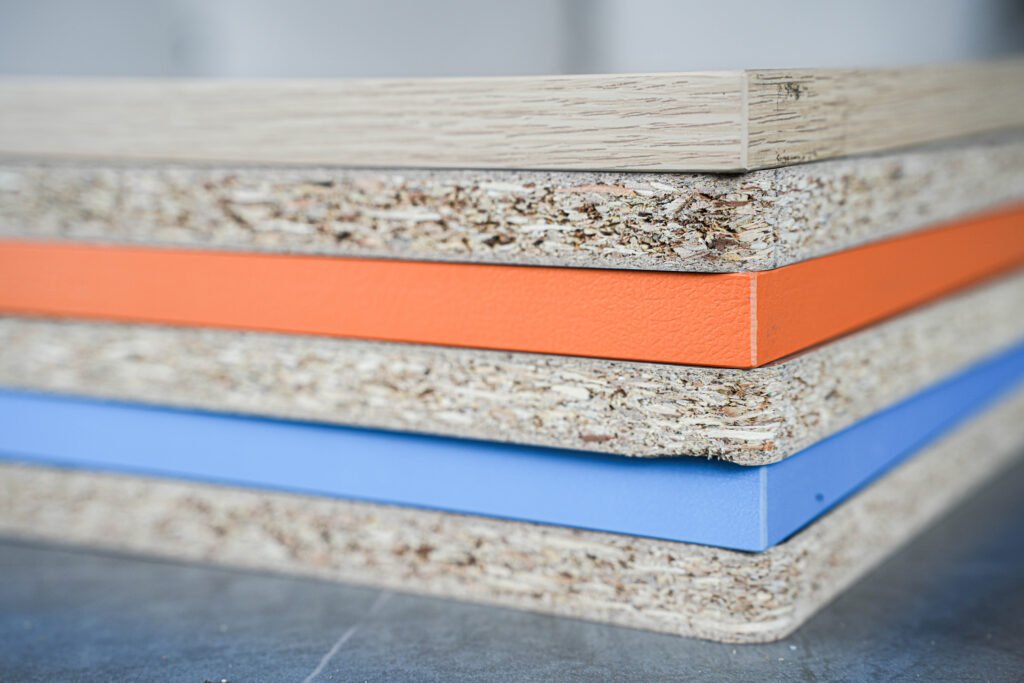
Factories combine inline gauges, visual inspection, and lab tests. They also run adhesion, immersion, and thermal shock tests when needed. These steps stop bad rolls from shipping.
Dive deeper
I examine the QC mix: inline, at-line, and lab tests. Each catches different classes of faults.
Inline measurements and alarms
Inline thickness gauges and laser micrometers monitor dimension every few meters. The system flags drift and can stop the line. Color can be monitored with in-line spectrophotometers or at-line booths. When a color drift exceeds ΔE limits, the run is paused. Inline systems reduce scrap by catching issues fast.
Visual and sampling inspection
Operators sample rolls every set length. They check for texture, print registration, and edge quality. Automated cameras can find surface defects, streaks, and dust spots. Human checks focus on cosmetic issues that cameras might miss.
Adhesion and environmental tests
Adhesion pull tests, immersion in water, steam resistance, and thermal shock tests simulate real use. Some brands demand that edge banding survive cycles from -12°C to 70°C without delamination. Factories run these tests for kitchen and bathroom use cases.
Traceability and corrective action
When a defect appears, the factory isolates affected rolls and reviews machine logs to find the root cause. I want to see corrective action records and how long it took to fix the issue. This shows whether a supplier learns or repeats faults.
| QC Type | Purpose | Frequency |
|---|---|---|
| Inline gauges | Dimensional control | Continuous |
| Spectrophotometer | Color match | Every shift or sample |
| Adhesion test | Bond strength | Batch sample |
| Environmental test | Durability | Pre-shipment / periodic |
I expect suppliers to share QC reports. If they refuse, I assume risk. A good QC system reduces returns and protects the brand.
How Industrial-Grade Production Ensures Reliable Lead Times and Repeat Orders for Global Buyers?
Problem: inconsistent suppliers miss dates and change quality.
Agitate: missed dates cost projects and trust.
Solve: industrial planning, buffers, and stable runs give predictable delivery.
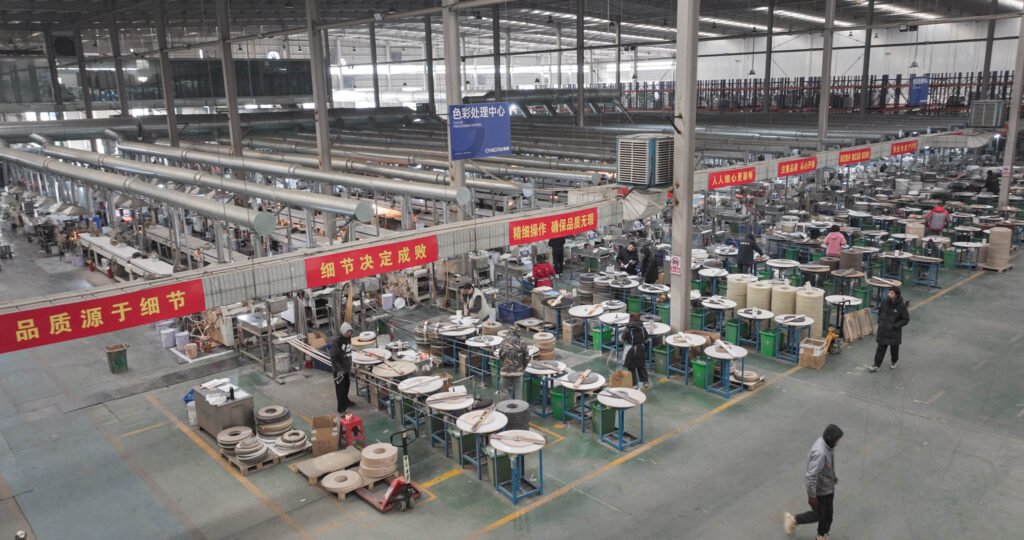
Large factories plan production runs, hold safety stock, and use MES to schedule. They can repeat a run with the same settings and materials. This predictability is the core value I buy into.
Dive deeper
Predictable supply is not luck. It is process, planning, and inventory.
Production planning and batch scheduling
Factories schedule long runs for high-volume SKUs. They group orders that share the same color and profile. This reduces changeovers and waste. I ask for a production calendar to see how my order fits into their plan.
Safety stock and finished goods warehousing
Good plants hold safety stock for core SKUs. This buffer absorbs small demand spikes. They also rotate finished goods by FIFO and practice humidity control in storage.
Repeatability and sample retention
When a run passes QC, factories keep a retained sample and process log. If a future order shows a variance, the supplier compares the new run to the retained sample. This makes dispute resolution faster.
Logistics and packaging standards
Industrial-grade factories use packing standards that protect rolls in container shipping. They also specify lead times with clear terms. I prefer suppliers who publish standard lead times for each order size and are transparent about seasonal changes.
| Reliability Factor | Factory practice | Buyer action |
|---|---|---|
| Scheduling | Group similar runs | Request production calendar |
| Stock | Safety inventory | Ask minimum stock levels |
| Records | Sample retention | Request sample policy |
| Packaging | Export-safe | Ask packing photos pre-shipment |
After many audits, I learned that production control beats price when you need consistent supply. I pay a little more to avoid the chaos of variable deliveries.
Conclusion
I trust industrial processes to turn one good sample into thousands of repeatable, reliable rolls.
Data sources and links
- JWELL — How Does a Plastic Edge Banding Extrusion Line Work? (jwellmachine.com)
https://www.jwellmachine.com/how-does-a-plastic-edge-banding-extrusion-line-work/ - SHARC / SHARCPM — PVC Edge Band Tape Production Line (process and equipment). (SHARC)
https://www.sharcpm.com/solution/pvc-edge-band-tape-production-line/ - X-Rite — Color Quality Control Best Practices (spectrophotometer use). (xrite.com)
https://www.xrite.com/page/visual-instrument-quality-control - HOMAG — Quality criteria and tolerances (formatting/dimensioning). (HOMAG)
https://www.homag.com/fileadmin/Terms_and_Conditions/Quality-criteria-HOMAG-EN.pdf - Santos Kitchens — Quality controls for edge banding (adhesion and environmental tests). (Santos)
https://santos.es/en/blog/quality-controls-for-santos-kitchens-edge-banding-and-edge-banded-items/