Customer expectations are rising. Traditional edge banding methods often show glue lines and limited durability. Laser edge banding promises seamless quality, but many distributors hesitate due to cost and market uncertainties.
Laser edge banding offers a seamless finish, high durability, and efficiency advantages over traditional edge banding, and its demand is increasing while traditional methods remain strong where cost and simplicity matter most.
Before deep diving, we need to understand why this comparison matters now. The edge banding market is evolving with changing furniture standards, environmental regulations, and automation trends. I will break down the key differences, performance factors, cost considerations, application niches, and demand trends for both laser and traditional edge banding.
What Are the Key Differences Between Laser and Traditional Edge Banding?
Many distributors see the terms “laser” and “traditional” but don’t know the real technical differences. Misunderstanding these basics can lead to wrong inventory strategies.
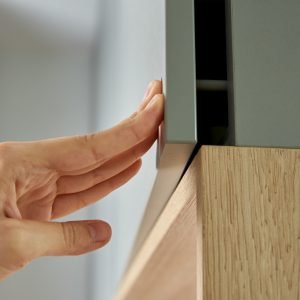
Laser edge banding uses a laser to fuse a special polymer layer to the panel edge, producing a seamless, “0-joint” finish, while traditional edge banding relies on hot-melt adhesives like EVA or PUR, which often leave visible glue lines.

How the Bonding Works
| Aspect | Laser Edge Banding | Traditional Edge Banding |
|---|---|---|
| Bond Mechanism | Laser fuses polymer to substrate | Adhesive layer with glue |
| Joint Appearance | Almost invisible | Visible glue line |
| Adhesive Use | None | Required (EVA, PUR) |
| Aesthetic Result | Seamless | Glue line present |
| Environment Impact | Low VOC | Potential VOC |
Laser technology melts functional adhesive on the back of the tape directly into the panel’s surface. In contrast, traditional methods apply hot melt glue that cures and forms a mechanical bond. The result often shows a seam that can collect dirt and discolor.
Material and Tooling
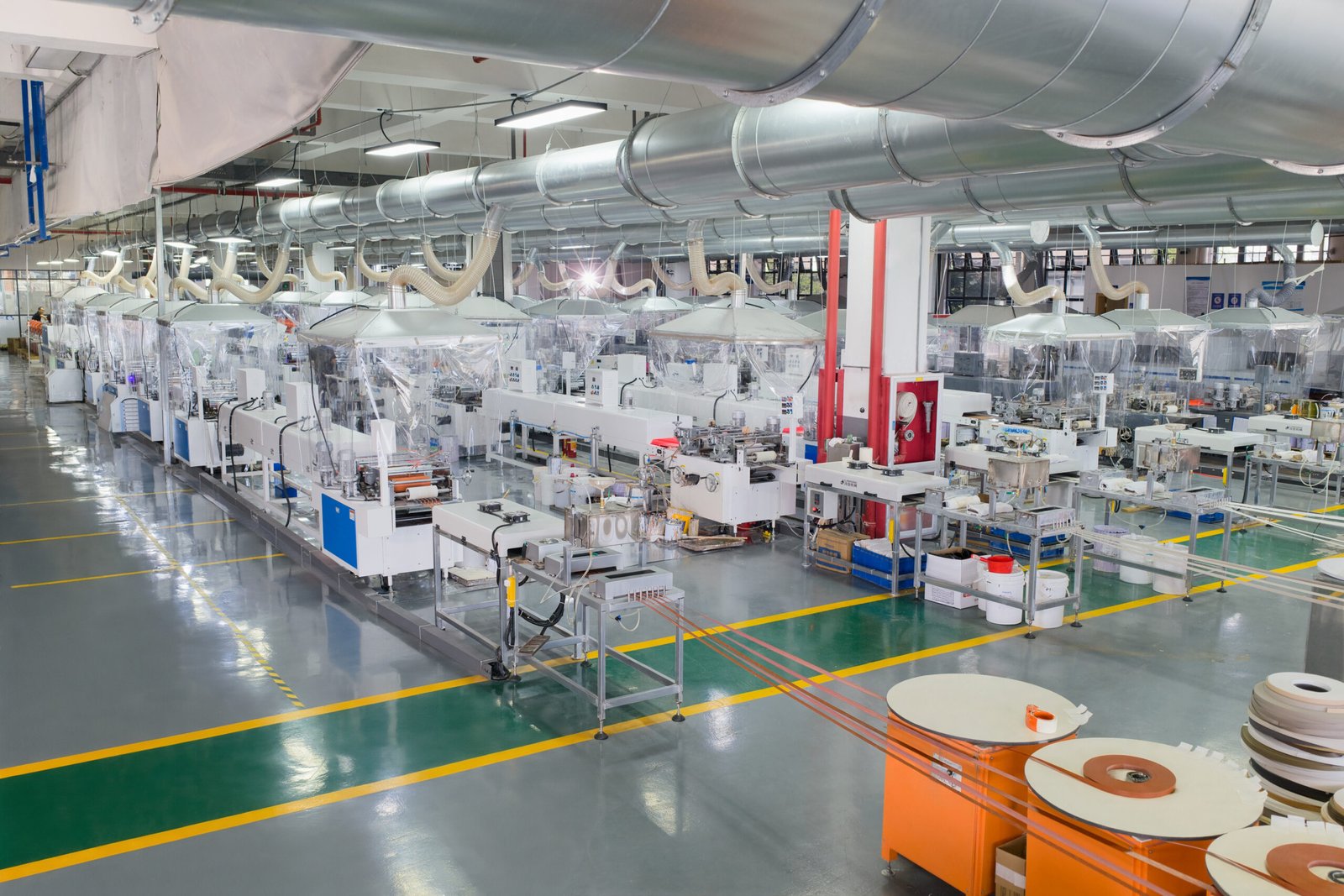
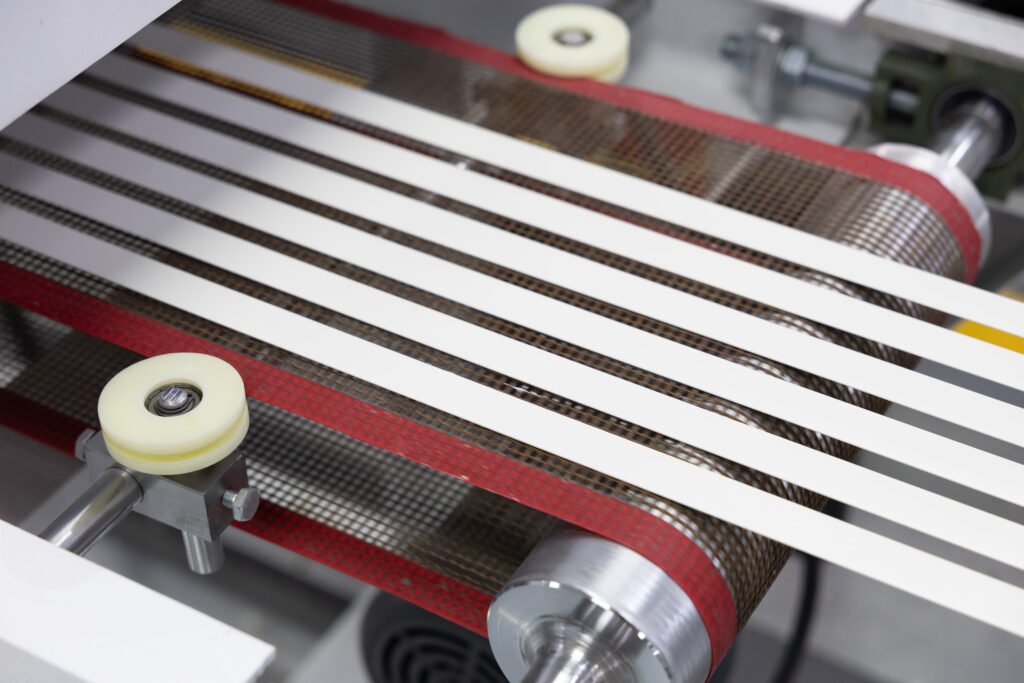
Laser edge banders require laser-compatible edge banding materials and more advanced equipment. Traditional systems use standard edge banding rolls compatible with most hot-melt machines.
From a technical standpoint, this means laser systems are cleaner and more precise, while traditional systems are simpler and more familiar in many small workshops.
How Do Performance and Quality Compare Between Laser and Traditional Edge Banding?
Distributors and manufacturers both care about quality. Poor long-term performance increases complaints and returns.
Laser edge banding generally produces edges with higher durability, better moisture resistance, and cleaner aesthetics, while traditional edge banding can still be acceptable for many mid-range and cost-conscious applications.

Durability and Resistance
| Quality Metric | Laser Edge Banding | Traditional Edge Banding |
|---|---|---|
| Bond Strength | Very high | High (especially PUR) |
| Water/Moisture Resistance | Excellent | Good (PUR) to fair (EVA) |
| Heat Stability | Excellent | Medium |
| Surface Seam Visibility | Invisible | Visible |
Laser fusion creates a structural bond that resists moisture and heat better than traditional hot-melt adhesives. The edge becomes less likely to separate in humid or heated environments, which is why laser is often chosen for kitchens or bathrooms.
Aesthetics and Finishing
A seamless finish gives furniture a premium look. Distributors often find that laser edge banding increases perceived value and reduces complaint rates around visible adhesive marks.
In contrast, traditional edge banding can show small imperfections under close inspection. However, it remains sufficient for many everyday furniture products.
How Do Cost and Pricing Influence Distributor and Manufacturer Choices?
Price plays a critical role in stock decisions. Many distributors hesitate to invest in laser systems because they see the upfront cost as high.
Laser edge banding systems and materials typically cost more upfront, but they can reduce labor and finishing time, whereas traditional edge banding equipment and materials have lower initial costs but may incur more downstream labor expenses.
Cost Considerations
| Cost Factor | Laser Edge Banding | Traditional Edge Banding |
|---|---|---|
| Equipment Cost | High | Low to Medium |
| Material Cost | Higher | Lower |
| Labor and Processing | Lower | Higher |
| Post-Processing | Minimal | Required |
Laser machines are a higher capital investment. Traditional machines are widely available and often less expensive. However, laser reduces trimming, adhesive handling, and cleanup time.
In large-scale furniture manufacturing, the higher efficiency and lower long-term labor cost can offset the upfront price over time.
Impact on Pricing
Manufacturers using laser technology can justify a premium price for finished products, especially in high-end markets. Traditional edge banding remains attractive for price-sensitive product lines where appearance and extreme durability are less critical.
Which Industries and Applications Prefer Laser or Traditional Edge Banding?
Different products and markets shape demand. Not all furniture requires the same edge banding technology.
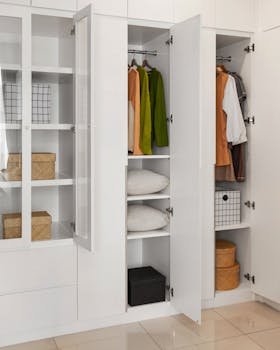
Laser edge banding is increasingly chosen for high-end residential furniture, custom cabinetry, and commercial spaces where aesthetics, durability, and seamless joints matter, while traditional edge banding dominates mid-range furniture and standard cabinetry markets.

Application Scenarios
| Application | Preferred Technology | Why |
|---|---|---|
| Custom Kitchens | Laser | Seamless, premium finish |
| High-End Furniture | Laser | Aesthetics & longevity |
| Office Furniture | Traditional | Cost-effective, durable |
| Standard Cabinets | Traditional | Balanced cost and performance |
Laser’s seamless finish fits minimalist, high-gloss designs that are popular in modern interiors. Traditional methods remain suitable for large runs where cost control is more important than invisible seams.
What Are the Current Market Demand Trends for Laser vs Traditional Edge Banding?
Market data shows that both technologies remain relevant, but trends are shifting.
The global edge banding market continues to grow overall, with laser edge banding gaining adoption due to automation and quality demands, while traditional methods stay dominant where cost and simplicity matter.

Market Growth & Trends
According to market analysis, the laser edge banding sector is expanding with a projected CAGR of around 6.8% through 2027, driven by automation and precision requirements in furniture production. Asia-Pacific leads adoption, especially among large-scale manufacturers.
The broader thermoplastic edge band market still sees PVC dominance, driven by classic edge band types and cost-sensitive segments. PVC remains over 60% of market use, while laser and other advanced methods gain ground in niche but fast-growing segments.
Technology Adoption Trends
Automation and digital integration are pushing laser technology forward. Manufacturers seek ways to reduce labor costs and improve consistency, making laser more attractive where skilled labor is scarce or quality standards are high.
Conclusion
Laser edge banding demand is rising due to quality and automation needs, while traditional methods remain strong for cost-sensitive markets. Distributors should stock based on customer segment, quality requirements, and long-term trends.
Data Sources
- LinkedIn – Laser Edge Banding vs Traditional Edge Banding Comparison
https://www.linkedin.com/pulse/laser-edge-banding-vs-traditional-ultimate-comparison-lambo-zou-jdd8c - Laser Delta – Laser Edge Banding Guide
https://laseracc.com/laser-edge-banding-the-ultimate-guide-2025.html - Nanxing Machinery – Laser Edge Banding vs Traditional Method
https://www.falitmac.com/arcnews_375.html - Edge Banding Trends – SMIEdge
https://smiedge.com/edge-banding-trends-the-latest-innovations-in-furniture-finishing/ - Accio – Market Trends of Laser Edge Banding
https://www.accio.com/plp/laser-edgebanding - Thermoplastic Edgeband Market Report – MarketGrowthReports
https://www.marketgrowthreports.com/market-reports/thermoplastic-edgeband-market-103148