
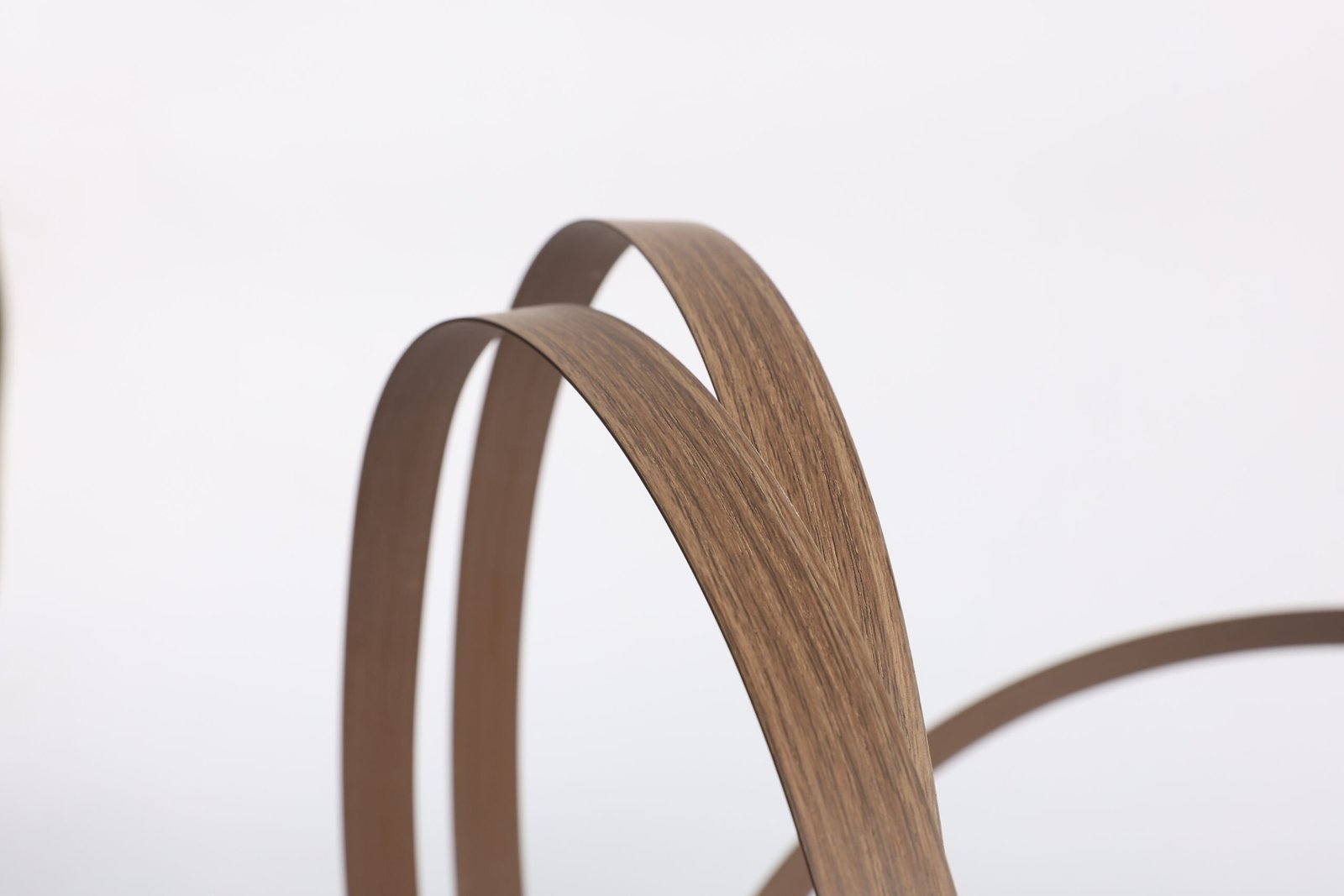
Pain: Straight edgebands are easy.
Agitate: Curves break many standard methods.
Solve: I share tested solutions so you stop rework and save time.
PVC edgeband can work on curves when you pick the right tape, adhesive, and heat method. This article gives step-by-step choices and practical tips for flexible edges.

If you make or fit curved furniture, stay with me. I will show material choices, forming methods, common mistakes, and product recommendations. I write from shop-floor experience and supplier guidance.
Understanding the Challenges of Edgebanding Curved and Flexible Surfaces?
Pain: Curves put stress on the edgeband.
Agitate: The band may stretch, gap, or curl after bonding.
Solve: I explain the key problems so you can target fixes.
Curved or flexible edges need edgeband that bends without tension. You must control heat, adhesive open time, and pulling forces to prevent gaps or wrinkles.
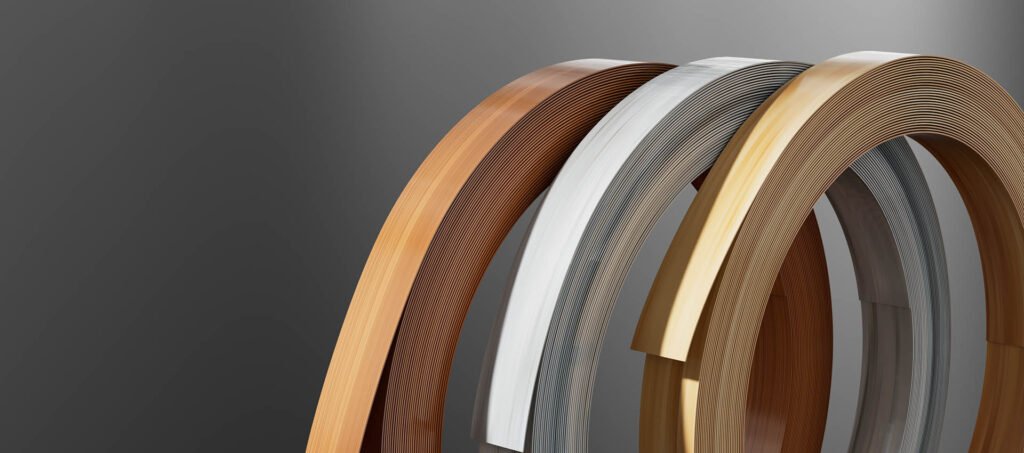
Curves change how the edgeband lays on the panel. The outer radius needs more tape length than the inner radius. That difference can cause tension. Thin, flexible PVC handles the curve better. Thicker or rigid tape resists bending and shows gaps.
Heat also changes behavior. PVC softens under heat. You must heat enough to let tape conform, but not so much that it deforms or chars. The right adhesive must stay soft long enough for you to form the tape and press it in place. Too fast-setting glue locks in stress and causes lifting.
Tooling matters too. Hand presses, radius jigs, hot-air guns, and soft rollers all change results. An operator who knows when to stop pulling and when to keep pressing will get better seams. I teach operators to feel tension and to let the tape relax before trimming.
Finally, measurement and prep reduce problems. I check edge radius and panel thickness before I choose tape. I cut sample pieces and test on a scrap panel. Simple tests avoid a whole bad batch.
How PVC Edgeband Adapts to Curved Furniture Designs?
Pain: Not every PVC tape bends the same.
Agitate: Picking the wrong material leads to tears or poor adhesion.
Solve: I show which PVC grades and profiles work best for curves.
Thermoformable or soft PVC with lower thickness bends more easily. Look for flexible grades and avoid rigid formulations for tight radii.

Material choices I use
- Thin PVC (0.4–1.0 mm): Most flexible. Good for small radii and fine contours.
- Semi-rigid PVC (1.0–2.0 mm): Works for gentle curves and thicker panels. Some semi-rigid types are labeled “FlexEdge” or “softforming.”
- Preformed or hot-bend tapes: These are made to be heated and shaped. They save time on complex profiles.
Why thickness matters
Thinner tape needs less extra length to go around the outer radius. Thicker tape needs more stretch or scoring to follow the curve. If you force thick tape, it may lift on the inner side or produce wrinkles on the outer side.
Surface and finish
A glossy tape reflects light and shows any gaps. Matte tapes hide small irregularities. I match the tape finish to the panel to reduce visible errors.
I always test the tape on the actual edge radius before full runs. Suppliers often publish minimum bend radii. Use those as a start, then verify in your shop.
Heat Forming and Application Techniques for Flexible Edgebanding?
Pain: Heat and adhesive timing make or break a curved joint.
Agitate: Wrong heat method burns the tape or causes poor bond.
Solve: I list tested heating and application workflows.
Common safe methods are softforming (hot-air or IR preheat), hot-bending on a shaped former, and using low-temp hot-melt adhesives designed for curved work.
Step-by-step workflow I use
- Measure and plan. Check the radius and choose tape thickness and width.
- Preheat if needed. Use hot-air or an IR oven to warm the tape. Keep temperature in the safe zone for the PVC grade. Avoid direct contact with flame.
- Apply adhesive. Use an appropriate hot-melt with the right open time. For thin PVC, pick low-temp adhesives to avoid overheating the tape. Jowat and other makers list low-temp grades for this use.
- Form to the radius. Press the tape onto the outer radius first, then ease the inner side. Use a soft roller or a shaping block to avoid point pressure. Rotate along the curve rather than pulling sideways.
- Cool under pressure. Hold the formed tape with a soft jig or roller until the adhesive sets. This step prevents rebound and lifting.
- Trim and finish. Trim after the bond sets. Remove protective foil immediately if applicable to avoid residue.
Tools and tips
- Use a controlled hot-air gun or a station with temperature control.
- Use shaped overlays or radius templates to guide pressing.
- Choose adhesives with longer open times when you need to reposition. Short open-time adhesives work for straight runs but can fail on curves.
I always run small trials to set the temperature and adhesive feed speed. That gives repeatable results and reduces scrap.
Common Issues When Bending Edgeband—and How to Avoid Them?
Pain: Bending can cause bubbles, wrinkles, gaps, or delamination.
Agitate: Fixing them later costs time and looks bad.
Solve: I list causes and quick fixes so you can act fast on the line.
The main issues are tension-induced lifting, adhesive starve, overheating, and edge mismatch. I give checks for each problem below.
Problem: Wrinkles or stretching on the outer radius
Cause: Too much pull or wrong tape.
Fix: Use thinner or thermoformable tape. Preheat and form with a template. Reduce puller speed and stop pulling tight while pressing.
Problem: Lifting or gaps on the inner radius
Cause: Tape under tension and adhesive set too fast.
Fix: Use adhesive with longer open time. Apply tooling to hold inner side during cure. Relax the tape before trimming.
Problem: Bubbles and blisters after heating
Cause: Moisture in the tape or overheated PVC.
Fix: Store tape dry. Lower heating temperature and increase dwell time. Use recommended adhesive temperatures.
Problem: Delamination of printed surface
Cause: Poor primer or contamination.
Fix: Use correct primers and ensure the surface is clean. Run adhesion tape tests before production.
Quick troubleshooting table
| Issue | Likely cause | Quick action |
|---|---|---|
| Wrinkles outer radius | Excessive pull | Reduce pull, preheat, use thin tape |
| Gaps inner radius | Fast-set glue | Use longer open-time adhesive |
| Bubbles | Moisture/overheat | Dry stock, reduce temp |
| Delaminate print | Poor adhesion | Check primer and ink cure |
I train operators to stop at the first sign of a repeat defect. Stopping early saves whole rolls.
Best Product Options and Innovations for Curved Edge Applications?
Pain: The market has many products and claims.
Agitate: Wrong choice wastes money and time.
Solve: I recommend practical options and point to innovations to watch.
Look for thermoformable PVC, labeled softforming tapes, low-temp hot-melt adhesives, and preformed corner pieces. Big suppliers like REHAU publish processing tips and specific product lines for curves.
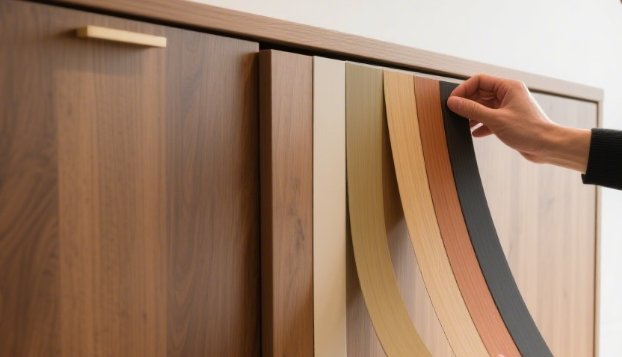
Product picks I use
- Thermoformable PVC tapes (thin gauges): Best for tight radii and furniture curves.
- Low-temperature hot-melts (EVA/PO based): These lower heat input and reduce tape stress. Jowat lists low-temp grades for edgebanding.
- Pre-bent or shaped edgeband pieces: Use these on repetitive profiles to save time.
- Softforming systems and heat presses: For high-volume curved work, dedicated formers give fast, consistent results. Altendorf and other machine makers provide guidance.
Innovations to watch
- UV-curable adhesives with short cure but controlled handling.
- Laser-assisted edge systems that reduce glue lines and improve fit on some contours.
- Tapes with higher recycled content that still form cleanly. Suppliers are improving formulations to combine sustainability and flexibility.
I test new products on real parts before I buy a large stock. That way I know tool settings and limits.
Conclusion
I match flexible PVC, heat method, adhesive, and tooling to the curve. Test first, train operators, and record settings for repeatable success.
Data sources and references
- REHAU — Edgeband technical information and processing tips. https://www.rehau.com/downloads/886866/edgeband-technical-data-sheet.pdf (REHAU)
- REHAU — Edgeband brochure and FlexEdge / RAUKANTEX info. https://www.rehau.com/downloads/1250640/edgeband-brochure.pdf (REHAU)
- Jowat — Low-temperature hot-melt adhesives for edgebanding (product guidance). https://www.jowat.com/en/adhesives/hot-melt-adhesives/jowathermr-eva/low-temperature-hot-melt-adhesives-for-edgebanding/ (jowat.com)
- Jowat product catalog (adhesive temps and use cases). https://files.jowat-cloud.com/dokumente/haendlerprogramm/Jowat_SE_Haendler-Programm_EN-s_HAENDLER_2024-07-31.pdf (files.jowat-cloud.com)
- REHAU — Technical delivery specifications: notes on heating and forming. https://interior.rehau.com/downloads/2125982/raukantex-technical-specification.pdf (interior.rehau.com)
- Altendorf — Guidance on working with flexible materials and machine tips. https://altendorf.in/maximize-your-craft.html (altendorf.in)
- General PVC thermoforming and temperature guidance. https://thermoformingdivision.com/resources/thermoforming-101/thermo101_alphabet/ (SPE Thermoforming Division)