
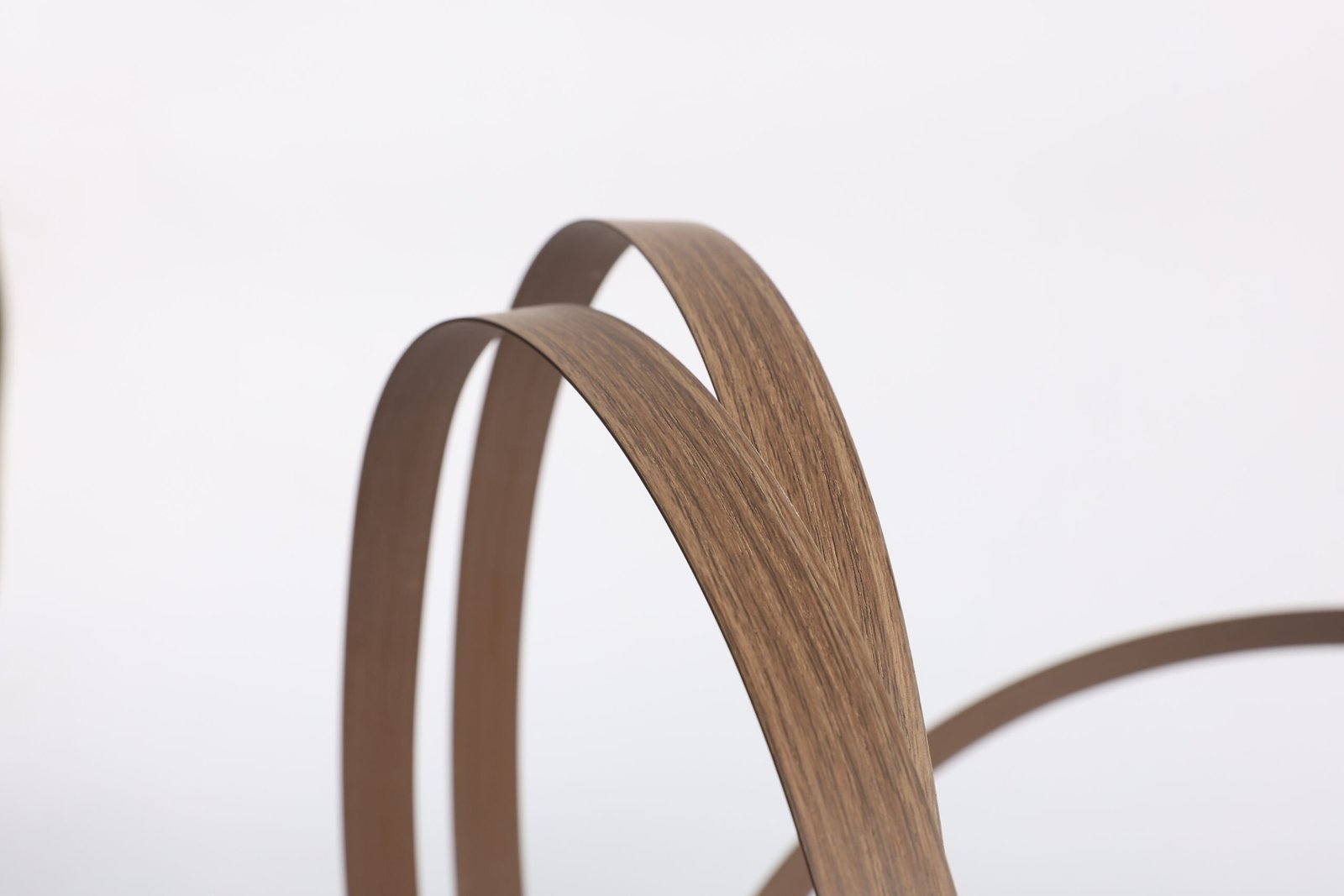
Most buyers lose money by choosing the wrong PVC edgeband width. It causes bad trimming, slow production, and panel rejects. I see this every week.
PVC edgeband width ranges from 12mm to 100mm. The right size depends on panel thickness, trimming method, machine settings, and tolerance. Most errors happen because buyers match width to panel thickness but ignore edge radius, scraper loss, and glue squeeze-out.

Width looks simple, but it impacts your reject rate, cost, machine speed, and finish. If you choose wrong, you pay twice. Let me break it down step by step.
Understanding Standard PVC Edgeband Width Ranges (12mm–100mm)?
Wrong width is the silent killer in edge banding. You see rough edges and bad trimming. You blame glue or machines. But 7 out of 10 times, the width was the real cause.
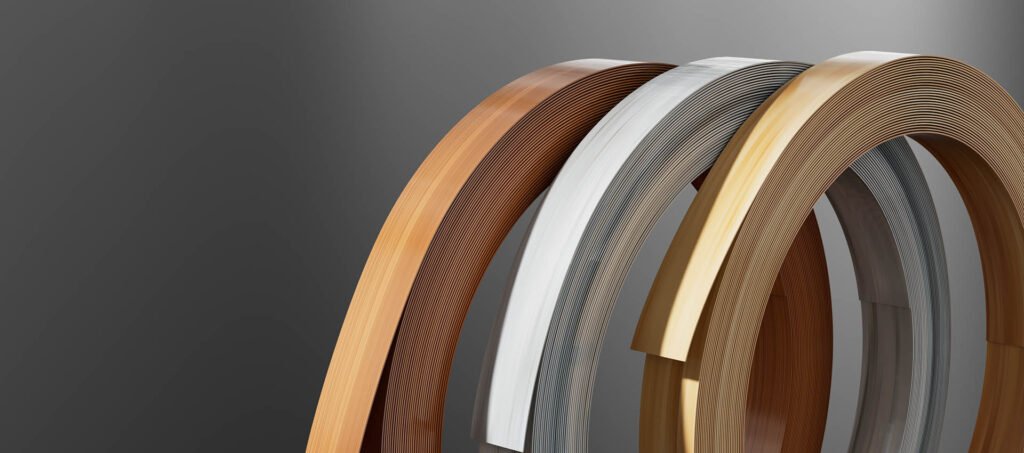
Standard PVC edgeband widths go from 12mm to 100mm. Thin widths serve small panels and doors. Mid widths cover most cabinet boards. Wide widths fit thick panels, partitions, and custom furniture parts.
Why these sizes exist
PVC edgeband widths are standardized because furniture panels follow global thickness norms. Most boards fall into a narrow group. So the band widths match them. If widths were random, trimming would fail and cost would rise.
Common width groups and use cases
| Width Range | Best For | Typical Panel Thickness | Notes |
|---|---|---|---|
| 12–18mm | Small doors, drawers, thin MDF | 5–12mm | Low trimming allowance, high precision needed |
| 19–23mm | Most home cabinets | 15–18mm | The most popular global segment |
| 24–32mm | Thick boards, premium cabinets | 18–28mm | Needs stronger glue line control |
| 36–60mm | Partitions, desks, doors | 30–50mm | Extra trimming and scraper setup needed |
| 65–100mm | Custom projects | 50–90mm | Mostly need custom MOQ |
The hidden math behind width choice
Most people think like this:
Panel thickness + 2mm = correct band width.
This logic is wrong. The correct formula in real factories is closer to:
Panel thickness + material edge radius + trimming loss + glue squeeze-out allowance.
For example, if you band an 18mm panel with R2 rounded edges, you lose ~0.4–0.6mm on each side when trimming. Add glue squeeze of ~0.2–0.3mm per side. So you need 18mm + 1.2mm = 19.2mm minimum, meaning 20–23mm width is safe. That is why 23mm is more widely used than 19mm in mass production.
Why width uniformity matters
Thickness may vary up to ±0.15mm and width up to ±0.2mm under normal standards (ISO 18775). If your supplier has poor control, you get edge over-trimming or white lines. I always check width tolerance before mass orders. It matters more than people admit.
I learned this from one buyer who ordered 19mm band for 18mm boards. He returned 32,000 meters. His trimming knives kept scratching the board. The width was not enough to cover the edges after trimming. It was not the machine. It was math.
Choosing the Right Width Based on Panel Thickness and Application?
You want smooth edges. You want fast trimming. You want zero white lines. Then stop matching width to numbers. Match width to application context.
Panel thickness sets the baseline. Edge radius, machine precision, and finish type decide the real width. Gloss and soft-touch finishes need more trimming margin than matte.

Panel thickness vs ideal width
| Panel Thickness | Safe Width Range | Risky Width | Best Use |
|---|---|---|---|
| 5–9mm | 12–15mm | 12mm exact | Slim doors, back panels |
| 12–15mm | 16–21mm | 15mm exact | Slim cabinets, wall units |
| 16–18mm | 20–23mm | 18–19mm | Most furniture |
| 25mm | 28–32mm | 25mm exact | Premium boards |
| 30–50mm | 36–60mm | 32mm | Partitions and desks |
| 50mm+ | 65–100mm | 60mm | Custom designs |
How finish type changes width decisions
Gloss, super-matte, acrylic, and wood grain behave differently during trimming:
| Finish Type | Needs Extra Margin? | Why |
|---|---|---|
| High Gloss | Yes, +1.5mm | Micro scratches show more |
| Super Matte | Yes, +1mm | Surface burns easily |
| Wood Grain | Medium, +0.5–1mm | Texture affects scraping |
| Standard Matte | Low | Most stable during trimming |
Machine type changes everything
Manual banders, semi-auto, and full auto lines trim differently.
| Machine Type | Stability | Width Tolerance Needs | Extra Width Advice |
|---|---|---|---|
| Manual | Low | High | Add +2mm margin |
| Semi-Auto | Medium | Medium | Add +1–1.5mm |
| Full Auto | High | Low | +0.5–1mm is enough |
Glue behavior and width logic
Hot melt glue expands and pushes material outward. PUR pulls inward during curing. So:
- Hot melt needs more width margin.
- PUR needs less margin but higher precision.
I saw a batch fail because the buyer used PUR glue but added a wide margin like hot melt settings. Trimming left rough edges and too much waste. The glue type changed the width plan.
Common Width Selection Mistakes and How to Avoid Them?
People think width is the cheapest, simplest decision. It is not. This decision controls rejects, labor, and speed.
The biggest mistakes are ignoring trimming loss, copying old width specs, and assuming all suppliers control tolerance well. The fix is real measurement, machine testing, and margin planning.

Top 6 width mistakes I see
| Mistake | Result | Real Reason |
|---|---|---|
| Matching width exactly to panel | White lines | No trim margin |
| Copying last order specs | Hidden failure risk | Machines or glue changed |
| Ignoring tolerance | Uneven edges | Supplier variance too high |
| No test run | Mass rejects | No control sample |
| Same width for all finishes | Scratches | Gloss needs more space |
| No glue squeeze calculation | Poor bonding lines | Glue spread ignored |
The trimming loss nobody calculates
When trimming, you lose material because:
- Blades are angled, not straight cuts
- Scrapers remove micro layers
- Polish wheels remove surface
- Heat causes PVC micro expansion
Total loss can reach 0.6–1.2mm per side depending on setup.
The tolerance trap
Many buyers assume ±0.1mm tolerance. Most factories actually run ±0.15 to ±0.3mm depending on line quality. If your safe margin is 1mm, but real tolerance is 0.3mm, your safety zone shrinks by 30%.
Ask suppliers for:
- Width tolerance report
- Gauge inspection QC log
- Inline measurement records
- GRR (Gauge Repeatability & Reproducibility) if possible
The real fix
- Test width before mass order
- Measure blade trimming loss
- Add glue expansion factor
- Add tolerance buffer
- Lock width spec in contract
I run width lab checks on every new client. 60% of them find their width was under-planned by 1–2mm.
Custom Width Options: MOQ, Tolerance, and Production Feasibility?
Not all widths are stock. Some require custom extrusion. This adds cost, time, and restrictions.
Custom widths are possible from 23mm to 100mm+. Most factories set MOQ between 3,000–10,000 meters. Tolerance gets wider as width increases. Lead time increases by 3–7 days.

Why custom width is harder to control
PVC edges are extruded through a die. If you change width, you change:
- Melt pressure stability
- Cooling time
- Material shrink rate
- Line tension balance
Wide widths cool slower. This raises tolerance variation.
Typical MOQ by width
| Width Type | MOQ Range | Difficulty Level |
|---|---|---|
| 12–30mm (stock) | 1,000–3,000m | Easy |
| 31–60mm | 3,000–5,000m | Medium |
| 61–80mm | 5,000–8,000m | Hard |
| 81–100mm+ | 8,000–15,000m | Very Hard |
Tolerance trend
| Width | Normal Tolerance |
|---|---|
| 12–23mm | ±0.15mm |
| 24–36mm | ±0.20mm |
| 37–60mm | ±0.25mm |
| 61–100mm | ±0.30–0.50mm |
Production feasibility checklist
Before custom width, I check:
- Resin flow stability
- Extruder die wear level
- Cooling calibration length
- Haul-off pull force control
- Winder tension balance
- Real target tolerance needed
- Buyer trimming allowance room
If any fail, the width may be possible but not stable. Possible is not equal to reliable.
I refused orders before because the customer needed ±0.1mm on 80mm width. Physics says no. We redesigned the width plan instead.
How Width Impacts Trimming, Finishing, and Cost Efficiency?
Width affects cost more than material price. Waste, speed, blade wear, polish time, and rejects cost more than PVC itself.
Too-narrow widths increase rejects. Too-wide widths increase waste, trimming time, and blade wear. The best width is the smallest safe margin, not the biggest physical size.

Cost elements tied to width
| Width Issue | Hidden Cost |
|---|---|
| Too narrow | Reject panels, rebanding labor |
| Too wide | 8–15% material waste |
| Uneven width | Blade damage, recalibration |
| Over trimming | Edge burn, finish repair |
| Too tight margin | Slow machine speed |
Waste math example
If width is 2mm oversized:
- 2mm × 1000m = 2 meters of waste surface
- At 100,000m per order = 200 meters wasted material
- At $0.20 per meter cost = $40 direct loss
- +Blade wear +Labor +Slow speed = real loss ~5–8x the material cost
So $40 becomes $200–$320 real loss
Trimming vs finish quality
More trimming = higher chance of:
- White edges
- Gloss burn
- Texture flattening
- Micro cracks
- Poor touch feel on soft-touch surfaces
Less trimming (but safe margin) = best result.
Conclusion
Width is not a size choice. It is a process decision. Choose width based on trimming loss, tolerance, glue behavior, and finish type. Correct width saves cost, speed, and quality.
Data Sources
- ISO 18775:2017 – Furniture, PVC edge banding tolerance standard
https://www.iso.org/standard/62894.html - FDMC Magazine – Edge Banding Performance Factors
https://www.fdmc-online.com - European Panel Federation – Board Thickness Norms
https://europanels.org - Stiles Machinery – Trimming and Scraping Technical Notes
https://www.stilesmachinery.com