
I once lost a buyer because I did not plan MOQ. That cost me time and trust. I learned to handle MOQs the hard way.
Minimum order quantities (MOQs) set the smallest buy you must place for a custom edgeband. They come from tooling, compound runs, and printing setup. Knowing typical MOQ ranges and how to lower them saves money and speed.
I want to keep you reading. I will show what creates MOQs. I will give numbers you can expect. I will share tactics I use to lower MOQ without losing quality.
Why Minimum Order Quantities Exist in Custom Edgeband Production?
I remember asking a mill why they needed thousands of meters. The answer was simple. Setup costs had to be spread over many meters.
MOQs exist because fixed costs — tooling, plates, color masterbatches, and machine setup — must be amortized over a run. Gravure and extrusion have clear fixed steps that force higher MOQs than digital print. Digital printing can be low or zero MOQ.
Dive deeper: the fixed costs behind MOQ and how they matter
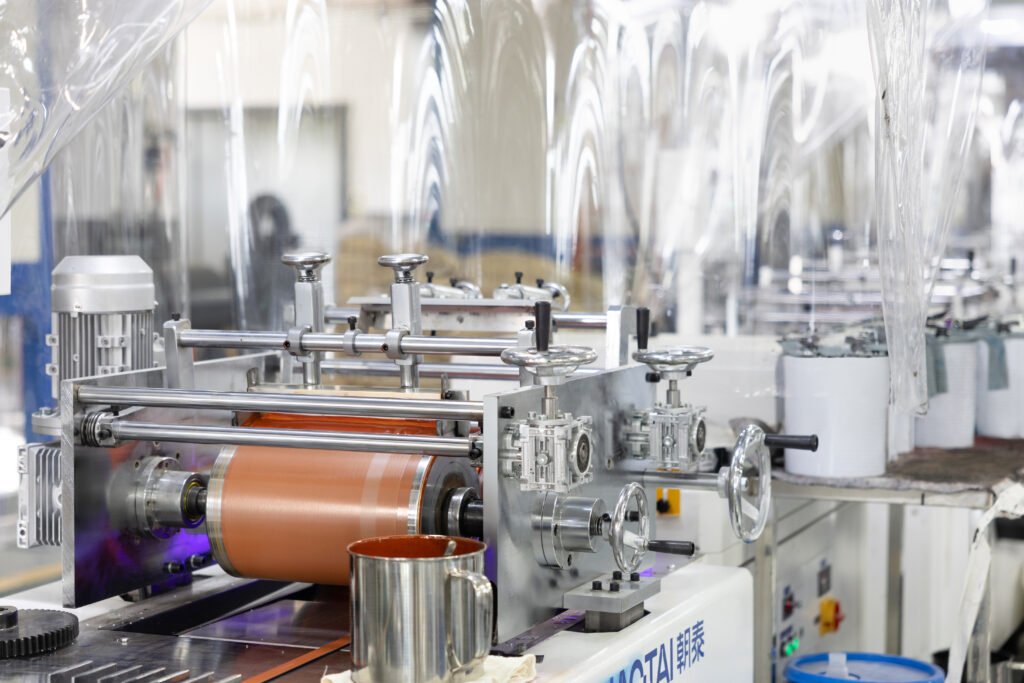
Tooling and setup create most of the MOQ pressure. For printed edgeband, gravure needs engraved cylinders. Those cylinders cost money. The cost is not small. The mill must justify that cost. They do that by asking for a larger order. This spreads the cylinder cost across many meters.
For extruded PVC or ABS tape, a masterbatch mix and stable extrusion setup are needed. Compounding a color batch has a minimum workable quantity. Changing compounding lines too often raises scrap and labor. So mills set MOQs to make runs efficient.
Press and extrusion settings take time to stabilize. The first meters are often waste. That waste is another fixed cost. When the waste and tooling cost are high, the MOQ rises.
Digital printing uses no engraved cylinder and less setup. It has less fixed cost per design. That makes small runs possible. Some digital suppliers advertise no MOQ. But digital can cost more per meter for long runs.
I use this rule: if the process has a physical, engraved, or compounded tool that cannot be reused cheaply, expect higher MOQ. If the process is file-driven and inkjet-based, expect lower MOQ. This simple view helps me pick the right supplier for a job.
How MOQs Change for PVC, ABS, Acrylic, and Printed Edgebands?
I made the mistake of treating all materials the same. They are different. Each material brings its own MOQ logic.
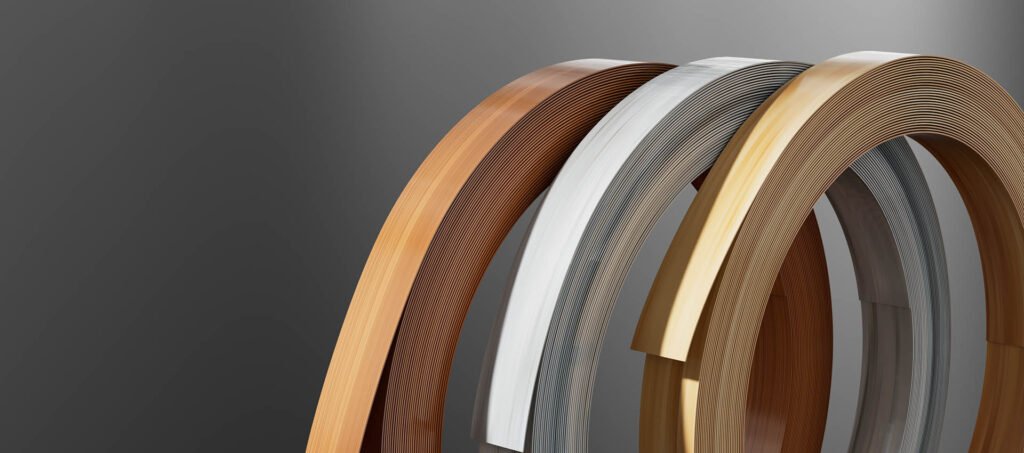
PVC and ABS extrusion often need thousands of meters per color. Printed papers controlled by gravure need high MOQ because of cylinders. Digital printed tapes can be ordered in small batches or even single rolls. Real MOQ figures vary by mill and by color.
Dive deeper: practical MOQ ranges by substrate and what I check
I break MOQ by the main categories I buy from.
PVC / ABS extruded tape
Extrusion needs compounded color. Many factories list MOQs around 2,000–5,000 meters per color or more for custom compounds. I have seen standard offers at 3,000–5,000 m per color from multiple suppliers. This covers masterbatch, setup, and waste. Small trial runs are sometimes possible but at a higher unit price. When I need a sample run, I ask for trial pricing and confirm the compound lot number.
Printed decor on tape (gravure)
Gravure gives great repeatability and color depth. It needs engraved cylinders. That raises MOQ. Typical MOQs depend on the mill. In many similar print industries, MOQs can be several thousand units or meters. Gravure is worth it only if you plan repeat orders or long runs. If you need many colors or patterns, expect higher MOQ.
Digital printed edgeband
Digital removes engraved-cylinder costs. That allows very low MOQs. Some digital suppliers advertise no MOQ or sample-length orders. I use digital for prototypes and short runs. The per-meter cost is higher, but I avoid big inventory. For small brands this is a lifesaver.
Acrylic and specialty tapes
Special polymers and finishes may require unique compounding. MOQs depend on the raw-material supplier and the mill’s capacity. I always ask for minimum compound batch weights in kg and convert that to meters for the tape width and thickness I need.
| Substrate | Typical MOQ (practical range) | Why |
|---|---|---|
| PVC / ABS extrusion | 2,000–5,000 m per color (varies) | Compound batch + extrusion setup |
| Gravure printed tape | Several thousand meters per design | Engraved cylinder & setup waste |
| Digital printed tape | 0–500 m possible | No cylinder, file-driven |
| Specialty polymers | Depends on compound lot sizes | Raw material batch constraints |
I always ask my supplier to convert MOQ into meters for my exact tape width and thickness. That helps me compare offers. I also ask if they can do paid trial runs. Paid trials protect both sides.
What Cost Factors Actually Drive MOQ Requirements?
I used to focus on price per meter. I now focus on cost drivers. The drivers explain MOQs.
The main cost drivers are tooling (cylinders, plates), masterbatch / pigment lots, machine setup and waste, and lead time losses. These fixed costs push suppliers to set MOQs that make the job profitable.

Dive deeper: itemized cost drivers and how they affect your order
I list each driver and explain how it impacts MOQ.
Tooling and plates
Engraved cylinders or plates are expensive. The cost must be spread across meters. If a cylinder costs $1,000 and you run 10,000 m, the per-meter share is $0.10. If you only run 500 m, the per-meter share becomes $2.00. This math is why gravure MOQs are high.
Pigment and masterbatch
Custom pigments or masterbatch mixes have minimum batch sizes. The supplier cannot make a tiny pigment batch cheaply. The minimum kg of compound converts to many meters of tape depending on thickness and width. That creates a floor on how little you can order.
Setup time and waste
Machines take time to stabilize. The first meters are often off-color or have defects. This creates waste. The more changeovers a mill does, the more waste and cost accumulate. MOQs allow mills to run longer and reduce changeover frequency.
Labor and testing
Color matching, spectral testing, and QC add labor per setup. For custom matches, labs generate reports. Mills put this cost into the whole job.
Inventory and lead time penalties
Holding small, custom runs forces buyers to manage many SKUs and slow-moving stock. Mills may charge more for small runs because they complicate production scheduling.
| Driver | How it raises MOQ |
|---|---|
| Tooling | Expensive fixed cost per design |
| Masterbatch | Minimum kg per color |
| Setup waste | More changeovers = more waste |
| QC testing | Lab and measurement time |
| Scheduling | Complex production planning |
I always ask suppliers to break down which drivers are in my quote. If tooling dominates, I push for digital. If masterbatch dominates, I ask if they will share compound leftover for small future orders.
How Buyers Can Lower MOQs Without Sacrificing Quality?
I used to accept MOQs. Then I learned tactics to lower them. These tactics saved money and kept quality high.
You can lower MOQs by choosing digital print for short runs, consolidating colors, paying for shared tooling, and offering forecasted reorder plans. Negotiation matters. Data and commitment close deals.
Dive deeper: practical tactics I use and contract terms I push for
Here are the tactics that worked for me.
Use digital printing for samples and short runs
I use digital print for prototypes. I also use it for limited editions. Digital avoids cylinder costs. It raises the per-meter price but cuts the MOQ to a few hundred meters or less.
Consolidate colors and patterns
I ask my product team to reduce the number of custom colors. We aim for shared tones across SKUs. Fewer unique colors mean fewer masterbatches and lower MOQ pressure.
Share tooling cost or accept a tooling fee
If I plan multiple SKUs or future repeats, I offer to pay part of the cylinder or plate cost. Suppliers often amortize that fee and lower MOQ for me on the first run.
Commit to forecasted reorders
I give suppliers a 6–12 month forecast. In return I ask for a lower MOQ or priority scheduling. Forecasts reduce the mill’s risk and often lower price and MOQ.
Accept higher unit price for trial runs
For a one-off product, I accept a higher per-meter price for a small run. I treat this as R&D spend. If the product sells, I move to larger, cheaper gravure runs.
Include clear contract terms
I add ΔE acceptance, batch record sharing, and recipe lock clauses in the contract. That protects me when volumes ramp.
| Tactic | When I use it | Benefit |
|---|---|---|
| Digital print | Prototypes, short runs | Low MOQ |
| Color consolidation | Product family design | Lower total MOQ |
| Tooling fee share | New design with repeats | Lower first-run MOQ |
| Forecast commit | Planned SKUs | Better pricing & MOQ |
| Paid trial run | New market test | Fast validation |
These moves gave me control. They let me balance speed, cost, and quality.
When Higher MOQs Become More Cost-Effective for Large Furniture Brands?
I once pushed for low MOQ on a high-volume color. That was a mistake. High MOQ can be good for big brands.
High MOQ reduces unit cost. For stable, high-volume SKUs, gravure or extrusion with higher MOQ gives far lower price per meter and better consistency across batches.
Dive deeper: the break-even view and how I calculate it
I compare total cost per meter at different run sizes. I include tooling amortization, pigment cost, and expected repeat volume.
Step 1: sum fixed tooling cost and lab setup
I add cylinder cost, standard setup waste, and lab match costs.
Step 2: estimate variable cost per meter
This includes raw materials, ink, energy, and direct labor.
Step 3: calculate cost per meter for target runs
I divide (fixed cost + variable cost × meters) by meters. I do this for several run sizes. The per-meter cost usually falls fast as meters increase.
Example (simple): if tooling costs $2,000 and variable cost is $0.05/m:
- At 1,000 m: cost/m = (2000 + 0.05×1000) /1000 = $2.05/m
- At 10,000 m: cost/m = (2000 + 0.05×10000) /10000 = $0.25/m
This math shows why big brands accept MOQ. The unit saving is real. Big brands also benefit from consistent batches and locked recipes. For them, the inventory cost is offset by lower unit cost and smoother production.
I always run this break-even math before I accept a supplier’s MOQ. I also add carrying cost for inventory. That gives a real view of total landed cost, not just unit price.
Conclusion
I treat MOQ as a tool. I balance run size, price, and flexibility. The right plan saves money and keeps quality.
Data sources and links
- Industry overiew on gravure MOQ and why gravure demands higher minimums.
https://lqcprinting.com/news/why-gravure-printing-demands-high-minimum-order-quantities/ - Frametech digital edgeband — example of low/no-MOQ digital printing option. (Frama-Tech)
https://www.framatech.com/collections/digitally-printed-pvc-edgebanding - Alibaba / supplier listings showing common MOQ ranges for PVC edgeband (3,000–5,000 m examples). (Alibaba)
https://www.alibaba.com/showroom/pvc-edge-banding.html - Netsuite guide to MOQ basics and how suppliers set minimums. (NetSuite)
https://www.netsuite.com/portal/resource/articles/inventory-management/minimum-order-quantity-moq.shtml