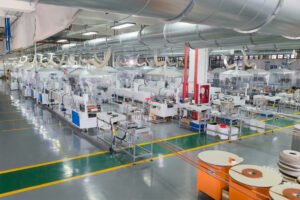

Struggling to find a PVC edge banding factory that truly supports your business? You are not alone in this problem.
A factory suitable for distributors must offer quality, consistency, capacity, and cooperation that help you grow sales and reduce risk.

Choosing the wrong factory costs money, time, and reputation. In the paragraphs below, I will share what I have learned from years of working with factories and distributors.
What Distributors Really Need From a PVC Edge Banding Factory?
You might chase low prices and ignore real needs. That leads to returns, complaints, and stress.
Distributors need a factory that delivers reliable products, clear specs, and honest communication. Price alone never solves supply issues.

What Distributors Actually Need
Clear Specifications
Distributors need exact specs that match catalog claims. PVC edge banding has many variables:
| Specification | Meaning to Distributor |
|---|---|
| Thickness tolerance | Must fit machines and panels |
| Color match standard | Must match boards consistently |
| Width accuracy | Must fit edge profile precisely |
| Material grade | Affects durability and bonding |
When I first contacted factories, many could not give exact tolerances or color tolerances. That cost me two pilot runs and extra freight. A good factory gives clear spec sheets early.
Quality Testing Data
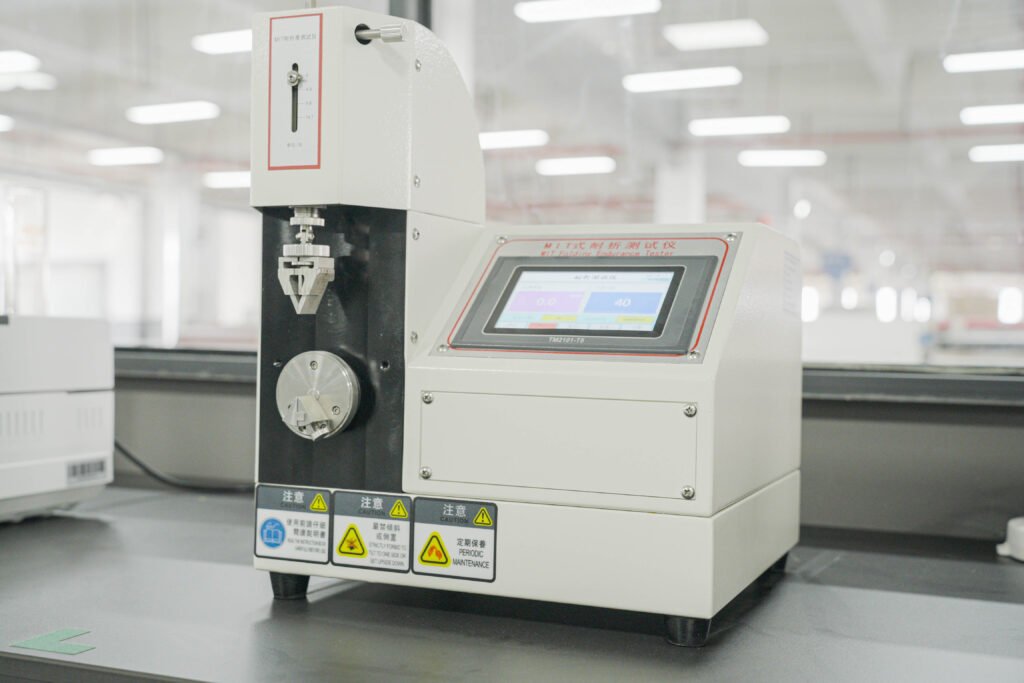
Distributors need reliable data on product tests. Good factories use machines like spectrophotometers to ensure color consistency and micrometers for thickness control. They keep records of test results by batch.
Distributors should ask factories for:
- Sample reports from last 3 production runs
- Color deviation values like Delta E (e.g., ≤1 for tight match)
- Thickness and width inspection charts
If a factory cannot provide such data, it likely has weak quality control.
Honest Communication
Distributors juggle many orders and clients. I learned that poor communication kills partnerships fast. Good factories respond quickly, answer questions with data, and share production capacity openly.
An ideal factory:
- Responds in 24 hours
- Shares production photos
- Explains delays before they happen
Poor communication always leads to surprises.
How Needs Translate Into Business Value
A factory that meets these needs helps distributors:
- Keep orders on schedule
- Reduce rejects and rework
- Offer consistent products to clients
You want a partner, not a price quote.
How Production Stability and Batch Consistency Affect a Distributor’s Business?
Unstable production and inconsistent batches destroy distributor profits. I saw this first with an order that had 5 different shades in 500 rolls. My client refused shipment.
Batch consistency is not a luxury. It is a requirement.

Why Stability Matters
Production Line and Technology
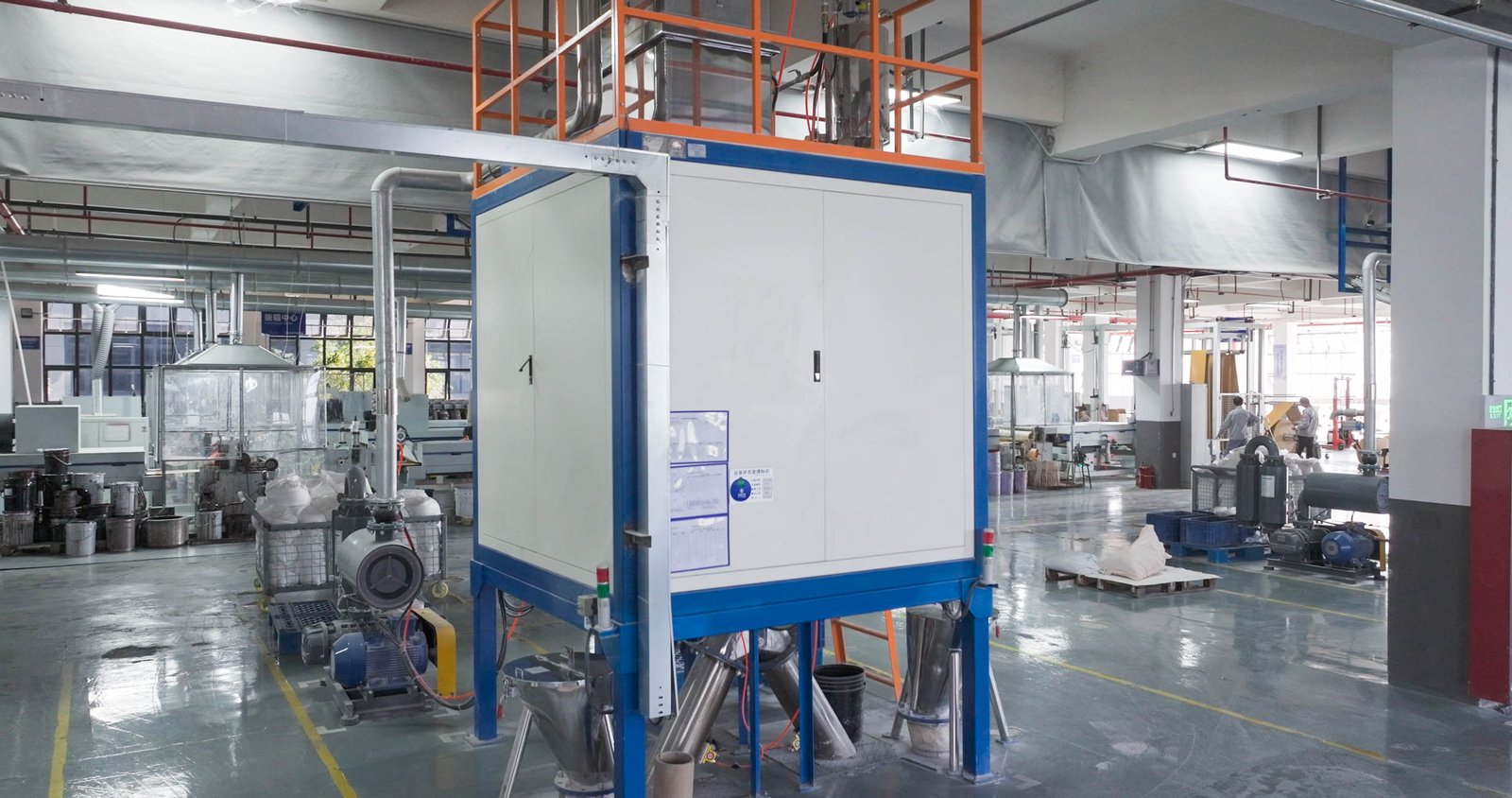
A stable factory uses:
- Multiple extrusion lines
- Automated quality checks
- Routine calibration of machines
Factories with only one old line cannot guarantee stable output week after week. They may switch raw material lots without notice.
Batch Control Methods
Good factories tag production batches with:
- Date and line number
- Raw material batch codes
- Color formula records
This allows matching new orders to old batches when clients need replacements.
Factories that lack batch controls force distributors to:
- Accept mismatched colors
- Handle client complaints
- Lose trust in delivery
I once had to re-cut thousands of meters because two batches varied slightly in tanning under daylight. It was costly.
Batch Consistency Checklist
| Item | What You Should See |
|---|---|
| Batch tags | Yes, on every box |
| Color formula file | Yes, stored and backed up |
| Spectrophotometer readings | Yes, available for review |
Factories that share this data upfront show they are serious partners. Those who refuse often hide poor controls.
Real Impact on Orders
Unstable production leads to:
- Emergency air freight to fix mistakes
- Discounted orders to appease clients
- Delayed deliveries that break contracts
As a distributor, you must avoid these risks. A factory with stable production creates predictability, which equals lower cost and stronger reputation.
Why Color Matching and Custom Capability Matter for Distributor Sales?
Color matching and custom options differentiate you from competitors. Clients rarely accept “close enough.” They want exact matches.
Poor color matching kills sales. I lost three accounts before I learned this lesson the hard way.
The Importance of Color Matching
Client Expectations
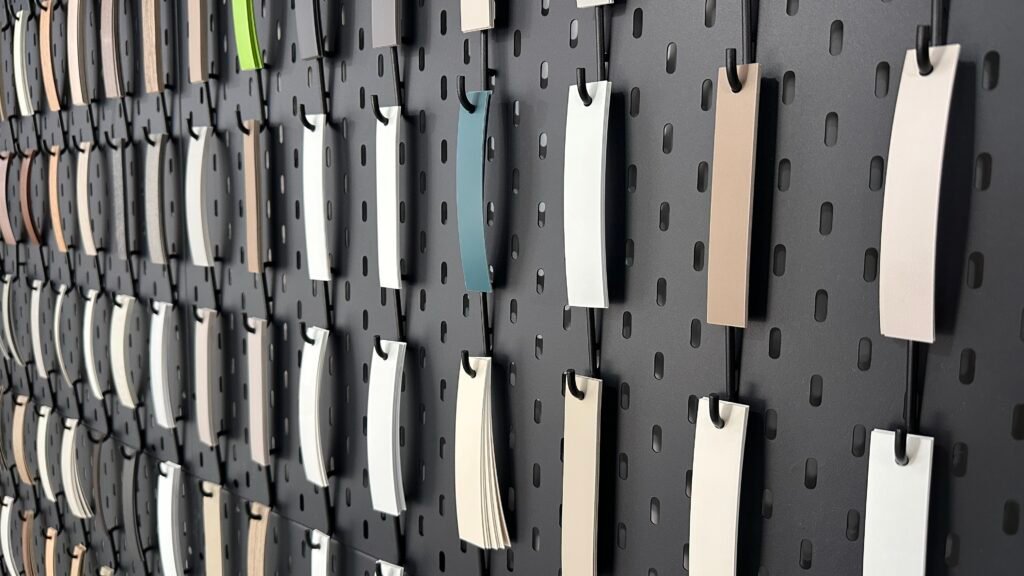
Furniture brands and OEMs use panels with precise colors and patterns. Edge banding must match. Even a slight shift ruins the final product look.
Good factories:
- Use colorimeters or spectrophotometers
- Follow standard light boxes for evaluation
- Record Delta E values per batch
Distributors should require factories to:
- Share color test results
- Provide on-site or third-party reports
- Reproduce old batches on demand
Custom Capabilities
Many clients want:
- Special wood grains
- Unique film textures
- Thin or thick edges
- Matte, gloss, or soft-touch
A suitable factory offers:
- Custom tooling
- Color formula development
- Small batch runs without huge MOQs
Factories that only offer standard SKUs limit your sales. They force you into price competition, not value competition.
How Custom Options Translate Into Sales
Custom options allow you to:
- Win unique orders
- Command higher margins
- Serve niche market segments
A factory that supports creative options becomes your growth partner.
Color and Custom Checklist
| Capability | Distributor Benefit |
|---|---|
| Color matching data | Confidence in delivery |
| Custom tooling | Expanded product line |
| Multiple film textures | Competitive edge |
| Flexible MOQs | Faster test orders |
Factories with data and customization win more orders. Those that cannot adapt lose business.
How a Factory’s Supply Chain and Inventory Model Impacts Distributor Risk?
Inventory and supply chain determine whether a distributor can handle spikes in demand and avoid stockouts.
I once had no stock for two weeks because a factory waited for raw material shipments. My clients canceled orders.
Inventory Models That Matter
Stock-Based Factories
Stock-based factories keep:
- Standard colors
- Popular widths and thicknesses
- Ready production rolls
This allows quick delivery for urgent orders.
Distributors should check:
- Weekly stock reports
- Stock rotation practices
- Aging inventory controls
Just-In-Time (JIT) Factories
Some factories work with JIT supply. They order only raw materials when orders come in. This reduces their cost but increases your delivery risk.
Ask:
- What are standard lead times?
- How do they plan peak season production?
- Do they have backup suppliers?
Good factories plan for raw material shortages and peak volume. They manage buffer stock.
Supply Chain Checklist
| Factor | Distributor Risk |
|---|---|
| Raw material backups | Lower risk |
| Multi-supplier strategy | Lower risk |
| Clear delivery schedule | Lower risk |
| Poor planning | High risk |
Factories with clear supply chain strategy help distributors avoid stockouts and delays.
Why Inventory Matters to You
Inventory gives you speed. Speed equals:
- Faster quotes
- Shorter lead times
- Happier clients
Factories without stock force you into delays. That costs sales.
How to Identify a PVC Edge Banding Factory Built for Long-Term Distributor Partnerships?
Long-term partners think beyond the first order. They focus on service, data, support, and growth.
Short-term sellers think only about closing deals.
Traits of a True Partner
Documentation and Systems
Good factories have:
- SOPs (Standard Operating Procedures)
- Traceability systems
- QA/QC checkpoints
- Customer service logs
These systems show discipline and readiness for long-term business.
Support Beyond Delivery
A strong partner helps with:
- Glue and machine setting recommendations
- Installation tips
- Warranty claims
- Product knowledge training
I had one partner send a technician to help troubleshoot client machine issues. That built trust and repeat orders.
Transparency and Responsibility
A good factory:
- Admits mistakes early
- Proposes corrective actions
- Provides compensation or replacement
A poor supplier hides faults and blames others.
Long-Term Partnership Indicators
| Indicator | Why It Matters |
|---|---|
| Open factory visits | Trust and transparency |
| Clear quality data | Confidence in products |
| Technical support | Better client outcomes |
| Long credit terms | Cash flow support |
Distributors should choose partners who share data, support growth, and plan for joint success.
Conclusion
A PVC edge banding factory suitable for distributors must deliver quality, consistency, supply stability, color matching, customization, and partnership support.
Data Sources:
– PVC edge banding technical and distributor requirements, pvcdecorativefilm.com: https://pvcdecorativefilm.com/pvc-edge-banding-distributors/
– Supplier reliability insights, edgebandct.com: https://edgebandct.com/key-red-flags-that-indicate-a-pvc-edge-banding-supplier-is-not-reliable/
– Color matching and quality importance overview: https://pvcdecorativefilm.com/boost-pvc-edge-banding-quality-with-color-consistency/