

I can find many edge banding suppliers online, but inconsistent quality, delayed orders, and poor communication can quickly turn a low price into a high cost.
I look for consistent quality, stable production, predictable lead times, practical MOQs, customization support, and clear communication when I choose a long-term edge banding supplier.

When I choose an edge banding supplier for distribution, I do not want to make the decision based only on the quotation. A supplier can offer a low price and still create problems for my business if quality changes from one batch to another or delivery dates are not reliable. I need to think about the whole supply chain. I also need to think about what will happen after my first order, not only before it. A long-term supplier should help me sell products with fewer supply problems and fewer surprises.
What Product Quality Should Distributors Expect from a Reliable Edge Banding Supplier?
I cannot build a stable distribution business if my customers keep finding differences in color, thickness, surface finish, or adhesion between different batches.
I expect a reliable edge banding supplier to use clear quality standards, stable production processes, consistent raw materials, and measurable quality controls for every regular product.

I need consistency more than a perfect sample
When I test a new supplier, the sample usually looks good. That is not enough for me.
The real question is whether the next 10, 20, or 50 production batches can maintain similar quality.
This point matters because I am not only buying rolls of edge banding. I am selling those rolls to my own customers. If the quality changes after the first order, my customers may blame me instead of the manufacturer.
I therefore check several basic quality points:
| Quality factor | What I check | Why it matters |
|---|---|---|
| Color | Color consistency between batches | Helps furniture makers maintain a consistent appearance |
| Thickness | Actual thickness against specification | Affects processing and fitting |
| Width | Width consistency | Affects production and trimming |
| Surface | Finish, texture, and appearance | Affects the final furniture look |
| Adhesion | Back coating or primer performance | Affects bonding during production |
| Flexibility | Bending and handling performance | Affects processing |
| Packaging | Protection during storage and transport | Reduces damage and handling problems |
| Documentation | Specifications and test records | Makes quality easier to verify |
I do not expect a supplier to simply say, “Our quality is good.” I want to know how the supplier controls quality.
ISO describes quality management as a system that helps organizations consistently provide products and services that meet customer and applicable requirements. ISO also identifies customer focus, process control, relationship management, and continual improvement as key quality management principles.
That gives me a useful way to evaluate a manufacturer.
I can ask how the factory controls raw materials. I can ask how production parameters are monitored. I can ask how finished products are inspected. I can also ask what happens when a quality problem is found.
I would not judge quality from certificates alone
A certificate can be useful, but I would not use a certificate as the only reason to choose a supplier.
ISO explains that ISO 9001 certification is voluntary. It can demonstrate conformity to the standard, but the real value comes from how the quality management system is implemented.
For me, this means I should look at the process behind the certificate.
I would ask for product specifications, inspection standards, samples, test reports, and information about batch control. I would also compare samples from different production runs when possible.
A reliable supplier should be able to explain its quality process in simple terms.
That is more useful to me than hearing a long list of certificates.
How Does Production Capacity Affect the Reliability of an Edge Banding Supplier?
I may receive excellent samples from a small supplier, but I also need to know whether that supplier can support my business when my orders become larger.
A reliable supplier needs enough production capacity, equipment, workers, materials, and planning ability to keep supplying my important SKUs as my distribution business grows.
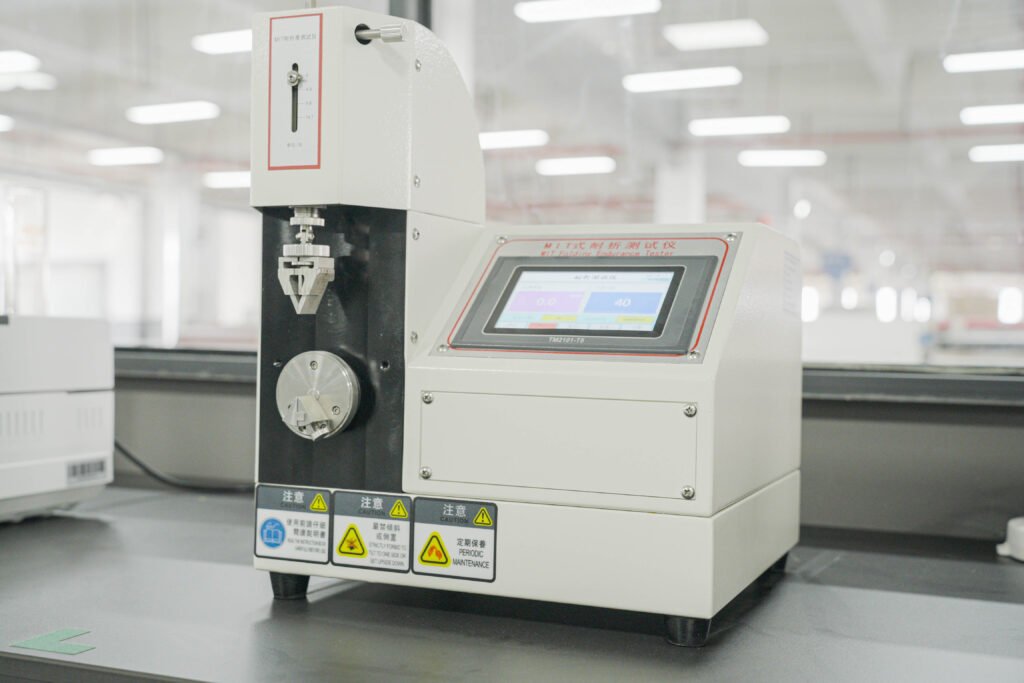
Capacity is about more than factory size
When I hear “large factory,” I still need more information.
A large building does not automatically mean reliable supply.
I want to know how much of the factory’s capacity is actually available for my product category. I also want to understand whether the manufacturer has enough production lines for different materials, thicknesses, widths, colors, and finishes.
For a distributor, this matters because demand is not always stable.
One month I may need a normal quantity. The next month, one of my customers may launch a large furniture project and need much more material.
If the supplier cannot increase production when demand rises, I may lose the order.
I therefore look at capacity in several ways:
| Capacity factor | Question I would ask |
|---|---|
| Production lines | How many lines can produce my required products? |
| Material capability | Can the factory produce the materials I need? |
| Color capability | Can it manage a wide color range? |
| Raw materials | Can it maintain stable raw material supply? |
| Labor | Does it have enough trained production staff? |
| Maintenance | How does it handle equipment downtime? |
| Planning | How does it prioritize urgent orders? |
| Expansion | Can capacity grow with customer demand? |
I also care about production flexibility
I do not always need the supplier with the biggest factory.
Sometimes I need the supplier that can respond to changes.
For example, I may have a regular order for several standard colors. I may also need a smaller quantity of a new color for a new customer.
If the factory can handle both regular production and smaller development orders, I have more options as a distributor.
This is especially useful when I want to test a new product before placing a large order.
I also need to understand the difference between production capacity and available capacity.
A factory may have many machines, but those machines may already be fully booked.
That is why I would ask about normal lead times, peak-season capacity, production planning, and how the supplier handles sudden increases in demand.
The World Bank’s Logistics Performance Index also shows why reliability matters in international supply chains. Its 2023 report evaluates logistics performance across 139 countries and focuses on factors such as supply chain reliability, logistics services, infrastructure, and the ability to move goods with speed and reliability.
For me, factory capacity is therefore not just a production issue. It is part of my ability to promise products to my own customers.
What Should Distributors Check About Lead Time, MOQ, and Supply Stability?
I can accept a reasonable price or a slightly longer lead time, but I cannot build a stable distribution business around uncertain delivery promises.
I check lead time, MOQ, order frequency, production schedules, and supply consistency before I decide how much inventory risk I can accept.

Lead time needs to be predictable
When I calculate inventory, I need to know when I can expect replenishment.
If my supplier says an order normally takes 15 days but sometimes takes 30 days, I cannot plan my stock based on 15 days alone.
I may need more safety stock.
IBM explains that safety stock is extra inventory used to reduce the risk of stockouts caused by demand, supply, and manufacturing variability. IBM also notes that lead-time variation is one of the factors used in safety stock calculations.
This creates a simple relationship:
Less predictable lead time → more inventory risk → more safety stock
More predictable lead time → easier planning → potentially less safety stock
That does not mean a shorter lead time is always better. A stable 20-day lead time can be easier for me to manage than an unstable 10-day lead time.
MOQ can change my entire inventory strategy
MOQ is another point that I would never ignore.
If a supplier requires a very large minimum order for every color, I may need to buy more products than I can sell quickly.
That creates slow-moving inventory.
I would therefore compare MOQ with actual demand.
| Supplier condition | Possible effect on distributor |
|---|---|
| Low MOQ | Easier to test new products |
| High MOQ | More cash tied up in inventory |
| Flexible MOQ | Easier to manage different SKUs |
| Stable lead time | Easier replenishment |
| Unstable lead time | Higher safety stock pressure |
| Clear production schedule | Better customer promises |
I also want to understand whether MOQ changes by color, thickness, width, material, or packaging.
A supplier may have a reasonable MOQ for standard products but a much higher MOQ for custom products.
I need this information before I build my product portfolio.
Supply stability matters more than one successful order
One good shipment does not prove long-term reliability.
I want to see whether the supplier can deliver similar products with similar quality over time.
I would track:
- On-time delivery
- Quality complaints
- Quantity accuracy
- Response time
- Production lead time
- Order changes
- Packaging damage
- Claim handling
The World Bank describes supply chain reliability as a critical part of logistics performance and notes that international trade depends heavily on reliable movement of goods.
For me, this is why I would test a supplier over several orders before moving a large share of my business to that supplier.
How Can an Edge Banding Supplier Support Distributors with Customization and New Products?
I do not want my supplier to only produce the products I already sell. I also want the supplier to help me develop products that can create new demand.
A useful supplier should support color matching, specifications, packaging, samples, OEM products, and new product development without making every small change difficult.
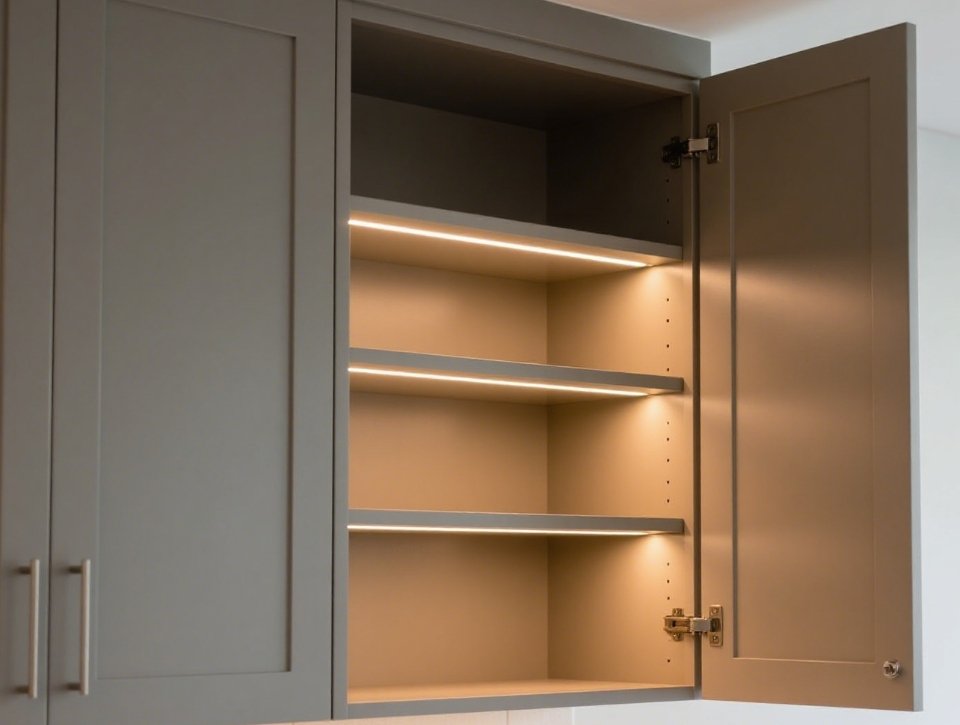
Customization can help me build a stronger product range
Furniture manufacturers often work with different panel suppliers, colors, finishes, and designs.
If I only offer a limited standard range, I may lose customers who need a closer match.
A supplier with customization capability can give me more ways to serve those customers.
I may need:
- Custom colors
- Different widths
- Different thicknesses
- Different surface finishes
- Different materials
- Special packaging
- Private labeling
- Customer-specific specifications
But I would not ask a supplier to customize everything.
Customization also creates cost and inventory risks.
I need to understand which products should remain standard and which products should be customized.
Sampling is part of product development
When I want to introduce a new edge banding product, I do not want to wait too long just to receive a sample.
I want a clear process.
For example:
Requirement → Color or specification confirmation → Sample → Testing → Customer feedback → Trial order → Regular production
This process helps me reduce the risk of launching a product that customers do not actually want.
I also want the supplier to keep records of approved colors and specifications.
That can reduce repeated communication later.
New product support can create a long-term advantage
A distributor can compete on price, but price alone is difficult to protect.
If I can offer products that fit a customer’s needs better, I have another reason for the customer to stay with me.
That is why I would ask a supplier whether it can support new materials, finishes, packaging formats, and changing market needs.
ISO’s quality management principles include customer focus, relationship management, and continual improvement.
I see these principles as useful when I evaluate product development support.
A supplier should not only ask, “What quantity do you want?”
A better supplier should also understand, “What problem is your customer trying to solve?”
That difference can affect whether the relationship becomes a simple buying relationship or a long-term distribution partnership.
How Can Distributors Evaluate the Long-Term Value of an Edge Banding Supplier?
I do not measure a supplier only by the price on the quotation. I measure the total effect that supplier has on my sales, inventory, customer satisfaction, and operating work.
A supplier has long-term value when consistent quality, reliable supply, useful support, and reasonable commercial terms help me reduce risk while growing my distribution business.

I would use a simple supplier scorecard
I can make supplier evaluation more objective by using the same criteria for each manufacturer.
| Evaluation area | What I would check |
|---|---|
| Product quality | Consistency, specifications, testing |
| Production capacity | Available capacity and scalability |
| Lead time | Average time and consistency |
| MOQ | Fit with my sales volume |
| Product range | Ability to cover my main categories |
| Customization | Color, size, finish, packaging |
| Communication | Speed and clarity |
| Problem solving | Response to quality or delivery issues |
| Documentation | Product and quality information |
| Commercial terms | Price, payment, MOQ, shipping |
| Long-term support | Willingness to grow with my business |
I can score each area based on my own business needs.
I would not give every factor the same weight.
If my customers need very fast delivery, lead time may be more important to me than customization.
If I sell many custom colors, color matching and development support may be more important.
The point is to make my decision based on business requirements instead of emotion.
I would also calculate the hidden cost of an unreliable supplier
A cheaper supplier may not actually be cheaper.
Suppose Supplier A offers a lower price but has frequent delays. I may need to keep more inventory. I may also spend more time chasing orders, explaining delays to customers, handling complaints, and finding replacement products.
Supplier B may have a slightly higher purchase price but provide stable quality and delivery.
The real comparison should therefore include more than unit price.
IBM’s inventory guidance explains that inventory optimization depends on factors such as demand, lead time, processing time, and storage costs.
I can use the same thinking when I evaluate suppliers.
I can ask:
How much does this supplier cost me after I include the risks and operating work?
That question is more useful than simply asking:
Which supplier gives me the lowest quotation?
Long-term value should be tested over time
I would not decide that a supplier is reliable after one sample or one shipment.
I would start with a controlled order.
Then I would measure actual performance.
After several orders, I can compare the supplier’s promised lead time with actual lead time. I can compare the approved sample with production batches. I can also see how the supplier reacts when something goes wrong.
This is where the real relationship becomes visible.
A long-term supplier should make my business easier to operate.
I should be able to forecast inventory more accurately. I should be able to give customers clearer delivery information. I should spend less time solving repeated quality problems.
That is the value I want from a supplier relationship.
Conclusion
I choose a long-term edge banding supplier based on consistent quality, stable supply, predictable delivery, flexible support, and the ability to grow with my distribution business.
Data Sources
- ISO — Quality Management Principles: ISO Quality Management Principles
- ISO — ISO 9001:2026 Quality Management Systems: ISO 9001:2026
- IBM — What Is Safety Stock?: IBM Safety Stock Guide
- IBM — What Is Inventory Optimization?: IBM Inventory Optimization Guide
- World Bank — Logistics Performance Index 2023: World Bank Logistics Performance Index 2023