I see the trap: a low quote looks great at PO time, then problems pile up. I explain why cheap edgeband usually costs more over the life of a project. (PAS — 22 words)
Buying the cheapest PVC edgeband can lead to glue failure, color drift, edge chipping, extra rework, machine downtime, and warranty claims. Real cost includes scrap, labor, lost time, and brand damage — not just the price per meter.
I break down why cheap banding fails, the hidden costs it creates, and what I watch for when I buy. I use simple checks and data-backed rules so you can avoid the same mistakes I’ve seen on real jobs.
What Makes PVC Edgeband “Cheap” at the Material and Process Level?
Cheap edgeband usually results from cutting corners in raw materials and process control. That is the first sign of later trouble.
Suppliers cut costs by using lower-grade PVC resin, higher filler content (cheap CaCO₃), weak stabilizers, thin skin layers, poor pigment packages, and lower control on extrusion and cooling. These choices reduce material cost but create warping, poor adhesion, and color instability down the line.

Dive deeper: ingredient & process trade-offs that reduce price but raise risk
I look at the common ways factories lower cost and explain the risks tied to each choice.
High filler ratios. Many low-cost edgebands include more filler such as calcium carbonate. That reduces polymer content and lowers price. Fillers change surface smoothness and reduce embossing detail. They also make the band more brittle. In practice, too much filler leads to edge chipping and poor adhesion during bending or trimming.
Weaker stabilizers and UV package. Cheap stabilizers cut cost but reduce thermal stability during extrusion and weather resistance in use. That raises the chance of yellowing or color fade when the piece sits under showroom lights or sunlight. UV stabilizers and better pigments cost more but prevent early fading.
Thin or inconsistent skin layers. Some suppliers produce edgeband with minimal face layer thickness to save raw material. That saves money per meter but reduces abrasion resistance and makes the face show wear and scratches quickly. The surface can also fail during processing (scraping, polishing), increasing rework.
Poor compounding and dispersion. Low-cost lines often have basic screw profiles or weak mixing stages. Poor pigment dispersion causes streaks and color spots. It also creates weak points where adhesive bonding is inconsistent. Studies show that compounding parameters (mix, temperature, screw design) strongly affect peel strength and surface quality.
Process controls and QC shortcuts. Some factories skip inline measurement or do random rather than systematic checks. Lack of QC lets out-of-spec reels ship. If color, width, or thickness vary beyond tolerance, the buyer pays later in rework, rejects, or slow line speed.
All these cost-saving moves add up. The initial price per meter looks good. But once panels are made, the hidden costs start: peeling edges, visible color differences, extra sanding, machine stoppages, and warranty returns. I avoid the cheapest offers unless I can verify raw material certificates and see consistent sample runs.
Hidden Risks: Glue Failure, Color Fading, and Edge Chipping Over Time?
The failures I see most are glue line problems, color change, and mechanical damage. These cause immediate rework and long-term returns.
Glue failure often stems from bad surface chemistry or wrong adhesive choice. Color fading comes from weak pigments or missing UV stabilizers. Edge chipping links to thin faces or high filler. These defects surface after assembly or during handling, creating costly rework.
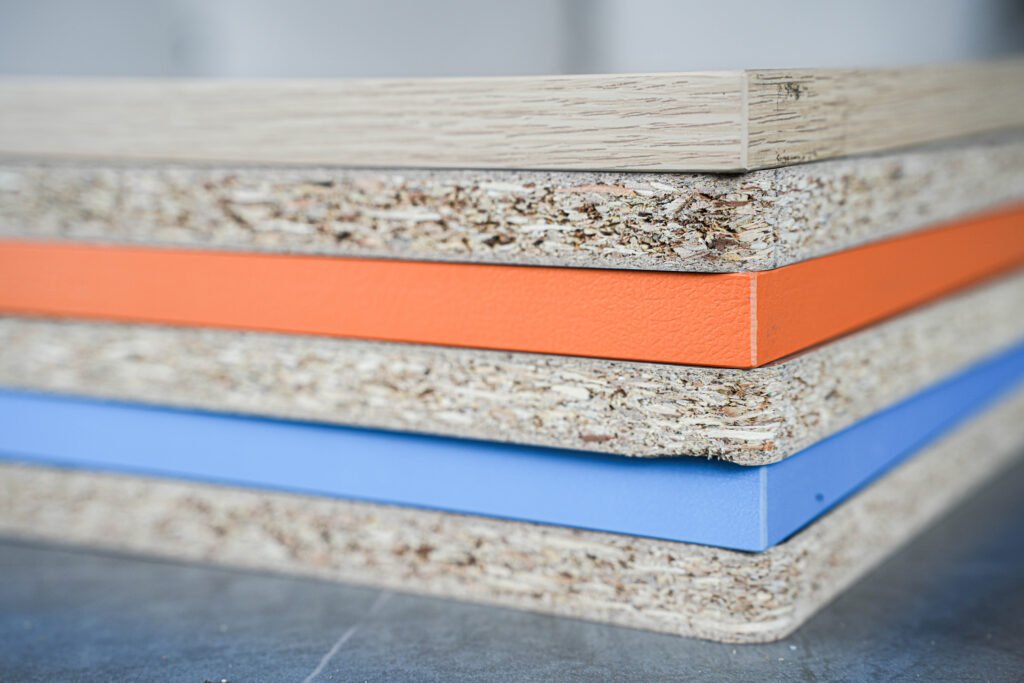
Dive deeper: root causes, how they appear on the shop floor, and real repair costs
I describe how each hidden risk appears, why it happens, and what it costs in practice.
Glue failure (delamination, peeling). The most frequent cause is wrong adhesive temperature or wrong adhesive type for the PVC formulation. Adhesive needs match to PVC face chemistry, core density, and glue type (hot-melt EVA vs PUR). Poor surface finish or lubricant residues also stop glue from wetting the surface. When glue fails, panels must be re-banded or scrapped. Repair costs include labor, extra adhesive, possible panel replacement, and production delays. Industry guidance stresses correct glue application and matching adhesive to banding material to avoid this.
Color fading and mismatch. Cheap pigments and missing UV stabilizers cause ΔE drift. People notice this in showrooms or after a few weeks in sunlight. A visible ΔE can trigger customer complaints and returns. Using a proper color standard and ΔE limits (for many interiors ΔE ≤ 2–3 is required) prevents disputes. Color failure forces expensive rework or replacement and harms brand reputation.
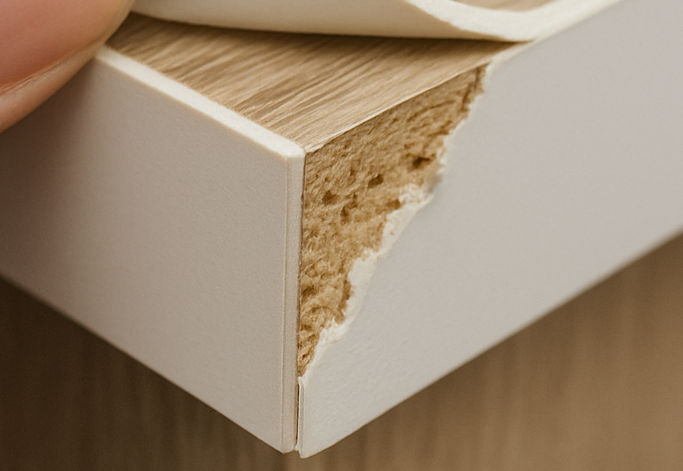
Edge chipping and surface wear. Edgeband with thin or brittle faces chips when edges are bumped, during transport, or during assembly. Chipping is costly because it often shows after final assembly. Fixing a chipped edge needs local repair or full replacement. That takes time and money and often triggers order-level claims.
Real cost examples. Studies and industry analyses show rework costs can be a significant slice of sales. One summary puts average rework cost in manufacturing around 10–12.5% of sales in some contexts. Even a small percentage of rejects in a furniture order can erase the apparent savings from buying the cheapest banding.
I always test the glue bond (peel test), age samples under UV or heat lamps, and run abrasion tests before approving a low-cost supplier. If a cheap sample fails these tests, the saving is not worth it.
Calculating the Real Cost: Rework, Complaints, and Brand Damage?
Price per meter is only the start. I track direct and indirect costs to see the true price of cheap banding.
Real cost includes scrap, rework labor, machine downtime, expedited shipping for replacements, warranty claims, lost repeat business, and reputation damage. I use a simple formula to capture direct and indirect costs before choosing a supplier.

Dive deeper: cost model, sample calculations, and decision rule I use
I use a basic Cost of Poor Quality (COPQ) model to show how small failure rates erase savings.
Simple COPQ model (example):
- Unit material saving by buying cheap banding: $0.05 per meter.
- Order size: 100,000 meters → immediate saving = $5,000.
Now add realistic failure impacts:
- Reject rate due to peeling/chips: 1% → 1,000 meters require rework or replacement. Rework cost per meter (labor + adhesive + packaging + handling) = $1.50 → rework cost = $1,500.
- Downtime & machine stoppage: 2 hours of stoppage for diagnosis and rework at $120/hour → $240.
- Expedited shipping for replacements: $500.
- Customer claim & goodwill / discount: $1,000.
- Hidden quality admin & inspection: $300.
Total hidden cost = $3,540. Net saving = $5,000 − $3,540 = $1,460 (still positive). But consider repeated issues and brand impact: if two shipments have problems, cumulative losses rise, and customers may switch suppliers, causing long-term revenue loss. Many studies show rework as a percentage of sales ranges widely, and reducing rework significantly improves margins.
Decision rule I use: If the supplier’s lower price saves less than the expected COPQ (including a buffer for unknowns), I do not buy. Put simply: only buy a cheaper option if a validated trial run shows zero meaningful increase in defect rate and you can document the same material certificates and process controls.
I also price in the value of reputation. For many B2B customers, one visible defect in a showroom set costs far more than the material saving.
How Low-Grade Edgeband Impacts Productivity and Machine Maintenance?
Cheap edgeband causes more machine cleaning, blade wear, and downtime. That cuts throughput and raises indirect costs.
Residues from poor materials, excess adhesive pickup, and abrasive fillers increase maintenance. More downtime and tool replacements lower productivity. Good factories and materials reduce these hidden costs and keep production steady.

Dive deeper: maintenance costs, productivity loss, and practical checks to avoid surprises
I share practical maintenance impacts and the checks I run.
Glue pot and roller buildup. Low-quality faces and additives can cause adhesive to cling, burn or carbonize on glue rollers and pot walls. This requires more frequent cleaning. Glue pot downtime and cleaning labor add to cost. Manufacturers advise routine glue pot maintenance to avoid performance loss, but cheap banding makes that job more frequent and costly.
Blade and cutter wear. Abrasive fillers and hard face layers increase blade wear. Blunt blades produce poor trimming, more manual rework, and line slowdowns. Replacing knives frequently increases cost and interrupts scheduling. Studies on edge-banding machine performance emphasize the need for proper material selection to limit wear.
Machine stoppages and yield loss. When material varies in thickness or width beyond tolerance, line settings must be adjusted. This causes rejects during transient periods and reduces hourly output. For high-volume lines, even a small drop in OEE (overall equipment effectiveness) translates to significant lost revenue.
My operational checks before approving a supplier:
- Ask for machine-run videos showing continuous production for at least 30 minutes.
- Request maintenance logs showing average glue pot cleaning intervals.
- Run a short production trial on my line or the supplier’s line under my technician’s observation.
- Measure scrap rate, blade change frequency, and average downtime during the trial.
If these checks show more frequent maintenance or higher scrap versus my baseline, the supplier’s lower price is not acceptable.
What to Prioritize Instead of Price for True Long-Term Cost Savings?
I pick partners and specifications that lower total cost, not just sticker price. That is my core buying rule. (PAS — 18 words)
Prioritize consistent material specs, verified compound data, real peel/abrasion testing, color stability, documented tolerances, and process transparency. Pay more per meter when it reduces rework and machine downtime. The right choice saves money over the product lifecycle.
%prioritize quality over price
Dive deeper: specific acceptance criteria and procurement steps I require
Here are the exact checks I run before awarding repeat business.
Material verification
- Request Certificates of Analysis (CoA) for resin, masterbatch, and additives.
- Check filler % and UV stabilizer presence. Ask for lab test reports.
Performance testing
- Peel test (ASTM or internal standard) to verify adhesive strength.
- Abrasion test for surface durability.
- Accelerated UV/heat aging to check color stability (measure ΔE before and after). Aim for ΔE within agreed tolerance.
Process transparency
- Ask the factory to show extrusion parameters, die maintenance schedule, and QC logs.
- Require pilot reels and signed acceptance before mass runs.
Commercial terms
- Include acceptance criteria in the contract.
- Use staged payments tied to sample approval and pre-shipment inspections.
- Add warranty clauses for major failures.
I prefer to pay a modest premium when these tests pass. That premium buys predictability. Predictability reduces COPQ and protects margin. Over years, that choice proves cheaper than chasing low-cost reels that break the line.
Conclusion
Cheap per-meter prices hide bigger costs. I buy based on verified specs, trial runs, and total cost models to avoid rework, downtime, and brand damage. (27 words)
Data sources and links
- Jowat — Failures in edgebanding: causes and solutions. (jowat.com)
https://www.jowat.com/en/newsroom/detail/failures-in-edgebanding-the-most-frequent-causes-and-how-to-solve-them/ - Homag / Stiles Machinery — Edgebander maintenance and prevention guides. (Stiles Machinery)
https://stilesmachinery.com/preventative-maintenance-guide-homag-edgebander/ - Optimization of edge banding process parameters — peer-reviewed study on peel strength. (BioResources)
https://bioresources.cnr.ncsu.edu/resources/optimization-of-edge-banding-process-parameters-used-for-particle-board-and-medium-density-fiberboard/ - Industry notes on color measurement and ΔE tolerances. (Formlabs)
https://www.formlabs.com/global/blog/color-accuracy-delta-e/
https://edgebandct.com/why-color-tolerance-%CE%B4e-matters-in-pvc-edgeband-production/ - ASQ / industry summaries on rework and its cost impact. (colabsoftware.com)
https://www.colabsoftware.com/research/rework-is-no-longer-a-necessary-evil - Practical shop-floor troubleshooting (Woodweb / EdgebandCT) on adhesion and common problems. (woodweb.com)