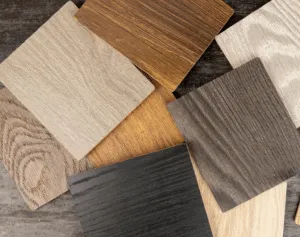
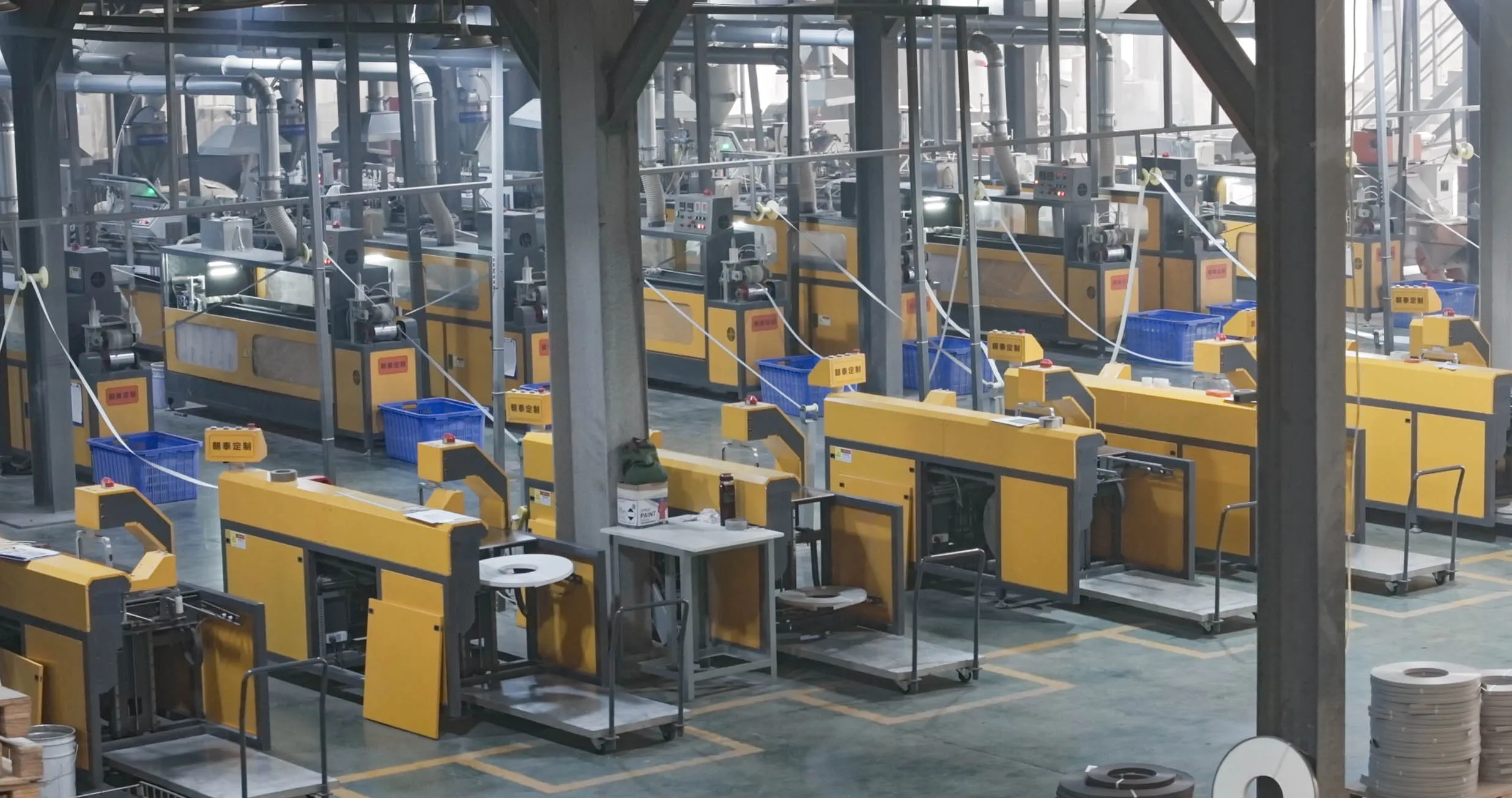
I feel the pain when a board and its edgeband look off. Customers notice at once. I used to lose orders over small color gaps.
Manufacturers deliver exact board matching by combining lab-grade measurement, matched inks and polymers, tight process control, and clear tolerances. I will explain the methods I use and recommend.

I know you want the short answer now. Stay with me and I will show step-by-step how modern suppliers reach near-perfect matches and keep them across batches.
Why Exact Board Matching Matters for Furniture Brands?
I used to win a client on price. I lost them later for a color mismatch. Painful lesson learned.
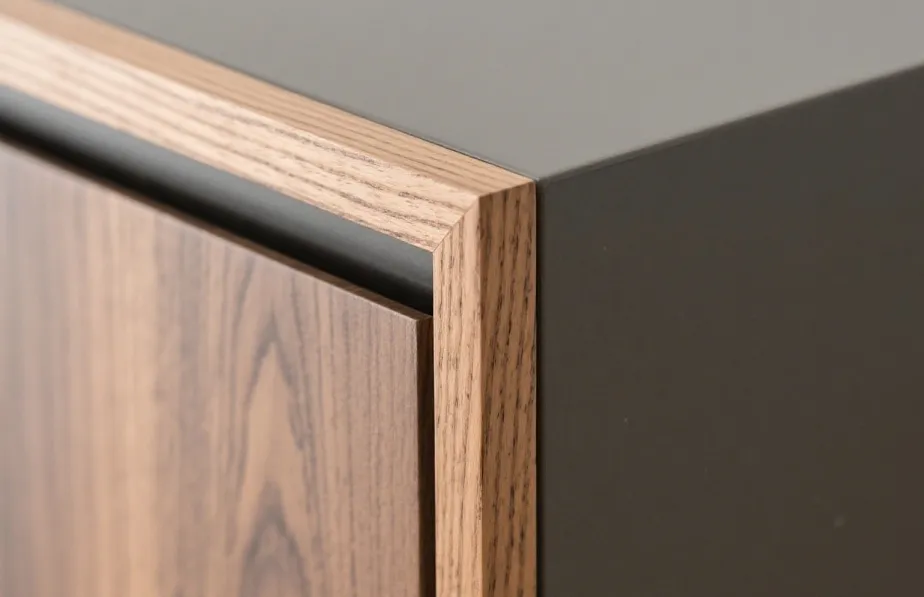
Exact board matching matters because visible color gaps harm perceived quality, cause rework, and break long-term trust. A small color delta can ruin a whole batch.
Dive deeper: the real costs and what brands actually lose
I will break this down into clear parts so you see the stakes.
1) Visual trust and perceived value
A visible mismatch tells an end buyer that the product is cheap. The buyer may refuse the whole shipment. That costs repeat business. I learned this when a sample photo sent to a buyer showed a sash of banding that looked warmer than the panel. The buyer refused final approval.
2) Direct rework costs
Reworking edges is not cheap. You must strip and reapply banding or scrap panels. Labor and material costs spike. For large runs the numbers add up fast.
3) Logistic and warranty fallout
If mismatches reach market, returns and warranty claims follow. Logistics and lost shelf life hit margin.
4) Why “small” differences matter — Delta E explained
We measure color differences with ΔE. A ΔE under ~2–3 is commonly acceptable for many furniture applications. High-end brands may require ΔE ≤1. This gives an objective way to set limits and avoid arguments.
| Risk area | What goes wrong | What I watch |
|---|---|---|
| Perceived quality | Surface and edge look different | Photo and sample checks under D65 light |
| Cost | Rework or scrap | Clear tolerance in contract |
| Time | Production delays | Pre-approval of matched samples |
| Reputation | Lost repeat orders | Maintain master color records |
I now insist on agreed ΔE limits in every contract. I also include viewing conditions and approved sample stamps. This simple move saved me avoidable disputes.
What “Custom” Really Means in Edgeband Color-Matching Services?
I once asked a supplier “can you match our board?” The answer “yes” meant different things. I pushed for details.
Custom means the supplier adapts ink or polymer recipes, reproduces the pattern, and documents tolerances so the banding blends with your panels. It is not a one-off color mix. It is a documented process.
Dive deeper: what I expect from a true custom service
Here I list the concrete services that separate a real custom match from a vague promise.
H3: Spectral matching and lab work
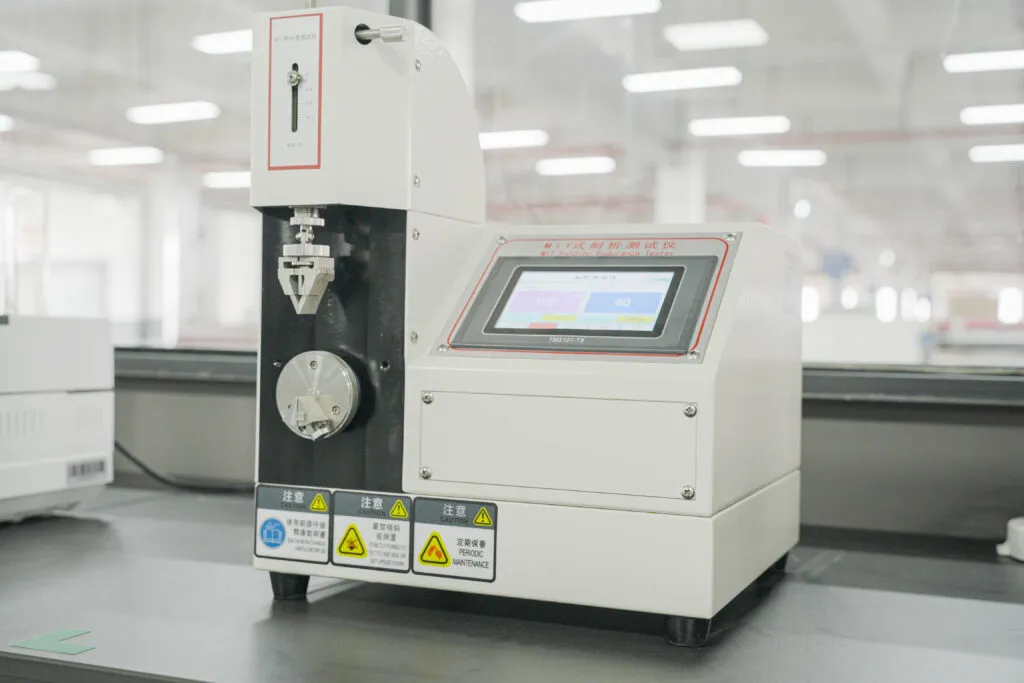
A real supplier measures both the board and sample banding with a spectrophotometer. They record L*a*b* values and spectral curves. Then they compute ΔE. I require spectral reports before mass runs. Tools from X-Rite or Datacolor make this repeatable.
H3: Recipe and master batch control
After a match, the supplier saves the pigment or ink recipe. For PVC or ABS, they save compounding formulas. For printed décor, they save ink settings and plate parameters. This becomes the “master” used for all future orders.
H3: Pattern reproduction and texture matching
Custom often includes grain direction, gloss level, and micro-texture. A color match only works visually if gloss and texture align. I check gloss with a gloss meter and texture by look and touch.
H3: Sample approval flow
A robust process gives a pilot sample, measured ΔE data, and client sign-off. I refuse to start large runs without written approval.
| Service element | Purpose | What I check |
|---|---|---|
| Spectral measurement | Objective match | L*a*b*, spectrum |
| Recipe saving | Repeatability | Master formula file |
| Print/texture control | Visual continuity | Gloss and embossing |
| Approval sample | Risk control | Signed sample with ΔE |
When a supplier offers all four, I call them “custom.” If they only give a cosmetic pass, I walk away.
How Manufacturers Match Colors Across Décor Papers, PVC, ABS, and Boards?
I worked with different substrates. Each behaved in its own way. I learned to treat them separately.
Matching means compensating for substrate effects, choosing the right printing or compounding route, and verifying with instruments and human eyes. The strategy differs by material.
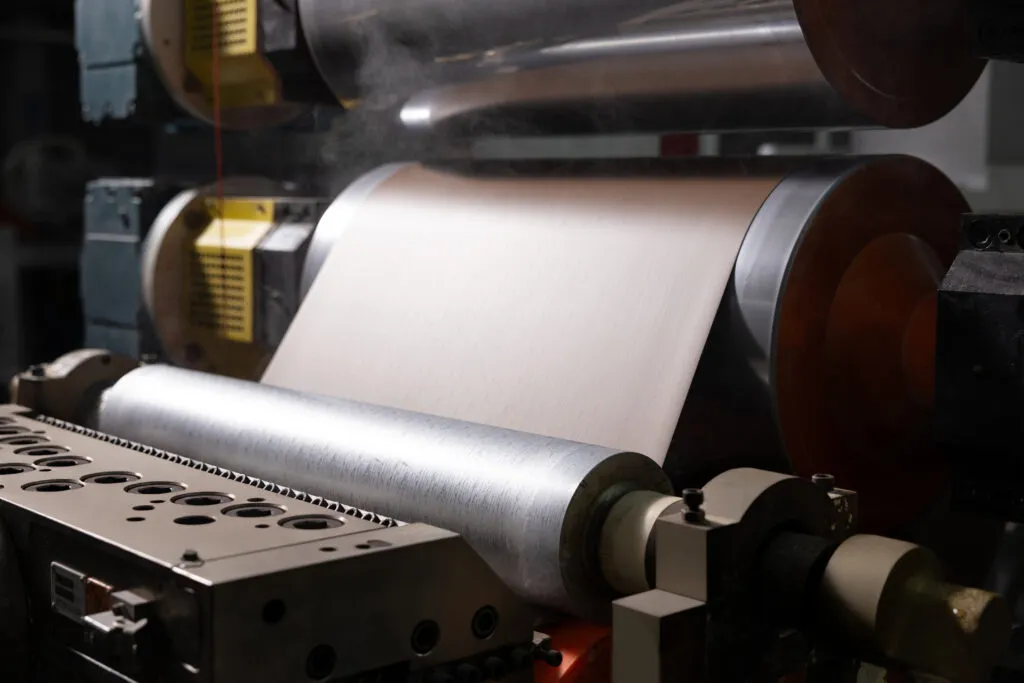
Dive deeper: methods by substrate and the controls I use
I will walk through the main materials and the practical steps we take.
PVC / ABS extruded tapes
For extruded PVC/ABS, color comes from pigments in the compound. We match by adjusting masterbatch pigments. The supplier runs small extrusions and measures the result. Compounding tolerances matter a lot because extrusion heat and cooling affect final color. I ask for spectral data and compound batch numbers. X-Rite style instruments are common here.
Printed decor papers on edge tape
Many edgebands are printed using rotogravure (gravure) presses. Gravure reproduces woodgrain and subtle patterns with high repeatability. The press uses anilox rolls and cylinders. Color control is done via ink recipes, anilox selection, and press settings. Digital printing is an option for short runs but has different ink behavior. I expect the mill to document the press type and plate parameters.
Laminate and vinyl-wrapped boards
Boards with laminated surfaces have their own pigment sets and surface texture. We match by measuring the finished laminate. Then we either print a matching tape or compound a film that matches. Texture and sheen must be checked under D65 light.
How I manage cross-substrate visual differences
I always test the combination — the tape on the actual panel. Lighting, angle, and edge profile change perception. We measure and then do a visual approval under standardized light. I also record acceptable ΔE tolerances for each substrate combination.
| Substrate | Method | Key control |
|---|---|---|
| PVC / ABS | Compound + extrusion | Masterbatch record |
| Printed paper | Gravure / flexo / digital | Press recipe |
| Laminates | Film compounding | Texture & gloss test |
| Composite | Trial bonding | On-board sample check |
This practical, material-by-material approach avoids surprises at assembly.
The Lab and Production Technologies Behind Accurate Edge Banding Matching?
I value labs. A supplier with no lab is a red flag. Labs make matching measurable.
Key technologies are spectrophotometers, controlled lighting booths, gravure/flexo presses, precise compounding lines, and adhesive ovens with tight temp control. These tools let us hit and hold targets.
Dive deeper: instruments, process controls, and what I audit
Here I name the tech and explain why each matters. I include how I audit them.
H3: Spectrophotometers and objective measurement
Spectrophotometers give L*a*b* and spectral curves. I ask for measurement reports for samples and trial runs. They remove guesswork and help set ΔE targets. I also cross-check instruments across suppliers when needed.
H3: Light booths and viewing conditions
I require sample viewing under standardized lighting (D65 and TL84 where relevant). Color looks different under different lights. A match in one booth may fail in another. I insist on documented viewing conditions before sign-off.
H3: Printing and compounding equipment
Gravure presses and extrusion lines must be stable. For printed tape, plate engraving depth, anilox volume, and ink viscosity are critical. For extruded tape, zone temperatures and cooling rate change shade. I review the mill’s machine specs and maintenance logs when possible.
H3: Adhesive and process temperature control
Edge bonding uses adhesives like EVA or PUR. Adhesive temperature affects bond and can slightly influence gloss near the joint. For laser or seamless banding, air and laser settings matter. I require the supplier to document adhesive type and process parameters.
H3: Data systems and recipe management
The best suppliers keep digital recipe libraries. They log color measurements, master formulas, and batch IDs. That makes repeat orders consistent. I ask for screenshots or exports of these records before large runs.
| Technology | Why it matters | What I check |
|---|---|---|
| Spectrophotometer | Objective color data | Measurement reports |
| Light booth | Consistent viewing | Illuminant and geometry |
| Gravure/extrusion | Repeatable output | Parameters and maintenance |
| Adhesive ovens | Bond and finish | Temp control ±2°C |
| Recipe library | Repeatability | Saved master files |
The lab is where color becomes repeatable. I treat lab reports as the contract.
How Reliable Suppliers Guarantee Consistency Across Batches and Repeat Orders?
I once had a great first order. The second was slightly off. That taught me to ask for guardrails.
Reliable suppliers control raw-material batches, lock recipes, use statistical process control, and share measurement evidence with every delivery. Contracts should list ΔE limits and reporting requirements.

Dive deeper: policies, checks, and contract clauses I require
This is the practical checklist I use with suppliers.
H3: Raw-material lot control
Suppliers must track pigment and polymer lot numbers. A change in pigment lot can shift color. I require lot records and I accept changes only after re-approval.
H3: Statistical process control (SPC) on production runs
Suppliers should monitor key variables and run SPC charts. I ask for sample sheets showing mean and sigma for color readings across a run. Trends tell when a press or extruder needs maintenance.
H3: Master recipe lock and change control
Any change to recipe needs a formal change control. I require written sign-off for recipe changes, with new samples measured and approved.
H3: Incoming inspection and batch certificates
Each delivery should include a batch certificate showing ΔE vs. approved sample, measurement device used, and viewing conditions. This is simple but powerful.
H3: Contract clauses and penalties
I write ΔE tolerances into contract and include remedies for out-of-tolerance shipments. This avoids arguments and reduces risk.
| Guarantee area | What I require | Why |
|---|---|---|
| Lot traceability | Pigment/compound lot numbers | Prevent silent shifts |
| SPC | Run charts for color | Early warning of drift |
| Change control | Written approval for recipe changes | Maintain master |
| Batch cert | ΔE report per shipment | Proof of compliance |
| Contract ΔE | Numeric tolerance | Clear acceptance criteria |
Good suppliers welcome these checks. They make production smoother. I learned that if a mill resists traceability or SPC, I should be wary.
Conclusion
I use measurement, process control, and written tolerances to make matches stick. Good matches start in the lab and live in recipe files.
Data sources and links
- Datacolor — Best practices for ΔE and color tolerancing. (Datacolor)
https://www.datacolor.com/business-solutions/blog/best-practices-delta-e-tolerances/ - X-Rite / Precision color resources — Spectrophotometer use in plastics. (Precision Color Compounds, LLC)
https://precisioncolorcompounds.com/x-rite-precision-in-plastic-colors/ - ISO 11664-6 / CIEDE2000 — Standard for color difference calculations.
https://www.iso.org/standard/63731.html - Gravure printing and edgeband technical notes — gravure as primary printed decor method. (RAMS Industries, Ltd.)
https://ramsindustries.com/gravure-printing-for-edgebanding-technical-considerations-in-design-and-colour-control/ - Jowat — Adhesives and edgebanding recommendations. (Jowat)
https://www.jowat.com/en-US/industries/furniture-industry/edgebanding/