A good edge banding result on one machine may fail on another. Poor adhesion, uneven trimming, and visible gaps can increase waste and slow production.
I find that edge banding performance depends on more than the edge banding material itself. Machine design, feed speed, temperature, pressure, adhesive type, and tool condition all affect the final result. Manufacturers need to match these factors to achieve stable quality.
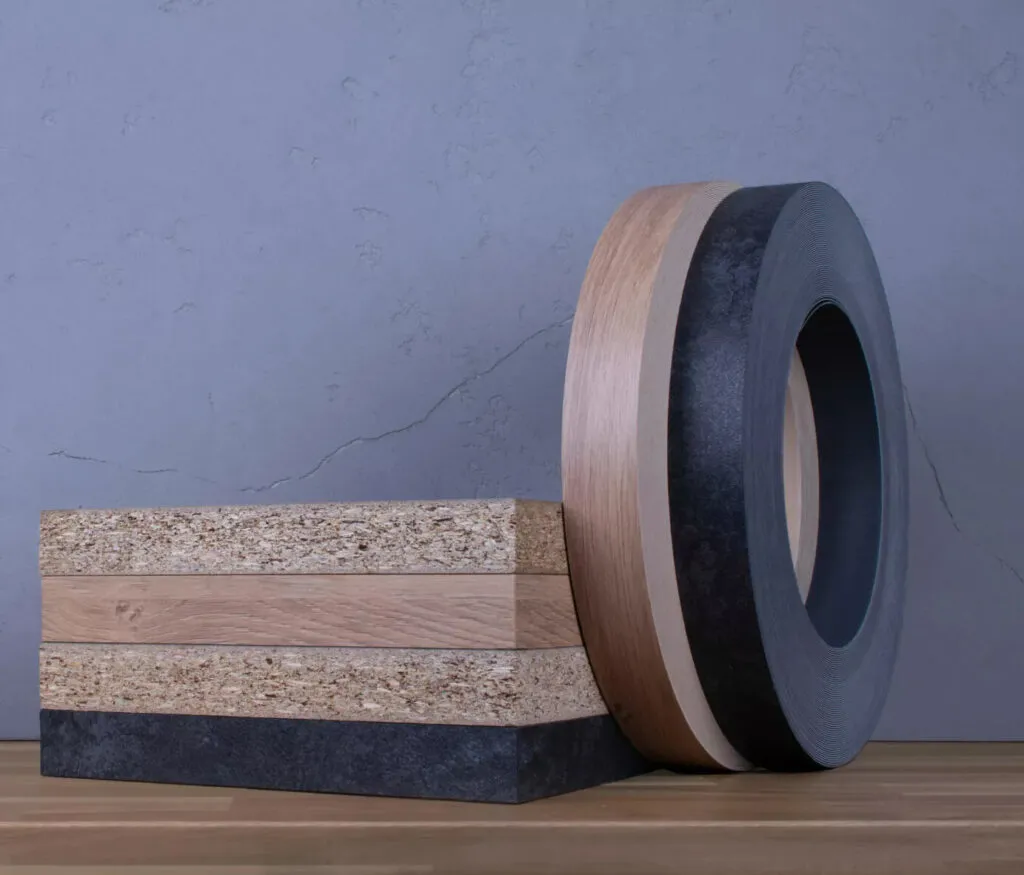
When I look at edge banding problems, I do not start by blaming the edge banding roll. I first check how the machine processes the material. A machine that works well with one material or production speed may need different settings for another. By understanding each factor, manufacturers can find the real cause of defects and reduce repeated adjustments.
How Do Edgebanding Machine Types and Processing Speeds Affect Edge Banding Performance?
A machine may produce clean edges during a slow test but show defects during full production. This difference can lead to waste, rework, and delivery delays.
I consider machine type and processing speed two basic factors because they affect how the machine applies, presses, and finishes the edge banding. The right setup depends on the machine’s design and the material being processed.

How Does Machine Design Affect Edge Banding Results?
I separate edgebanding machines into broad groups based on their working methods. Manual edge banders, portable machines, and automatic production lines do not offer the same level of control.
A portable machine may suit small workshops and repair jobs. An automatic edge banding line may suit furniture factories that process large numbers of panels. The automatic line can include several working units, such as glue application, pressing, end trimming, top and bottom trimming, scraping, and polishing.
The number of working units does not guarantee better results by itself. I also check the accuracy of the feed system, the condition of the tools, and the consistency of each station. A well-maintained machine with suitable settings can produce better results than a more advanced machine that is poorly adjusted.
| Machine type | Common use | Factors I would check |
|---|---|---|
| Manual or portable edgebander | Small jobs and repairs | Operator control, pressure, and travel speed |
| Compact automatic edgebander | Small to medium production | Feed stability, glue application, and trimming |
| Industrial automatic edge banding line | High-volume production | Line speed, unit coordination, and repeatability |
Why Does Processing Speed Change the Result?
Processing speed affects how long the edge banding and panel remain in contact with each working unit. When I increase the feed speed, the machine has less time to apply heat, spread adhesive, and press the edge banding against the panel.
The result depends on the machine’s design and settings. A machine with a suitable heating and pressing system may work well at a higher speed. Another machine may need a lower speed to achieve the same bond quality.
I would not assume that a faster machine always creates a weaker bond. The important question is whether the machine can maintain the required conditions at the chosen speed.
| Production condition | Possible result | What I would check |
|---|---|---|
| Speed is too high for the setup | Incomplete bonding or uneven application | Adhesive condition, temperature, and pressing |
| Speed is too low for the material and setup | Excessive heat exposure or adhesive changes | Adhesive instructions and material limits |
| Speed changes during production | Uneven results between panels | Feed mechanism and operating procedure |
| Speed remains stable | More repeatable results | Bond quality and finishing consistency |
I recommend testing edge banding at the actual production speed, not only during a slow trial. I also record the machine settings and inspect several panels after the line reaches a stable operating condition. This approach helps me separate machine limits from material problems.
How Do Temperature, Pressure, and Feed Speed Affect Edge Banding Adhesion?
A panel can look correct when it leaves the machine but develop lifting edges later. This problem can lead to customer complaints and costly rework.
I check temperature, pressure, and feed speed together because these factors affect adhesive activation, contact, and bonding time. A change in one setting can affect the others.

How Does Temperature Affect Adhesive Bonding?
Temperature matters because many edge banding processes use hot-melt adhesives. The adhesive needs to reach the working condition specified by its manufacturer. If the adhesive is too cold, it may not spread or wet the surfaces as intended. If it is too hot or stays hot for too long, its working properties may change.
I do not use one universal temperature for every edge banding job. The correct setting depends on the adhesive formulation, the machine, the edge banding material, and the surrounding conditions. I follow the adhesive supplier’s technical data sheet and check the actual process rather than relying only on the temperature shown on the control panel.
The displayed temperature may not fully represent the adhesive temperature at the application point. I also consider warm-up time, production interruptions, and changes in the workshop environment.
How Do Pressure and Feed Speed Work Together?
Pressure helps bring the edge banding and panel into close contact while the adhesive forms a bond. If the pressure is too low or uneven, gaps may remain between the two surfaces. However, more pressure is not always better. Excessive pressure may squeeze out too much adhesive or leave marks, depending on the material and machine design.
Feed speed also affects how long the pressing rollers can work on the bonded area. If I increase the speed without checking the pressing system and adhesive, the process may become less stable.
| Factor | Possible problem when poorly controlled | Practical check |
|---|---|---|
| Temperature | Poor adhesive flow or changes in adhesive behavior | Confirm the adhesive’s recommended working range |
| Pressure | Gaps, weak contact, or excessive adhesive squeeze-out | Inspect roller condition and pressure consistency |
| Feed speed | Insufficient process time or inconsistent results | Test at the intended production rate |
| Panel surface | Uneven contact or poor bonding | Check for dust, damage, and surface variation |
How Can I Identify the Main Cause?
I change one setting at a time when I troubleshoot adhesion. If I change temperature, pressure, and speed together, I may improve the result without knowing why it improved. That makes the next production run harder to control.
I first inspect the defect pattern. If lifting appears across many panels, I check the adhesive and machine settings. If it appears only on certain panels, I check the panel surface, thickness, and material consistency. I then run a controlled test and compare the result with the original setup.
I also check the adhesive supplier’s recommendations before making large adjustments. The goal is not to use the highest temperature or pressure. The goal is to create a stable process that matches the materials and machine.
Why Do Different Edgebanding Machines Produce Different Trimming and Finishing Results?
The edge banding may be firmly attached, but the finished panel can still look poor. Rough corners, uneven edges, and visible glue lines can reduce product quality.
I treat trimming and finishing as separate from adhesion because these defects often come from cutting tools, tool alignment, panel movement, or the finishing units. A good bond does not automatically produce a clean edge.

How Do Cutting Tools Affect the Finished Edge?
I check the condition and setup of the cutting tools before I change the edge banding material. End-trimming units cut excess material at the front and rear of a panel. Top and bottom trimming units remove excess material along the panel edges. Scraping and polishing units may then improve the surface, depending on the machine configuration.
A dull or damaged tool can leave rough edges, chips, or marks. A tool that is not aligned correctly can remove too much material from one side. The final result also depends on the edge banding thickness, hardness, and surface finish.
I do not expect one tool setup to work equally well for every material. A thicker or harder edge banding may require a different setup from a thin, flexible product. I follow the machine manufacturer’s instructions and confirm the cutting conditions through a test run.
Why Does Panel Stability Matter?
The panel must stay in a stable position as it moves through the machine. If the panel shifts, vibrates, or enters a working unit at an inconsistent angle, the trimming result may vary from one piece to another.
I check the feed chain, pressure belts, guides, and panel support when defects appear repeatedly in the same location. I also check whether the panel thickness is consistent. If the panel varies in thickness, the machine may not remove the same amount of edge banding across every piece.
| Visible defect | Possible cause | What I would inspect first |
|---|---|---|
| Rough or chipped edge | Tool wear or unsuitable cutting conditions | Tool sharpness and tool setup |
| Edge banding cut too short | Trimming position or feed alignment | Trimming unit and panel position |
| Uneven top or bottom edge | Incorrect tool height or panel thickness variation | Tool height and panel measurements |
| Scratches on the surface | Dirty contact parts or damaged tools | Rollers, guides, and cutting tools |
| Inconsistent corners | End-trimming setup or material behavior | Corner cutting and edge banding properties |
How Can I Separate Trimming Problems from Material Problems?
I compare the same edge banding material on several panels and inspect the defects in the same positions. If the defect appears at a specific machine station, I focus on that station first. If the defect follows a particular material batch, I compare its thickness, hardness, and surface condition with an approved sample.
I also keep a sample from a successful production run. This sample gives me a practical reference when I adjust the machine or replace a tool. I record the tool condition, material specification, and machine settings so that I can repeat the setup later.
I avoid changing several trimming settings at once. A controlled test helps me identify whether the problem comes from the tool, panel movement, or edge banding material. This saves time and reduces unnecessary material waste.
How Do Edge Banding Materials and Adhesives Respond to Different Machine Settings?
A machine may process one type of edge banding well but struggle with another. If I use the same settings for every material, I may create defects even when both products meet their own specifications.
I match the edge banding material and adhesive to the machine’s operating conditions. Material thickness, stiffness, surface treatment, and adhesive compatibility can all affect the result.
Why Does Material Type Matter?
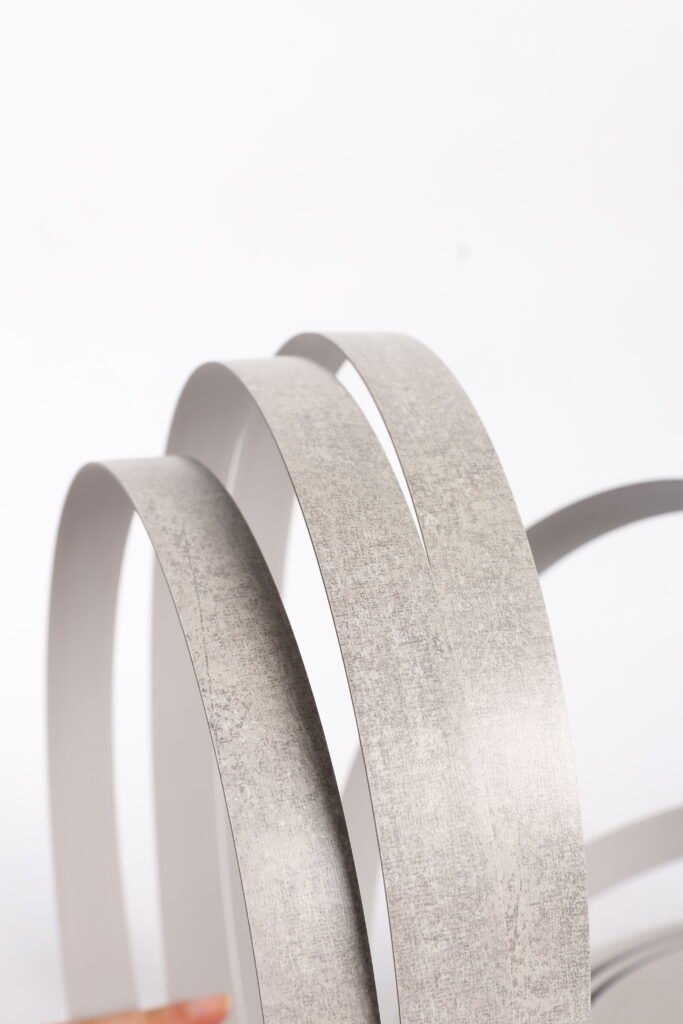
PVC, ABS, acrylic, and wood veneer edge banding do not behave in exactly the same way. They differ in properties such as stiffness, surface characteristics, and response to heat. Their recommended processing conditions may also differ by product and manufacturer.
PVC edge banding is widely used in furniture production. ABS edge banding is another option, while acrylic products may be selected for particular visual effects. Wood veneer has a different structure from plastic edge banding and may need a different approach to handling and finishing.
I do not assume that every product within one material category behaves identically. Two PVC edge banding products can differ in thickness, formulation, surface texture, and backing treatment. These differences may affect feeding, bonding, and trimming.
How Do Adhesive Types Affect Machine Compatibility?
The adhesive must suit the edge banding material, panel substrate, and machine process. Hot-melt adhesives may use different formulations, including EVA and PUR. Each type has its own processing requirements, and the machine must be able to support those requirements.
I check the adhesive supplier’s technical data before switching adhesive types. I also confirm that the machine’s application system, temperature control, cleaning process, and production procedure are suitable for the chosen adhesive. A change from one adhesive to another can affect more than the bonding temperature.
| Material or process factor | Why it matters | What I would confirm |
|---|---|---|
| Edge banding thickness | Affects feeding, trimming, and the amount of excess material | Actual thickness and machine capability |
| Material stiffness | Can affect handling and contact with the panel | Feeding stability and roller contact |
| Surface or backing treatment | Can affect adhesive bonding | Supplier specifications and compatibility |
| EVA or PUR adhesive | Different formulations have different processing needs | Technical data and machine compatibility |
| Panel substrate | Surface condition can affect adhesion | Cleanliness, consistency, and suitability |
Why Should I Test Each Material and Adhesive Combination?
I use a small production trial before approving a new material or adhesive combination. The trial should use the actual panel substrate, edge banding, adhesive, and machine that the factory plans to use. A result from another machine may not represent the conditions on the production line.
I inspect adhesion, visible glue lines, trimming quality, and surface damage. I also check the result after the product has cooled and stabilized, rather than judging it only at the machine exit.
If the material comes from a new supplier, I compare it with an approved reference sample. I ask the supplier for technical specifications and processing recommendations when the result differs. This helps me decide whether the machine needs adjustment or whether the material is not suitable for the intended process.
I also record the approved combination of material, adhesive, and machine settings. This gives operators a starting point for repeat orders and helps the factory reduce trial-and-error adjustments.
How Can Manufacturers Adjust Machine Settings to Achieve Consistent Edge Banding Results?
Repeated defects can waste material and make production difficult to control. Random adjustments may fix one panel but create new problems on the next production run.
I use a step-by-step process to find the cause, test a change, and record the result. This helps me improve quality without changing too many variables at once.
How Do I Troubleshoot Edge Banding Problems Step by Step?
I start by identifying the defect. I do not change machine settings before I understand what has gone wrong. Poor adhesion needs a different check from rough trimming or uneven corners.
I then check the material, adhesive, machine condition, and production settings. If the machine has recently changed speed or started using a new material, I pay special attention to that change.
| Step | Action | Purpose |
|---|---|---|
| 1. Identify the defect | Check bonding, glue lines, trimming, and corners | Define the problem clearly |
| 2. Inspect the materials | Check edge banding thickness, panel surface, and adhesive specifications | Rule out material-related causes |
| 3. Check the machine | Inspect rollers, tools, guides, and adhesive application parts | Find wear or alignment problems |
| 4. Record the current settings | Note temperature, feed speed, and relevant pressure settings | Establish a baseline |
| 5. Change one variable | Adjust one setting within the recommended range | Identify the effect of the change |
| 6. Run a controlled test | Process several panels under the same conditions | Check whether the improvement is repeatable |
| 7. Record the approved setup | Save the material details and successful settings | Support future production runs |
Why Should I Keep a Machine Setting Record?
I do not rely only on an operator’s memory. Different shifts may use different settings if the factory does not keep a clear record. This can cause the same defects to return during repeat orders.
My production record includes the machine model, edge banding specification, panel type, adhesive product, processing temperature, feed speed, and any relevant pressure settings. I also record the tool condition and the inspection results.
The adhesive supplier’s technical data sheet is an important reference. For example, Jowat product information gives different recommended processing temperatures and feed speeds for different adhesive products. These figures show why I should not apply one universal setting to every edge banding job. I use the data sheet for the exact adhesive, then confirm the setup on the actual production line.
How Can I Keep Results Stable Across Different Machines?
I establish a separate approved setup for each machine and material combination. Even if two machines have similar functions, their heating systems, feed mechanisms, pressing units, and trimming tools may differ.
I first run a trial with the intended materials. I check the bond, visible glue line, trimming quality, and surface finish. I then compare the results with the factory’s quality requirements and save the settings that produce acceptable results consistently.
When I move production to another machine, I use the approved setup as a starting point rather than copying every setting without testing. I also ask the machine manufacturer or adhesive supplier for technical advice when a problem remains unresolved.
My goal is not to make every machine operate in exactly the same way. My goal is to make each machine produce a consistent result with the materials and production conditions it is designed to handle.
Conclusion
Edge banding performance depends on machine design, speed, settings, tools, materials, and adhesives. I achieve more consistent results by testing these factors systematically and recording proven settings.
Data Sources
1. HOMAG — EDGETEQ T-100/T-200 Edge Banding Machines Machine specifications, supported edge thicknesses, and feed-speed ranges help explain differences between machine types. https://www.homag.com/fileadmin/product/edge/brochures/edgeteq-t-100-200/Edge-banding-machines-edgeteq-t-100-200-en.pdf
2. Jowat — EVA Hot-Melt Adhesive 284.00/01/02 Technical information on adhesive applications, processing temperature, feed speed, and the effects of substrate and process conditions. https://www.gluesystem.gr/en/jowat/eva/eva-hot-melt-adhesive-284-00
3. Hranipex — JOWATHERM 607.51 PUR Hot-Melt Adhesive Product information on recommended working conditions, feed rates, temperature checks, and the importance of testing bond quality. https://www.hranipex.com/en/product/jowatherm-607-51-white-pur-hot-melt-2115/
4. PROSTECH — Edge Banding Adhesives Product data for EVA, PO, and PUR hot-melt adhesives, including examples of their different processing temperature ranges. https://prostech.vn/industries/furniture-building-construction-adhesive/edge-banding/