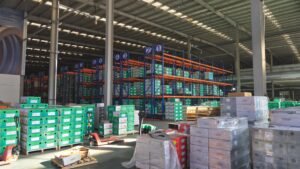

A high minimum order quantity can tie up cash, while poor reorder terms can leave distributors with empty shelves. I believe both problems deserve attention before the first purchase order.
Distributors can negotiate better MOQ and reorder terms by sharing realistic demand forecasts, combining compatible products, agreeing on volume-based pricing, and setting clear lead times. I recommend negotiating the total cost and supply flexibility, not just the minimum order quantity.
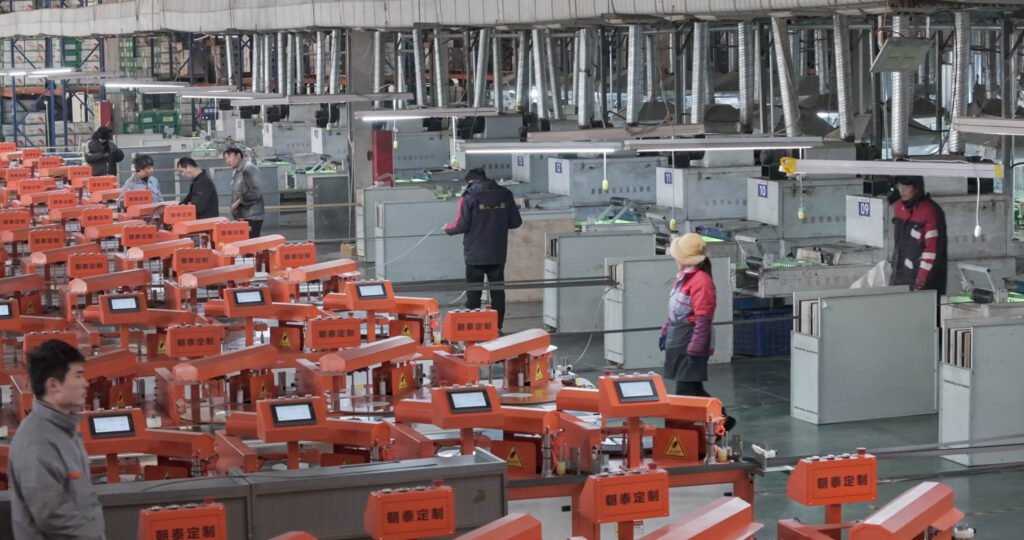
When I discuss purchasing with edge banding manufacturers, I do not treat MOQ as a fixed number that buyers must simply accept. I look at why the supplier sets that quantity and what both sides can change. A standard color may be easier to order in a small quantity than a custom color with special production requirements. A distributor with regular orders may also have more options than a buyer who places one large order and then disappears for several months. The best approach is to understand the supplier’s production needs, show the value of the business, and build a supply plan that works for both sides.
What Factors Determine MOQ and Reorder Terms for Edge Banding Distributors?
When a manufacturer asks for a large MOQ, I would not immediately assume that the supplier is unwilling to negotiate. The quantity may reflect production costs, material availability, color requirements, or the time needed to change production settings.
I recommend that distributors first identify what drives the MOQ. This helps them ask for a practical change instead of requesting a lower number without explaining how the order can work.

Why Does MOQ Vary Between Edge Banding Products?
I would start by separating standard products from custom products. Manufacturers may already have standard colors, common sizes, and established production processes. Custom colors, special surface finishes, unusual widths, or special packaging may require extra preparation.
For example, one edge banding supplier publishes different MOQs for different sizes and thicknesses, while another states that its custom-match MOQ is usually 10,000 meters per color and size. These are examples of individual supplier policies, not universal industry standards.
I would ask the manufacturer whether the MOQ applies to each color, each size, each material, or the entire purchase order. This distinction matters. An order of 20,000 meters across four colors is not the same as an order of 20,000 meters in one color if the factory sets its minimum by color.
Which Factors Affect Reorder Terms?
Reorder terms depend on more than the first order quantity. I would review the following factors before negotiating:
| Factor | Why it matters | What I would ask |
|---|---|---|
| Product type | Standard and custom products may have different production requirements | Which items can be supplied from existing production or stock? |
| Color and size | Each combination may need separate planning | Can compatible colors or sizes be combined in one order? |
| Production setup | Changes may require extra time and labor | Can repeat orders use the existing specifications and production records? |
| Order frequency | Regular demand can help the factory plan production | Can recurring orders qualify for different MOQ terms? |
| Forecast accuracy | Better forecasts can reduce planning uncertainty | Can I share a rolling demand forecast? |
| Packaging | Special labels and packaging may add preparation work | Can I use standard export packaging to reduce the minimum? |
| Delivery requirements | Urgent or split shipments can add costs | Can I schedule deliveries in advance? |
How Should Distributors Prepare for Negotiation?
I would collect sales records, current stock levels, and expected demand before contacting the manufacturer. These figures help me explain why I need a lower MOQ or a more flexible reorder arrangement.
I would also identify which products sell regularly and which products sell only occasionally. Fast-moving standard colors may justify larger orders, while slow-moving custom colors may need smaller initial quantities.
The important point is that buyers should understand the supplier’s cost structure without assuming that every MOQ is negotiable. If the minimum comes from a real production constraint, changing the order structure may work better than simply asking the factory to reduce the quantity.
How Can Distributors Negotiate Lower MOQs Without Increasing Unit Costs?
A lower MOQ can help distributors test a market and protect cash flow. However, I would not assume that a smaller order will keep the same unit price. The factory may need to spread setup costs across fewer meters, or it may need to arrange a separate production run.
I recommend negotiating the order structure first. Buyers can explore mixed-color orders, standard products, trial orders, and scheduled releases before asking the manufacturer to reduce the price and MOQ at the same time.

Can Distributors Combine Different Colors and Sizes?
I would first ask whether the manufacturer can combine compatible products into one purchase order. For example, a distributor may need several colors in 22 mm width and 0.8 mm thickness. If the supplier can plan these items together, the distributor may have more flexibility than if each item is treated as a completely separate order.
However, combining products on one purchase order does not automatically mean that the supplier will combine their MOQs. The factory may still require a minimum quantity for each color or size. I would ask the supplier to explain which minimums apply at the product level and which apply to the whole order.
Can a Trial Order Lead to Better Terms?
I would use a trial order to test demand, product quality, and customer response. The first order can focus on a limited number of standard colors or sizes. Once the distributor has sales data, the next order can reflect actual demand rather than guesswork.
I would not ask the manufacturer to treat every future order as a trial order. Instead, I would explain the expected growth and propose a review after a defined number of successful orders.
For example, a distributor could propose a smaller initial order, followed by a review of sales and reorder frequency after three months. This is a negotiation example, not a standard industry arrangement.
Which Negotiation Methods Are Worth Comparing?
| Negotiation method | Potential benefit | Possible trade-off |
|---|---|---|
| Mixed-color order | Reduces the need to buy a large amount of one color | Each color may still have its own MOQ |
| Standard colors and sizes | May avoid custom production requirements | The available range may be limited |
| Trial order | Tests demand before a larger commitment | Unit prices may be higher |
| Scheduled repeat orders | Helps the factory plan future production | Requires reliable forecasts |
| Blanket purchase order with scheduled releases | Establishes an overall commitment while allowing planned deliveries | The buyer may still be responsible for the full committed quantity |
| Standard packaging | May reduce special preparation work | Less flexibility in branding and presentation |
How Can Buyers Protect the Unit Price?
I would compare the total commercial offer instead of focusing on MOQ alone. If a manufacturer offers a smaller minimum at a higher price, I would calculate whether the added cost is reasonable for the lower inventory risk.
For example, consider two hypothetical offers for the same product:
| Item | Offer A | Offer B |
|---|---|---|
| MOQ | 10,000 meters | 5,000 meters |
| Unit price | $0.20/m | $0.23/m |
| Initial order value | $2,000 | $1,150 |
Offer B requires less initial cash, but it costs more per meter. The difference is $150 for every 5,000 meters purchased at the stated prices. These figures are illustrative, not market quotations.
I would also consider freight, storage, handling, and the risk of unsold inventory. If a smaller order helps prevent obsolete stock, the higher unit price may be justified. If the product sells quickly and consistently, a larger order may offer better economics.
My goal would be to find a quantity and price combination that supports profitable sales, not to win the lowest MOQ at any cost.
What Pricing and Order Conditions Should Distributors Discuss With Manufacturers?
I would not negotiate the unit price in isolation. A competitive price can lose its value if the payment schedule puts too much pressure on cash flow, the delivery terms are unclear, or the supplier changes the price without enough notice.
Distributors should negotiate unit pricing, volume discounts, payment terms, freight responsibilities, and order changes as one commercial package. I recommend putting the final agreement in writing so both sides can use the same terms for every order.

How Should Distributors Negotiate Volume-Based Pricing?
I would ask for clear price levels based on order quantity or annual purchasing volume. For example, the manufacturer might quote different prices for a trial order, a regular order, and a larger order. The actual price breaks should come from the supplier’s cost structure rather than an assumed industry standard.
I would also ask whether the price applies to each individual purchase order or to the total volume purchased over an agreed period. These are different arrangements. A distributor may be able to commit to an annual volume without taking delivery of the entire quantity at once, but the supplier must agree to the structure and its conditions.
Which Commercial Terms Should Buyers Review?
I would put the following items on my negotiation checklist:
| Commercial term | Question to ask |
|---|---|
| Unit price | Is the price fixed for this order or valid for a defined period? |
| Volume discount | Does the discount depend on each order or total annual volume? |
| Payment terms | What deposit and balance payment schedule applies? |
| Sample costs | Are sample products and courier costs charged separately? |
| Packaging | Are labels, cartons, pallets, or custom packaging included? |
| Freight and insurance | Which costs are included in the quotation? |
| Delivery terms | Which Incoterms rule and named place apply? |
| Price changes | How much notice will the supplier give before a price change? |
| Order changes | Can the buyer change quantities or colors after confirmation? |
| Late delivery | What happens if production or shipment is delayed? |
The International Chamber of Commerce explains that Incoterms rules allocate specific responsibilities, costs, and risks between buyers and sellers. They do not replace the full sales contract. I would therefore specify the relevant rule and named place, such as an agreed port or delivery location, rather than writing only “FOB” or “DAP” without further detail.
How Can Buyers Negotiate Better Payment Terms?
I would link payment discussions to the order’s commercial risk and the relationship’s history. A new buyer may need to accept a deposit and a balance payment before shipment. A distributor with a record of regular purchases and timely payments may be able to ask for a more flexible arrangement.
I would not assume that every manufacturer can offer credit terms. Instead, I would ask which options are available and what conditions apply. I would also confirm when the production lead time begins. If the supplier requires payment, color approval, and specification confirmation before production, the agreed start date should be clear.
Why Should Buyers Compare the Total Landed Cost?
I would compare the cost of getting the goods to the intended warehouse, not just the factory quotation. The total can include the product price, packaging, freight, insurance, import duties, customs-related charges, and local handling, depending on the agreed terms.
This comparison is especially important when one supplier offers a lower unit price but another offers more suitable shipment arrangements. A distributor should calculate the cost on a consistent basis before deciding which offer supports the best margin.
I would also ask the manufacturer to identify any extra charges before confirming the purchase order. Clear pricing reduces disputes and helps distributors calculate their resale prices more accurately.
How Can Distributors Build a Reorder Plan That Balances Inventory and Lead Time?
I believe a good reorder plan should connect sales demand with supplier lead time. If distributors order too early, they may tie up cash in slow-moving inventory. If they order too late, they may run out of popular colors while waiting for production and delivery.
I recommend using actual sales data, agreed lead times, and safety stock to decide when to reorder. Distributors should also discuss production scheduling with manufacturers so both sides can prepare for repeat orders.

How Can Distributors Calculate a Reorder Point?
I would start with a simple formula:
Reorder point = Average daily sales × Lead time in days + Safety stock
This formula estimates the stock level at which a distributor should place the next order. The UK government’s business guidance on inventory management uses the same basic approach.
For example, suppose a distributor sells 200 rolls of a particular edge banding product each month. If the distributor uses a 30-day month for planning, average daily sales are about 6.7 rolls. If the supplier’s total lead time is 20 days and the distributor holds 50 rolls as safety stock, the reorder point is approximately 184 rolls.
This is a hypothetical example. In practice, I would use the distributor’s actual sales history and the full replenishment lead time. That lead time should include the relevant production, preparation, and transportation stages.
I would also calculate reorder points separately for different products. A popular standard color may need a different stock policy from a custom color that sells only a few rolls each month.
How Should Distributors Set Safety Stock?
I would not use the same safety stock for every item. Products with stable demand and reliable supply may need less buffer stock than products with seasonal demand or long, uncertain lead times.
I would review three factors:
- Demand variation: Does the product sell at a stable rate, or do orders change sharply from month to month?
- Lead-time variation: Does the supplier deliver consistently, or do production and shipping times often change?
- Business impact: Would a stockout cause the distributor to lose a major customer or delay a large project?
I would use these factors to set a practical buffer. I would also review the buffer regularly as sales and delivery performance change.
Which Reorder Arrangements Can Buyers Negotiate?
| Arrangement | How it works | What buyers should confirm |
|---|---|---|
| Rolling forecast | The distributor shares expected demand for future months | How often forecasts are updated and whether they are binding |
| Blanket purchase order | The buyer agrees to an overall quantity for planned releases | Total commitment, release dates, and price validity |
| Scheduled deliveries | The manufacturer delivers agreed quantities at set times | Production capacity and changes to delivery dates |
| Reserved production capacity | The supplier plans capacity for expected repeat orders | Reservation fees, notice periods, and unused capacity rules |
| Safety stock at a warehouse | The buyer or supplier holds extra stock for urgent needs | Ownership, storage costs, and stock availability |
| Repeat-order price agreement | The parties agree on pricing for a defined period or volume | Review conditions and how price changes are handled |
I would not assume that a forecast automatically reserves production capacity. I would ask the manufacturer which forecast periods are for planning only and which quantities create a purchase commitment.
How Can Distributors Reduce the Risk of Running Out of Stock?
I would monitor inventory by product code, color, and size. A total stock figure for all edge banding products can hide a shortage in one important color.
I would also compare actual supplier lead times with the original agreement. If a supplier regularly takes longer than expected, the distributor should adjust the reorder point or negotiate a more reliable schedule.
For international purchases, I would separate production lead time from shipping and customs time. This helps the distributor understand where delays happen and which part of the supply chain needs attention.
My preferred approach is to review sales and stock levels regularly and share a realistic forecast with the manufacturer. A reliable reorder plan can reduce emergency orders, limit excess stock, and give both sides a clearer view of future demand.
Which MOQ and Reorder Terms Should Distributors Confirm Before Signing a Supply Agreement?
A negotiation is not complete when both sides agree verbally on a price or quantity. I believe the final terms need to be clear enough that the purchasing team can use them without guessing what the supplier meant.
Before signing a supply agreement, I recommend confirming the MOQ, product specifications, price validity, delivery schedule, quality requirements, and rules for changes or cancellations. Written terms help both parties manage expectations and resolve problems when actual orders differ from the plan.

Which MOQ Details Must Be Written Down?
I would make sure the agreement states exactly how MOQ is calculated. It should identify whether the minimum applies per color, size, thickness, material, or purchase order.
I would also confirm whether mixed-color orders are accepted and whether trial orders have separate conditions. If the supplier agrees to a lower MOQ for the first order, I would clarify whether that concession applies to later orders or only to the trial.
The agreement should also state how custom products are handled. Custom colors, special surface finishes, and custom packaging may have different production requirements. Buyers should confirm any extra costs, approval steps, and minimum quantities before production begins.
How Should Reorder Terms Be Defined?
I would ask the supplier to define the process for repeat orders, including the information needed to release an order and the point at which the production lead time starts.
The agreement should cover these details:
| Term | What I would confirm in writing |
|---|---|
| MOQ | Minimum quantity per order, color, size, or product |
| Reorder pricing | Price levels, validity period, and price review conditions |
| Lead time | Production time, shipping time, and the start date used for calculation |
| Forecasts | Which forecasts are non-binding and which commitments are binding |
| Delivery schedule | Agreed release dates and procedures for changing them |
| Product approval | Approved samples, specifications, and quality tolerances |
| Order changes | Cut-off dates and any fees for changing quantities or colors |
| Cancellations | Conditions for cancellation and responsibility for custom goods already produced |
| Quality claims | Evidence required, reporting deadlines, and corrective-action process |
| Late delivery | Notification requirements and any agreed remedy |
| Incoterms | The selected rule, named place, and applicable version |
| Dispute resolution | Applicable law and the agreed process for handling disputes |
How Can Buyers Protect Themselves When Demand Changes?
I would avoid making a large annual commitment based only on optimistic sales forecasts. If demand falls, a distributor may be left with inventory that is difficult to sell. If demand rises, a supplier may not have enough capacity to meet the original schedule.
I would discuss what happens in both situations before signing. For example, the parties might agree on a forecast review every month, a defined period for changing future releases, or a process for requesting additional quantities. These arrangements must be agreed by both parties. They should not be treated as automatic rights.
I would pay special attention to custom colors and special specifications. The supplier may have already purchased materials or completed production for those items. The agreement should explain how the parties will handle these costs if the distributor changes or cancels the order.
What Should Distributors Do Before Committing to a Long-Term Agreement?
I would review the proposed terms against actual sales data and cash-flow needs. I would also check whether the supplier has explained the limits of its flexibility. A low MOQ is not helpful if the supplier cannot deliver the product when customers need it.
For a new supplier, I would consider starting with a manageable trial order and reviewing quality, lead time, communication, and order accuracy. The results can help both parties set more suitable terms for future orders.
I would then document the final agreement and make sure the purchasing, sales, and inventory teams use the same version. This reduces the risk of one team promising a delivery date or quantity that the supplier has not approved.
Conclusion
I recommend that distributors negotiate MOQ, pricing, and reorder schedules together to protect cash flow, reduce inventory risk, and build reliable long-term partnerships with edge banding manufacturers.

Talk MOQ & Reorder Terms
Send your volume and color mix — we reply with MOQ, lead time and reorder terms within 24 hours.
Ask our sales team
Data Sources and References
The following sources support the inventory planning methods, MOQ examples, and international trade terms discussed in this article.
1. Shanghai Suntung Industry Co., Ltd. — Edge Banding FAQ
https://www.suntungedgebanding.com/faq/
Provides examples of product-specific MOQ requirements and trial-order options.
2. CHAOTAI Edge Band — Custom Color and Pattern Matching
https://edgebandct.com/products/custom-match/
Explains custom color matching, sample approval, production lead times, and MOQ considerations.
3. UK Government — How to Manage Inventory for Multiple Online Channels
https://www.business.gov.uk/export-from-uk/learn/categories/prepare-sell-new-country/selling-with-e-commerce/how-to-manage-your-inventory-for-multiple-online-channels/
Provides inventory planning guidance and a reorder-point formula based on sales, lead time, and safety stock.
4. Amazon — Inventory Management for Small Businesses
https://sell.amazon.com/blog/ecommerce-inventory-management
Explains reorder points, stock levels, and ways to reduce stockouts and excess inventory.
5. International Chamber of Commerce (ICC) — Incoterms® Rules
https://iccwbo.org/business-solutions/incoterms-rules/