
A large edge banding order can still create problems when roll length, core size, or packing units are unclear. These details affect production, storage, and shipping costs.
I recommend that buyers specify the required length per roll, core dimensions, rolls per carton, cartons per pallet, and packaging details before placing an order. Buyers should also confirm measurement tolerances and approve a packing sample to avoid misunderstandings.
I have seen buyers spend a lot of time comparing material prices and product specifications. But some buyers do not give the same attention to roll and packaging details. This can create problems after production starts. A roll may be too long for a customer’s handling process. A core may not fit the unwinding equipment. A carton may contain a different number of rolls than the buyer expected. These problems can affect the customer’s production plan and inventory records. I believe buyers should treat packaging specifications as part of the product order, not as a small detail that the supplier can decide later.
Why Should Buyers Specify Roll Length, Core Size, and Packing Units Before Ordering Edge Banding?
A buyer may receive the correct edge banding material but still face problems during production. Unclear roll and packing details can create extra work and unexpected costs.
I recommend that buyers confirm roll length, core dimensions, and packing units before production. These details help suppliers prepare the right product format and help buyers plan machine use, inventory, storage, and shipping.
Packaging is part of the purchasing specification
I do not think buyers should treat packaging as a decision that suppliers can make without confirmation. The way a product is wound and packed affects how customers receive, store, and use it.
For example, a furniture factory may order 20,000 meters of PVC edge banding. The supplier could deliver this quantity in 20 rolls of 1,000 meters, 40 rolls of 500 meters, or 100 rolls of 200 meters. The total length is the same, but the customer will handle these orders in different ways.
A factory that runs long production batches may prefer longer rolls. A distributor that sells smaller quantities to different customers may prefer shorter rolls. A customer with limited storage space may also need smaller cartons or a different pallet arrangement.
I would confirm these details before the supplier starts production:
| Specification | What buyers need to confirm | Why it matters |
|---|---|---|
| Roll length | Meters or feet per roll | Production planning and quantity control |
| Length tolerance | Allowed difference from the specified length | Prevents disputes over actual delivery |
| Core size | Inner diameter, outer diameter, and width | Machine compatibility and handling |
| Roll diameter | Maximum outside diameter of the finished roll | Storage and machine clearance |
| Packing unit | Rolls per carton and cartons per pallet | Inventory and shipping calculations |
| Package weight | Net weight and gross weight | Handling and transport planning |
| Package dimensions | Carton and pallet dimensions | Warehouse and container loading |
The same total quantity can create different costs
I would not compare two suppliers only by their price per meter. I would also compare the number of rolls, cartons, and pallets required for the same order quantity.
For example, Supplier A offers 500 meters per roll, while Supplier B offers 250 meters per roll. If both suppliers deliver 10,000 meters, Supplier A provides 20 rolls and Supplier B provides 40 rolls.
The second option may need more core tubes, labels, protective materials, and handling. It may also create more work when the customer receives and stores the goods. However, shorter rolls may be more convenient for a distributor that sells smaller quantities.
The buyer needs to compare the total cost with the actual business need. A longer roll is not always better, and a shorter roll is not always cheaper.
Packaging requirements should be agreed before production
I suggest that buyers put packaging details in the purchase order or an approved product specification. A message such as “standard export packing” is not enough when the customer has specific requirements.
The buyer should state the required roll length, core size, carton quantity, pallet arrangement, and labeling information. The supplier should confirm whether these requirements are available for the selected product.
This step is especially important for repeat orders. If the first order uses 500-meter rolls and the next order uses 300-meter rolls without approval, the customer’s inventory and production plan may change. I believe a clear specification helps both sides avoid this kind of problem.
How Should Buyers Determine the Right Roll Length for Edge Banding Orders?
The wrong roll length can increase roll changes or create unnecessary inventory. I would choose roll length based on how the customer uses and sells the edge banding.
Buyers should consider production batch size, machine operation, customer order patterns, storage capacity, and handling needs. They should also agree on the actual length tolerance with the supplier.

Start with the customer’s production or sales pattern
I would first ask how the edge banding will be used. A furniture factory and an edge banding distributor may need different roll lengths.
A furniture factory often plans production around specific panel sizes, colors, and order quantities. Longer rolls may reduce the number of roll changes during a large production run. This can save operator time and reduce interruptions.
A distributor has a different requirement. The distributor may supply many small and medium-sized customers. Shorter rolls can make it easier to divide inventory and sell manageable quantities. The distributor may also need different roll lengths for different customer groups.
I would use the following points when selecting a roll length:
- Production batch size: Large and continuous orders may benefit from longer rolls.
- Machine operation: The roll must fit the machine’s loading and unwinding arrangement.
- Customer order size: Distributors should consider the quantities that their customers normally purchase.
- Storage capacity: Large rolls may need more space and suitable handling equipment.
- Operator handling: The roll weight and outside diameter should be manageable for the people who load the machine.
- Product characteristics: Thickness, width, material, and winding conditions can affect the finished roll size and weight.
Compare different roll length options
I would not set one roll length for every customer. The following table shows how different options may fit different business needs. These are examples for planning, not fixed industry standards.
| Roll length | Possible advantages | Possible limitations | Suitable situation |
|---|---|---|---|
| 100–200 m | Easier to handle and divide into small orders | More frequent roll changes and more packaging units | Small distributors and low-volume users |
| 300–500 m | Balance between handling and production use | May not suit very long production runs | General distribution and medium-volume factories |
| 600–1,000 m | Fewer roll changes and fewer rolls per order | Larger roll size and potentially heavier handling | Large factories and regular high-volume production |
The actual suitable length depends on the edge banding width, thickness, material, winding diameter, and core specification. A 1,000-meter roll of one product may have a very different weight and outside diameter from a 1,000-meter roll of another product.
Calculate the number of rolls before confirming the order
A simple calculation can help buyers compare different packing options.
Number of rolls = Total ordered length ÷ Length per roll
For example, a buyer orders 12,000 meters of edge banding:
| Option | Length per roll | Required rolls |
|---|---|---|
| A | 200 m | 60 |
| B | 400 m | 30 |
| C | 600 m | 20 |
| D | 1,000 m | 12 |
This calculation gives the planned number of rolls. It does not automatically confirm the number of cartons or pallets. Buyers still need to check how many rolls fit in each carton and how the supplier arranges the pallets.
Define length tolerance and measurement rules
I believe this is one of the most important details in a roll length specification. Buyers should not write only “500 meters per roll” and assume both sides understand it in the same way.
The buyer should confirm whether 500 meters is a target length, a minimum guaranteed length, or an approximate nominal length. The buyer should also agree on the allowed tolerance, the measurement method, and how short or overlength rolls will be handled.
For example, the purchase order could state:
| Item | Example requirement |
|---|---|
| Nominal roll length | 500 m |
| Minimum actual length | 495 m |
| Maximum actual length | 505 m |
| Measurement unit | Meter |
| Short-roll handling | Supplier must report and obtain approval |
These numbers are only an example. Buyers and suppliers should agree on realistic tolerances based on the product and production process. If the buyer needs every roll to meet a minimum length, the order should say so clearly.
I would also ask the supplier to explain how it measures roll length. The buyer should know whether the supplier uses a length counter during winding or another measurement method. This makes it easier to check the delivered quantity and deal with any difference.
What Core Sizes and Specifications Should Buyers Confirm with Edge Banding Suppliers?
A roll may have the correct length but still fail to fit the customer’s machine. The core size is a small detail that can stop the whole production process.
I recommend that buyers confirm the core inner diameter, outer diameter, wall thickness, and core width. They should also check the roll’s outside diameter and the machine’s loading requirements before approving the specification.

Understand the main core dimensions
A paper core is not defined by one measurement. Buyers need to understand the main dimensions and tell the supplier exactly which ones matter.
The four basic measurements are:
- Inner diameter (ID): The diameter of the opening inside the core. This is important because it must fit the machine shaft, chuck, or holder.
- Outer diameter (OD): The diameter measured across the outside of the core.
- Wall thickness: The thickness of the paper material between the inner and outer surfaces.
- Core width or length: The distance from one end of the core to the other. It should match the roll width and the machine’s support arrangement.
ISO 11093-4:2022 specifies methods for measuring the internal diameter, external diameter, wall thickness, and length of paper and board cores. I see this as a useful technical reference when buyers and suppliers need to agree on how core dimensions are measured. It does not prescribe one universal core size for all edge banding rolls.
Why inner diameter is important
I would check the inner diameter first because it determines whether the core can fit onto the customer’s equipment.
For example, a machine may use a shaft or holder designed for a specific core opening. If the core opening is too small, the roll may not fit. If it is too large, the roll may move or sit incorrectly on the holder. The result can affect unwinding and operator handling.
Buyers should not rely on descriptions such as “standard paper core.” Different suppliers may use different sizes. They should provide the required inner diameter in millimeters or inches and state the allowed tolerance.
If the buyer already has a roll that works well, I recommend sending the supplier a physical sample or a dimensioned drawing. The supplier can then check the sample and confirm whether it can produce the same specification.
Check wall thickness and core strength
The wall thickness affects the core’s structure. A core must support the wound edge banding during winding, storage, transport, and unwinding.
A core that is too weak may deform under the roll’s weight or during handling. A damaged or oval core may also cause problems when the customer loads it onto a machine.
I would not select wall thickness based on a general number alone. The supplier should consider the roll weight, core material, winding tension, and handling conditions. Buyers with heavy rolls or long-distance shipping requirements should ask whether the core has enough strength for the intended use.
Confirm all dimensions with the supplier
I would use a table like this in the technical specification:
| Core parameter | What to specify | What to check |
|---|---|---|
| Inner diameter | Required ID in mm or inches | Fits the machine shaft or holder |
| Outer diameter | Required OD | Matches the core and handling design |
| Wall thickness | Required thickness | Supports the roll during handling |
| Core width | Required width in mm | Matches the roll width and machine setup |
| Dimensional tolerance | Allowed variation for each dimension | Prevents fit and loading problems |
| Core material | Paperboard or other agreed material | Matches the customer’s requirements |
Do not forget the finished roll outside diameter
The core size and the finished roll diameter are two different things. The core is the tube in the center. The finished roll outside diameter includes the core and all the wound edge banding.
I would ask the supplier for the maximum finished roll diameter, especially when the customer has limited machine clearance or storage space. This measurement also helps buyers plan carton dimensions and pallet arrangements.
My view is that buyers should confirm core dimensions with a drawing or sample before mass production. A few measurements can prevent a much bigger problem when the goods arrive at the customer’s factory.
How Should Buyers Define Packing Units to Control Inventory and Shipping Costs?
The total order quantity does not tell buyers how the goods will arrive. Poorly defined packing units can create inventory errors, extra handling, and unexpected shipping costs.
I recommend that buyers define the number of meters per roll, rolls per carton, cartons per pallet, package dimensions, and package weight. They should also ask for a packing list that uses the same units as the purchase order.
Define the packing hierarchy
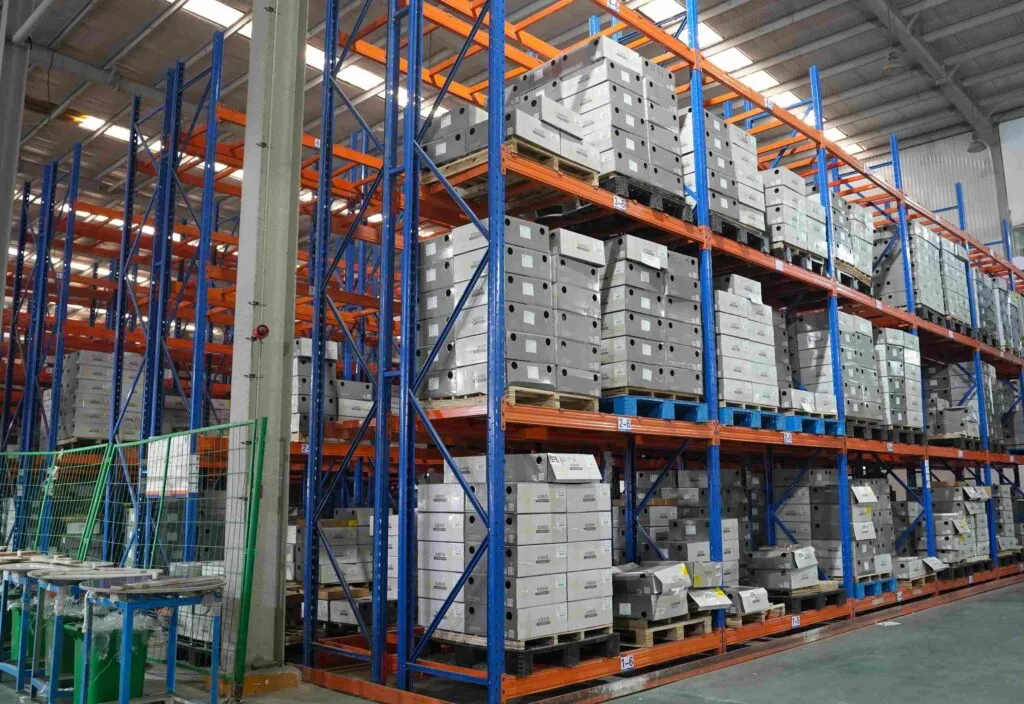
I usually break the packing structure into three levels: roll, carton, and pallet.
| Packing level | Example unit | Information to confirm |
|---|---|---|
| Product unit | 1 roll | Length per roll |
| Carton unit | 4 rolls per carton | Rolls per carton and carton dimensions |
| Pallet unit | 20 cartons per pallet | Cartons per pallet and pallet dimensions |
These figures are examples only. The right packing structure depends on roll size, carton strength, product weight, and transport conditions.
Buyers should also make sure that the supplier uses the same definition of a packing unit. For example, an order for 100 rolls is not the same as an order for 100 cartons. The purchase order should never leave this point open to interpretation.
Calculate the quantity at each packing level
I would calculate the carton and pallet quantities before confirming the order.
For example, assume a buyer orders 12,000 meters of edge banding. Each roll contains 400 meters. The supplier packs four rolls in one carton and 20 cartons on one pallet.
- Total rolls: 12,000 ÷ 400 = 30 rolls.
- Total cartons: 30 ÷ 4 = 7.5 cartons.
- Full pallets: 20 cartons per pallet.
This example shows a problem. The order does not divide evenly into full cartons. The buyer and supplier must decide whether to use seven cartons with four rolls and one carton with two rolls, or change the packing quantity.
I would always ask the supplier to confirm the actual packing plan. A simple calculation can reveal problems before production and packing begin.
Check carton dimensions and weight
The number of rolls in a carton is only one part of the packing decision. Buyers should also check the carton size and weight.
A carton that is too large may waste warehouse space. A carton that is too heavy may be difficult for workers to handle. A carton that is too weak may be damaged during stacking or transport.
I would request the following information:
| Packing information | Why I would request it |
|---|---|
| Carton length, width, and height | Warehouse and container planning |
| Net weight | Product weight without packaging |
| Gross weight | Total weight including packaging |
| Rolls per carton | Inventory counting |
| Cartons per pallet | Pallet planning |
| Pallet length, width, and height | Warehouse and transport planning |
| Total pallet weight | Handling and shipping arrangements |
ISO 3394:2012 provides dimensional series for rigid rectangular transport packages and unit loads. It uses standard plan dimensions such as 600 × 400 mm and related pallet dimensions. Buyers can use this standard as a reference when planning compatible rectangular packages, but they should not assume that every edge banding carton must follow these dimensions. The actual package still needs to fit the product and the transport plan.
Consider pallet strength and handling
I would also ask how the supplier protects cartons during stacking and transport. The supplier should consider the weight of the cartons, pallet arrangement, wrapping method, and expected transport conditions.
ISO 2234:2000 describes stacking tests for complete, filled transport packages and unit loads under a static load. The test can help assess package strength and protection when packages are stacked. It is a useful reference when buyers need to evaluate packaging performance, especially for shipments with multiple stacked cartons or pallets.
Buyers should also confirm whether the pallets can be handled by forklifts or pallet trucks. If the shipment will be stored in a warehouse, the pallet height and weight should fit the warehouse’s handling and storage rules.
Use clear package labels
I believe package labels are part of inventory control. Each carton should show enough information for the buyer to identify its contents without opening it.
I would request the product code, color or decor, material, thickness, width, roll length, quantity per carton, batch number, and gross weight. Pallet labels should show the pallet number and the carton quantity.
ISO 780:2015 provides graphical symbols for handling and storage instructions on distribution packages. Buyers can refer to it when they need symbols for instructions such as handling or storage. The standard does not replace product identification or the buyer’s own carton-label requirements.
My view is that a good packing plan should make the product easy to receive, count, store, and use. It should not only make the supplier’s packing process convenient.
What Should Buyers Include in an Edge Banding Order Specification to Avoid Packing Disputes?
Many packing disputes start with a simple problem: the buyer and supplier have different ideas about what the order should contain.
I recommend that buyers put all roll, core, and packing requirements into one written specification. Both sides should approve the document before production and use it as the reference for final inspection and delivery.
Create one complete specification sheet
I would not put roll length in one email, core size in another message, and carton quantity in a separate packing discussion. This makes it difficult to check whether everyone is using the same information.
I prefer one specification sheet for each product or order. The sheet should include the product details, roll details, core details, and packing requirements.
Here is an example of the information I would include:
| Category | Required information | Example |
|---|---|---|
| Product | Material | PVC |
| Product | Thickness | 1.0 mm |
| Product | Width | 22 mm |
| Product | Color | Customer-approved decor code |
| Roll | Length per roll | 500 m |
| Roll | Length tolerance | Agreed in the purchase order |
| Core | Inner diameter | 76 mm |
| Core | Outer diameter | Agreed drawing dimension |
| Core | Width | Suitable for the roll and machine |
| Packing | Rolls per carton | 4 |
| Packing | Cartons per pallet | 20 |
| Packing | Carton dimensions | Confirmed before production |
| Packing | Net and gross weight | Listed on packing documents |
| Label | Identification | Product code, color, batch, and quantity |
The example dimensions are not universal requirements. Buyers should replace them with the actual dimensions required by their machines and customers.
Define how suppliers should handle deviations
A specification should also explain what happens when the supplier cannot meet a requirement.
For example, the supplier may find that a requested roll length does not work well with the selected core or carton size. The supplier should not change the packing method without the buyer’s approval.
I would define a simple approval process:
- The buyer sends the complete product and packing specification.
- The supplier checks production and packaging feasibility.
- Both sides confirm the final dimensions and quantities.
- The supplier prepares a packing sample or sample photographs for approval.
- The supplier follows the approved specification during mass production.
- The supplier provides the final packing list before shipment.
This process helps prevent unexpected changes. It also gives the buyer a clear record if the delivered goods do not match the agreed requirements.
Make the packing list match the purchase order
The purchase order and packing list should use consistent product codes and packing units. If the purchase order specifies four rolls per carton, the packing list should show the actual number of rolls in each carton.
I would ask the supplier to provide a packing list with the following details:
- Product code and description.
- Material, thickness, width, and color.
- Roll length and number of rolls.
- Carton quantity and carton numbering.
- Pallet quantity and pallet numbering.
- Net weight and gross weight.
- Carton and pallet dimensions.
- Batch or production identification.
The buyer should also agree on how partial cartons will be listed. For example, if one carton contains two rolls instead of four, the packing list should show this clearly.
Use pre-shipment checks to confirm the final packing
I would not wait until the goods arrive to check whether the packing is correct. Buyers can ask suppliers to check roll labels, core dimensions, carton quantities, and pallet labels before shipment.
For repeat orders, buyers should compare the current packing arrangement with the approved version from the previous order. If the supplier changes the core, roll length, carton size, or packing quantity, the supplier should inform the buyer before shipping.
My view is that the order specification should be clear enough for a third person to understand without reading the entire email history. When the buyer, supplier, warehouse team, and shipping team all use the same document, there is less room for misunderstanding.

Lengths, Cores and Packing on One Sheet
Metres per roll, core ID, rolls per carton and cartons per pallet – confirmed on the order and repeated on every shipment.
Browse Product Specifications
Conclusion
I believe buyers should specify roll length, core dimensions, and packing units before ordering to control production, inventory, shipping costs, and delivery quality.
References and Data Sources
- International Organization for Standardization (ISO) – ISO 11093-4:2022: Paper and Board — Testing of Cores — Part 4: Measurement of Dimensions.
https://www.iso.org/standard/77831.html
Provides methods for measuring the inner diameter, outer diameter, wall thickness, and length of paper and board cores. - International Organization for Standardization (ISO) – ISO 3394:2012: Packaging — Complete, Filled Transport Packages and Unit Loads — Dimensions of Rigid Rectangular Packages.
https://www.iso.org/standard/50990.html
Provides dimensional references for rigid rectangular transport packages and unit loads. - International Organization for Standardization (ISO) – ISO 780:2015: Packaging — Distribution Packaging — Graphical Symbols for Handling and Storage of Packages.
https://www.iso.org/standard/59933.html
Covers graphical symbols used to communicate handling and storage instructions on distribution packages. - International Organization for Standardization (ISO) – ISO 2234:2000: Packaging — Complete, Filled Transport Packages and Unit Loads — Stacking Tests Using a Static Load.
https://www.iso.org/standard/32410.html
Describes methods for evaluating the stacking performance of filled transport packages and unit loads. - International Organization for Standardization (ISO) – ISO 11093-1:1994: Paper and Board — Testing of Cores — Part 1: Sampling.
https://www.iso.org/standard/1295.html
Provides a method for obtaining representative samples of paper and board cores for testing. - ROMA – PVC Edgebands Technical Specifications.
https://www.romabant.com/assets/uploads/files/2025/10/pvc-technical-specifications.pdf
Provides an example of manufacturer-specific edge banding packing information, including core diameter, roll diameter, length tolerance, and pallet information. These are product-specific specifications, not universal industry requirements.
Editorial note: The numerical roll lengths, carton quantities, and core dimensions used in this article are illustrative examples. Buyers should confirm actual requirements with their equipment manufacturers and edge banding suppliers.