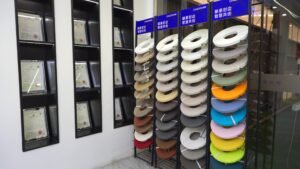

A large edge banding shipment may look correct at first, but hidden defects can reach your customers. Without a clear inspection plan, small problems can become expensive disputes.
Buyers should establish an incoming quality inspection plan by defining product specifications, setting acceptance criteria, selecting inspection methods, applying a suitable sampling plan, and creating clear procedures for handling nonconforming products.

When I work with edge banding buyers, I believe product inspection should start before the shipment arrives. Buyers should already know which specifications they need to check, how they will check them, and what conditions will lead to acceptance or rejection. This is especially important for distributors and wholesalers who purchase large quantities of PVC, ABS, acrylic, or other edge banding materials. A supplier’s inspection report is useful, but I do not think it should replace the buyer’s own incoming inspection. The two processes have different purposes. The manufacturer checks whether the products meet its production requirements, while the buyer checks whether the delivered products meet the purchase agreement and actual application needs.
Why Do Buyers Need an Incoming Quality Inspection Plan for Edge Banding?
A shipment can contain thousands of edge banding rolls, and checking every roll may take too much time. However, accepting products without a clear inspection process can expose buyers to quality and financial risks.
I believe incoming inspection is not just about finding defective products. It is also about making sure that the delivered goods match what both sides agreed to before production.

Why Is a Supplier’s Quality Inspection Not Enough?
Most professional edge banding manufacturers have their own quality inspection procedures. They may check product dimensions, color, surface appearance, and other properties before packing.
However, the manufacturer’s inspection and the buyer’s incoming inspection do not serve exactly the same purpose.
The manufacturer focuses on controlling its production process. The buyer needs to confirm that the actual shipment meets the agreed purchase specifications.
For example, a manufacturer may produce PVC edge banding according to its standard thickness tolerance. However, the buyer may have agreed on a different tolerance with the supplier. If the buyer does not check the purchase agreement, both sides may have different ideas about what an acceptable product means.
I would also pay attention to transportation and storage conditions. Some problems may appear or become visible after packing, handling, or transportation. Damaged cartons, mixed product labels, and missing rolls may not be reflected in the original factory inspection report.
What Risks Can an Incoming Inspection Plan Reduce?
I usually divide incoming edge banding risks into four groups:
- Specification risks: The delivered thickness, width, roll length, material type, or color code does not match the order.
- Appearance risks: Products have scratches, stains, uneven surfaces, color differences, or other visible defects.
- Performance risks: Products do not meet the agreed requirements for adhesion, flexibility, or other application-related properties.
- Packaging risks: Rolls are damaged, labels are incorrect, or different specifications are mixed.
These problems can affect buyers in different ways. A wrong roll length may increase inventory and cost calculations. A color difference may cause complaints from furniture manufacturers. Poor bonding performance may lead to production interruptions for the buyer’s customers.
Why Should Buyers Inspect Products Before Stocking or Distribution?
I do not recommend moving all incoming products directly into available inventory before completing the required checks.
A better approach is to keep the goods in a receiving or inspection area until the buyer confirms their status.
For example, a distributor receives 3,000 rolls of PVC edge banding in 20 colors. If the warehouse mixes all the rolls before inspection, finding a problem later may require checking several storage locations.
A clear incoming inspection plan helps buyers separate products into different statuses.
| Product status | Meaning | Suggested action |
|---|---|---|
| Pending inspection | Inspection has not been completed | Keep products on hold |
| Accepted | Products meet agreed requirements | Release to inventory |
| Conditional acceptance | A deviation needs buyer approval | Record the agreement |
| Rejected | Products do not meet acceptance criteria | Isolate and contact supplier |
I believe this process is particularly useful for overseas distributors. Once products enter available inventory or are sold to customers, it becomes harder to control the cost of a quality problem.
Which Quality Parameters Should Buyers Check When Receiving Edge Banding?
Buyers should not inspect every edge banding product in exactly the same way. Different materials, specifications, and applications require different inspection priorities.
I believe buyers should divide inspection into dimensional checks, appearance checks, material identification, performance tests, and packaging checks. This makes the inspection process easier to follow and reduces the chance of missing important details.

1. Dimensional Inspection
Dimensions are among the first things I would check when receiving edge banding.
The buyer should compare the actual product with the purchase order and approved specifications.
The main items include:
- Thickness.
- Width.
- Roll length.
- Core size, where specified.
- Roll quantity.
- Packaging dimensions, if relevant to the order.
Thickness and width can be checked with suitable measuring tools, such as a calibrated digital caliper or micrometer. Buyers should use the measurement method and reference points agreed with the supplier.
For example, a buyer may order PVC edge banding with a thickness of 1.0 mm and a width of 22 mm. The inspector should not simply record that the product looks correct. The inspector should measure the product and compare the results with the agreed tolerance.
Roll length also deserves attention. Buyers should confirm whether the supplier uses a defined roll length and how that length is measured. This is important when products are sold to customers based on the number of meters per roll.
2. Appearance and Color Inspection
Appearance is another important factor, especially for decorative edge banding.
I would check the following details:
- Color consistency.
- Surface scratches.
- Dirt, stains, or visible marks.
- Gloss or matte finish.
- Texture and embossing consistency.
- Printing or decorative pattern alignment.
- Visible bubbles, cracks, or other surface defects.
Color inspection needs more care than a simple visual comparison.
The buyer should compare the incoming product with an approved sample or color reference under consistent lighting conditions. Different light sources can make the same color appear different.
For decorative products, I also recommend checking several points along the roll. A sample taken from only one position may not show a variation that appears later in the roll.
3. Material and Product Identification
Buyers should confirm whether the delivered material matches the order.
PVC, ABS, PP, acrylic, and wood veneer edge banding have different material characteristics and applications. A correct product name on the carton does not automatically prove that the actual material is correct.
I would check the supplier’s product declaration, order information, batch labels, and relevant material documentation.
For special orders, buyers may also request supporting documents or additional tests when material identification is important.
4. Functional and Performance Inspection
Some edge banding properties cannot be judged through appearance alone.
Depending on the product and application, buyers may need to check:
- Adhesion performance under defined bonding conditions.
- Flexibility and bending behavior.
- Resistance to cracking.
- Surface coating or back coating condition.
- Compatibility with the intended adhesive and processing equipment.
For example, an edge banding roll may have the correct thickness and color but still perform poorly during furniture production.
I would not use one general adhesion test for every customer. The test should reflect the actual application conditions, including adhesive type, temperature, pressure, and machine speed.
5. Packaging and Label Inspection
Packaging is often treated as a minor issue, but it can create serious problems for distributors.
I would check whether the cartons are damaged, whether the rolls are properly protected, and whether the labels match the products inside.
| Inspection category | Key items | Suggested method |
|---|---|---|
| Dimensions | Thickness, width, length | Caliper, micrometer, length measurement |
| Appearance | Color, surface, texture, gloss | Visual inspection under controlled lighting |
| Material | PVC, ABS, PP, acrylic, etc. | Product documents and agreed verification methods |
| Performance | Adhesion, flexibility, coating | Defined application or laboratory tests |
| Packaging | Labels, roll quantity, carton condition | Visual check and document comparison |
| Identification | Product code, batch number, color code | Compare labels with purchase order |
I believe buyers should give each inspection item a clear method and acceptance requirement. Otherwise, different employees may judge the same product in different ways.
How Should Buyers Set Acceptance Standards for Different Edge Banding Specifications?
An inspection plan is only useful when buyers know what counts as acceptable and what counts as a defect.
I have noticed that some purchasing teams focus heavily on the product specifications but do not define the acceptance limits in enough detail. This can create disagreements when the buyer receives products that are slightly different from expectations.
I believe buyers should establish acceptance standards before placing the order. These standards should cover product dimensions, appearance, performance, and packaging.

Why Should Buyers Avoid Using One Standard for Every Material?
Different edge banding materials have different characteristics. A visual inspection method that works for PVC may not be enough for wood veneer or acrylic edge banding.
For example, PVC edge banding buyers may focus on thickness, width, color, surface finish, and bonding performance. Buyers of wood veneer edge banding may also need to pay attention to natural grain variation, knots, and surface differences.
Acrylic edge banding may require closer attention to transparency, surface appearance, and protective film condition.
I would establish separate inspection requirements for different material types and product applications.
| Material | Important inspection items |
|---|---|
| PVC | Thickness, width, color, surface finish, flexibility |
| ABS | Dimensions, color, surface quality, application performance |
| Acrylic | Transparency, surface scratches, protective film, appearance |
| PP | Dimensions, appearance, material identification, application compatibility |
| Wood veneer | Grain appearance, natural variation, cracks, surface finish |
The exact requirements should come from the purchase agreement, approved samples, technical specifications, and intended use. The table above is a practical inspection guide, not a universal testing standard.
How Should Buyers Define Dimensional Tolerances?
I would never rely on a product’s nominal dimensions alone.
For example, if a buyer orders 2.0 mm PVC edge banding, the inspection plan should state the acceptable thickness range. The same principle applies to width and roll length.
The buyer and supplier should agree on:
- Nominal product dimensions.
- Minimum and maximum acceptable values.
- Measurement tools.
- Measurement positions.
- Number of measurements per sample.
- Rules for handling results outside the agreed range.
For example, buyers can define a thickness tolerance in the technical specification before production. The actual tolerance must be based on the product design, manufacturing capability, and application needs. Buyers should not assume that one tolerance applies to every PVC edge banding product.
How Should Buyers Define Appearance Acceptance Criteria?
Appearance standards need clear references.
I recommend keeping an approved physical sample or an agreed color reference before mass production. Both parties should identify the reference with a product code, color code, and approval date.
For color inspection, the parties can agree on a visual comparison method or a color measurement method.
A colorimeter can provide numerical color difference data, such as ΔE. However, the buyer and supplier must agree on the color measurement system, lighting conditions, instrument settings, and acceptable limit. A ΔE value without these details may not provide a fair basis for acceptance.
For surface defects, buyers should define which defects are critical, major, or minor.
How Should Buyers Classify Defects?
I find defect classification useful because not all problems have the same effect on product use.
| Defect category | Example | Possible treatment |
|---|---|---|
| Critical | Material or product condition creates a serious safety or compliance risk | Reject or stop release |
| Major | Wrong dimensions or serious bonding problems | Reject affected lot or follow agreed disposition |
| Minor | Small appearance issue with limited effect on use | Evaluate against agreed visual criteria |
These categories should be agreed upon by the buyer and supplier. A minor appearance issue for one application may be unacceptable for a premium furniture project.
I also recommend writing the acceptance criteria into the purchase specification. A verbal agreement is difficult to verify when different purchasing and quality employees handle the same order.

Have a spec or project to discuss?
Send your panel, thickness, finish and volume. Our engineers reply with a matched color, sample plan and price — usually within 24 hours.
Request a Quote1,000+ stock colors · Swatches on request
How Can Buyers Establish a Practical Sampling and Inspection Procedure for Incoming Edge Banding?
Checking every roll is not always practical, especially when a shipment contains thousands of rolls. However, taking a few convenient samples from the top of several cartons is not a reliable inspection method either.
I believe buyers should use a sampling plan that reflects the order size, product risk, supplier performance, and inspection resources.

Step 1: Define What Counts as One Inspection Lot
Before selecting samples, buyers should decide how to divide the shipment into inspection lots.
I would not automatically treat an entire container as one lot.
For example, a container may include several materials, colors, thicknesses, and production batches. Combining all these products into one inspection lot can hide problems in individual product groups.
A more practical method is to separate products according to:
- Product material.
- Color or product code.
- Thickness and width.
- Production batch.
- Manufacturing date, where relevant.
- Purchase order or agreed delivery lot.
Products with different specifications should not be mixed simply because they arrived in the same shipment.
Step 2: Choose a Suitable Sampling Standard
For buyers who receive repeated shipments, I recommend studying ISO 2859-1:2026, which provides acceptance sampling schemes indexed by Acceptance Quality Limit (AQL) for lot-by-lot inspection by attributes.
ANSI/ASQ Z1.4 is another recognized reference for attribute sampling.
These standards help buyers determine sample sizes and acceptance or rejection criteria. They also provide inspection approaches that can change according to the supplier’s inspection history.
However, buyers should understand that AQL is not a guarantee that every accepted shipment contains no defective products. It is a sampling system used to make lot acceptance decisions under defined statistical rules.
For dimensional measurements, buyers may also need a variables-based inspection approach. A measurement result, such as 0.98 mm thickness, provides more information than simply recording whether a product passes or fails.
Step 3: Select Samples Randomly
I believe sample selection is just as important as sample size.
If an inspector only takes products from easily accessible cartons, the sample may not represent the whole lot.
A better procedure is to select samples from different positions in the shipment and from different cartons or batches.
For example, inspectors can select cartons from different pallet positions, including accessible upper, middle, and lower areas. The selection should follow a documented random method whenever practical.
The inspector should also avoid selecting only the best-looking rolls.
Step 4: Decide the Inspection Level and AQL
ISO 2859-1 uses different sampling plans and inspection levels. The correct sample size depends on the lot size, selected inspection level, and applicable sampling plan.
Buyers should also define AQL values for different defect classes if they use an AQL-based system.
I would not recommend copying one AQL value from another company’s inspection plan without understanding the product risks.
For example, a serious functional problem should not be treated in the same way as a small cosmetic defect. The buyer should define the classification and acceptance rules before the inspection starts.
Step 5: Record Results and Make a Lot Decision
Every inspection should create a record.
The report should include the purchase order number, supplier, product code, batch number, lot quantity, sample quantity, inspection date, inspection results, and final decision.
| Procedure | What the inspector should do | Required record |
|---|---|---|
| Lot identification | Separate products by specification and batch | Lot identification sheet |
| Sampling | Select samples according to the plan | Sampling record |
| Dimensional inspection | Measure thickness, width, and length | Measurement results |
| Appearance inspection | Check color and surface defects | Appearance checklist |
| Performance testing | Conduct agreed application tests | Test report |
| Final decision | Accept, hold, or reject the lot | Inspection approval record |
A Practical Example for a Distributor
Imagine that a distributor receives 1,200 rolls of PVC edge banding in six colors.
I would first divide the shipment into separate inspection lots according to color, specification, and production batch. Then I would select the sampling plan agreed with the supplier and inspect each lot.
The inspector would check dimensions, appearance, labels, and packaging. The inspector would also carry out any agreed performance tests.
If one color fails the inspection, the distributor should not automatically reject all six colors. The quality team should first identify the affected lot and review the relevant results.
This approach helps buyers control inspection costs without losing sight of product risks.
What Should Buyers Do When Incoming Edge Banding Fails Quality Inspection?
Finding a defect does not mean the inspection process is complete. Buyers still need to decide what to do with the affected products and how to communicate with the supplier.
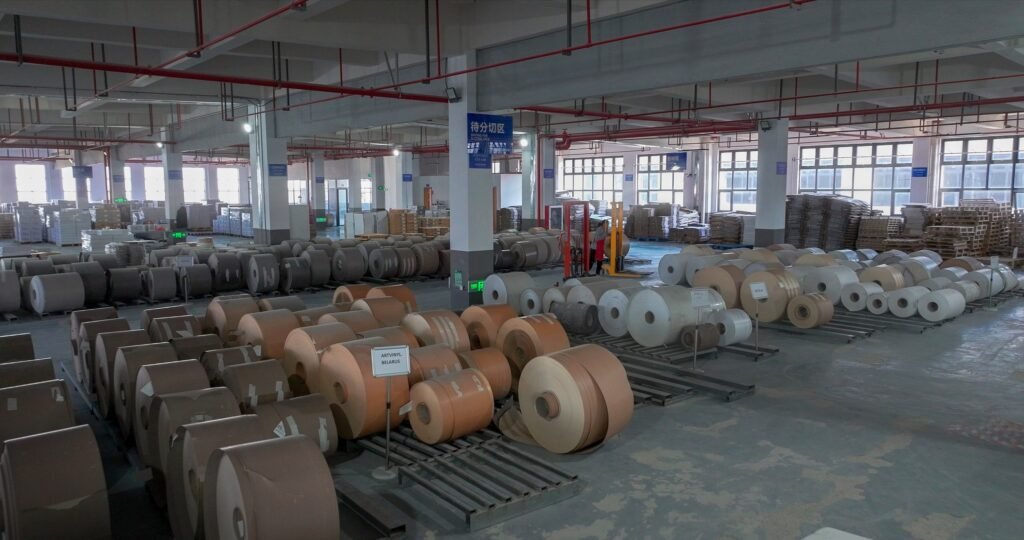
I believe the most important rule is to prevent unapproved products from entering available inventory or reaching customers before the issue is resolved.
Step 1: Isolate the Affected Products
When an inspector finds a problem, the first action should be to identify and separate the affected products.
The buyer should mark the products as pending or rejected and prevent accidental use or shipment.
I would record the product code, batch number, carton number, quantity, and inspection date. Photos and measurement records should also be kept.
This is especially important when a shipment contains multiple colors or production batches.
Step 2: Identify the Type and Scope of the Defect
Buyers should not assume that one defective sample means the entire shipment is defective.
The quality team should review the inspection results and determine whether the problem is isolated or may affect a wider production range.
For example, if a few rolls have incorrect labels, the problem may be related to packaging. If several rolls from the same batch have thickness deviations, the problem may involve production control.
I would compare the inspection results with the original specifications and approved samples before making a final decision.
Step 3: Send a Clear Nonconformity Report to the Supplier
A useful supplier complaint should contain facts rather than general statements.
I recommend including:
- Purchase order and product information.
- Batch and carton identification.
- Quantity affected.
- Inspection method and results.
- Photos or videos of the defects.
- Relevant specification or approved sample.
- Requested corrective action.
For example, instead of saying that the PVC edge banding is too thin, the buyer should provide the nominal thickness, agreed tolerance, actual measurement results, and measuring method.
This gives the supplier a clear starting point for investigation.
Step 4: Agree on a Corrective Action
Different defects require different solutions.
| Problem | Possible action |
|---|---|
| Wrong product specification | Replacement or return |
| Serious color inconsistency | Reproduction or replacement after sample approval |
| Thickness deviation | Additional inspection and replacement of affected products |
| Poor adhesion | Joint application testing and root cause investigation |
| Damaged packaging | Repacking or replacement, depending on product condition |
| Missing quantity | Reconciliation and additional delivery |
I would also ask the supplier to explain the root cause and the steps taken to prevent the same problem from happening again.
A replacement alone may solve the immediate issue, but it does not necessarily improve the production process.
Step 5: Reinspect Before Releasing the Products
After the supplier completes corrective action, buyers should verify the result.
The inspection should focus on the original problem and any related product characteristics that may have been affected.
For example, if the supplier replaces a batch because of color inconsistency, the buyer should compare the replacement products with the approved reference under the agreed lighting conditions.
The buyer should also record the final decision and keep the relevant inspection documents.
Why Should Buyers Include Rejection Rules in the Purchase Agreement?
I strongly recommend agreeing on inspection and rejection procedures before mass production.
The purchase agreement should explain the inspection standard, defect classification, sampling method, acceptance criteria, and responsibilities of both parties.
It should also explain how buyers and suppliers will handle disputes, additional inspection costs, replacement, and return arrangements.
ISO 9001:2015 provides a useful reference for controlling nonconforming outputs. Clause 8.7 requires organizations to identify and control outputs that do not meet requirements and to retain documented information about nonconformities and actions taken.
I believe this principle is useful for both manufacturers and buyers. A clear record helps both sides understand what happened and what action was agreed upon.
- How European Furniture Standards Impact PVC Edgeband Imports →
- Essential PVC Edgeband Specifications Every Distributor Should Understand →
- Furniture Edge Banding Supplier Selection Checklist: Key Factors Every Distributor Should Consider →
- How to Evaluate a Wholesale Edge Banding Supplier Before Partnering →

Compare Materials Before You Write the Spec
PVC, ABS, MABS, PP and acrylic side by side — thickness ranges, finishes and the applications each material suits best.
Explore the Material Range
Conclusion
An incoming inspection plan turns a shipment into a series of checkable facts: agreed specifications, defined acceptance limits, a sampling method both sides accept, and a clear route for nonconforming lots. Buyers who settle these rules before the order is produced spend far less time arguing about quality after the container arrives.
Conclusion
A clear incoming inspection plan helps buyers verify specifications, control quality risks, and handle supplier disputes before defective edge banding reaches customers.
Data Sources and References
- International Organization for Standardization (ISO) – ISO 2859-1:2026: Sampling Procedures for Inspection by Attributes
https://www.iso.org/standard/2859-1Reference for AQL-based sampling, inspection levels, lot acceptance, and rejection procedures. Note that the 2026 edition is the current edition and replaces ISO 2859-1:1999. - American Society for Quality (ASQ) – Attribute and Variable Sampling Plans
https://asq.org/quality-resources/sampling/attributes-variables-samplingExplains the differences between attribute inspection and variable inspection, and how sampling plans support quality decisions. - American Society for Quality (ASQ) – ANSI/ASQ Z1.4 and Z1.9
https://asq.org/quality-resources/z14-z19Reference for sampling procedures and inspection tables for attributes and variables. - International Organization for Standardization (ISO) – ISO 9001:2015 Quality Management Systems
https://www.iso.org/standard/62085.htmlReference for product conformity, documented inspection information, and control of nonconforming outputs, particularly Clauses 8.6 and 8.7. - ISO – ISO 9001:2015 Documented Information Guidance
https://www.iso.org/files/live/sites/isoorg/files/standards/docs/en/iso_9001_2015_guidance_documented_information.pdfGuidance on maintaining documented information to support quality management processes.