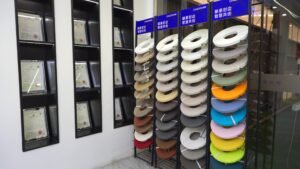
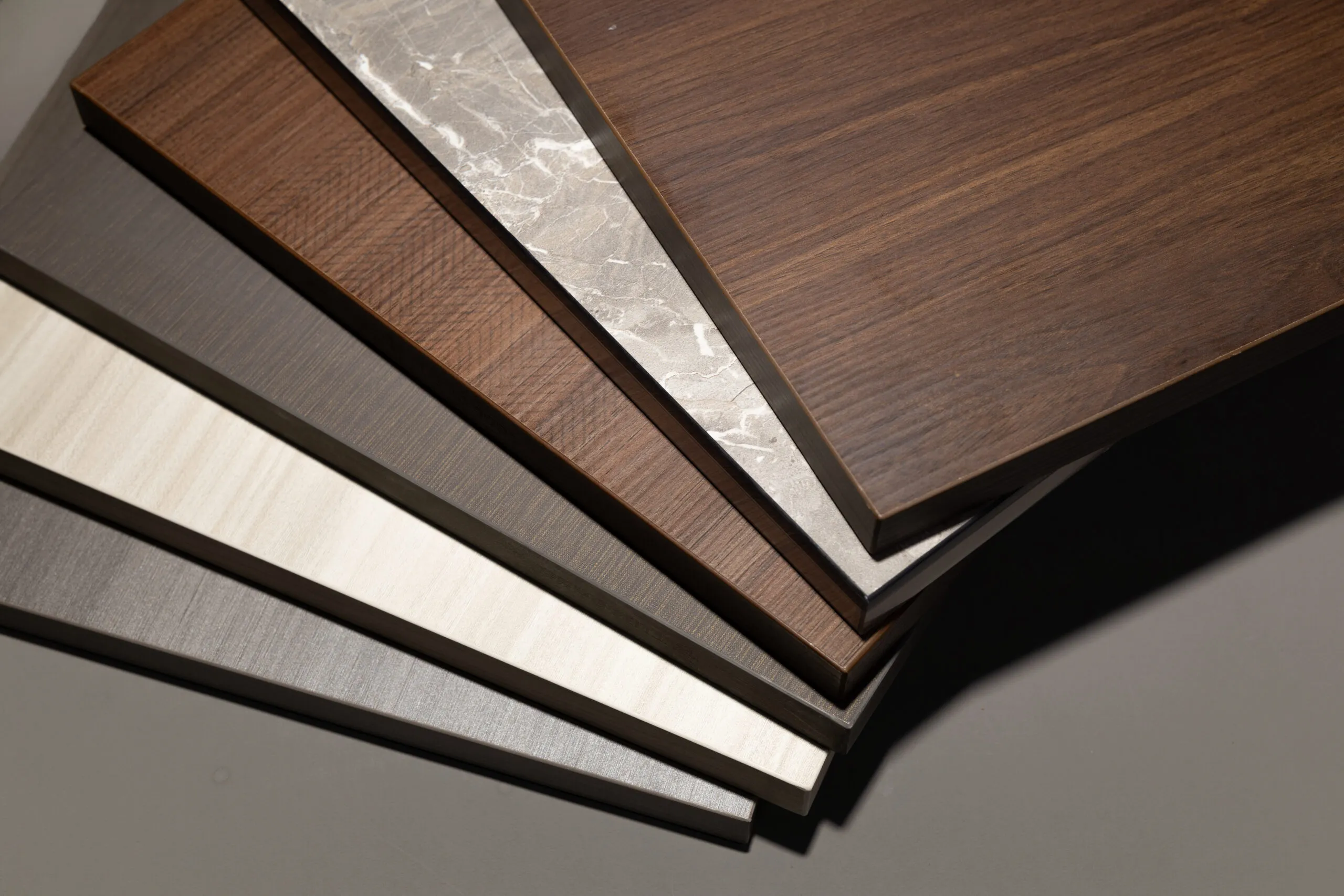
Many furniture material distributors depend on traditional PVC and ABS edge banding. However, price competition is getting stronger, and similar products are becoming harder to differentiate. Could 3D edge banding offer a better way to grow?
3D edge banding can be a profitable product opportunity for furniture material distributors when local customers value its visual effects, distributors can secure reliable suppliers, and the selling price covers sourcing, inventory, and marketing costs. However, profitability depends on real demand, not product novelty alone.
I have seen many furniture material distributors focus on products that already have stable demand. This is a reasonable business choice because traditional edge banding has a clear customer base and a familiar sales process. However, I also believe distributors need to look beyond standard products if they want to create new sales opportunities. A new product does not need to replace PVC or ABS edge banding. It can become an additional product line that helps distributors serve customers with different design requirements. In this article, I will look at the market potential, target customers, profit factors, business risks, and supplier selection process. My goal is to help distributors decide whether 3D edge banding deserves a place in their product range.
Why Is 3D Edge Banding Gaining Attention in the Furniture Materials Market?
Traditional edge banding mainly helps furniture manufacturers cover exposed panel edges and improve the finished appearance. However, furniture design is not only about protecting panel edges. Buyers also pay attention to surface texture, visual depth, and the overall look of furniture.
3D edge banding is gaining attention because it can add decorative effects that standard edge banding may not offer. It gives distributors another product option for customers who want more distinctive furniture designs.

What Makes 3D Edge Banding Different from Traditional Edge Banding?
When I compare 3D edge banding with standard PVC and ABS products, I first look at the surface design and visual effect.
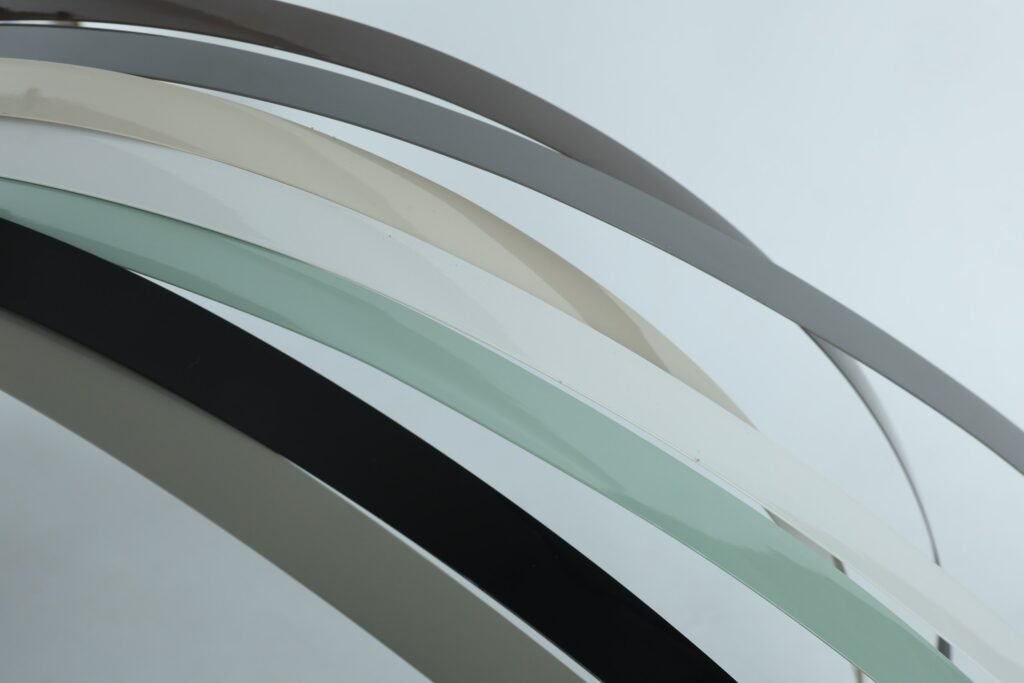
Traditional edge banding usually focuses on matching the color, grain, and texture of furniture panels. 3D edge banding can go further by creating a stronger sense of depth through decorative printing, transparent surface layers, and special finishing techniques. In practice, that transparent layer is usually an acrylic-based surface, which is why these products behave differently from a standard acrylic edge banding strip during trimming and polishing.
For example, REHAU describes its Magic 3D edgeband as a product that uses decorative printing beneath a transparent PMMA surface to create an illusion of depth and embossed texture. The manufacturer also highlights its ability to handle tight radii and further processing, such as polishing and beveling.
This difference matters because furniture manufacturers may use 3D effects to create a more distinctive appearance without changing the entire panel material.
| Product type | Main feature | Potential application |
|---|---|---|
| Standard PVC edge banding | Flexible, practical, and available in many colors | Cabinets and general furniture |
| ABS edge banding | Decorative surface and material options | Residential and commercial furniture |
| Embossed edge banding | Textured surface that adds a tactile effect | Cabinets and decorative panels |
| 3D edge banding | Visual depth and special decorative effects | Premium furniture and customized designs |
I would not treat every embossed edge band as a 3D product. Some suppliers use the term 3D to describe surface texture, while others use it for a deeper visual effect created through multiple decorative layers. Distributors should check the actual product structure and sample before making comparisons. Our guide to how surface embossing affects PVC edge banding performance explains where a texture ends and a true multi-layer effect begins.
Why Are Furniture Manufacturers Interested in More Decorative Materials?
I believe product differentiation is one of the main reasons why 3D edge banding deserves attention.
Many furniture manufacturers already have access to standard colors and woodgrain patterns. If every supplier offers similar products, manufacturers have fewer ways to make their finished furniture look different.
3D edge banding gives them another design option. It may work well with modern cabinets, display furniture, decorative panels, and customized furniture projects.
The European Commission describes the furniture industry as a sector with strong design capabilities and a high number of small and medium-sized manufacturers. It also highlights the industry’s ability to respond to new design demands.
This does not prove that demand for 3D edge banding is growing at a specific rate. However, it shows why distributors should pay attention to products that support design differentiation.
For me, the opportunity is not simply selling a more expensive edge band. It is helping furniture manufacturers offer a different finished appearance to their own customers.
Which Customer Segments Are Most Likely to Buy 3D Edge Banding?
Not every furniture manufacturer needs 3D edge banding. Some factories focus on low-cost, high-volume furniture, while others produce customized products with more attention to appearance.
I would not recommend promoting 3D edge banding to every customer. Distributors should first identify manufacturers whose products and customers can benefit from its decorative features.
Which Furniture Manufacturers Should Distributors Target First?
I would divide potential customers into four main groups.
1. Custom furniture manufacturers
Custom furniture manufacturers often work with different panel colors, surface finishes, and customer requirements. They may need special edge banding to create a more complete design.
For these customers, 3D edge banding can become an additional option for customized projects. The selling point is not only the edge material itself. It is the ability to offer more design choices.
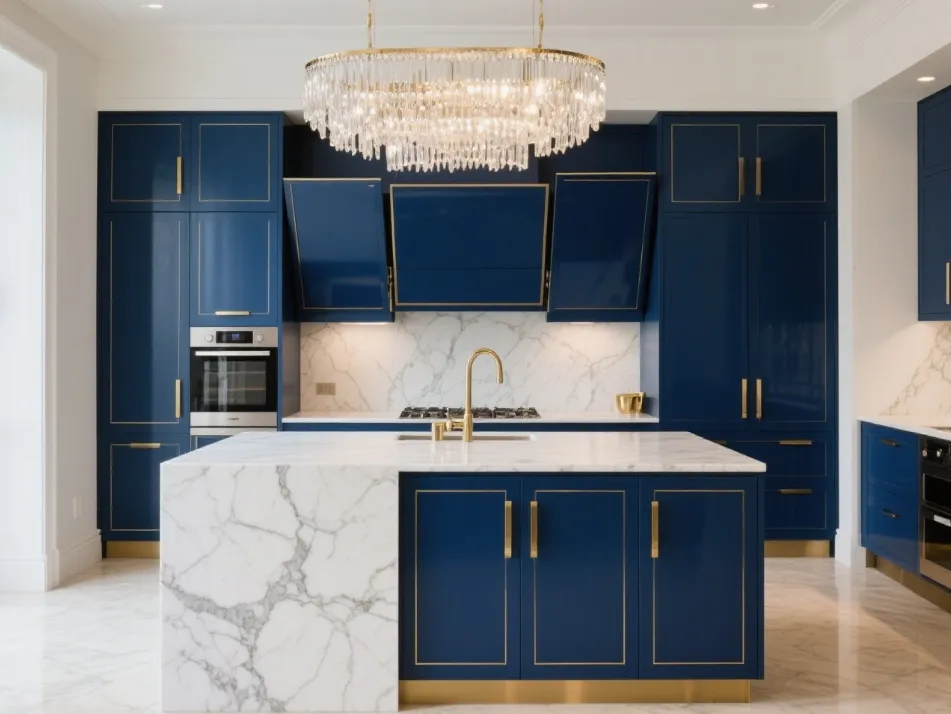
2. Kitchen and bathroom cabinet manufacturers
Kitchen and bathroom furniture often combines different materials and surface finishes. Some manufacturers may want more decorative details to create a premium appearance.
However, distributors should not assume that every 3D product is suitable for wet environments. They need to check moisture resistance, adhesive compatibility, and the manufacturer’s application recommendations.
3. Premium furniture manufacturers
Premium furniture manufacturers usually pay more attention to the final appearance of their products. They may be more willing to test special textures, metallic effects, and visual depth.
I believe this segment deserves attention because these manufacturers may compete through design rather than price alone.
4. Furniture panel and material wholesalers
Wholesalers can also become important buyers. They may purchase different decorative materials and resell them to local furniture factories, workshops, and cabinet manufacturers.
For distributors that already sell PVC and ABS edge banding, this group may be easier to approach because the new product can be added to an existing customer relationship.
How Can Distributors Identify Real Buying Demand?
I would not judge demand only by asking customers whether they like 3D edge banding. A customer may like a sample but have no plan to purchase it.
Instead, I would ask three practical questions:
- Does the customer currently produce furniture that needs special decorative finishes?
- Does the customer have projects that require textured or three-dimensional visual effects?
- Is the customer willing to test a new edge banding material at a commercial order quantity?
These questions help distributors separate general interest from real purchasing demand.
I would also recommend showing physical samples instead of relying only on product photos. A customer needs to see how the surface looks under different lighting conditions and how it feels when touched.
| Customer segment | Potential demand | What distributors should focus on |
|---|---|---|
| Custom furniture factories | High potential | Custom colors and design matching |
| Kitchen cabinet manufacturers | Medium to high potential | Surface compatibility and durability |
| Premium furniture factories | High potential | Visual effects and product quality |
| General furniture factories | Depends on price | Cost and practical application |
| Furniture material wholesalers | Depends on their customer base | Product range and resale potential |
The table represents my commercial assessment, not measured market demand. Distributors should validate these segments through sample testing and customer interviews in their own markets.
What Determines the Profit Margin of 3D Edge Banding for Distributors?
A product can have a higher selling price without generating higher profits. I have seen distributors focus too much on the difference between purchase prices and selling prices while ignoring inventory costs, customer acquisition costs, and product returns.
For 3D edge banding, I believe distributors should evaluate the complete cost structure before deciding how much to invest.

How Does the Purchase Cost Affect Distributor Profitability?
The first factor is the purchasing cost.
3D edge banding may involve more complex decorative processes or material structures than standard products. For example, products using transparent PMMA layers and special decorative printing may have different production costs from ordinary PVC edge banding.
However, I would not assume that every 3D product has a higher manufacturing cost or a higher profit margin. The actual cost depends on its material, production process, thickness, width, surface finish, and order quantity.
When I compare suppliers, I would consider the following costs:
- Factory purchase price per meter or roll.
- International shipping and insurance.
- Import duties and customs clearance.
- Local warehousing and handling.
- Product inspection and sample costs.
- Inventory losses caused by slow-moving designs.
The following formula can help distributors understand their actual gross profit:
Gross Profit = Selling Revenue – Total Product Cost
Gross Margin = Gross Profit / Selling Revenue × 100%
For example, suppose I purchase a batch of 3D edge banding at $0.80 per meter. After shipping, duties, and handling, my total landed cost reaches $1.00 per meter. If I sell it for $1.50 per meter, my gross profit is $0.50 per meter, and my gross margin is 33.3%.
This is only an illustrative calculation, not an actual industry price or average margin.
| Cost item | Example cost per meter |
|---|---|
| Factory purchase price | $0.80 |
| Shipping and duties | $0.15 |
| Local handling | $0.05 |
| Total landed cost | $1.00 |
| Selling price | $1.50 |
| Gross profit | $0.50 |
| Gross margin | 33.3% |
I would also calculate the net profit after sales commissions, marketing, storage, and other operating expenses. This gives distributors a more realistic picture of the business.
Can 3D Edge Banding Increase the Average Order Value?
I believe this is one of the most interesting opportunities.
Distributors who already sell standard PVC and ABS edge banding have an existing customer base. They do not need to build a completely new sales channel to introduce 3D products.
For example, when a furniture factory purchases standard edge banding, I can introduce several special decorative options. The customer may choose to add a small quantity of 3D edge banding for specific furniture projects.
This approach can increase the value of an existing order without requiring the distributor to find an entirely new customer.
I would also consider selling related products together:
- Standard PVC and ABS edge banding.
- Special embossed and 3D decorative edge banding.
- Matching furniture panels.
- Hot melt adhesive suitable for the application.
- Other decorative furniture materials.
However, distributors should not force customers to purchase products they do not need. The purpose of cross-selling is to solve more customer problems, not simply increase the number of products on an invoice.
How Should Distributors Calculate the Break-Even Point?
Before placing a large order, I would calculate how many meters of 3D edge banding I need to sell to cover the initial investment.
The basic formula is:
Break-Even Sales Volume = Fixed Costs / Contribution Profit per Unit
For example, suppose I spend $3,000 on samples, marketing, and other initial expenses. My selling price is $1.50 per meter, and my variable cost is $1.00 per meter.
My contribution profit is $0.50 per meter.
Therefore:
3,000 ÷ 0.50 = 6,000 meters
I need to sell 6,000 meters to recover the $3,000 fixed investment, before considering additional fixed expenses or taxes.
This calculation is useful because it changes the question from “Is 3D edge banding profitable?” to “Can my existing customer base generate enough sales to cover the investment?”
For a distributor with an established customer network, this may be a reasonable product test. For a new distributor without regular furniture factory customers, the same investment may carry much higher risk.
Have a spec or project to discuss?
Send your panel, thickness, finish and volume. Our engineers reply with a matched color, sample plan and price — usually within 24 hours.
Request a Quote1,000+ stock colors · Swatches on request
What Challenges Should Distributors Consider Before Adding 3D Edge Banding to Their Product Range?
I believe distributors should be careful when introducing a new decorative product. A product may look attractive in a showroom, but that does not mean it will sell quickly or work well in every furniture factory.
The biggest mistake is purchasing too many designs before understanding what local customers actually need.
Will Existing Furniture Production Equipment Support 3D Edge Banding?
This is one of the first questions I would ask before selling the product.
Furniture factories may use different edge banding machines, adhesives, temperatures, feeding speeds, and pressure settings. A special decorative edge banding product may require different processing conditions from standard materials.
For example, REHAU states that its Magic 3D product supports tight radii and can be polished or beveled while retaining its decorative print. This is a product-specific feature. I would not assume that every 3D edge banding product offers the same processing performance.
I would ask suppliers to provide clear technical information, including:
- Material composition and surface structure.
- Recommended adhesive systems.
- Processing temperature and machine speed.
- Minimum bending radius.
- Trimming and polishing recommendations.
- Suitable furniture applications.
I would also arrange a practical test with the customer’s actual equipment before confirming a large order.
A sample that looks good by hand may produce a different result during mass production. Distributors need to check the finished edge after trimming, bonding, and corner processing.
How Can Inventory Risk Affect the Business?
Inventory management is another important issue.
Traditional PVC edge banding often has relatively predictable demand for common colors and specifications. Special decorative products may have a smaller customer base and more specific applications.
If I purchase too many designs, some products may stay in the warehouse for months. This ties up working capital and reduces the money available for regular products.
I would divide the inventory into three categories:
| Inventory category | Suggested strategy | Main purpose |
|---|---|---|
| Basic colors and popular designs | Keep regular stock | Support repeat orders |
| Special 3D textures | Start with small quantities | Test market demand |
| Customized designs | Purchase against confirmed orders | Reduce inventory risk |
I would also ask suppliers whether they support small trial orders, mixed designs, or repeat production of the same specifications.
Another point is color consistency. If a customer purchases one design today and orders the same design several months later, the new batch should match the approved sample as closely as possible.
Distributors should ask suppliers how they manage color records, production batches, and quality inspections. These details matter because furniture manufacturers often need consistent materials across multiple production orders.
Is the Market Ready to Pay More for 3D Edge Banding?
This is a question that I would never ignore.
A decorative product may offer a better appearance, but customers still compare prices. If the finished furniture does not generate additional value for their own buyers, they may not accept a higher material cost.
The broader furniture market also does not guarantee success for every new decorative material. For example, CSIL’s reporting on the European furniture industry shows that market conditions vary between countries and that manufacturers face different demand and cost pressures.
I would therefore avoid entering a market based only on general design trends.
Instead, I would conduct a small market test:
- Select five to ten 3D designs that fit the local furniture market.
- Prepare physical samples and technical information.
- Contact existing furniture factory customers.
- Record their preferred designs and acceptable price ranges.
- Collect trial orders before expanding inventory.
I would also compare the customer’s expected selling price for the finished furniture with the additional cost of using 3D edge banding.
If the customer cannot explain why the decorative effect adds value to the final product, I would not push for a large order.
How Can Distributors Evaluate and Select a Reliable 3D Edge Banding Supplier?
A profitable product line needs a reliable supply chain. Even when distributors find customers who like 3D edge banding, unstable quality or long delivery times can damage the business.
I believe supplier selection should focus on production capability, product consistency, technical support, and long-term cooperation rather than simply choosing the lowest quotation.

What Production Capabilities Should Distributors Check?
First, I would check whether the supplier actually understands 3D edge banding production.
Some suppliers may offer decorative products through external sourcing. This does not automatically mean they are unreliable, but distributors need to understand who controls production and quality.
I would ask the supplier:
- What materials are used in the product?
- Can the factory provide different textures and decorative effects?
- Can it match existing furniture panel designs?
- Does it have a stable quality inspection process?
- Can it maintain consistent specifications between batches?
- What are its production lead times and minimum order quantities?
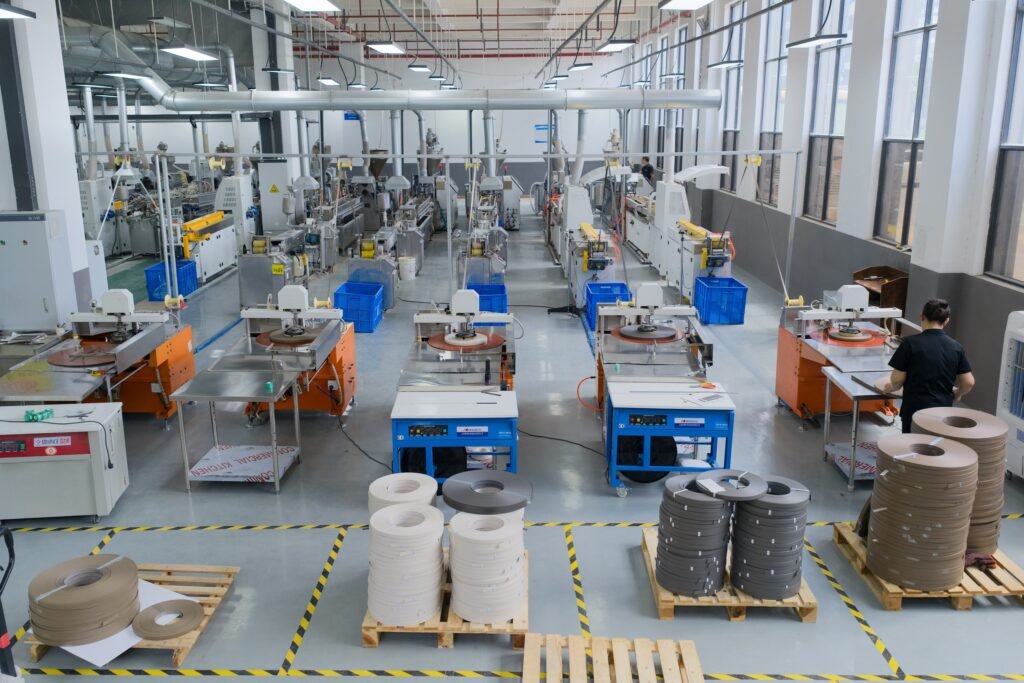
I would also ask for factory production photos, technical documents, and samples from actual production batches.
For distributors who want to build a long-term product line, production stability is more important than a low price on the first order.
Why Should Distributors Test Samples Before Placing Bulk Orders?
I would never recommend purchasing a large quantity of unfamiliar 3D edge banding without testing it first.
A sample test helps distributors understand whether the product meets the customer’s actual production requirements.
I would divide sample inspection into four areas:
| Inspection item | What to check |
|---|---|
| Appearance | Color, texture, gloss, visual depth, and surface defects |
| Physical properties | Flexibility, thickness, width, and surface durability |
| Processing performance | Adhesion, trimming, polishing, and corner performance |
| Batch consistency | Color and specification differences between samples and production batches |
I would also ask the supplier to provide samples that match the furniture panels used by target customers.
This is important because a 3D edge banding sample may look attractive on its own but may not match the customer’s existing panel designs.
For more demanding applications, I would ask the supplier for relevant test methods and supporting quality records. The customer should approve the sample and processing conditions before mass production.
How Should Distributors Compare Different Suppliers?
I would not compare suppliers based only on their quotations. A lower purchase price may become expensive if the supplier cannot maintain quality or deliver on time.
Instead, I would use a simple supplier evaluation system.
| Evaluation factor | Weight | What I would evaluate |
|---|---|---|
| Product quality | 30% | Appearance, processing performance, and consistency |
| Production capability | 20% | Equipment, technical knowledge, and output stability |
| Price competitiveness | 15% | Total purchasing cost and quotation terms |
| Delivery reliability | 15% | Lead time and order fulfillment |
| Customization | 10% | Colors, textures, and panel matching |
| Technical support | 10% | Samples, documentation, and problem-solving |
These weights are my suggested purchasing framework, not an official industry standard.
For example, I would rather work with a supplier that offers stable quality and reliable delivery than one that offers a slightly lower price but cannot control batch differences.
I would also discuss the terms of long-term cooperation before starting the business. These terms may include sample approval, production tolerances, complaint handling, replacement policies, and payment conditions.
For distributors who already have a stable PVC or ABS edge banding supply chain, I would first ask existing suppliers whether they can provide 3D products. This may reduce communication costs and make combined purchasing easier.
However, I would still compare at least two or three suppliers before making the final decision.

Custom Decors and 3D Effects, Matched to Your Panels
Send a panel sample and the effect you want. We confirm the decor match, surface structure, MOQ and lead time before you commit to an order.
Explore Custom Matching
Conclusion
3D edge banding can create new sales opportunities for distributors, but I would start with small orders, test customer demand, and expand only when repeat purchases support the investment.
Data Sources and References
The following sources support the market background, product technology, and industry analysis in this article.
- REHAU – 3D Edgebanding Technology
https://www.rehau.com/us-en/millwork/edging/edgebanding
Product information on decorative printing under a transparent PMMA surface, embossed depth, and processing of 3D edgeband. - European Commission – Furniture Industry
https://single-market-economy.ec.europa.eu/sectors/raw-materials/related-industries/forest-based-industries/furniture-industry_en
Sector overview describing the design capability and structure of the European furniture industry. - CSIL / World Furniture – Europe’s Furniture Market: A Crucial Sector and its Malaise (2026)
https://www.worldfurnitureonline.com/wp-content/uploads/2026/02/WorldFurnitureMagazine09-March2026.pdf
Market commentary on demand and cost pressure in European furniture manufacturing. - CSIL – The Furniture Industry in Europe
https://www.worldfurnitureonline.com/report/the-furniture-industry-in-europe/
Report structure and country-level scope for the European furniture industry. - CBI – What Is the Demand for Home Decoration and Home Textiles in the European Market?
https://www.cbi.eu/market-information/home-decoration-home-textiles/what-demand
Import market information on European demand for home decoration products.