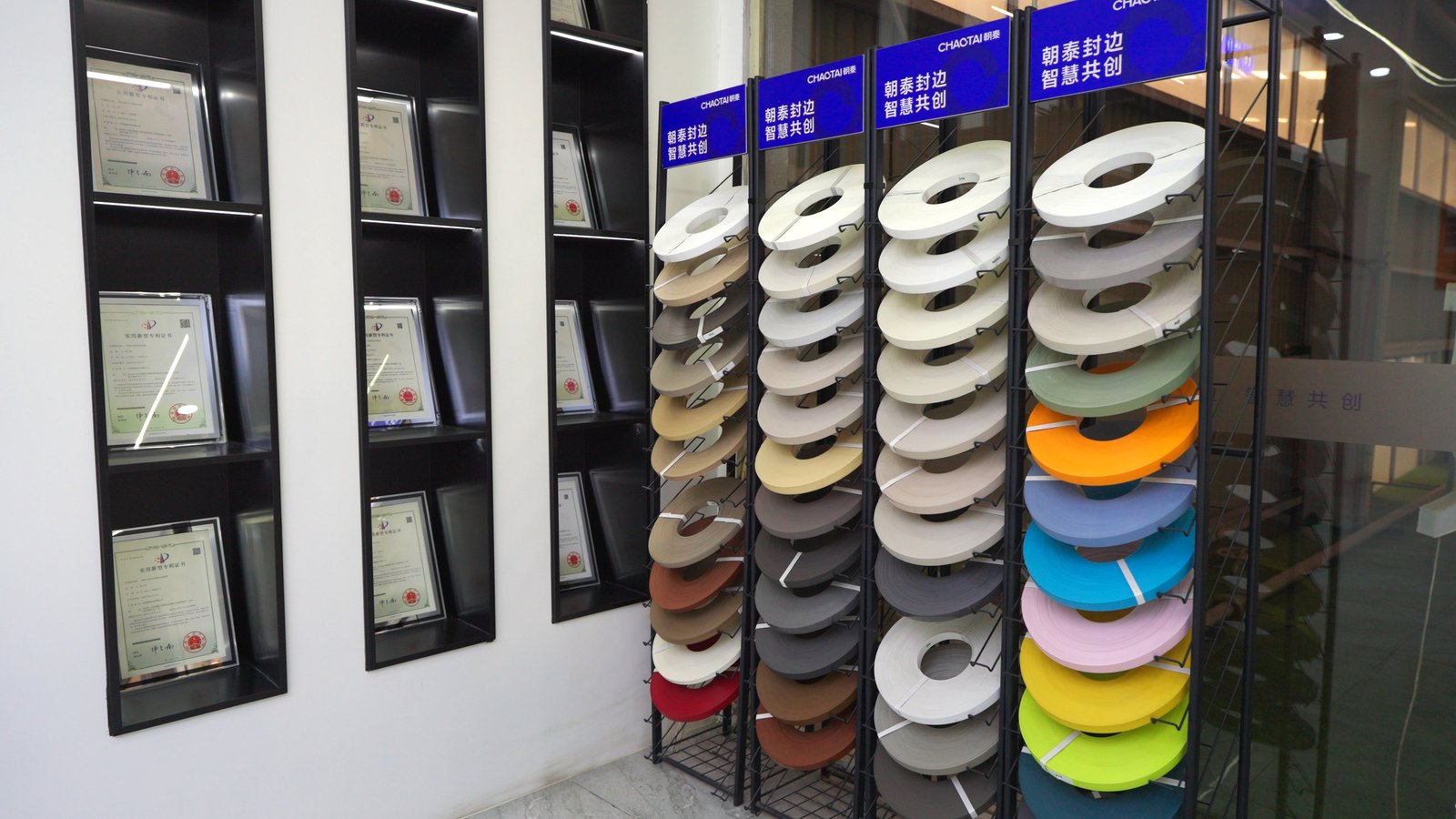
I have seen how unexpected seasonal orders can create serious problems for furniture manufacturers. A shortage of the right edge banding can delay production, while excessive purchasing can tie up cash and fill warehouse space.
I believe furniture manufacturers can forecast seasonal edge banding demand by analyzing historical sales, monitoring customer orders, calculating material requirements, and coordinating purchasing plans with reliable suppliers. A good forecast should also include safety stock and adjustments for changing production schedules.
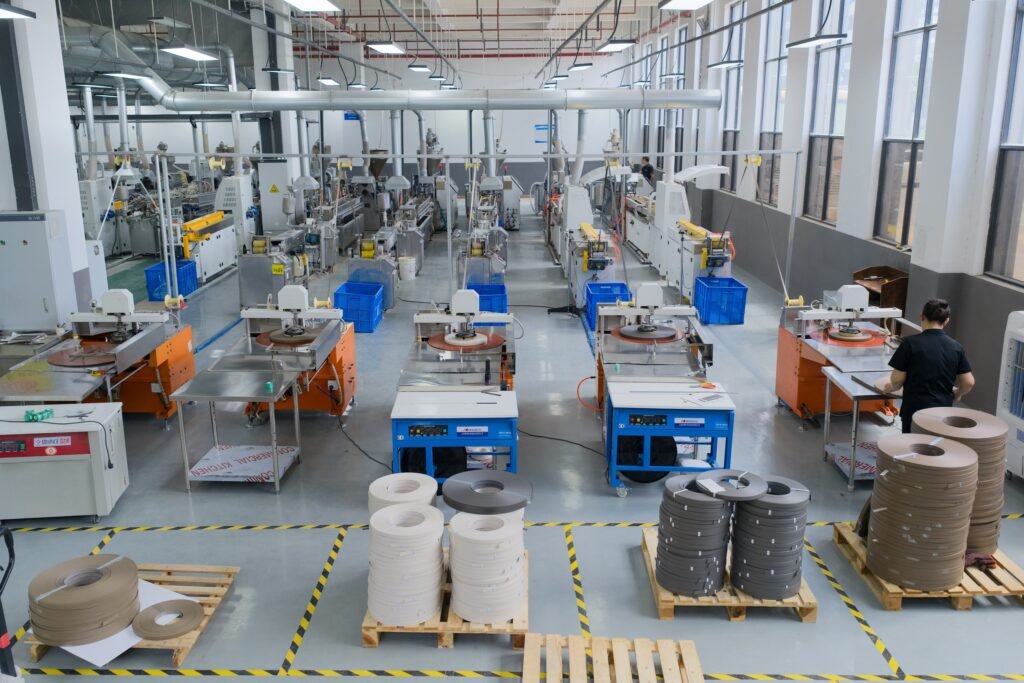
I think seasonal demand forecasting is not simply about predicting how many furniture products a factory will sell. Manufacturers also need to understand how those sales affect material consumption. Different furniture orders require different panel colors, edge banding widths, thicknesses, and surface finishes. A factory may have enough total edge banding in its warehouse but still lack the exact specifications needed for an urgent production order. In my experience, this is why manufacturers should connect sales forecasts with production plans and purchasing decisions. I would rather prepare a detailed material plan before the busy season than deal with shortages after production has already started.
What Factors Cause Seasonal Changes in Edge Banding Demand for Furniture Manufacturers?
I believe seasonal demand is affected by more than changes in furniture sales. Customer order schedules, housing activity, furniture design trends, and production capacity can all change the amount of edge banding a factory needs.
I would identify these factors before preparing a seasonal purchasing plan. Otherwise, a manufacturer may prepare the wrong colors or quantities even when its total demand forecast looks correct.
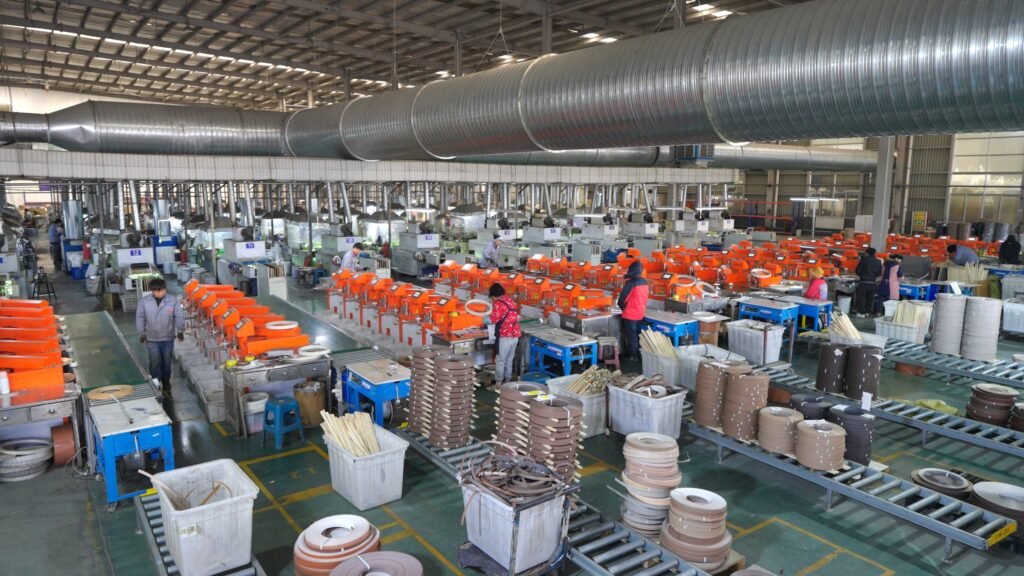
1. Changes in Furniture Market Demand
The first factor I would consider is the seasonal pattern of furniture sales.
Furniture demand can change throughout the year. Some markets have stronger demand before major holidays, during home renovation periods, or before the end of the year. Furniture retailers may increase orders during these periods, and furniture manufacturers may need to increase production in advance.
A 2024 study published in Systems analyzed furniture retail sales from 2019 to 2023. The researchers found seasonal patterns in the data, with differences between months. Their analysis also showed that furniture demand forecasting can benefit from statistical models that consider both trends and seasonal changes.
However, I would not directly apply another country’s seasonal pattern to my own factory. A furniture manufacturer serving North America may have a different production calendar from one serving Europe or Southeast Asia.
I would check the sales patterns of my main customer markets before deciding when to increase edge banding purchases.
2. Changes in Customer Production Schedules
The second factor is the production schedule of furniture customers.
A furniture factory may receive large orders from retailers, construction companies, hotel projects, or kitchen cabinet brands. These orders can create sudden increases in material demand.
For example, a manufacturer may receive a large kitchen cabinet order that requires production to begin in September and finish before the end of November. The factory must prepare the required panels, hardware, adhesives, and edge banding before production starts.
I would pay attention to confirmed orders rather than relying only on general market expectations.
I would also separate regular customer demand from project-based demand. A large project can increase monthly edge banding consumption, but that does not mean the same demand will continue after the project ends.
3. Changes in Furniture Colors and Product Specifications
I also believe product design changes can affect seasonal edge banding demand.
Furniture manufacturers may introduce new colors, panel finishes, or product collections before a busy sales period. These changes can affect the edge banding specifications required by the production line.
For example, a kitchen cabinet manufacturer may move from traditional woodgrain panels to modern matte finishes. The factory may still use the same amount of edge banding, but it needs different colors and surface textures.
I would therefore forecast demand by SKU rather than only by total meters.
| Demand factor | Possible seasonal change | Effect on edge banding |
|---|---|---|
| Furniture retail demand | More customer orders | Higher material consumption |
| Holiday production schedules | Earlier production preparation | Earlier purchasing requirements |
| Construction projects | Large project orders | Sudden demand for specific colors |
| New furniture collections | New panel designs | Changes in color requirements |
| Customer order changes | Delayed or canceled production | Excess inventory risk |
4. Supplier Lead Times and Production Capacity
I would also consider the supply side of the market.
A furniture factory may forecast the correct amount of edge banding but still face shortages if the supplier cannot deliver on time.
This can happen when several customers increase their orders during the same period. The manufacturer may also need to produce customized colors or special specifications, which can require additional preparation time.
I would check the supplier’s normal lead time, production capacity, raw material availability, and delivery performance before the seasonal production period begins.
In my opinion, seasonal demand forecasting should consider both how much material the factory needs and how early the material must arrive.
How Can Furniture Manufacturers Use Historical Sales Data to Forecast Seasonal Edge Banding Demand?
I believe historical sales data is one of the most useful starting points for seasonal demand forecasting. It helps manufacturers understand when demand usually increases, which colors sell more frequently, and how much material customers consume during different production periods.
However, I would not simply copy last year’s purchasing quantity. I would compare historical sales with actual production consumption and adjust the forecast according to current customer orders.

1. Collect at Least 12 Months of Historical Data
I would first collect monthly data for each major product and specification.
Oracle’s demand planning documentation recommends using at least 12 months of historical data for forecasting. It identifies 18 to 36 months as a best practice because less than one year of data can make it difficult to identify annual seasonal patterns.
For a furniture manufacturer, I would collect the following information:
- Monthly furniture production volume.
- Monthly edge banding consumption.
- Customer order quantities.
- Edge banding colors and specifications.
- Monthly stock levels.
- Material shortages and emergency purchases.
- Supplier delivery times.
I would also separate actual material consumption from purchasing quantities.
For example, a factory may purchase 100,000 meters of edge banding in October but only consume 65,000 meters during that month. The remaining quantity becomes inventory for future production.
If I use purchasing records alone, I may incorrectly assume that October production demand was 100,000 meters.
2. Identify Monthly and Annual Demand Patterns
After collecting the data, I would compare demand across different months and years.
One simple method is to calculate a seasonal index.
Seasonal Index = Average Demand in a Month ÷ Average Monthly Demand
For example, assume a furniture factory has an average monthly consumption of 100,000 meters of edge banding.
| Month | Average consumption | Seasonal index |
|---|---|---|
| January | 85,000 m | 0.85 |
| February | 90,000 m | 0.90 |
| March | 110,000 m | 1.10 |
| April | 100,000 m | 1.00 |
| May | 105,000 m | 1.05 |
| June | 95,000 m | 0.95 |
| July | 90,000 m | 0.90 |
| August | 100,000 m | 1.00 |
| September | 110,000 m | 1.10 |
| October | 120,000 m | 1.20 |
| November | 115,000 m | 1.15 |
| December | 80,000 m | 0.80 |
Illustrative figures only, not actual furniture industry statistics.
In this example, October has a seasonal index of 1.20. This means the factory’s average October consumption is 20% higher than its average monthly consumption.
I would use this information as a starting point for the next seasonal forecast. However, I would still check whether the same customer orders and production conditions are expected to continue.
3. Adjust Historical Data for Changes in Customer Demand
Historical data does not always represent future demand.
A factory may have gained two new customers, lost a major customer, or changed its product range. These changes can make previous sales records less useful.
I would adjust the forecast according to current business conditions.
For example:
- A new furniture customer may increase expected production.
- A canceled construction project may reduce material requirements.
- A new cabinet design may increase demand for specific colors.
- A change in panel suppliers may affect edge banding specifications.
Oracle’s forecasting guidance also supports the use of statistical methods that consider historical demand, trends, and seasonality instead of relying on a single average.
4. Compare Forecasts with Actual Consumption
I would review forecast accuracy every month.
One simple method is Mean Absolute Percentage Error (MAPE):
MAPE = (100% ÷ n) × Σ |(Actual Demand – Forecast Demand) ÷ Actual Demand|
Where:
- Actual demand = the quantity consumed in each period.
- Forecast demand = the quantity planned for that period.
- n = the number of periods being measured.
For example, if the factory forecasts 100,000 meters but actually consumes 110,000 meters, the forecast error for that period is 9.1%.
I would not use one forecast for every edge banding product. White PVC edge banding, woodgrain edge banding, and customized colors can have very different demand patterns.
I would review forecast accuracy by important SKU and customer group. This helps me find out whether the problem comes from incorrect total production estimates or incorrect product selection.
Have a spec or project to discuss?
Send your panel, thickness, finish and volume. Our engineers reply with a matched color, sample plan and price — usually within 24 hours.
Request a Quote1,000+ stock colors · Swatches on request
How Should Manufacturers Calculate Edge Banding Requirements for Seasonal Production Orders?
I believe manufacturers should calculate edge banding demand from actual production requirements rather than using general purchasing estimates. A factory may know how many furniture units it plans to produce, but it still needs to calculate how much edge banding each product requires.
I would connect the production plan with the bill of materials (BOM), panel dimensions, edge finishing requirements, and expected production waste. This helps manufacturers prepare the correct quantity for each color and specification.
1. Calculate Edge Banding Consumption for Each Furniture Product
The first step is to understand how much edge banding each furniture product needs.
Different furniture products have different panel structures. A kitchen cabinet, office desk, wardrobe, and bookshelf may use different numbers of panels and different edge finishing requirements.
I would calculate the edge banding requirement for each panel based on its dimensions and the number of edges that need finishing.
For a rectangular panel with all four sides covered:
L = 2 × (Length + Width)
For example, if a panel measures 2 meters in length and 0.6 meters in width:
L = 2 × (2 + 0.6) = 5.2 m
This panel requires 5.2 meters of edge banding before adding production allowances.
If a furniture factory produces 1,000 identical panels, the total requirement is:
5.2 × 1,000 = 5,200 m
However, not every panel needs edge banding on all four sides. Some panels have unfinished edges that will be hidden inside furniture structures. I would only count the edges that actually require edge finishing.
2. Calculate Material Requirements by Color and Specification
I would not combine all edge banding requirements into one total quantity.
Furniture manufacturers usually need different colors, thicknesses, and widths for different products. Therefore, I would calculate the material requirements separately for each SKU.
For example, a factory may have the following production plan:
| Furniture product | Panel quantity | Edge banding specification | Estimated requirement |
|---|---|---|---|
| Kitchen cabinets | 1,000 | White PVC, 2 mm × 22 mm | 5,200 m |
| Office desks | 600 | Oak PVC, 1 mm × 22 mm | 2,400 m |
| Wardrobes | 800 | Grey PVC, 1 mm × 35 mm | 3,600 m |
| Bookshelves | 500 | Black PVC, 2 mm × 22 mm | 1,800 m |
Illustrative production data. Actual consumption depends on panel dimensions and the number of finished edges.
I would use this table to connect the production schedule with the purchasing plan. It also helps the purchasing team avoid ordering the correct total quantity in the wrong colors or specifications.
3. Include Production Waste and Cutting Allowances
I would also include production waste in the calculation.
Edge banding consumption is not always equal to the theoretical panel perimeter. The factory may need additional material for cutting, end trimming, machine setup, trial runs, and rejected products.
A simple calculation is:
Required Quantity = Theoretical Consumption × (1 + Waste Rate)
For example, if the theoretical requirement is 5,200 meters and the factory uses an illustrative 5% waste allowance:
5,200 × 1.05 = 5,460 m
The factory should therefore prepare approximately 5,460 meters.
I would not recommend using 5% as a fixed industry standard. Each factory should calculate its own waste rate using actual production records. Different machines, panel sizes, operators, and edge banding specifications can produce different results.
4. Connect the Calculation with the Bill of Materials
I believe the BOM is an important tool for this process.
Microsoft Dynamics 365 documentation explains that production planning uses the active BOM to identify required materials. The planning system then considers available inventory, existing supply, and planned orders when calculating additional material requirements.
I would organize the BOM so that every furniture product has a clear material requirement.
| BOM information | Example |
|---|---|
| Finished product | Kitchen cabinet |
| Panel quantity | 4 panels |
| Panel dimensions | 2 m × 0.6 m |
| Finished edges | 4 sides |
| Edge banding material | PVC |
| Thickness | 2 mm |
| Width | 22 mm |
| Color | White oak |
| Standard consumption | Calculated from panel edges |
When the factory increases its seasonal production plan, the BOM can help calculate the additional edge banding requirements.
I would also update the BOM whenever the factory changes panel designs or edge finishing specifications. An outdated BOM can create incorrect purchasing quantities even when the production forecast is accurate.
How Can Furniture Manufacturers Coordinate with Edge Banding Suppliers to Ensure Stable Seasonal Supply?
I believe seasonal production planning should not stop inside the furniture factory. Suppliers need enough information to prepare production capacity, raw materials, and delivery schedules.
A factory may forecast its edge banding demand correctly, but late communication with suppliers can still lead to material shortages. I would start supplier coordination before the expected production peak.
1. Share Production Forecasts with Suppliers in Advance
I would share a preliminary demand forecast with the edge banding supplier before placing large seasonal orders.
The forecast does not need to be a final purchase commitment. It should give the supplier an idea of the expected quantities, product specifications, and delivery periods.
For example, a furniture factory can share a three-month production forecast:
| Period | Expected production demand | Main edge banding requirements |
|---|---|---|
| September | 80,000 m | Standard colors |
| October | 120,000 m | Standard and woodgrain colors |
| November | 150,000 m | Multiple colors and specifications |
Illustrative figures for supplier planning.
This information allows the supplier to review production capacity and prepare for possible increases in demand.
I would also update the forecast when major customer orders change. A supplier should not be expected to plan production based on information that is no longer accurate.
2. Confirm Supplier Lead Times and Production Capacity
I would ask suppliers to confirm their actual lead times for different products.
Standard PVC edge banding and customized colors may have different production requirements. A supplier may be able to produce standard colors quickly but need more time for special colors, new patterns, or customized specifications.
I would check the following information:
- Standard product production lead time.
- Customized color development time.
- Minimum order quantity.
- Available production capacity.
- Raw material availability.
- Packaging and delivery time.
- Quality inspection and sample approval time.
I would also distinguish between production lead time and total replenishment lead time.
The total replenishment period may include sample confirmation, production scheduling, manufacturing, quality inspection, packaging, and transportation.
If I only consider manufacturing time, I may place the order too late.
3. Arrange Seasonal Orders in Multiple Batches
I would not always place the entire seasonal purchasing quantity in one order.
When demand is relatively stable and the supplier can deliver reliably, I would consider dividing purchases into several batches.
For example, if the factory expects to consume 100,000 meters of a certain edge banding specification during the next three months, it may arrange an initial order and then schedule additional deliveries according to confirmed production needs.
This can reduce the amount of inventory stored in the factory.
However, I would only use this approach after confirming the supplier’s production and delivery capacity. Smaller orders are not helpful if the supplier cannot guarantee the agreed delivery schedule.
4. Confirm Samples and Product Specifications Before Peak Season
I believe product consistency is just as important as delivery quantity.
A furniture factory may have enough edge banding in its warehouse, but a color difference between batches can still affect production quality.
Before the seasonal production period, I would confirm the following:
| Quality factor | What I would confirm |
|---|---|
| Color | Approved color sample |
| Thickness | Required thickness and tolerance |
| Width | Correct width for the panel |
| Surface finish | Matte, glossy, embossed, or other finish |
| Material | PVC, ABS, or other specified material |
| Adhesion | Compatibility with the factory’s application process |
| Packaging | Correct labels and product identification |
I would keep approved samples and technical specifications for future orders.
For customized products, I would also discuss how the supplier controls color consistency between production batches.
In my view, a reliable edge banding supplier should understand that furniture manufacturers need more than a competitive price. They need stable specifications, clear communication, and predictable delivery during busy production periods.
For CHAOTAI, I see this as an important part of long-term cooperation with furniture manufacturers. Early demand communication, sample confirmation, and production planning can help both sides prepare for seasonal changes.
What Inventory and Purchasing Strategies Can Help Manufacturers Avoid Shortages and Excess Stock During Seasonal Production?
I believe a good demand forecast is only useful when the factory turns it into a practical inventory and purchasing plan. Manufacturers need enough edge banding to support production, but excessive inventory can increase storage costs and tie up working capital.
I would use different inventory strategies for different products instead of applying the same purchasing rules to every edge banding SKU.
1. Set Different Safety Stock Levels for Different Products
I would not maintain the same safety stock for every edge banding product.
Popular standard colors may have stable demand, while customized colors may have irregular demand. Their supply risks are also different.
Oracle’s supply chain documentation explains that safety stock helps protect against demand fluctuations, forecast errors, and changes in supplier lead times.
I would consider the following factors when setting safety stock:
- Average daily consumption.
- Demand fluctuations during seasonal production.
- Supplier delivery time.
- Historical material shortages.
- Importance of the product to production.
A simplified reorder point formula is:
ROP = (D × L) + SS
Where:
- ROP = Reorder point.
- D = Average daily demand.
- L = Supplier replenishment lead time in days.
- SS = Safety stock.
For example, if a factory consumes 500 meters of a certain color every day, the supplier needs 15 days to deliver, and the factory maintains 2,000 meters of safety stock:
ROP = (500 × 15) + 2,000 = 9,500 m
When available inventory approaches 9,500 meters, the purchasing team should review whether a new order is necessary.
I would also consider confirmed incoming orders and reserved inventory before making the final purchasing decision.
2. Use ABC Analysis to Prioritize Purchasing
I recommend using ABC analysis to classify edge banding inventory.
This method helps manufacturers focus on products that contribute the most value or have the greatest impact on production.
| Category | Product characteristics | Inventory strategy |
|---|---|---|
| A | High-value or critical production materials | Frequent monitoring and careful replenishment |
| B | Medium-value or regular-demand materials | Periodic inventory review |
| C | Low-value or less frequently used materials | Limited stock and demand-based purchasing |
I would also consider production importance when classifying products.
For example, a customized edge banding color may have low annual consumption, but it could be essential for a major furniture customer. I would not automatically reduce its inventory just because its sales volume is low.
3. Use Different Purchasing Plans for Standard and Customized Colors
I believe standard and customized edge banding products need different purchasing strategies.
Standard colors often have more stable demand and may be easier to replenish. Customized colors can have higher purchasing risks because they depend on specific customer orders and production requirements.
I would use the following approach:
| Product type | Recommended purchasing approach |
|---|---|
| Standard white and black | Maintain suitable regular stock |
| Popular woodgrain colors | Forecast demand and replenish before peak season |
| Special colors | Purchase according to customer orders |
| Customized colors | Confirm samples and quantities before production |
| Low-frequency specifications | Avoid unnecessary bulk purchasing |
This approach can help manufacturers balance material availability and inventory costs.
4. Build a Monthly Inventory Review System
I would review inventory every month and increase the review frequency before major production seasons.
The review should include:
- Actual consumption compared with the forecast.
- Current stock quantity by SKU.
- Confirmed customer production orders.
- Open purchase orders and expected delivery dates.
- Products with unusually high or low demand.
- Potential shortages during the next production period.
I would also compare forecast accuracy with actual production consumption.
Oracle Planning Central describes how demand forecasting, inventory planning, and supply planning can work together to identify material shortages, adjust planned supplies, and calculate safety stock.
I think this type of planning is useful even for manufacturers that do not have advanced ERP systems. A well-maintained spreadsheet can already provide a clear view of production demand, stock levels, and upcoming purchases.
The important thing is to update the information regularly and make purchasing decisions based on actual production requirements.
- Is 3D Edge Banding a Profitable Product Opportunity for Furniture Material Distributors? →
- How Can Distributors Manage Slow-Moving Edge Banding Products Without Losing Money? →
- Key Factors That Affect Wholesale PVC Edge Banding Pricing Across Different Regions →
- Wholesale PVC Edge Banding Price Guide →

Confirm Colours Before Your Peak Season Run
Send your panel sample and seasonal volumes. We match the decor, confirm thickness and width, and plan production so the right colours arrive before your line starts.
Start a Colour Match
Conclusion
I believe accurate seasonal forecasting requires historical sales analysis, BOM-based calculations, supplier coordination, and flexible inventory planning to ensure stable production without unnecessary stock.
Data Sources and References
The following sources support the forecasting, production planning, and inventory management principles discussed in this article.
- Oracle – Forecasting Profile Options for Demand Plans
https://docs.oracle.com/en/cloud/saas/supply-chain-and-manufacturing/25c/faupc/forecasting-profile-options-for-demand-plans.html
Reference for historical data requirements, forecast methods, and seasonality handling. - Oracle – The Planning Central Business Flows
https://docs.oracle.com/en/cloud/saas/supply-chain-and-manufacturing/25c/faupc/the-planning-central-business-flows.html
Reference for connecting demand forecasting, inventory planning, and supply planning. - Microsoft Learn – Production Planning in Dynamics 365 Supply Chain Management
https://learn.microsoft.com/en-us/dynamics365/supply-chain/master-planning/planning-optimization/production-planning
Reference for BOM-based material requirements and planned order calculation. - Oracle – Safety Stock in Advanced Supply Chain Planning
https://docs.oracle.com/cd/E18727-01/doc.121/e13358/T309464T309472.htm
Reference for safety stock logic and protection against demand and lead-time variation. - Systems (MDPI) – Forecasting Retail Sales for Furniture and Furnishing Items through the Employment of Multiple Linear Regression and Holt-Winters Models (2024)
https://www.mdpi.com/2079-8954/12/6/219
Reference for seasonal patterns in furniture retail sales and statistical forecasting models. - Oracle – Defining a Forecast Rule
https://docs.oracle.com/cd/A60725_05/html/comnls/us/inv/frcstrul.htm
Reference for forecast rule setup and forecast accuracy review. - U.S. Federal Reserve Bank of St. Louis (FRED) – Monthly State Retail Sales: Furniture and Home Furnishings Stores
https://fred.stlouisfed.org/data/MSRSUSA442
Reference for monthly furniture retail sales data used to check seasonal patterns. - U.S. Department of Defense – Manufacturing & Quality Engineering Body of Knowledge, Chapter 2: Materiel Solution Analysis
https://www.cto.mil/wp-content/uploads/2025/07/MQBOK-Ch-2-MSA-2025-07-21-Cleared.pdf
Reference for production planning and material analysis concepts.
Editorial note: The production quantities, seasonal examples, and purchasing calculations in this article are illustrative. The seasonal patterns of furniture demand vary by country, customer type, and product category. The 5% waste allowance and other example figures should not be treated as universal industry benchmarks. Furniture manufacturers should use their own production records to establish actual consumption and safety stock levels.