
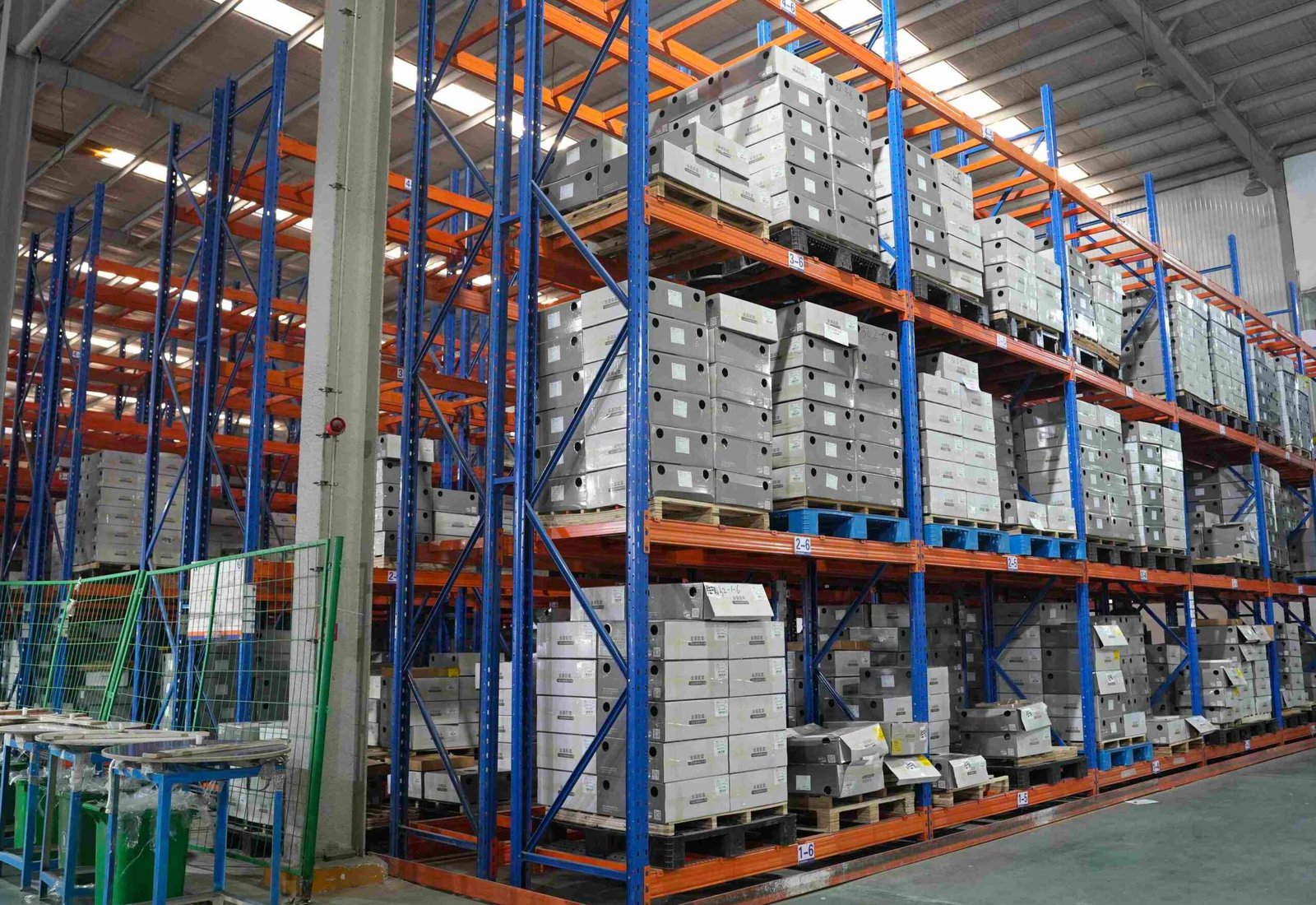
A mixed-SKU container order can help distributors serve more customers and reduce repeated shipping costs. But poor SKU planning can create excess stock, uneven inventory, and wasted container space.
I recommend planning a mixed-SKU edge banding order around three things: customer demand, product specifications, and container capacity. Buyers should group SKUs by material, color, thickness, and width, calculate the required quantity for each SKU, and confirm packaging dimensions and weights with the manufacturer before booking shipping.
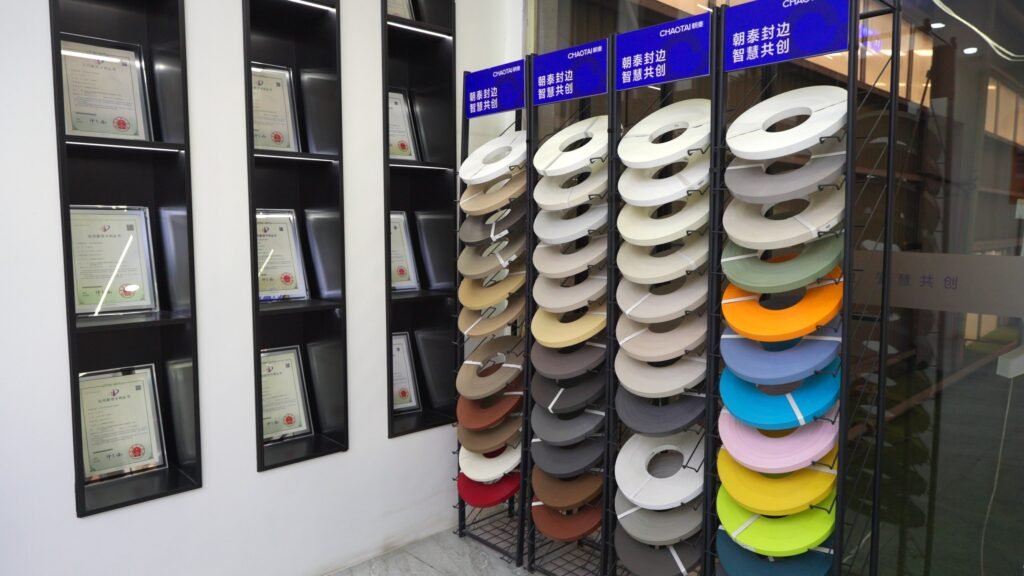
When I work with overseas distributors, I find that a container order is not simply about filling available space. A distributor may need 20 colors, several thicknesses, and different widths in one shipment. Each SKU may have a different sales speed and minimum order quantity. Some products may be regular stock items, while others may be made for a specific customer.
If buyers only focus on reaching a full container load, they may purchase products that take months to sell. If they only focus on individual customer orders, they may miss opportunities to reduce freight costs through better consolidation. I believe distributors need a clear purchasing plan before they send an RFQ to an edge banding manufacturer.
The following sections explain how I would plan a mixed-SKU order, from product selection to final container loading.
Why Should Distributors Consolidate Multiple Edge Banding SKUs into One Container Order?
Many distributors face the same problem. Their customers need different edge banding colors and specifications, but each individual order may not be large enough for efficient shipping. Separate shipments can increase freight costs and make inventory management harder.
I believe SKU consolidation is a practical way to make purchasing more flexible, especially for distributors who serve different furniture manufacturers.

Why Can Mixed-SKU Orders Improve Purchasing Efficiency?
When I look at a distributor’s purchasing plan, I do not only consider the total quantity. I also look at how many customer requirements one shipment can cover.
For example, a distributor may sell white, black, wood-grain, and solid-color PVC edge banding. One furniture factory may mainly need white edge banding, while another may order oak and walnut designs. A third customer may need several widths for different panel thicknesses.
If the distributor purchases only one or two SKUs in large quantities, the inventory may not match the needs of all customers. A mixed-SKU order gives the distributor more product choices without requiring a separate shipment for every specification.
I see three main benefits:
- Lower shipping costs per purchasing cycle: Buyers can consolidate several product requirements into one shipment instead of arranging many small shipments.
- More flexible inventory: Distributors can keep different colors, widths, and thicknesses available for different customer groups.
- Better purchasing coordination: Buyers can discuss several SKUs with one manufacturer and coordinate production, packing, and shipment dates.
However, I do not think mixed-SKU orders are always the best choice. If a distributor adds too many slow-moving products, the inventory cost may become higher than the freight savings.
When Does Consolidation Make More Sense?
I would consider mixed-SKU consolidation when a distributor has several regular customers, similar purchasing cycles, and enough demand to support different product specifications.
| Purchasing situation | Recommended approach |
|---|---|
| Several customers need different colors | Consolidate colors into one order |
| One customer needs several widths | Combine different width specifications |
| Regular demand for popular products | Give these SKUs higher priority |
| Uncertain demand for new colors | Start with smaller quantities if MOQ allows |
| Urgent demand for one specific SKU | Consider a separate shipment if waiting creates a greater cost |
I also recommend reviewing the sales history before placing the order. A distributor should know which colors sell every month and which products are only requested occasionally.
For me, the main purpose of consolidation is not to put as many SKUs as possible into one container. It is to make one shipment cover more real customer demand. That is the difference between a well-planned purchasing order and a container that is simply full.
How Can Buyers Select the Right Mix of Edge Banding Colors, Materials, Thicknesses, and Widths?
Choosing the right SKU mix is one of the most important parts of mixed-container planning. A distributor may have access to thousands of edge banding colors, but that does not mean every color should be included in every shipment.
I believe buyers should use customer demand and product compatibility as the starting points instead of selecting products only because they look attractive in a color catalog.

How Should Distributors Build a Practical SKU List?
When I help plan an order, I would first divide the product list into four groups: material, color, thickness, and width.
Material selection should follow the needs of the distributor’s customers. PVC edge banding is a common choice for panel furniture applications. ABS, MABS, acrylic, PP, and wood veneer may serve different design or performance requirements.
Color selection should come from actual customer orders and local market demand. Buyers can review previous sales records, customer inquiries, and popular furniture panel designs. They should also separate standard colors from customized colors.
Thickness and width require more attention than many buyers expect. A color may be popular, but the distributor still needs to know which product specifications its customers actually use.
I would organize the purchasing list in the following way:
| SKU factor | What buyers should check | My recommendation |
|---|---|---|
| Material | PVC, ABS, MABS, acrylic, PP, or veneer | Follow customer application requirements |
| Color | Solid colors, wood grains, and custom matches | Prioritize proven sales colors |
| Thickness | Common specifications and special requirements | Match the customer’s panel and processing needs |
| Width | Required width for different furniture panels | Review historical order specifications |
| Surface | Matte, gloss, texture, or other finishes | Confirm the required appearance |
| Matching | Color consistency with the panel | Request samples before bulk production |
Why Should Buyers Avoid Adding Too Many Similar SKUs?
I often see distributors treat similar colors as separate opportunities. For example, they may add several shades of white or oak because they believe more choices will attract more customers.
But a wider selection does not always create more sales. If two colors have very similar appearances, the distributor may divide its inventory between them without increasing actual customer demand.
I would rather select a smaller number of well-tested colors and keep enough stock for regular customers. Buyers can add new colors after they receive customer feedback or confirm a real sales opportunity.
Another important point is color matching. A distributor should not rely only on a digital image or a color name. Different manufacturers may use different color references, and the same color name does not always mean the same visual result.
I recommend sending a physical panel sample or an approved reference sample to the manufacturer. The buyer should confirm the material, surface finish, thickness, and width before approving mass production.
For customized orders, I would also ask the manufacturer whether the same color can be reproduced in future batches. This matters because distributors need consistent products for repeat orders.
My approach is simple: choose SKUs based on customer demand, confirm specifications before production, and avoid adding products that have no clear sales purpose.
How Should Distributors Calculate SKU Quantities to Maximize Container Loading Efficiency?
A mixed-SKU order can contain many products, but the total number of rolls does not tell buyers whether the container is being used efficiently. Different edge banding specifications may have different roll lengths, core sizes, packaging dimensions, and weights.
I believe distributors should calculate both volume and weight before they confirm the final order quantity.

How Can Buyers Estimate the Required Container Space?
I would start by asking the manufacturer for the packing information of each SKU.
The information should include:
- Roll length and roll quantity per carton.
- Core diameter and roll outer diameter.
- Carton length, width, and height.
- Net weight and gross weight per carton.
- Pallet dimensions and pallet weight, if pallets are used.
- Total carton quantity for each SKU.
Buyers can then calculate the total cargo volume using the following formula:
Total volume = carton length × carton width × carton height × carton quantity, summed across all SKUs
All dimensions should use the same measurement unit. For example, buyers can convert carton dimensions into meters before calculating cubic meters.
However, I would not use the theoretical container volume as the final loading target. Actual loading depends on carton shape, stacking strength, door opening dimensions, pallet use, and the way the cargo is arranged.
For reference, Maersk lists a nominal capacity of 33.2 m³ for a standard 20-foot container and 67.7 m³ for a standard 40-foot container. Its listed maximum payloads are 28,300 kg and 28,870 kg, respectively. These are reference specifications, not guaranteed usable loading capacities for every shipment. Buyers should confirm the actual container and route limits with their shipping provider. Maersk Container Cargo Weight Limits
Why Should Buyers Calculate Both Volume and Weight?
I would never calculate container loading efficiency using volume alone.
A container may have enough space for more cartons, but the total gross weight may already be close to the permitted payload. The opposite can also happen. The cargo may be relatively light, but carton dimensions may prevent buyers from using the remaining space.
| Calculation | Formula | Purpose |
|---|---|---|
| Total carton volume | Carton volume × carton quantity | Estimate space requirements |
| Total gross weight | Gross weight per carton × carton quantity | Check cargo weight |
| Volume utilization | Cargo volume ÷ container reference volume | Estimate space usage |
| Weight utilization | Cargo gross weight ÷ applicable payload limit | Estimate weight usage |
I would also ask the manufacturer to prepare a loading plan before shipment. The plan should show how cartons from different SKUs will be arranged and whether the packaging can support stacking.
For edge banding rolls, packaging protection matters because pressure, poor stacking, and movement during transport may damage the outer cartons or product surfaces. I would rather leave some unused space than force an unsafe loading arrangement.
What Is My Preferred Loading Method?
I would give priority to stable, regular-selling SKUs and arrange the remaining products around their carton dimensions and weight.
For example, a distributor may order 60% of the shipment in regular PVC edge banding and use the remaining capacity for different colors, widths, and special specifications. This is only an example of an order structure. The actual ratio should come from sales data and packing calculations.
The manufacturer should also confirm the final carton count and gross weight before the container is sealed. A good loading plan should protect the goods, use the available space well, and make unloading and SKU identification easier at the destination.

Have a spec or project to discuss?
Send your panel, thickness, finish and volume. Our engineers reply with a matched color, sample plan and price — usually within 24 hours.
Request a Quote1,000+ stock colors · Swatches on request
How Can Buyers Balance Inventory Demand, MOQ Requirements, and Shipping Costs When Planning Mixed Orders?
The biggest challenge in mixed-SKU purchasing is not always shipping. It is finding the right balance between how much a distributor needs, how much a manufacturer can produce, and how much inventory the distributor can afford to hold.
I believe buyers should calculate the total purchasing cost instead of comparing only the unit price or ocean freight.

How Should Distributors Deal with MOQ Requirements?
Different colors and specifications may have different minimum order quantities. A manufacturer may accept a mixed-SKU order, but each SKU may still need to meet its own production or packaging requirements.
I would ask the manufacturer to provide an MOQ list before preparing the final purchasing plan.
For example, a distributor may want to order 20 colors, but some colors may have very low expected demand. If every SKU requires a large minimum quantity, the buyer may end up with too much inventory.
I would divide the products into three groups:
- Regular SKUs: These products have stable demand and should receive higher purchasing quantities.
- Seasonal or project-based SKUs: These products should follow confirmed customer orders or expected project demand.
- Trial SKUs: These products should start with smaller quantities when the manufacturer’s MOQ allows it.
This approach helps distributors avoid treating every SKU equally.
How Can Buyers Compare the Real Cost of Different Order Plans?
I would compare the total landed cost rather than looking only at the factory quotation.
The total cost may include product prices, packaging, inland transportation, export charges, ocean freight, insurance, import duties, customs clearance, and destination handling. The exact allocation of these costs depends on the agreed delivery terms and the commercial contract.
The International Chamber of Commerce explains that Incoterms® rules define the responsibilities, costs, and risks of buyers and sellers. They do not replace the full sales contract. Buyers should therefore confirm the agreed Incoterms® rule and named place before comparing quotations. ICC Incoterms® 2020
I would use this table to compare different purchasing plans:
| Cost item | Small separate orders | Mixed-SKU container |
|---|---|---|
| Product cost | Depends on individual quantities | Depends on combined quantities |
| Freight cost | May involve repeated shipments | Can consolidate several SKUs |
| Inventory investment | Lower per shipment | May require more upfront cash |
| Stock availability | Depends on shipment frequency | More specifications arrive together |
| Inventory risk | Usually concentrated in fewer SKUs | Can increase if too many slow-moving SKUs are included |
How Can Distributors Reduce the Risk of Overstocking?
I recommend using sales history to estimate purchasing quantities.
For example, if a distributor sells 100 rolls of a particular color every month and has 40 rolls in stock, the buyer should consider the expected sales during the production and shipping period before deciding how many more rolls to purchase.
A simple planning formula is:
Purchase quantity = expected demand + safety stock − available inventory
The buyer should adjust this calculation for confirmed customer orders, incoming shipments, and any products that are already reserved.
I would also pay attention to the product’s inventory turnover. A product that sells quickly may justify a larger order even if its unit price is slightly higher. A slow-moving product may not be worth adding just to fill unused container space.
For me, the goal is not to minimize every individual cost. It is to control the total cost while keeping enough inventory to serve customers. A container that arrives with too much unsold stock is not necessarily a successful shipment.
What Details Should Distributors Confirm with Manufacturers Before Loading a Mixed-SKU Container?
Even when a distributor has selected the right products and calculated the quantities, the order can still face problems if the manufacturer and buyer do not share the same information.
I believe the final confirmation stage is just as important as the initial purchasing plan. Every SKU should have a clear specification, quantity, packaging method, and shipping record.
What Product Information Should Buyers Confirm?
I would prepare one final SKU confirmation sheet and ask the manufacturer to check it before production or packing.
The sheet should include the following information:
| Item | Details to confirm |
|---|---|
| Product material | PVC, ABS, MABS, acrylic, PP, or veneer |
| Color reference | Color code or approved physical sample |
| Thickness | Exact thickness in millimeters |
| Width | Exact width in millimeters |
| Roll length | Length per roll |
| Core size | Inner diameter of the roll core |
| Quantity | Number of rolls or cartons per SKU |
| Packaging | Individual packaging, carton packaging, or pallet packaging |
| Labeling | SKU number, color, size, batch, and quantity |
| Quality requirements | Surface, color, dimensions, and agreed inspection standards |
I would also make sure that the final order sheet uses the same SKU codes as the manufacturer’s production and packing records.
This is important because product names can sometimes be confusing. For example, two similar wood-grain colors may have different internal codes. If the buyer and manufacturer use different names for the same product, or the same name for different products, mistakes can happen during packing.
Why Should Buyers Confirm Packing and Shipping Documents?
I would ask for packing photos and a final packing list before the container leaves the factory.
The packing list should show the quantity and packaging details for each SKU. The buyer should compare it with the approved purchase order and check whether the actual carton count matches the planned quantity.
Weight confirmation is also essential. Under the International Maritime Organization’s SOLAS requirements, the shipper is responsible for providing the verified gross mass (VGM) of a packed container. The VGM must be available in time for vessel stowage planning. A packed container without the required verified gross mass cannot be loaded onto a ship under the applicable rule. IMO: Verification of the Gross Mass of a Packed Container
I would confirm the following documents and details:
- Final commercial invoice.
- Packing list with SKU-level quantities.
- Shipping marks and carton labels.
- Container number and seal number.
- Verified gross mass information.
- Bill of lading details.
- Agreed shipping terms and destination information.
What Should Buyers Do Before the Container Is Sealed?
I recommend arranging a final loading inspection, either through the buyer’s own staff or an agreed third-party inspection service.
The inspection should check the SKU labels, carton condition, actual quantities, and loading arrangement. Buyers should also request clear photos of the loaded container and the container seal.
I would pay special attention to mixed-SKU identification. When a distributor receives a container with many different colors and specifications, poor labeling can create extra work during unloading and warehouse sorting.
A clear label should allow warehouse staff to identify the product without opening every carton. The SKU code, color reference, thickness, width, roll length, and quantity should be easy to read.
I also recommend confirming the destination warehouse’s receiving requirements before loading. Some distributors may need palletized cargo, while others may prefer cartons that can be unloaded and sorted individually.
For me, a shipment is not fully ready just because the container door can close. The order must also be easy to identify, receive, inspect, and distribute after it reaches the destination.
- How Do Raw Material Fluctuations Affect PVC Edge Banding Prices and Supply Stability? →
- How Should Buyers Establish an Incoming Quality Inspection Plan for Edge Banding? →
- Essential PVC Edgeband Specifications Every Distributor Should Understand →
- What to Expect From a Modern Private Label Edge Banding Supplier →

Every Material and Specification on One Page
PVC, ABS, MABS, acrylic, PP and veneer, with thickness, width and packing options listed for each – build your mixed-SKU list from one place.
View the Product Range
Conclusion
I believe successful mixed-SKU container planning starts with real customer demand, accurate packing data, and clear communication between distributors and manufacturers.
Data Sources
The following sources provide official information for container capacity, international shipping safety, and buyer-seller responsibilities.
- Maersk – Cargo Weight Limit
https://www.maersk.com/support/faqs/cargo-weight-limit
Reference for container payload and cubic capacity. - International Maritime Organization (IMO) – Verification of the Gross Mass of a Packed Container
https://www.imo.org/en/ourwork/safety/pages/verification-of-the-gross-mass.aspx
Official SOLAS requirements for container VGM. - International Chamber of Commerce (ICC) – Incoterms® 2020
https://iccwbo.org/business-solutions/incoterms-rules/incoterms-2020/
Official reference for international trade responsibilities, costs, and risks.