Changing an edge banding adhesive system may seem simple, but one wrong setting can cause poor bonding, visible glue lines, and production waste.
I recommend checking adhesive compatibility, machine conditions, processing parameters, bonding quality, and cleaning requirements before changing any edge banding adhesive system. Manufacturers should run controlled production trials before approving the new system for mass production.
When I talk about edge banding production, I do not think adhesive selection is only a purchasing decision. It directly affects the production process, the final appearance of furniture panels, and the stability of the finished product.
Many furniture manufacturers use EVA hot melt adhesive for regular production. Some factories consider switching to PUR because they need better heat and moisture resistance. Others may change suppliers because of adhesive costs, production speed, or equipment upgrades.
However, I believe manufacturers should not treat this change as a simple replacement. Different adhesive systems have different working conditions. The same machine settings may not produce the same bonding results after a change.
I would check the entire production process before making the switch. Here are the main points I would discuss with a furniture factory before it changes its adhesive system.
Why Do Furniture Manufacturers Need to Recheck Production Conditions When Changing Edge Banding Adhesive Systems?
A factory may use the same edge banding machine and the same PVC edge banding after changing its adhesive. But the bonding results may still change because the new adhesive has different processing requirements.
I believe manufacturers should review the entire production process instead of assuming that the old settings will continue to work.
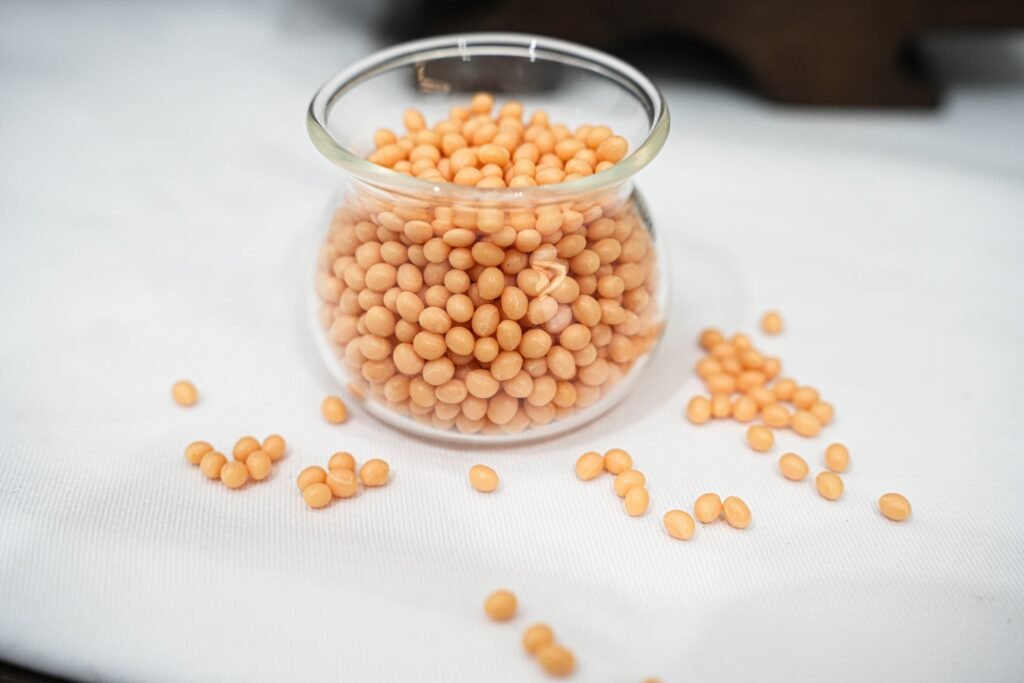
Why Does a Different Adhesive Change the Production Process?
When I look at adhesive systems, I first consider the differences between EVA, PUR, and other hot melt adhesives.
EVA is a common choice for furniture edge banding. It is a thermoplastic hot melt adhesive. It bonds when the adhesive melts and cools after application.
PUR is a reactive hot melt adhesive. It also needs heat during application, but it reacts with moisture and forms a cross-linked bond during curing. This gives PUR different heat and moisture resistance characteristics.
These differences affect more than the final bonding strength. They also affect the machine setup, cleaning process, production schedule, and handling requirements.
For example, Jowat lists some EVA edge banding products with processing temperatures around 180–210 °C, while some PUR products have recommended processing temperatures around 130–160 °C. These values depend on the exact adhesive grade and application. They are not universal settings for every EVA or PUR product. Jowat Adhesive for Furniture Industry
I would therefore ask the adhesive supplier for the latest Technical Data Sheet (TDS) before making any production changes.
Which Production Conditions Should Factories Review First?
I would divide the production conditions into several groups:
| Production factor | What I would check | Why it matters |
|---|---|---|
| Adhesive type | EVA, PUR, or another hot melt system | Different bonding mechanisms |
| Edge banding material | PVC, ABS, PP, veneer, or other materials | Different surface and primer requirements |
| Base material | MDF, particleboard, or plywood | Surface condition and material stability |
| Machine system | Glue pot, roller, nozzle, or cartridge system | Equipment compatibility |
| Factory environment | Temperature, humidity, and ventilation | Affects application and PUR curing |
| Production speed | Current panel feed speed | Affects open time and bonding conditions |
| Cleaning process | Existing adhesive residues and cleaning agents | Prevents contamination and unwanted reactions |
Why Should Manufacturers Avoid Changing Everything at Once?
I prefer a controlled changeover process.
If a factory changes the adhesive, edge banding material, machine speed, and application temperature at the same time, it becomes difficult to identify the reason for a bonding problem.
For example, a weak bond may come from insufficient adhesive application. It may also come from an unsuitable edge banding primer or an incorrect processing temperature.
I would keep the existing edge banding material and base panel unchanged during the first trial. The factory can then compare the old and new adhesive systems under controlled conditions.
I also recommend recording the original production settings before the change. These records give the production team a clear reference when it needs to identify differences.
For me, a successful adhesive change starts with understanding the existing process. A factory should know what works before it decides what needs to change.
How Can Factories Check Compatibility Between Different Adhesives, Edge Banding Materials, and Application Equipment?
An adhesive may perform well in one factory but produce poor results in another. The reason may not be the adhesive itself. The edge banding material, primer, base panel, and application equipment can all affect the final bond.
I believe manufacturers should confirm compatibility before ordering a large quantity of a new adhesive.
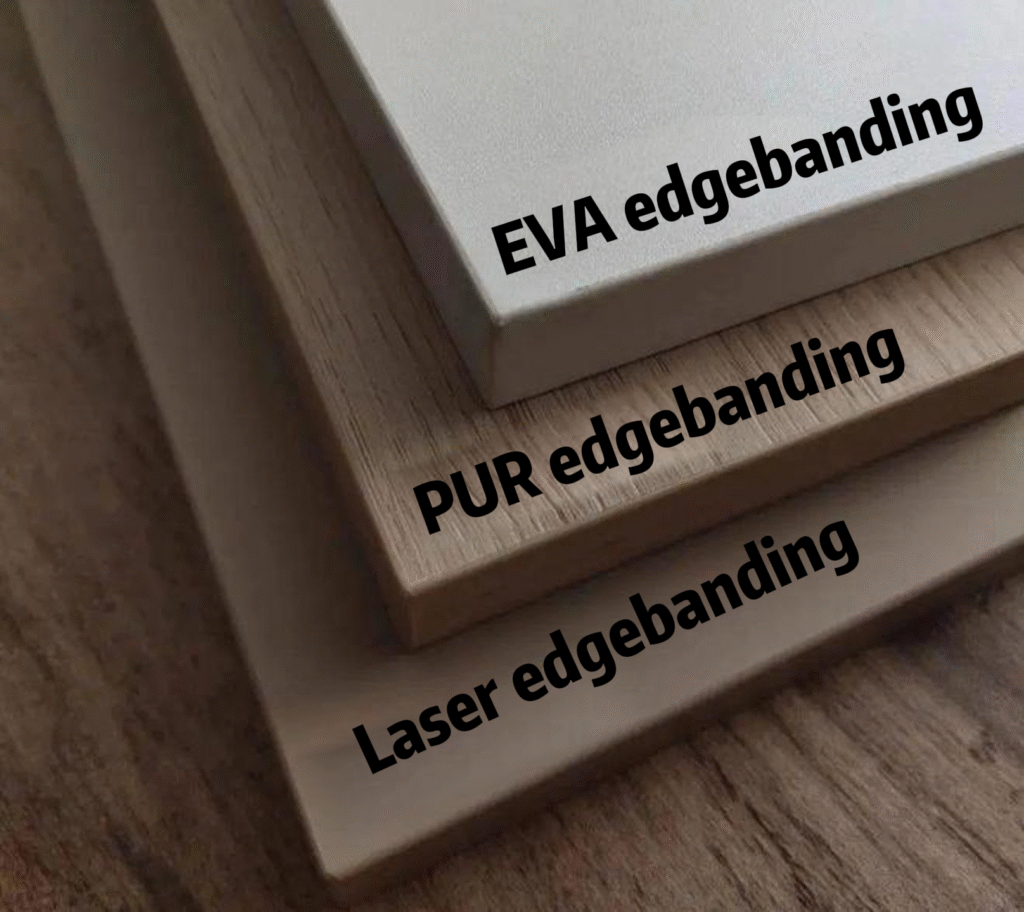
How Should Manufacturers Check Adhesive and Edge Banding Compatibility?
I would start with the material combination.
Furniture manufacturers commonly use PVC, ABS, PP, veneer, and other edge banding materials. These materials do not always have the same surface properties.
For example, some thermoplastic edge banding materials require a suitable primer on the reverse side before they can achieve reliable bonding with a particular adhesive.
I would not assume that an adhesive suitable for PVC will automatically work with every ABS or PP edge banding product.
The buyer should confirm the following information with both the adhesive and edge banding suppliers:
- Whether the adhesive is suitable for the selected edge banding material.
- Whether the edge banding requires a primer or special back coating.
- Whether the adhesive is compatible with the base panel.
- Whether the adhesive color is suitable for the edge banding appearance.
- Whether the supplier recommends any special application conditions.
I also recommend using an actual production sample instead of relying only on product descriptions.
Does the Existing Edge Banding Machine Support the New Adhesive?
This is another issue that I would check before purchasing a new adhesive system.
Some machines use conventional glue pots and application rollers. Others use cartridge systems or special PUR application units.
These systems may have different requirements for adhesive feeding, heating, temperature control, and cleaning.
A factory that wants to change from EVA to PUR should not assume that its existing glue pot can handle PUR without modification.
PUR systems may require dedicated equipment or a manufacturer-approved conversion and cleaning process. Some equipment also has restrictions on adhesive types and packaging formats.
I would ask the machine manufacturer and adhesive supplier to confirm the following points:
| Equipment component | Compatibility questions |
|---|---|
| Glue pot | Can it handle the new adhesive chemistry? |
| Heating system | Can it maintain the required temperature range? |
| Application roller | Is it suitable for the new adhesive viscosity and application method? |
| Glue delivery system | Can it feed the adhesive consistently? |
| Temperature sensor | Can it measure the actual application temperature accurately? |
| Cleaning system | Does the manufacturer approve the cleaning method for the new adhesive? |
Why Should Factories Check the Complete Material Combination?
I do not recommend testing an adhesive with only one edge banding sample and assuming that the result will apply to every product.
A factory may use several PVC colors, different thicknesses, and different surface finishes. Some edge banding products may also have different back coating treatments.
The same adhesive may produce different results across these combinations.
For example, a factory may achieve good bonding with a standard PVC edge banding product but experience poor adhesion with a special surface-treated product.
I would therefore prepare a compatibility test list based on the factory’s main production materials.
| Test combination | What to verify |
|---|---|
| PVC + MDF + new adhesive | Basic bonding performance |
| ABS + MDF + new adhesive | Material and primer compatibility |
| PP + MDF + new adhesive | Surface treatment and adhesion |
| Veneer + MDF + new adhesive | Bonding and appearance |
| Different thicknesses + new adhesive | Adhesive coverage and edge stability |
The factory should record the results for each combination.
I believe this step is especially important for manufacturers that produce furniture for different markets. A small change in material specifications can create unexpected problems after the adhesive system changes.
Which Machine Settings and Processing Parameters Should Be Adjusted When Switching Adhesive Systems?
Changing adhesive systems without adjusting the machine settings can create unstable production results. A factory may see glue lines, poor adhesion, or adhesive degradation even when it uses a high-quality product.
I recommend reviewing the processing temperature, application amount, feed speed, and pressure before starting the new production process.
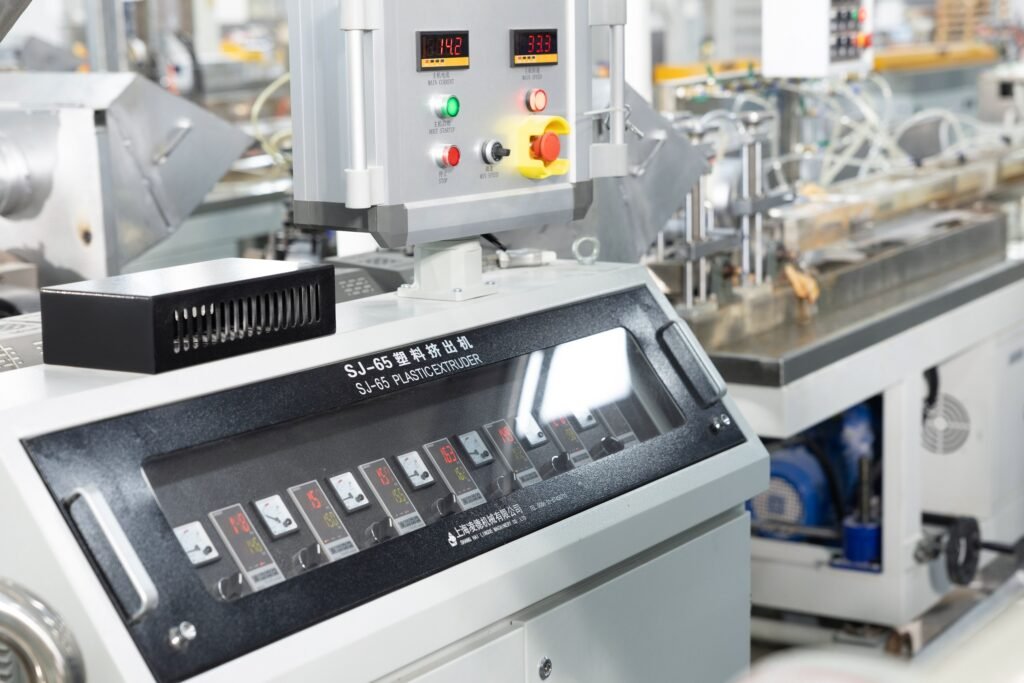
How Should Manufacturers Adjust the Processing Temperature?
Temperature is one of the first parameters I would check.
Different adhesives have different recommended processing temperatures. Even two products from the same adhesive family may have different requirements.
For example, some Jowat EVA products have recommended processing temperatures around 180–210 °C. Some Jowat PUR products have recommended temperatures around 130–160 °C. Manufacturers must follow the exact product TDS instead of using these ranges as general settings.
I also pay attention to the difference between the temperature shown on the machine control panel and the actual temperature at the application roller or nozzle.
The displayed temperature may not always represent the real adhesive temperature at the application point.
A technical guide from Hranipex also explains that low adhesive temperatures can affect open time and bonding quality, while excessive temperatures may cause adhesive degradation and changes in viscosity, color, and adhesion. Jowatherm PUR Technical Information
Which Other Machine Parameters Need Attention?
I would not adjust temperature alone. The factory should also review adhesive application amount, panel feed speed, and pressure roller settings.
| Machine parameter | What I would adjust or check | Possible production problem |
|---|---|---|
| Glue temperature | Follow the new adhesive TDS | Poor flow or adhesive degradation |
| Application amount | Check adhesive coverage and glue line | Excess glue or weak bonding |
| Feed speed | Match speed with open time and adhesive performance | Adhesive sets before bonding |
| Roller pressure | Follow machine and adhesive recommendations | Uneven contact or poor bonding |
| Panel temperature | Keep materials within the recommended range | Unstable bonding |
| Edge banding alignment | Check material positioning | Uneven glue coverage |
Why Does Feed Speed Matter When Changing Adhesives?
Feed speed affects the time between adhesive application and edge banding contact.
If the machine runs too slowly or too quickly for the selected adhesive, the bonding process may become unstable.
For example, an adhesive with a short open time may not work well when the production setup creates a long delay between application and bonding.
The factory should also consider the machine type. A small workshop machine and a high-speed industrial production line may require different adhesive grades.
I would ask the adhesive supplier to recommend a suitable product based on the actual machine speed.
How Should Factories Find the Right Settings?
I recommend using a step-by-step trial instead of making several large adjustments at once.
First, the production team should set the machine according to the adhesive supplier’s technical instructions. Then it should produce a small batch and inspect the results.
If the glue line is too thick, the team can check the application amount. If the bond is weak, the team should check temperature, feed speed, material condition, and pressure.
The factory should record every adjustment and its result.
I would also keep the machine settings in a production record after the trial is approved. This makes it easier for operators to repeat the process during future production runs.
A stable adhesive system needs stable machine settings. I do not think manufacturers should rely on operator experience alone when changing an important production material.
Have a spec or project to discuss?
Send your panel, thickness, finish and volume. Our engineers reply with a matched color, sample plan and price — usually within 24 hours.
Request a Quote1,000+ stock colors · Swatches on request
How Can Manufacturers Test Bonding Strength and Edge Banding Quality Before Starting Mass Production?
A new adhesive may look suitable during the first few minutes of production. But visual inspection alone cannot prove that the bonding performance is stable.
I believe manufacturers should test both the initial bonding result and the final performance after the adhesive has completed its required curing or cooling process.
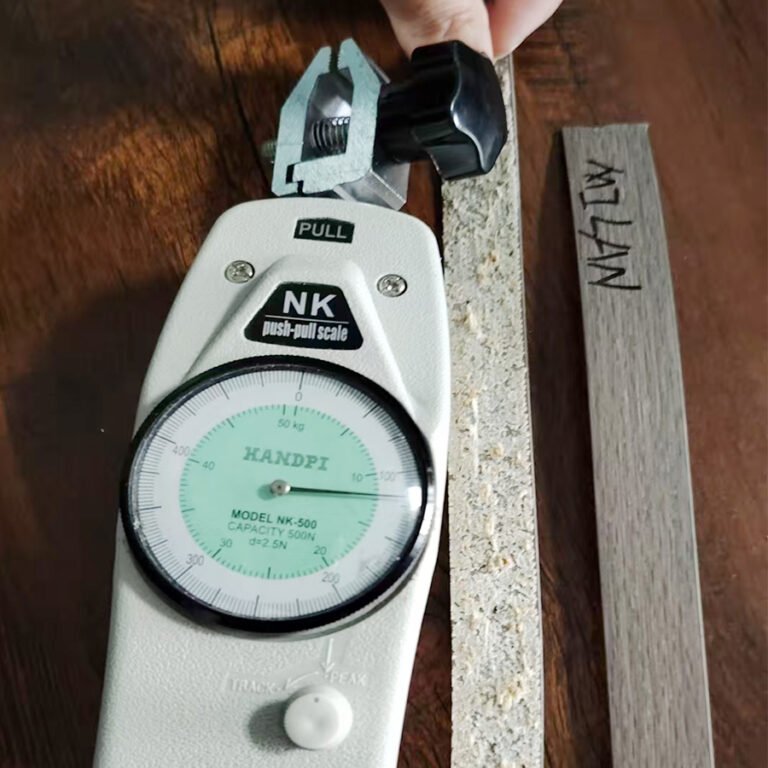
What Should Manufacturers Inspect During the First Production Trial?
I would start with visual inspection because it can help operators identify obvious production problems.
The inspection should include:
- Whether the edge banding is attached evenly.
- Whether the glue line is consistent.
- Whether there are visible gaps between the panel and edge banding.
- Whether adhesive leaks onto the panel surface.
- Whether the edge banding has bubbles, wrinkles, or other defects.
- Whether the trimming process damages the bonded edge.
However, I would not use appearance as the only quality standard.
A thin glue line may look attractive, but it does not automatically mean that the bond is strong. A factory needs to check the actual bonding performance.
Which Bonding Tests Should Factories Perform?
I recommend preparing test panels with different edge banding materials and specifications.
The factory can then use the same inspection process for the old and new adhesive systems.
| Test item | What to check | Purpose |
|---|---|---|
| Visual inspection | Glue line, gaps, bubbles, and surface appearance | Identify visible defects |
| Peel or separation test | Resistance to edge banding removal | Evaluate bonding performance |
| Edge integrity test | Whether the edge separates during machining | Check production stability |
| Heat exposure test | Changes in bonding after controlled heat exposure | Evaluate heat resistance |
| Moisture exposure test | Bonding condition after controlled moisture exposure | Evaluate moisture resistance |
| Repeated production test | Consistency across several panels | Check process stability |
The factory should define test conditions based on the product application and customer requirements. I would not use one test result to represent every furniture application.
For example, kitchen furniture and bathroom furniture may require different performance levels from standard indoor furniture.
How Long Should Manufacturers Wait Before Testing?
This point is especially important when switching to PUR.
EVA hot melt adhesive forms its bond as it cools. PUR also needs time for its moisture-driven chemical reaction and curing process.
The factory should not compare the final bonding performance of two adhesive systems at the same arbitrary time after application.
I would follow the adhesive supplier’s recommended curing period before conducting final performance tests.
The Jowat PUR product information explains that PUR crosslinking depends on moisture and material conditions. The required curing time can therefore vary between products and applications. Jowat PUR Edge Banding Adhesive Information
How Can Manufacturers Set Acceptance Standards?
I recommend creating a simple comparison sheet before the trial begins.
The sheet should include the old adhesive results, new adhesive results, test conditions, and acceptance requirements.
| Quality indicator | Existing system | New system | Acceptance requirement |
|---|---|---|---|
| Glue line appearance | Record result | Record result | Meet visual standard |
| Bonding strength | Record test value | Record test value | Meet internal specification |
| Edge separation | Record result | Record result | No unacceptable separation |
| Heat resistance | Record result | Record result | Meet application requirement |
| Moisture resistance | Record result | Record result | Meet application requirement |
| Production consistency | Record defect rate | Record defect rate | Meet production target |
I would also test more than one production batch when possible.
A single successful sample cannot prove long-term production stability. The factory should check whether the new adhesive produces similar results under normal operating conditions.
For me, the purpose of testing is not to prove that the new adhesive is better than the old one. It is to confirm that the new system can meet the factory’s actual production and product requirements.
What Production Risks Should Factories Monitor During the Transition to a New Adhesive System?
Even after the first production trial passes, manufacturers may still face problems during the transition period. Operators need time to learn the new process, and the factory needs to confirm that the new settings remain stable during normal production.
I recommend monitoring both equipment conditions and finished product quality during the first production batches.
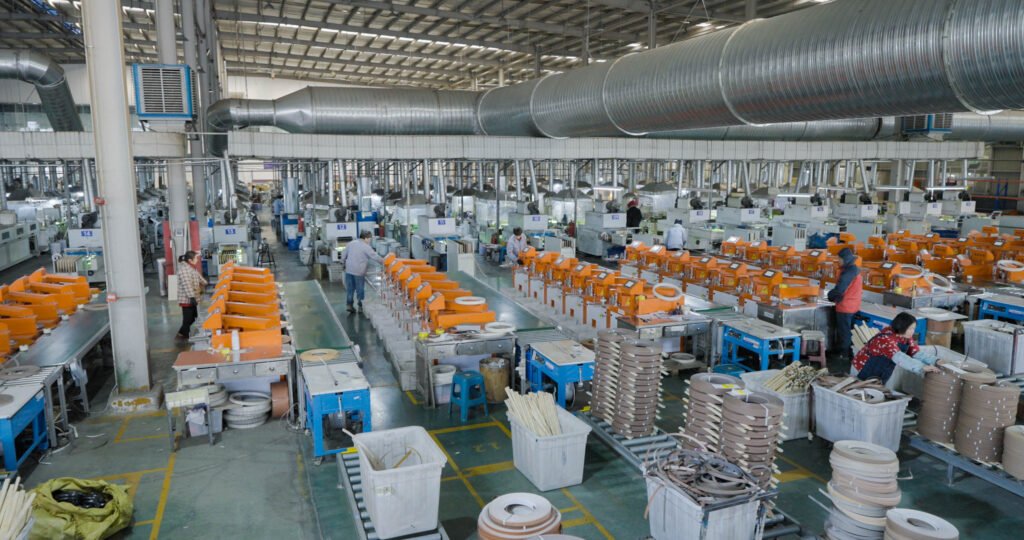
What Problems Can Occur During an Adhesive Changeover?
I would pay attention to four common risks.
1. Adhesive contamination
Old adhesive residues may remain in the glue pot, roller, or delivery system. These residues may affect the performance of the new adhesive.
This issue is especially important when changing between different adhesive chemistries. I would follow the machine manufacturer’s approved cleaning and conversion procedure.
2. Unstable bonding during the first production batches
Operators may continue using the old machine settings because they are familiar with them. This can create poor bonding or excessive adhesive application.
I would make sure that every operator has access to the new processing instructions.
3. PUR curing and handling problems
PUR requires controlled handling and storage. Moisture exposure can affect the adhesive before it is used.
The factory should follow the product’s storage instructions and safety data sheet. It should also control the cleaning and handling process.
4. Higher production waste
A factory may need several trial runs before it reaches stable production conditions. If the team does not prepare enough test material, it may waste finished panels and edge banding during the changeover.
How Can Factories Control These Risks?
I would prepare a changeover checklist and assign clear responsibilities to the production, maintenance, and quality control teams.
| Department | Main responsibility | What to monitor |
|---|---|---|
| Purchasing | Confirm new adhesive specifications | Product grade and supplier documents |
| Production | Set machine parameters | Temperature, speed, and application amount |
| Maintenance | Check equipment compatibility | Glue pot, roller, and cleaning system |
| Quality control | Inspect finished panels | Glue line and bonding performance |
| Warehouse | Manage adhesive storage | Temperature, packaging, and shelf life |
I would also keep the old adhesive’s production records for comparison.
If the new system creates a problem, the factory can compare the two processes and identify where the difference started.
Why Should Manufacturers Monitor the First Several Production Batches?
I do not recommend approving mass production immediately after one successful test.
The first batch may be produced under ideal conditions. The next batch may use a different edge banding color, a different panel thickness, or a different machine operator.
These changes can affect the production result.
I would monitor the first several batches and record the following information:
- Adhesive consumption per panel or production unit.
- Machine temperature during production.
- Production speed.
- Number of bonding defects.
- Number of panels requiring rework.
- Cleaning frequency and adhesive waste.
- Customer or internal quality inspection results.
I would also compare the actual adhesive consumption with the supplier’s recommendations.
If the factory uses too much adhesive, the product cost may increase. If it uses too little, bonding quality may suffer.
For PUR systems, I would pay extra attention to storage, moisture exposure, and cleaning requirements. The factory should never treat PUR as an ordinary EVA replacement.
I believe a successful transition requires cooperation between the adhesive supplier, machine manufacturer, and edge banding supplier. Each party understands a different part of the process. Their technical information can help the factory reduce unnecessary trial runs and avoid production problems.
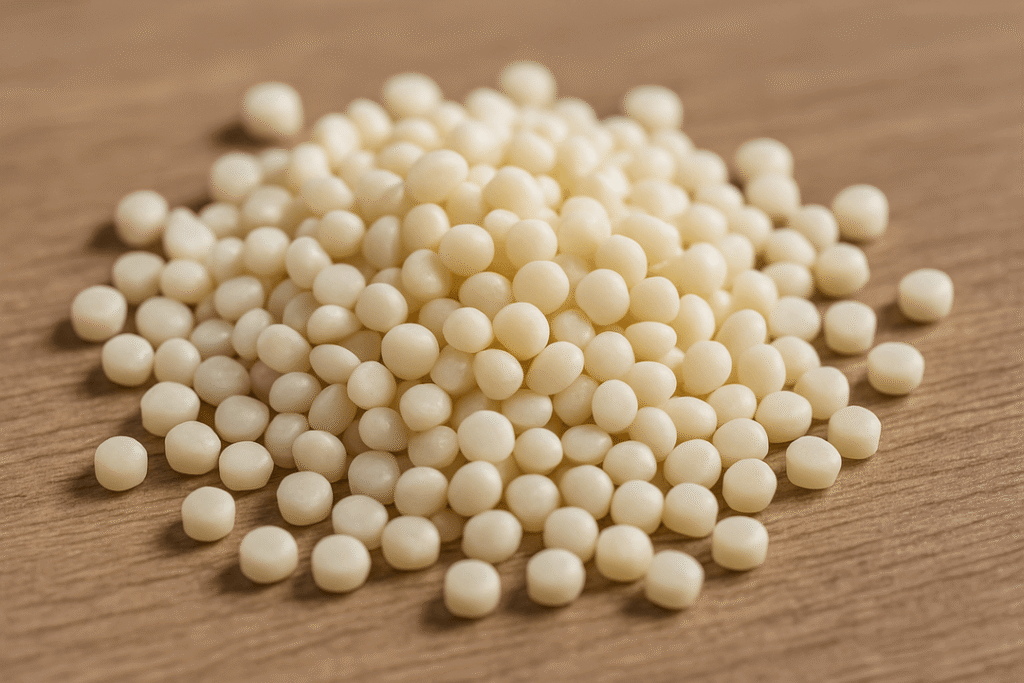
Adhesives Specified With the Banding
EVA, PUR and cartridge systems with the grade, working temperature and packing format listed, so glue and edge banding are approved together.
See Adhesive Options
Conclusion
I believe manufacturers should treat adhesive changes as controlled production projects. Compatibility checks, correct machine settings, and repeated quality tests help ensure stable edge banding production.