
Choosing PVC edge banding width may look like a small purchasing decision. But a wrong width can increase trimming work, material waste, and production time.
PVC edge banding width affects production efficiency mainly because the edge must provide enough coverage for the panel while leaving only a reasonable trimming margin. A width that is too large can create more waste and trimming work, while a width that is too small can cause coverage problems.
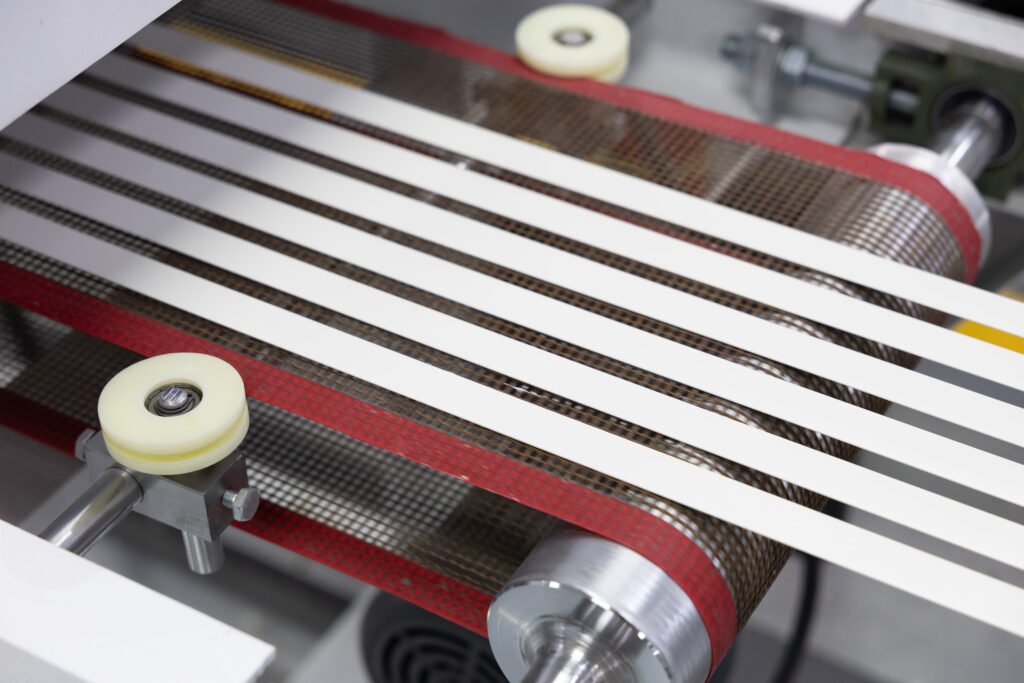
When I talk with furniture manufacturers about PVC edge banding, I often find that they focus first on thickness, color, and surface finish. Width is sometimes treated as a simple specification. I think this is a mistake. The right width can make production easier, while the wrong width can create waste that appears small on one panel but becomes expensive across thousands of panels.
How Does PVC Edge Banding Width Affect Production Efficiency?
A poor width choice can make trimming slower, increase adjustment work, and create more production waste. The right width gives the machine enough material to cover the panel without creating unnecessary excess.
PVC edge banding width affects production efficiency because every extra millimeter may need to be trimmed, while insufficient width can cause rework or rejection. The best width gives enough coverage and a controlled trimming margin.

I see width as part of the production process, not just part of the product specification. When I choose an edge band, I need to think about what happens after the material reaches the machine.
Width Creates a Trimming Requirement
When an edge band is applied to a panel, the material normally needs some extra width beyond the panel edge. This extra material allows the machine to complete the application and trimming process.
However, extra width is not free.
If I use a much wider edge band than necessary, the machine has more material to remove. The trimming unit may need to remove a larger amount from the upper and lower sides. This can increase cutting work and produce more scrap.
The effect may seem small. For example, an additional 2 mm does not look important when I look at one panel. But if the factory processes thousands of meters every day, the total amount becomes much larger.
Production Efficiency Depends on the Whole Process
I also need to separate material width from machine speed. A wider edge band does not automatically make a machine slower. The actual result depends on the machine, edge thickness, panel dimensions, trimming system, feed speed, and processing settings.
For example, HOMAG lists different feed-speed ranges across its edge banding machines. The EDGETEQ S-356 has a feed-speed range of 16–25 m/min, while the S-500 can be configured for higher feed speeds depending on the machine setup.
This tells me one important thing: I should not evaluate edge band width separately from the machine.
| Production factor | Possible effect of excessive width |
|---|---|
| Trimming amount | More material needs to be removed |
| Cutting load | More trimming work may be required |
| Scrap volume | More trimmed material becomes waste |
| Machine adjustment | Operators may need different settings |
| Production consistency | Poor matching can increase variation |
| Material cost | More purchased material may be consumed |
For this reason, I normally treat width as one part of the production system. A good width should support stable processing rather than simply provide the largest possible coverage.
Why Can the Wrong PVC Edge Banding Width Increase Material Waste?
The wrong PVC edge banding width increases waste because manufacturers often buy more material than the finished panel actually needs. The extra material is then removed during trimming and becomes scrap.
Material waste does not always come from defective PVC edge banding. Sometimes the material itself is good, but the selected width is not suitable for the production process.
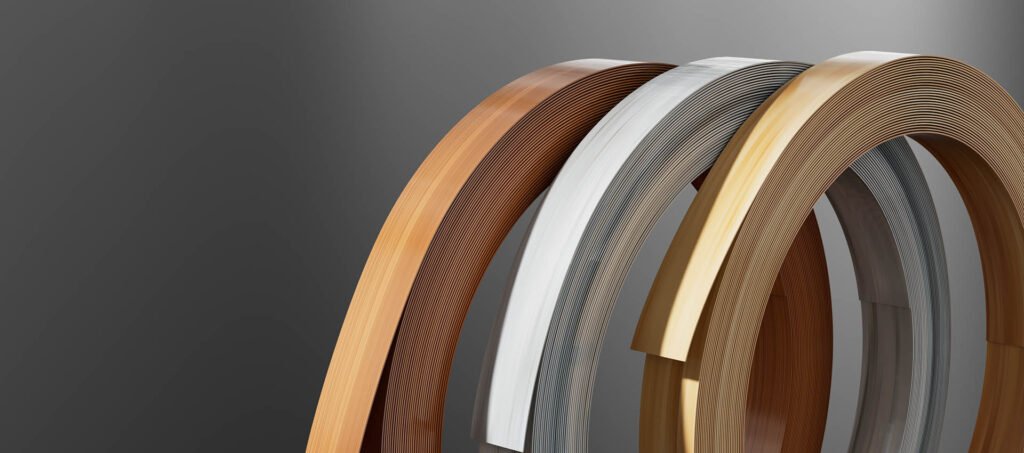
When I calculate edge banding cost, I prefer to look beyond the purchase price per meter. I also need to consider how much of that meter becomes part of the finished furniture and how much becomes production waste.
Small Differences Become Large at High Volume
Imagine a factory that uses 1,000 meters of edge banding per day.
If the selected width creates only a small additional trimming loss on every meter, the daily waste can still become significant. Over 250 production days, that small difference becomes a large annual volume.
The basic idea is simple:
Material waste = purchased material − material used in the finished product
The actual calculation can be more complicated because factories also have startup waste, roll-end waste, defective panels, setup waste, and rejected parts. Width is only one factor.
Still, width is a factor that buyers can control before production starts.
Wider Does Not Always Mean Safer
Some buyers prefer wider edge banding because they believe extra material gives more protection against insufficient coverage. This can be reasonable when the panel dimensions or production tolerance require it.
But I would not automatically choose the widest available option.
REHAU technical data shows that edge banding is available in different width and thickness combinations, with specified dimensional tolerances. This supports the idea that width should be treated as a controlled technical parameter rather than simply “more is better.”
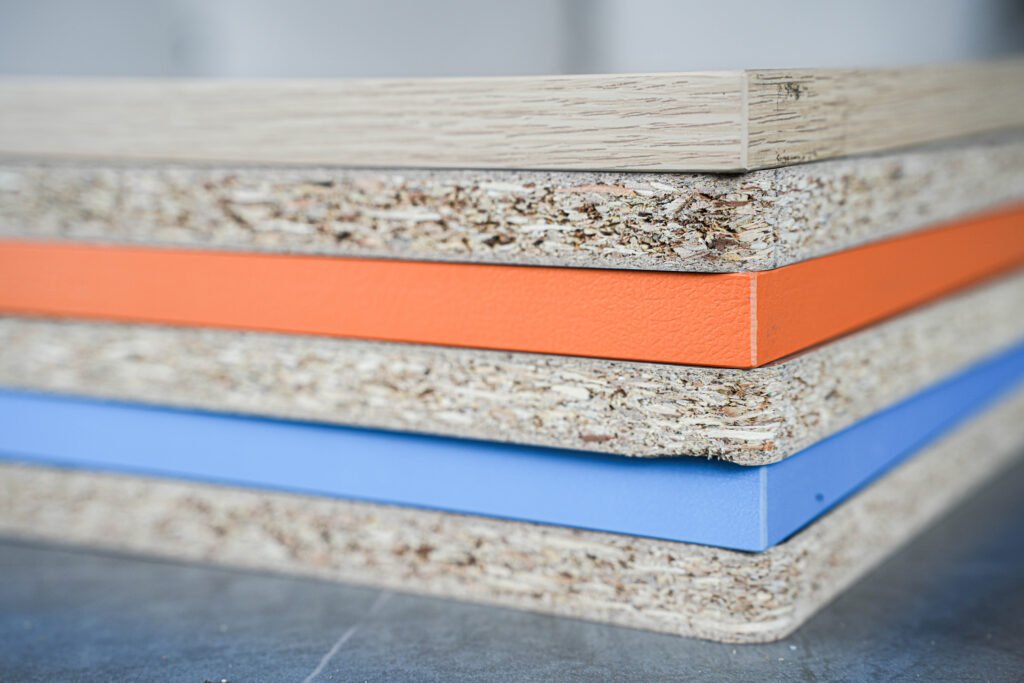
| Width choice | Possible benefit | Possible problem |
|---|---|---|
| Too narrow | Lower material consumption | Insufficient trimming margin |
| Proper width | Balanced coverage and waste | Requires correct specification |
| Too wide | More processing margin | More trimming and scrap |
| Variable width | Flexible for different panels | More inventory and setup |
Waste Should Be Measured Per Finished Product
I also think manufacturers should measure waste based on finished products instead of looking only at the purchase price.
For example, two edge bands may have similar prices per meter. But if one requires significantly more trimming, its real production cost can be higher.
I would therefore compare:
- Price per meter
- Actual consumption per panel
- Trimming loss
- Setup waste
- Rework rate
- Production speed
- Finished-product yield
This approach gives me a better picture of the real cost.
How Do Panel Thickness and Edge Banding Width Need to Match?
PVC edge banding width should provide enough coverage for the panel and the required trimming process. The correct width depends on panel thickness, edge design, machine process, and the amount of trimming margin required.
Panel thickness is important because the edge band must cover the panel edge from the correct position. If I only look at the edge band width without looking at the panel, I can easily choose an unsuitable specification.
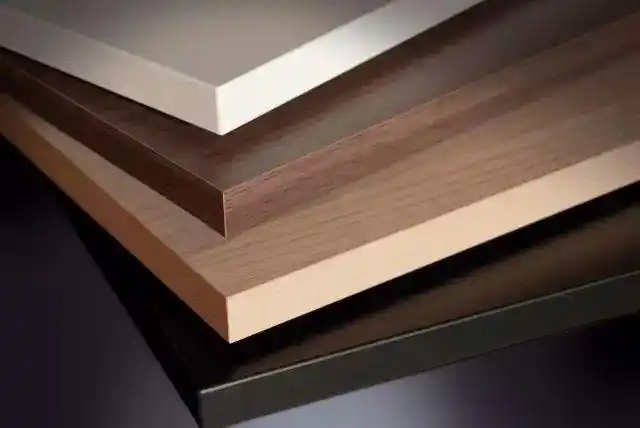
I usually start with the finished panel, not with the edge band catalog.
Panel Thickness Is the Starting Point
A thicker panel generally requires a wider edge band than a thinner panel if the same application method and trimming margin are used.
For example, a 16 mm panel and a 25 mm panel should not automatically use the same edge band width. The actual requirement also depends on how much material needs to extend beyond the panel before trimming.
The key question is:
How much width does the edge band need before trimming to produce the required finished edge?
That question is more useful than simply asking which width is most popular.
Surface Design Also Matters
Panel thickness is not the only consideration.
The final furniture design can change the required edge band specification. Different furniture parts may have different visible surfaces, corner treatments, or machining requirements.
A manufacturer may also process straight panels and curved components. A width that works well on one application may not be ideal for another.
This is why I prefer to confirm the actual application before recommending a width.
| Factor | Question I would ask |
|---|---|
| Panel thickness | How thick is the board? |
| Edge design | Is the edge straight, rounded, or curved? |
| Trimming process | How much material will the machine remove? |
| Visible surface | How much coverage is required after trimming? |
| Machine | What type of edge banding machine is being used? |
| Production volume | Is the factory producing small or large batches? |
Dimensional Tolerance Also Matters
I also need to consider dimensional consistency.
If the width varies more than expected between production batches, the trimming margin can change. A margin that is already small can become a problem when the material moves outside the expected tolerance.
REHAU publishes width tolerances for different edge band dimensions. Its technical data shows that tolerance can vary according to the width and thickness range.
For a manufacturer, this means the nominal width is not the whole story. The actual production tolerance also matters.
If I am buying large quantities, I would therefore ask the supplier for the width tolerance and confirm it with samples before mass production.
How Do Machine Settings and Production Speed Affect PVC Edge Banding Waste?
PVC edge banding waste depends not only on width but also on machine settings. Feed speed, trimming settings, pressure, adhesive application, and machine configuration can change how efficiently the edge band is processed.
A correct width can still produce unnecessary waste if the machine is poorly adjusted. I therefore treat material specification and machine settings as two connected parts of the same process.

Feed Speed Changes the Production Process
Production speed affects how much material the factory can process in a given time. But higher speed does not automatically mean better efficiency.
The machine must maintain stable feeding, bonding, pressure, and trimming at the selected speed.
HOMAG publishes different feed-speed ranges for different machines. For example, the EDGETEQ S-356 is listed at 16–25 m/min, while the EDGETEQ D-810 powerLine can reach speeds of up to 100 m/min in suitable production configurations.
These figures are machine specifications, not universal recommendations for every PVC edge band.
This distinction matters because a factory should not simply increase speed to reduce production time. The material and machine need to work together.
Trimming Settings Can Create Hidden Waste
I pay close attention to trimming because this is where excessive width becomes physical waste.
If the trimming unit removes more material than necessary, the factory is effectively paying for PVC that never becomes part of the finished product.
At the same time, trimming too aggressively can create appearance problems or insufficient coverage.
So I would look for a balance.
| Machine factor | What I would monitor |
|---|---|
| Feed speed | Stable material feeding |
| Pressure | Secure and consistent application |
| Trimming | Controlled material removal |
| Adhesive system | Stable bonding |
| Tool condition | Clean and accurate trimming |
| Machine adjustment | Repeatable settings between batches |
High-Speed Production Makes Consistency More Important
In low-volume production, an operator may notice a problem and adjust the machine quickly.
In high-volume production, the same small problem can repeat across hundreds or thousands of panels.
This is why I think dimensional consistency becomes more important as production speed increases.
HOMAG also describes automated edge banding systems that use automatic feeding, edge feeding, multiple edge magazines, and high-speed processing for large production volumes.
For these factories, the goal is not simply to find a width that works once. The goal is to find a specification that keeps working throughout the production run.
How Should Furniture Manufacturers Choose the Right PVC Edge Banding Width?
I would choose PVC edge banding width based on the panel, trimming requirement, machine, production volume, and supplier tolerance. I would not choose width only by price or by the most common specification.
The right width is the one that gives stable coverage while keeping trimming waste under control.

Start With the Finished Product
When I select an edge band, I first look at the finished furniture part.
I ask:
- What is the panel thickness?
- What edge shape is required?
- How much trimming margin is needed?
- Which machine will process the edge?
- What is the production speed?
- How large is the production batch?
- How much material waste is acceptable?
These questions are more useful than simply asking for a “standard width.”
Compare Width With Actual Consumption
I also recommend running a production test before placing a large order.
For example, if two widths can both produce an acceptable finished edge, I can compare their actual consumption.
| Evaluation point | Width A | Width B |
|---|---|---|
| Purchase price per meter | — | — |
| Consumption per panel | — | — |
| Trimming waste | — | — |
| Production speed | — | — |
| Rework | — | — |
| Finished edge quality | — | — |
| Total production cost | — | — |
The cheapest edge band per meter may not be the cheapest choice per finished cabinet.
This is especially important for distributors and large furniture manufacturers. A small difference in material utilization can become important when the same specification is purchased repeatedly.
Ask the Supplier for More Than the Nominal Width
When I communicate with a PVC edge banding manufacturer, I do not only ask:
“Can you supply 40 mm?”
I also ask for:
- Actual width tolerance
- Thickness tolerance
- Available widths
- Suitable panel thickness
- Recommended machine application
- Trimming requirements
- Sample availability
- Batch consistency
- Production lead time
This information gives me a much better basis for purchasing.
Use Production Data to Make the Final Decision
I prefer to make the final decision after a real production test.
The test should measure actual material consumption, trimming waste, production speed, edge quality, and rework.
This approach is especially useful when a factory is moving from manual production to automated production or from small-batch work to mass production.
The same nominal width may behave differently under different production conditions. Machine capability, material tolerance, and production settings all affect the final result.
For me, the most useful purchasing question is not:
“Which PVC edge banding width is cheapest?”
It is:
“Which width gives me the required finished edge with the lowest total production waste?”
That question connects material purchasing with actual manufacturing cost.
Conclusion
PVC edge banding width affects production efficiency through trimming, material consumption, machine settings, and production consistency. The right width should balance coverage, processing stability, and material waste.
Data Source
The technical parameters and equipment data in this article are mainly referenced from the following materials:
- REHAU — Edgeband Technical Data:
REHAU Edgeband Technical Data - HOMAG — EDGETEQ S-356:
HOMAG EDGETEQ S-356 - HOMAG — EDGETEQ S-500:
HOMAG EDGETEQ S-500 - HOMAG — EDGETEQ D-810 powerLine:
HOMAG EDGETEQ D-810 powerLine - HOMAG — EDGETEQ S-240:
HOMAG EDGETEQ S-240