A PVC edge band may work well by hand but behave differently on an automated line. The wrong material choice can create slow production, poor bonding, and finishing problems.
PVC edge banding for manual and automated furniture production is not always made from completely different materials. The main difference is that automated production usually requires tighter control of dimensions, processing stability, machine compatibility, and batch consistency.
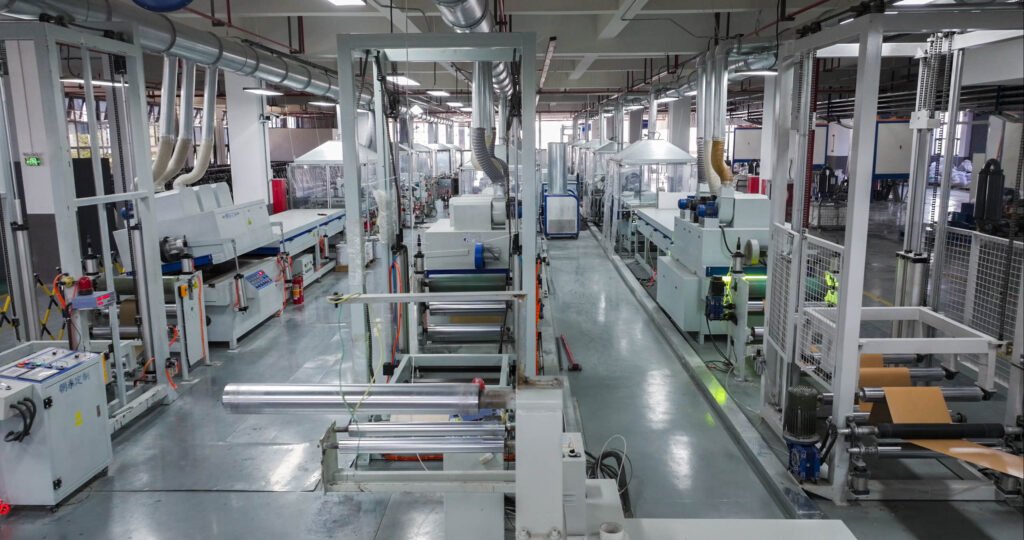
When I compare these two production methods, I do not simply ask which PVC edge banding is better. I first ask how the edge band will be processed. A small workshop and a high-speed production line can use PVC edge banding in very different ways. This difference changes what I look for when choosing the material.
What Are the Main Differences Between PVC Edge Banding for Manual and Automated Production?
The main difference is not always the PVC material itself. Manual production gives the operator more control, while automated production depends more on stable material dimensions, machine settings, and continuous processing.
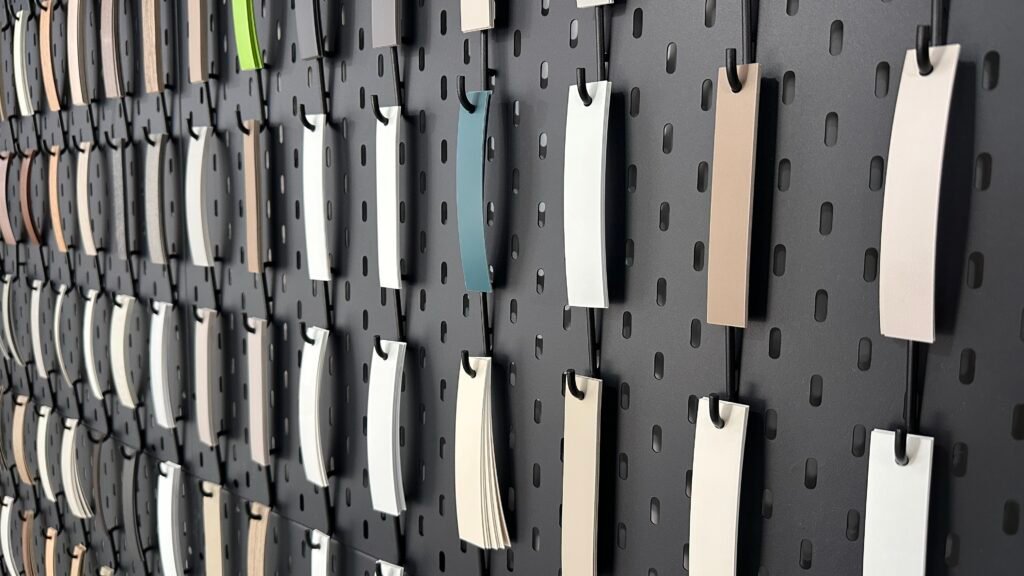
I have seen buyers treat “manual” and “automatic” PVC edge banding as two fixed product categories. I do not think this is the best way to understand the market.
Is There a Special PVC Edge Band for Manual Production?
In many cases, the same general type of PVC edge band can be used for different processing methods.
The important point is whether the material matches the application and equipment.
Manual processing can include handheld edge banding, small machines, or low-volume furniture production. The operator usually has more time to observe the edge, adjust the position, and correct small problems.
This can give the process more flexibility.
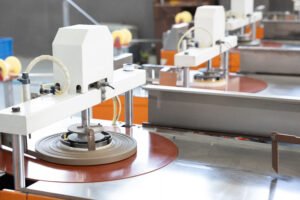
Automated production works differently. The material enters a repeatable machine process. The machine controls feeding, gluing, pressing, trimming, scraping, and other operations.
HOMAG lists edge banding machines with feed speeds from around 8 m/min on some entry-level models to much higher speeds on industrial systems. Its D-610 series, for example, can process edges at up to 50 m/min, while the D-810 powerLine has documented feed speeds up to 100 m/min.
This means an automated line can process a large amount of material in a short time.
A small material variation that is easy to correct by hand can become a repeated production problem on an automated line.
What Changes When Production Becomes Automated?
I usually focus on five areas:
| Production factor | Manual production | Automated production |
|---|---|---|
| Material handling | Operator controlled | Machine controlled |
| Feed speed | Usually lower and variable | Higher and controlled |
| Dimension control | Important | Very important |
| Batch consistency | Important | Critical for long runs |
| Process adjustment | Operator can react quickly | Settings need to remain stable |
This does not mean manual production has low quality requirements.
It means the production system handles variation differently.
For manual production, operator skill can sometimes compensate for small differences. For automated production, the material needs to work inside a stable process window.
That is why I would not ask only, “Can this PVC edge band be used manually?”
I would ask:
“Can this PVC edge band maintain stable performance under the actual production conditions?”
That question is much more useful for a furniture manufacturer.
How Do Thickness, Width, and Flexibility Requirements Differ Between Manual and Automated Edge Banding?
Thickness, width, and flexibility matter in both production methods, but automated production usually places more pressure on dimensional consistency because the material must pass through a controlled machine process.
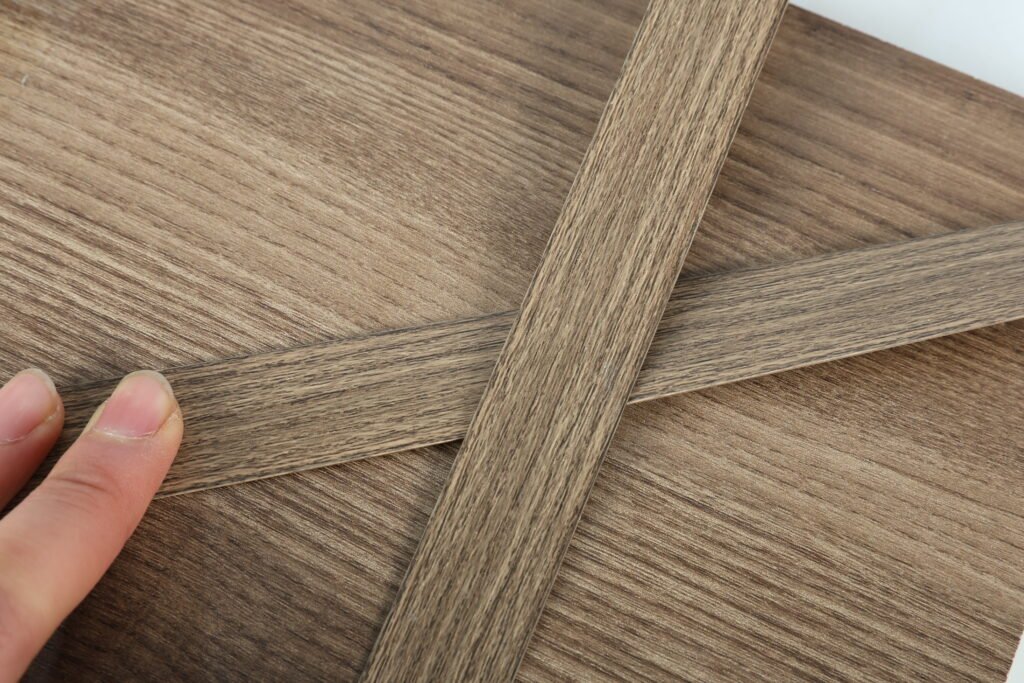
I pay close attention to these three properties because they affect both handling and machine processing.
Why Does Thickness Matter?
PVC edge banding is available in different thicknesses for different furniture applications.
For example, HOMAG’s EDGETEQ S-356 is designed to process coil edge thicknesses from 0.4 to 3 mm. Its S-500 series lists coil edge thicknesses from 0.3 to 3 mm.
These specifications show that machine compatibility needs to be checked before production.
A furniture manufacturer cannot simply choose any thickness and assume the machine will process it in the same way.
Thickness can affect:
- Cutting resistance
- Trimming
- Scraping
- Corner processing
- Machine pressure
- Final appearance
For manual production, the operator can sometimes make small adjustments during processing.
For automated production, the thickness needs to stay within the machine’s working range and the supplier’s defined tolerance.
Why Does Width Matter?
Width determines how much material is available to cover the panel edge.
If the width is inconsistent, the machine may need to compensate through adjustment. Excessive variation can also affect trimming and final appearance.
REHAU publishes standard tolerances for PVC and ABS edgebands. Its technical data includes defined thickness and width tolerances rather than treating dimensions as approximate values.
I see this as an important point for B2B buyers.
A supplier should not only say that the product has “stable dimensions.” The supplier should define what stable means.
Does Flexibility Matter More for Manual Production?
Flexibility can be especially useful when an operator needs to handle curves, corners, or different furniture shapes.
However, automated machines also process shaped parts and curved components. So I would not say that flexible PVC edge banding belongs only to manual production.
The better question is whether the flexibility matches the application and machine.
| Property | Manual production | Automated production |
|---|---|---|
| Thickness | Must suit the application | Must suit machine range |
| Width | Easy to observe during application | Needs stable dimensional control |
| Flexibility | Helps manual handling | Needs to match machine path and application |
| Tolerance | Important | More important for repeatability |
| Surface consistency | Important | Important for continuous finishing |
For me, the key point is simple: manual production can tolerate some process adjustment, while automated production needs the material and machine to work together more consistently.
How Do Adhesive and Surface Requirements Change Between Manual and Automated Production?
Adhesive and surface requirements do not become completely different between manual and automated production, but automated systems usually require more consistent material behavior because the process runs continuously.

I would pay attention to this area whenever a customer changes from manual application to an automated production line.
Why Does Adhesive Compatibility Matter?
PVC edge banding can be processed with different adhesive systems depending on the machine and application.
HOMAG’s machines can be configured for different technologies, including EVA, PUR, airTec, and laserTec on certain systems. Its S-500 series, for example, supports PUR and airTec options and can also be configured for different gluing systems.
This means I cannot evaluate the edge band separately from the adhesive system.
The same PVC edge band may need different processing conditions when the furniture factory changes from one adhesive system to another.
What Does Surface Treatment Do?
The surface of the PVC edge band needs to work with the selected bonding system.
Some edge banding technologies use special functional layers. HOMAG explains that its airTec process uses an edge with a decorative layer and a functional layer. Hot air activates this functional layer so it can bond to the panel.
This is very different from simply applying conventional hot-melt adhesive.
So when I evaluate an edge band for automated production, I want to know:
- What adhesive system is being used?
- Does the edge have a suitable coating or functional layer?
- What temperature is required?
- What feed speed is suitable?
- Does the supplier provide processing instructions?
- Has the material been tested on the customer’s machine?
Why Is Consistency More Important on an Automated Line?
A manual operator can notice a small problem and stop.
An automated line can repeat the same problem hundreds or thousands of times.
This difference changes the cost of a quality problem.
| Problem | Manual production | Automated production |
|---|---|---|
| Small color variation | Operator may notice it | Can affect many parts |
| Poor adhesive contact | Can be corrected early | Can repeat continuously |
| Width variation | Operator can adjust | May affect machine settings |
| Surface defect | Individual piece may be rejected | Large batch may be affected |
| Material change | Easy to observe | Needs controlled parameter change |
This is why I put more emphasis on repeatability when I evaluate PVC edge banding for automated furniture production.
Why Does Production Speed and Machine Precision Matter When Choosing PVC Edge Banding?
Higher production speed reduces the time available for each processing step, so the PVC edge band needs stable dimensions, surface quality, and processing behavior that match the machine.
I do not think speed alone makes an automated machine difficult to use. The real issue is the relationship between speed and all other machine parameters.
What Happens When Feed Speed Increases?
Feed speed changes how quickly the edge moves through the machine.
HOMAG lists the EDGETEQ S-356 with feed speeds of 16–25 m/min. Its S-500 series offers settings of 16–20, 25, 30, and 35 m/min. Its D-610 series can reach up to 50 m/min, while the D-810 powerLine has documented speeds up to 100 m/min.
These numbers show why I cannot use one universal processing speed for every furniture factory.
The machine, adhesive, edge thickness, panel, and production target all matter.
Why Does Machine Precision Matter?
Automated production depends on repeatable movements.
The machine needs to feed the panel correctly. The edge needs to remain in the correct position. The pressure needs to remain stable. The trimming tools need to work at the intended position.
If the material dimensions change too much, the machine may have less room to compensate.
This is where tolerance becomes important.
A supplier may provide a nominal thickness of 2 mm. That number alone does not tell me enough.
I also want to know the permitted deviation.
What Should I Check Before Running High-Speed Production?
I use a simple checklist:
| Item | Question |
|---|---|
| Edge thickness | Is it within the machine range? |
| Edge width | Is the width stable enough for the application? |
| Tolerance | Does the supplier provide defined tolerances? |
| Feed speed | Has the material been tested at the planned speed? |
| Adhesive | Is the adhesive compatible? |
| Pressure | Does the machine provide stable contact? |
| Finishing | Can the edge be trimmed and scraped cleanly? |
| Batch | Can future batches maintain similar performance? |
For example, HOMAG’s S-500 series supports automatic workpiece feeding systems designed to feed workpieces precisely into the edge processing machine.
This is why I see automation as a complete system.
The machine becomes more precise, so the material also needs to be consistent enough to work inside that system.
How Should Furniture Manufacturers Choose PVC Edge Banding for Manual or Automated Production?
I would choose PVC edge banding based on the actual production method, machine, adhesive system, product design, and required output instead of assuming that one type is automatically better.
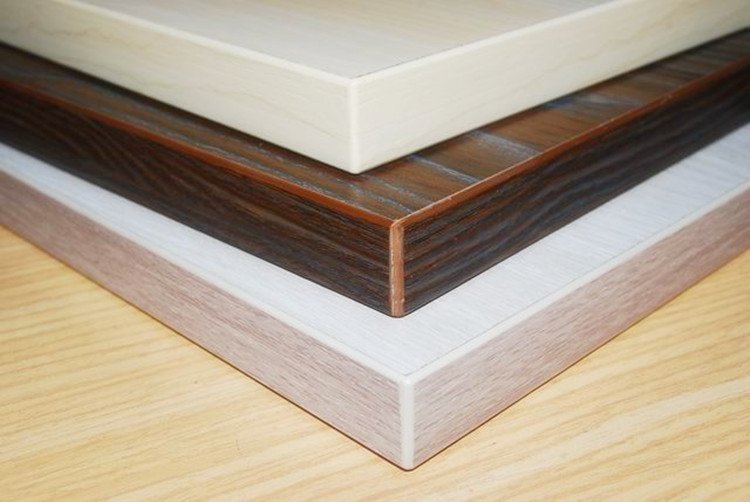
When I help a customer choose an edge band, I would first ask how the customer produces furniture.
I would not start with price.
What Should Manual Production Buyers Focus On?
For manual or small-batch production, I would pay close attention to:
- Ease of handling
- Suitable flexibility
- Correct thickness and width
- Surface appearance
- Easy trimming
- Adhesive compatibility
- Small-batch availability
The operator often has more direct control over the material.
This can make the production process more flexible.
However, the material still needs to meet the furniture manufacturer’s quality requirements.
What Should Automated Production Buyers Focus On?
For automated production, I would put more attention on:
- Thickness consistency
- Width consistency
- Dimensional tolerance
- Batch-to-batch stability
- Machine compatibility
- Adhesive compatibility
- Processing speed
- Surface consistency
- Technical support
This is because a high-output machine can process large quantities quickly.
HOMAG’s machine range shows the difference in production scale. Its product information includes machines for lower feed rates as well as systems designed for medium and large series, including double-sided processing and high-speed production.
How Would I Compare the Two?
| Buying factor | Manual production | Automated production |
|---|---|---|
| Main concern | Easy and stable handling | Repeatable machine processing |
| Thickness | Application-based | Application + machine-based |
| Width | Application-based | Tight and stable control |
| Flexibility | Often important | Must match machine and shape |
| Adhesive | Compatibility matters | Compatibility + stable processing |
| Batch consistency | Important | Very important |
| Technical data | Useful | Essential |
| Production trial | Recommended | Strongly recommended |
| Supplier support | Helpful | Important for troubleshooting |
I also would not assume that an automated production line always needs a completely different PVC edge band.
In many cases, the same product family can be used in different production environments when its specifications and processing conditions match the application.
The important part is the production window.
I want to know the range of conditions where the material produces an acceptable result.
That range should cover the real production environment, not only the supplier’s sample room.
Before a large order, I would run a production trial with the actual panel, adhesive, machine, speed, and finishing process.
I would also keep an approved sample and record the processing parameters.
This approach gives me a much better basis for future purchasing.
If a later batch behaves differently, I can compare the material specification, batch number, machine settings, and production conditions instead of guessing.
For a furniture manufacturer, that information can save much more time than choosing a PVC edge band only from a catalog photograph or price list.
Data source
The technical judgments and specific machine parameters in this article mainly refer to the following public materials:
- REHAU — Edgeband Technical Data:
REHAU Edgeband Technical Data - REHAU — RAUKANTEX Tools & Accessories:
REHAU RAUKANTEX Tools & Accessories - HOMAG — EDGETEQ S-356:
HOMAG EDGETEQ S-356 - HOMAG — EDGETEQ S-500:
HOMAG EDGETEQ S-500 - HOMAG — EDGETEQ D-610:
HOMAG EDGETEQ D-610 - HOMAG — EDGETEQ D-810 powerLine:
HOMAG EDGETEQ D-810 powerLine