Furniture factories usually choose edge banding glue from three hot-melt families: EVA for everyday indoor work, PO when better heat or moisture resistance is needed on standard machines, and PUR when the furniture will face water, heat or heavy use. The right type depends on the edge banding machine, the panel and edge material, and where the finished furniture will be used. A poor match often shows up later as peeling, a visible glue line, or rework.
Key takeaways
- EVA is the most common, cost-effective hot melt and works on most standard edge banding machines.
- PO (polyolefin) often sits between EVA and PUR for heat and moisture resistance, and many grades run on conventional hot-melt equipment. Chaotai’s published range lists EVA and PUR, not PO.
- PUR is a reactive polyurethane hot melt with high bond strength and better water and heat resistance, but it needs a PUR-specific application system.
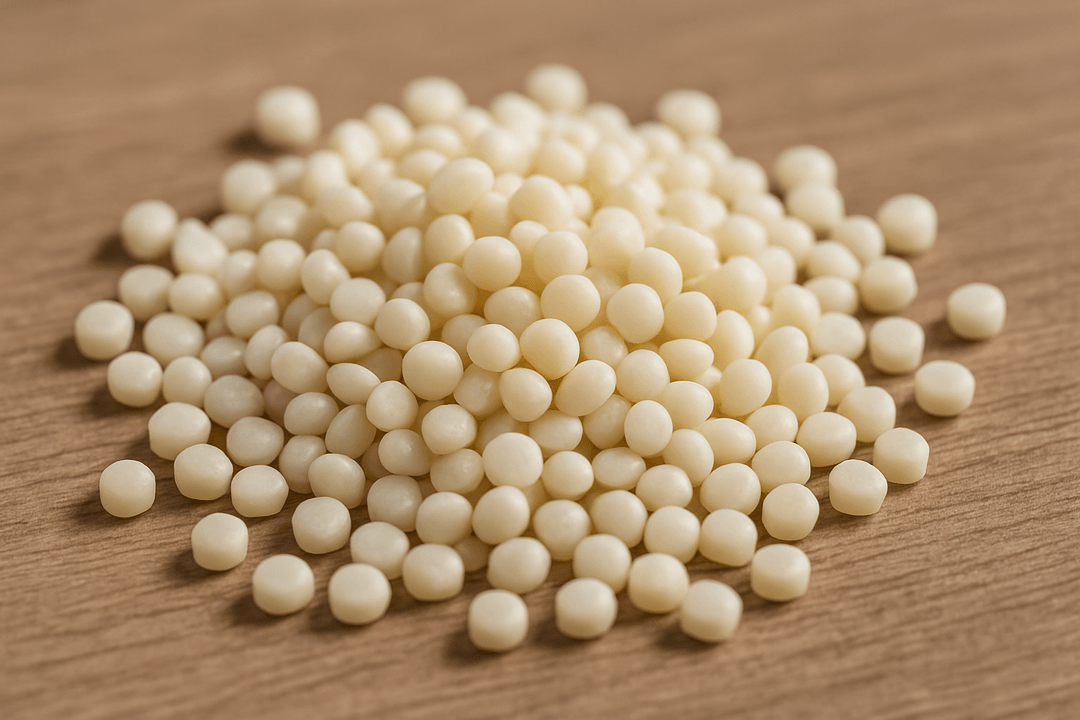
- Chaotai supplies EVA and PUR adhesives in granule, cartridge or block form for manual and automatic edgebanders, for use with PVC, ABS, acrylic and other common edge materials.
- Laser and hot-air “no glue line” processes activate a functional layer on the edge banding. They are not the same as choosing EVA or PUR tank glue.
What are EVA, PO and PUR edge banding glues?
EVA, PO and PUR are the three main hot-melt adhesive families used to bond edge banding to furniture panel edges. They all start as a solid that is melted and applied, but they do not behave the same way after the bond is made.
What is EVA edge banding glue?
EVA (ethylene vinyl acetate) is a thermoplastic hot-melt adhesive. It is cost-effective, easy to use and suitable for most everyday applications, which is why it is the default choice on many production lines. Because it is thermoplastic, the bond can be remelted with heat, which makes cleanup and some rework easier than with a cured reactive glue.
What is PO edge banding glue?
PO (polyolefin) is another thermoplastic hot-melt family. Factories often consider it when they want better heat or moisture resistance than a standard EVA, without moving to a PUR-specific application system. Many PO grades run on conventional hot-melt equipment, but temperature, open time and compatibility vary by formulation, so the supplier’s technical data sheet should be followed. Chaotai does not currently list a PO adhesive on its public adhesives page.
What is PUR edge banding glue?
PUR (polyurethane reactive) is a reactive hot-melt adhesive. After it is applied, it reacts with moisture and builds a strong bond with high water and heat resistance. That makes it a common choice for high-performance or moisture-prone furniture. PUR is not a drop-in replacement for EVA: it requires machines with PUR-specific melting and application systems.
These adhesives are used with a wide range of edge materials, including PVC, ABS, PP, acrylic, melamine and wood veneer, on panels such as MDF, particleboard and plywood.
How do EVA, PO and PUR edge banding glues compare?
The table below is a practical comparison for furniture and cabinet factories. EVA and PUR application temperatures, and the typical EVA coating weight later in this article, come from Chaotai’s published adhesives page. PO is described in general industry terms only, because grades vary and Chaotai does not publish a PO specification.
| Feature | EVA | PO (polyolefin) | PUR |
|---|---|---|---|
| Chemistry | Thermoplastic hot melt | Thermoplastic hot melt | Reactive (moisture-curing) hot melt |
| Typical use | Everyday indoor furniture | Indoor work needing better heat or moisture resistance than standard EVA | Kitchens, bathrooms and other high-use or moisture-prone furniture |
| Machine requirement | Most standard edge banding machines | Often conventional hot-melt equipment; confirm with the supplier | PUR-specific melting and application systems |
| Application temperature | 160–200°C (Chaotai published range) | Follow the supplier data sheet | 120–140°C, depending on the formulation (Chaotai published range) |
| Bond and resistance | Cost-effective and suitable for most applications | Generally better heat and moisture performance than standard EVA; grades vary | High bonding strength; water and heat resistant |
| Rework | Can be remelted with heat | Can be remelted with heat | Once cured, the bond is not remelted like EVA |
Which edge banding glue should a factory choose?
Choose the glue by end use and machine capability, not by the idea that one type is always better. A factory running bedroom or standard office furniture on a conventional edgebander will often stay with EVA. A factory making kitchen or bathroom cabinets, or supplying furniture that will see moisture, heat or heavy daily use, should compare PUR if the machine can apply it.
When is EVA the right choice?
- the furniture will stay in normal indoor conditions;
- cost, speed and easy handling matter more than maximum moisture or heat resistance;
- the line already uses a standard EVA edgebander.
When should a factory consider PO?
PO is worth comparing when the factory wants more heat or moisture resistance than a standard EVA, but wants to remain on conventional hot-melt equipment. It is not automatically a substitute for PUR in wet or high-heat service, and performance depends on the grade. A buyer who specifically needs PO should confirm availability with the adhesive supplier before writing it into a purchase order.
When is PUR the right choice?
- the furniture will be used in kitchens, bathrooms or other moisture-prone spaces;
- the specification calls for higher water and heat resistance;
- the factory has, or is prepared to run, a PUR-capable application system and can control melting, coating and cleanup correctly.
A short trial on the actual machine, panel and edge banding is the most reliable way to confirm appearance, adhesion and trimming quality before a volume run.
What should factories check before changing glue type?
Before switching from EVA to PUR, or changing a grade, factories should confirm the machine type and the processing window, then test on their own boards.
- Identify the machine and application method, such as roller or slot nozzle, and whether the unit is set up for EVA or for PUR.
- Set the application temperature from the data sheet. Chaotai’s published range is 160–200°C for EVA and 120–140°C for PUR, depending on the formulation.
- Control the coating weight. Chaotai states that the amount of glue depends on the board material and line speed, and typically quotes 150–180 g/m² for EVA. A per-sheet view of consumption is covered in this guide to how much glue is needed for edge banding per sheet.
- Confirm that the glue is suitable for the edge material — PVC, ABS, acrylic, melamine or wood veneer — and for the panel being used.
- Match the supply form to the machine. Adhesives may be supplied as granules, cartridges or blocks.
Temperature, glue-line thickness and surface preparation still decide whether a correctly chosen glue actually holds. Those process controls are explained in this article on glue lines, primers and temperature control.
Is PUR glue the same as laser or “no glue line” edge banding?
No. PUR glue is still an adhesive applied by the edge banding machine. Laser and hot-air “no glue line” or zero-joint processes work differently: they activate a functional layer on specially made edge banding, instead of applying tank glue in the same way. A factory comparing conventional hot-melt application with laser or hot-air methods can start with this comparison of hot melt adhesive edge banding and laser edge banding.
Frequently asked questions
Can one adhesive work with PVC, ABS and acrylic edge banding?
Often yes, if the grade is formulated for those materials. Chaotai states that its adhesives are made to bond with ABS, PVC, acrylic, melamine and wood veneer. The factory should still name the exact edge material when asking for a recommendation.
Can a standard EVA edgebander run PUR glue?
Not unless the machine has a PUR-specific melting and application system. EVA works on most standard edgebanders. Telling the supplier the machine brand and model is the practical way to check compatibility.
Does a lower application temperature mean a weaker bond?
No. PUR is typically applied at a lower temperature than EVA — 120–140°C rather than 160–200°C in Chaotai’s published ranges — and is chosen when higher water and heat resistance is required. The correct temperature is the one specified for that formulation, not the higher number.
Should distributors stock more than one glue type?
Many distributors keep EVA as the volume line for everyday furniture work and add PUR for customers who make kitchens, bathrooms or other demanding products. The mix should follow the machines and end uses in the local market.
Where can buyers see Chaotai edge banding adhesives?
Chaotai is an edge banding factory with 150 production lines and also supplies EVA and PUR adhesives for furniture manufacturers and distributors. The types, forms and processing notes are listed on the edge banding adhesives product page. If a project has a specific machine model, edge material or service condition to match, the team can be reached through the contact page to request a quote and discuss samples or a suitable adhesive.