Many distributors lose money in two ways: they hold too much stock, or they wait too long for products that customers need now.
I see stock and made-to-order PVC edge banding as two different tools. Stock products offer speed, while made-to-order products offer flexibility. The better choice depends on demand, lead time, MOQ, and inventory risk.

I have found that distributors do not need to choose only one model. A better approach is to understand where each model works best and build an inventory strategy around real customer demand.
What Is the Difference Between Stock and Made-to-Order PVC Edge Banding?
Distributors can buy PVC edge banding in two main ways. They can keep products in stock for immediate sales, or they can place orders with a manufacturer when customers need specific products.
Stock and made-to-order products differ mainly in availability, flexibility, inventory cost, and lead time.
Stock PVC Edge Banding
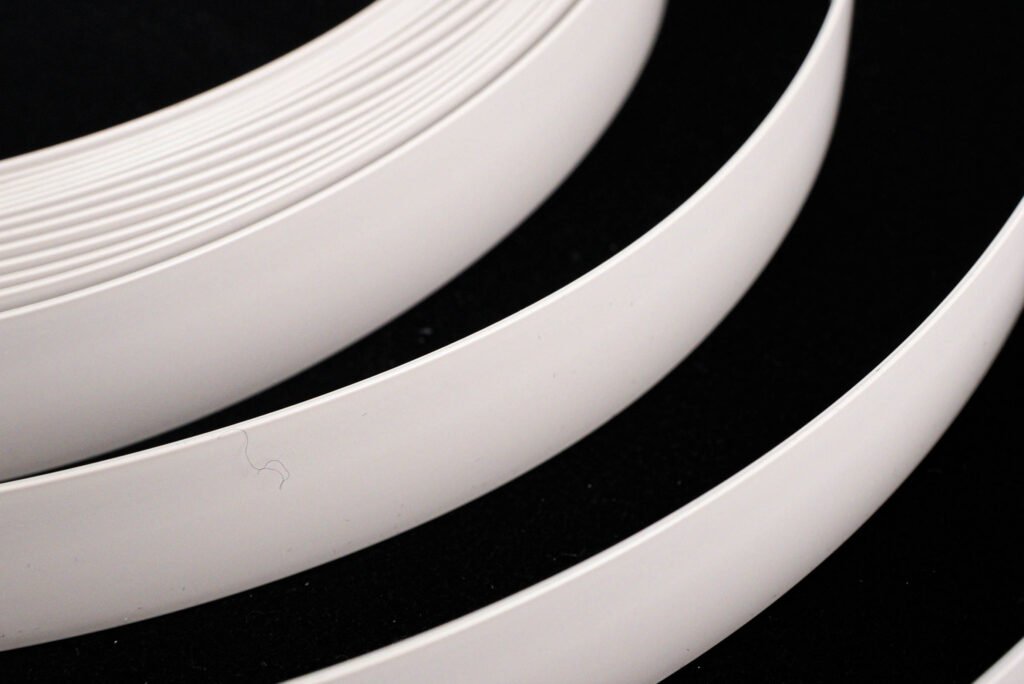
When I talk about stock products, I mean PVC edge banding that a distributor has already purchased and keeps in a warehouse.
The distributor normally selects products based on expected demand. Popular colors, common thicknesses, and standard widths are usually better candidates for stock.
The biggest advantage is simple. The distributor already has the product.
A customer can place an order today, and the distributor may be able to ship it quickly.
Made-to-Order PVC Edge Banding
Made-to-order products work in a different way.
The distributor does not need to keep every possible color and specification in the warehouse. Instead, the distributor sends the requirement to the manufacturer, and the manufacturer produces the order.
This model gives distributors more product flexibility.
A customer may request a specific color, thickness, width, or surface effect. The distributor can ask the manufacturer to produce the required specification instead of carrying it all year.
The main differences
| Factor | Stock PVC Edge Banding | Made-to-Order PVC Edge Banding |
|---|---|---|
| Availability | Ready for shipment | Produced after order |
| Lead time | Usually shorter | Usually longer |
| Inventory requirement | Higher | Lower |
| Product flexibility | More limited | Higher |
| Customization | Limited | Stronger |
| Slow-moving inventory risk | Higher | Lower |
| Response to urgent orders | Better | More difficult |
I do not see one model as automatically better.
If I were serving customers that regularly need the same five or ten colors, I would rather keep those products in stock.
If my customers often request special colors or unusual specifications, I would use made-to-order production.
The key is demand.
A distributor should not fill a warehouse with products simply because a manufacturer offers many options.
The distributor should first understand which products customers actually buy.
What Are the Advantages and Risks of Stock PVC Edge Banding for Distributors?
Stock PVC edge banding gives distributors one major advantage: speed.
When customers need common products quickly, a distributor with local inventory can respond faster than a supplier that needs to start production.

Why distributors keep stock
I usually see four main reasons for holding inventory.
First, customers may have urgent production schedules.
Second, some colors and specifications have stable demand.
Third, local inventory can make the distributor more competitive.
Fourth, fast delivery can become part of the distributor’s service value.
A distributor that can ship a common PVC edge banding product immediately may win an order even when another supplier offers a lower unit price.
Stock creates another problem
Inventory is not free.
When I buy products before receiving customer orders, my money stays in the inventory.
The warehouse also needs space. The distributor may need handling, management, insurance, and other operating resources.
The biggest risk comes from slow-moving products.
| Inventory Situation | Possible Result |
|---|---|
| Fast-moving color | Quick turnover |
| Regular specification | Predictable demand |
| Seasonal color | Uneven demand |
| Special color | Higher risk of slow movement |
| Rare specification | Capital tied up for longer |
I think distributors should pay special attention to the last two categories.
PVC edge banding comes in many colors, widths, thicknesses, and finishes. It is easy to believe that a large product range will always create more sales.
That is not always true.
A large catalog can be useful for marketing, but a large physical inventory can create cash-flow pressure.

The inventory turnover question
I would ask one simple question before stocking a product:
How often can I realistically sell it?
A product that generates regular orders can justify inventory.
A product that sells once every six months may need a different purchasing model.
The distributor should also look at order size.
If customers normally buy large quantities, the distributor may not need to hold a large amount of that product locally. The distributor can arrange production based on confirmed orders.
This is where stock and made-to-order models can work together.
Stock should support speed.
It should not become a collection of products that happen to be sitting in a warehouse.
When Should Distributors Choose Made-to-Order PVC Edge Banding?
Made-to-order PVC edge banding becomes useful when product demand is less predictable or when customers need specifications that are not suitable for standard inventory.
I think distributors should use this model when flexibility is more important than immediate delivery.

Made-to-order works well for special requirements
A distributor may receive an order for a specific furniture project.
The customer may need a special color that is not part of the distributor’s normal stock.
The customer may also require a special width, thickness, surface finish, or color match.
Keeping all these products in inventory would be difficult.
Made-to-order production gives the distributor another option.
| Customer Requirement | Better Approach |
|---|---|
| Popular standard color | Stock |
| Urgent small order | Stock |
| Rare color | Made-to-order |
| Custom color | Made-to-order |
| Large project | Made-to-order |
| Private-label product | Made-to-order |
| Special specification | Made-to-order |
Made-to-order reduces some inventory risks
The biggest benefit is that production is connected to real demand.
The distributor does not need to purchase large quantities before knowing whether customers will buy them.
This can reduce the risk of slow-moving inventory.
However, made-to-order is not risk-free.
The distributor needs to consider MOQ, production time, shipping time, and customer deadlines.
If a customer needs material tomorrow, made-to-order production may not solve the problem.

MOQ needs attention
MOQ can affect the decision.
For example, if a manufacturer requires a large minimum order for a custom color, the distributor needs to know whether the customer demand is large enough.
The distributor should compare the expected sales with the production quantity.
| Question | Why It Matters |
|---|---|
| What is the MOQ? | Determines purchasing size |
| What is the production lead time? | Determines delivery planning |
| Is the color exclusive? | Determines market value |
| Can future orders use the same product? | Reduces leftover risk |
| Is the specification standard or special? | Helps select the right model |
I believe made-to-order works best when the distributor has good customer information.
If the distributor understands the customer’s annual demand, the manufacturer can plan production more effectively.
The distributor can also combine several customer orders when possible.
This approach can make custom production more practical.
How Do Stock and Made-to-Order PVC Edge Banding Compare in Cost, Lead Time, and Inventory Risk?
When distributors compare stock and made-to-order PVC edge banding, they often start with the unit price.
I think that is too narrow.
The real cost includes more than the product price.

Unit price is only one part of the calculation
A stock product may have a higher total inventory cost because the distributor has already paid for the goods.
A made-to-order product may reduce inventory cost, but it may require more planning and a longer wait.
I would compare the two models using several factors.
| Factor | Stock | Made-to-Order |
|---|---|---|
| Purchase timing | Before customer order | After customer demand |
| Delivery speed | Fast | Slower |
| Warehouse demand | Higher | Lower |
| Cash tied in stock | Higher | Lower |
| Customization | Lower | Higher |
| Slow-moving risk | Higher | Lower |
| Urgent order support | Strong | Limited |
| Planning requirement | Lower | Higher |
Lead time changes the business decision
Lead time matters because furniture production often follows fixed schedules.
If a furniture manufacturer needs edge banding immediately, waiting for production can create problems.
The distributor can use local stock to solve this problem.
However, not every customer needs immediate delivery.
For planned projects, customers may accept a longer lead time if the product meets their exact requirements.
This creates a simple rule for me:
Urgency favors stock. Specificity favors made-to-order.
Inventory risk also has a cost
A distributor should calculate how much money stays in inventory and how quickly that inventory moves.
The U.S. Small Business Administration notes that inventory management is an important part of controlling business costs and cash flow. The exact inventory needs depend on the individual business and its operating model.
I do not think distributors should use one fixed inventory rule.
The right level depends on sales history, customer demand, warehouse capacity, and supplier lead time.
A distributor with reliable sales data can keep more fast-moving products in stock.
A distributor with unstable demand should be more careful.
A simple decision model
I would look at three numbers:
Monthly demand + Supplier lead time + Safety stock
For example, if a distributor sells a standard color every week, keeping stock can make sense.
If a distributor sells a special color only a few times each year, made-to-order production may be safer.
The decision should also include the cost of being out of stock.
If losing one urgent customer order costs more than keeping several weeks of inventory, stock may create better business value.
How Can Distributors Combine Stock and Made-to-Order PVC Edge Banding for Better Inventory Management?
I believe the strongest strategy for most distributors is not choosing stock or made-to-order.
It is using both.
A hybrid strategy allows distributors to keep fast-moving products ready while using manufacturers for special and lower-demand products.

Build inventory around product demand
I would divide products into three groups.
Group A: Fast-moving products
These products have stable demand. I would keep them in stock.
Group B: Medium-demand products
These products sell regularly but not every day. I would keep smaller quantities and replenish them based on sales.
Group C: Special products
These products have low or uncertain demand. I would normally use made-to-order production.
| Product Group | Demand | Recommended Model |
|---|---|---|
| A | High and stable | Stock |
| B | Medium | Limited stock |
| C | Low or uncertain | Made-to-order |
| Custom | Project-based | Made-to-order |
| Urgent | Immediate demand | Stock |
Use sales data instead of guesswork
A distributor should review sales records regularly.
I would check:
- Which colors sell most?
- Which sizes sell most?
- Which products have been sitting in the warehouse?
- Which customers place repeat orders?
- Which products create urgent requests?
This information can guide purchasing decisions.
The distributor can then reduce inventory for slow-moving products and increase stock for fast-moving products.
Work with manufacturers as part of the inventory strategy
A reliable manufacturer can make this model much easier.
The distributor can keep popular products locally and use the manufacturer for custom orders.
The manufacturer can also help plan production based on expected demand.
This is where supplier reliability becomes important.
If the manufacturer has stable quality, clear lead times, strong production capacity, and good communication, the distributor can carry less unnecessary inventory.
The distributor does not need to own every product physically to offer a broad product range.
The manufacturer can become an extension of the distributor’s supply chain.
The goal is not maximum inventory
I would not judge a distributor by warehouse size.
I would look at how well the inventory supports sales.
A smaller inventory with faster turnover can be healthier than a large warehouse filled with slow-moving products.
The right strategy gives customers fast access to popular products while keeping special products available through planned production.
That balance can help distributors protect cash flow, reduce inventory risk, and still offer a wide PVC edge banding range.
Conclusion
I would use stock for speed and made-to-order production for flexibility, then combine both models around real customer demand and inventory turnover.