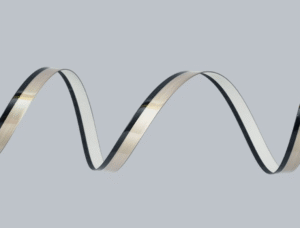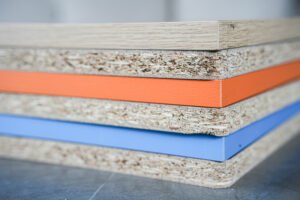
The color looks right, but the surface looks different. One batch looks bright, while another looks dull. This problem can affect the final furniture appearance.
The same PVC edge banding can have different gloss levels because surface formulation, temperature, cooling, production speed, machine settings, and finishing conditions can change the final surface.

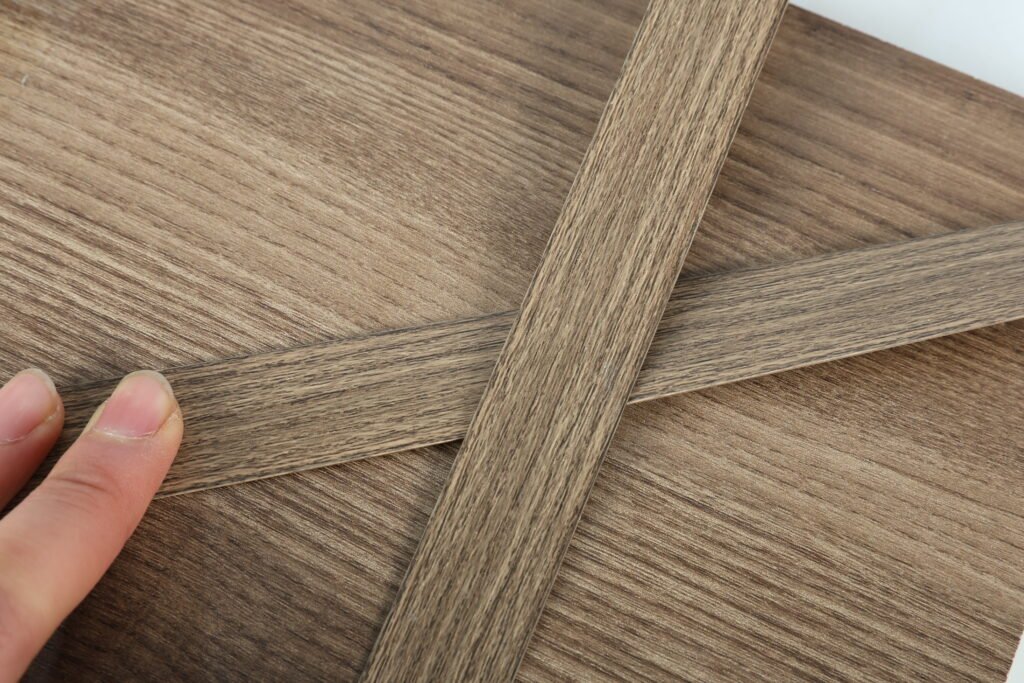
When I check PVC edge banding, I do not look at color alone. I also look at how the surface reflects light. Two rolls can have a very similar color but show a different visual effect under the same light. This difference becomes more obvious on high-gloss furniture panels.
For manufacturers, gloss consistency is not only a visual issue. It can also affect how well the edge band matches the panel surface. A customer may accept a small color difference, but a clear difference in surface reflection can make the edge look like a different material.
I usually break this problem into five parts. I first check the production factors. Then I check temperature and cooling. After that, I look at machine speed and settings. I also check the PVC formulation itself. Finally, I look at how the factory measures and controls gloss from batch to batch.
What Factors Can Cause Different Gloss Levels in the Same PVC Edge Banding?
I often find that gloss differences do not come from one single factor. Material formulation, surface treatment, temperature, cooling, production speed, and finishing can all affect the final gloss.
The main factors include PVC formulation, surface structure, processing temperature, cooling conditions, machine settings, production speed, polishing, and measurement conditions.
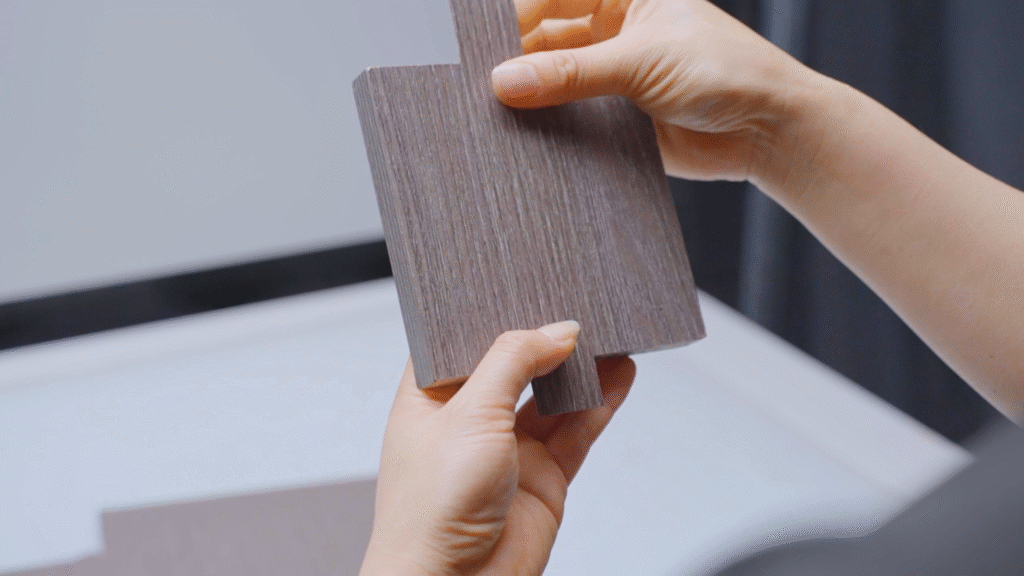
I think the first mistake is to treat gloss as a fixed property that cannot change during production. In reality, the final surface is created by the interaction between the PVC material and the production process.
Surface structure affects light reflection
Gloss is closely related to how a surface reflects light.
A smooth surface reflects more light in a regular direction. A rougher or more textured surface spreads the light in more directions. The surface can therefore look less glossy even when the base PVC color is very similar.
SURTECO states that PVC edge bands are available from super matt to high gloss, which shows that surface finish is a defined product characteristic rather than just an accidental visual effect.
I therefore do not compare only the color when I check two edge bands. I also compare their surface finish.
The production process can change the surface
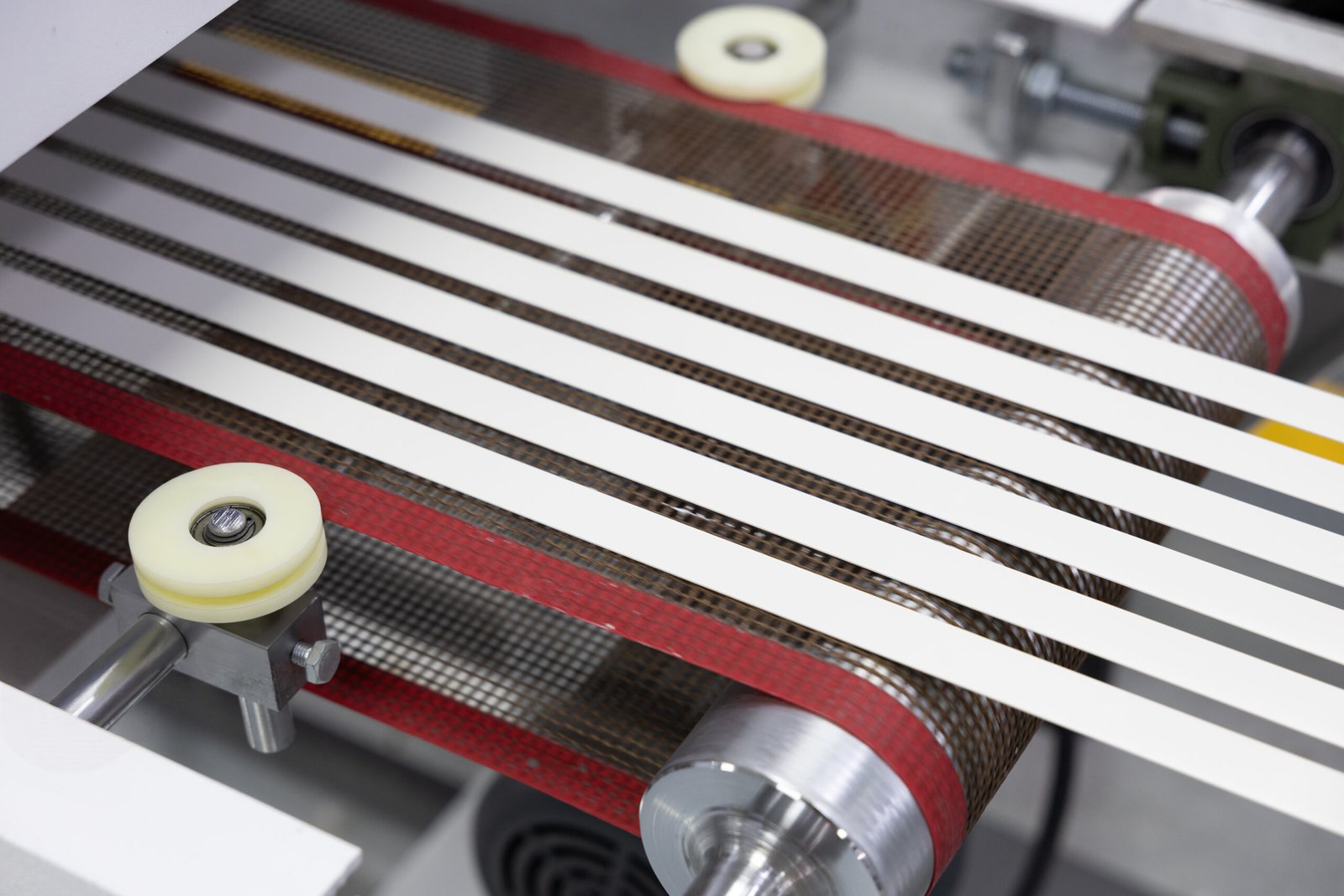
PVC edge bands are commonly produced through extrusion. SURTECO states that its PVC edge bands are produced using an extrusion process.
During production, the material passes through different stages before it becomes the finished edge band.
The surface can be affected by:
- Material temperature
- Die conditions
- Cooling
- Production speed
- Surface rollers
- Calibration
- Polishing
- Coating or lacquer
- Handling after production
A small change in one stage may change the final surface.
Gloss is also a measurement issue
I also pay attention to how the gloss is measured.
A gloss value is not meaningful if two factories use different measurement conditions. The measurement angle, instrument, surface direction, sample condition, and test location can all matter.
For this reason, I prefer to compare samples under the same test method and the same lighting conditions.
| Factor | Possible effect on gloss | What I check |
|---|---|---|
| PVC formulation | Changes surface behavior | Resin, filler, additives |
| Surface finish | Changes light reflection | Smooth, matte, glossy |
| Temperature | Changes surface formation | Actual process temperature |
| Cooling | Affects surface setting | Cooling stability |
| Production speed | Changes processing time | Line speed |
| Machine settings | Changes surface processing | Rollers and calibration |
| Polishing | Changes final appearance | Wheel condition and setting |
| Measurement | Changes recorded value | Same test method |
When I see a gloss difference, I therefore do not immediately say that one batch is defective. I first check whether the production and measurement conditions are actually comparable.
How Do Temperature and Cooling Affect PVC Edge Banding Gloss?
Temperature can change how the PVC surface behaves during production. Cooling then helps the material keep the surface created during processing.
Temperature and cooling affect PVC edge banding because they influence material softening, surface formation, dimensional stability, and the final surface condition.
I pay close attention to temperature because PVC is a thermoplastic material. Its behavior changes as temperature changes.
Heat changes the condition of the PVC
PVC needs to reach the correct processing condition during extrusion and forming.
If the material is processed under different thermal conditions, its flow and surface formation can change. The exact effect depends on the formulation and production equipment.
I do not use one temperature number as a universal answer because different PVC formulations and production lines can require different conditions.
SURTECO’s technical information also shows that PVC edge banding has a defined heat distortion behavior. Its Döllken PVC edge bands list a Vicat B 50 value of about 80 ± 2°C.
This does not mean that the production temperature should simply be set to this value. The number describes a material property, not a universal extrusion setting.
Cooling helps stabilize the finished surface
After the material leaves the forming stage, cooling becomes important.
I think about this stage in a simple way. The material first needs to form the desired surface. Then the production line needs to cool and stabilize that surface.
If the cooling conditions change, the final surface may also change.
This is one reason why I do not only check the heating system when I investigate gloss differences. I also check the cooling system.
Temperature control needs to be based on actual conditions
The displayed machine temperature does not always tell me exactly what is happening at the material.
REHAU’s PVC technical information points out that adhesive temperatures can vary and that the temperature at the applicator roller can differ significantly from the temperature shown by the melt-container thermostat. REHAU recommends measuring the temperature at the applicator roller when checking the actual process.
The same basic idea matters in production control: I prefer actual measurements to assumptions based only on machine displays.
The production environment also matters
I also consider the environment when comparing gloss.
Temperature around the production line, storage conditions, and the condition of the raw material can affect processing consistency.
REHAU recommends processing boards and edgebands at room temperatures above 18°C for its PVC application guidance and advises avoiding drafts because they can affect how quickly adhesive sets.
| Thermal factor | What can change | What I check |
|---|---|---|
| Material temperature | Material behavior | Storage and production temperature |
| Processing temperature | Surface formation | Actual process value |
| Cooling temperature | Surface stabilization | Cooling consistency |
| Cooling speed | Final surface condition | Cooling system |
| Ambient temperature | Production stability | Workshop conditions |
| Heat exposure | Surface or dimensional behavior | Processing time |
I therefore treat temperature and cooling as one connected process instead of two separate settings.
Why Can Production Speed and Machine Settings Change Edge Banding Gloss?
I do not think production speed is only a productivity number. It can also change how long the material stays under each processing condition.
Production speed and machine settings can change gloss because they affect processing time, heat exposure, cooling time, surface contact, and finishing conditions.

When I compare two production runs, I always ask whether the machine was running at the same speed and under the same settings.
Higher speed changes the processing time
A production line running at 30 m/min does not give the material the same processing time as a line running at 20 m/min.
This sounds simple, but it is easy to overlook.
If the production speed changes, the material may spend less time in a heating, cooling, calibration, or finishing section.
The final effect depends on the machine design and the process, so I do not say that a higher speed always creates lower gloss. I say that speed changes the processing conditions and therefore needs to be controlled.
Machine settings can change surface finishing
After the main forming process, the edge band may go through additional surface processing.
For example, buffing can change the final appearance. REHAU notes that its PVC edge bands can be buffed to generate a high-quality edge radius and describes a specific buffing setup for reducing stress whitening around the edge radius.
This matters because a manufacturer may compare two samples and think the PVC formulation changed when the actual difference came from the finishing process.
Different machines may create different results
I also avoid assuming that two production lines are identical.
One line may have different:
- Extrusion equipment
- Cooling design
- Calibration system
- Roller surface
- Production speed
- Polishing system
- Tension control
- Surface treatment
- Temperature control
This means that the same PVC formulation can require different process control on different machines.
SURTECO’s processing information makes a similar point from the application side. It states that important process parameters depend on the edgeband, adhesive, board, edge-gluing machine, and ambient temperature, and recommends determining the best settings through trials.
I prefer controlled production tests
When I test a gloss problem, I do not change everything at once.
I keep the material the same and change one major production variable.
| Test | Production speed | Temperature | Cooling | Purpose |
|---|---|---|---|---|
| A | Standard | Standard | Standard | Baseline |
| B | Higher | Same | Same | Check speed effect |
| C | Standard | Adjusted | Same | Check temperature effect |
| D | Standard | Same | Adjusted | Check cooling effect |
| E | Standard | Standard | Standard | Repeatability test |
This approach gives me a better chance of finding the real cause.
If I change speed, temperature, cooling, and polishing at the same time, I may get a different gloss level, but I will not know why it changed.
How Does the PVC Formulation Affect the Final Gloss Level?
I do not treat PVC as a single fixed material. Different formulations can create different surface properties even when the final products have a similar color.
PVC formulation affects gloss because the resin system, fillers, pigments, additives, surface structure, and finishing layer can influence how the finished edge band reflects light.
Data Source
- REHAU — RAUKANTEX PVC Technical Information: REHAU RAUKANTEX PVC Technical Information
- REHAU — RAUKANTEX Edgebands: REHAU RAUKANTEX Edgebands
- SURTECO / Döllken — PVC Edgebands Processing Information: SURTECO PVC Edgebands Technical Information
- SURTECO — PVC Edges: SURTECO PVC Edges
- REHAU — Edgeband Solutions: REHAU Edgeband Solutions