

Distributors can lose sales when standard edge banding fails to meet customer needs. But custom products can also tie up cash, increase inventory costs, and create delivery risks when demand is unclear.
I believe distributors should choose custom edge banding when customers need specific colors, sizes, finishes, or materials that standard products cannot provide. Standard products are usually better for regular demand, faster fulfillment, and lower inventory risk. I recommend comparing customer demand, minimum order quantities, lead times, and expected profit before making a decision.

When I look at edge banding distribution, I do not see custom products as an automatic upgrade from standard products. Custom edge banding can help a distributor win a valuable order, but it can also become slow-moving stock if the customer does not reorder. Standard products can support regular sales, but they may not meet every furniture manufacturer’s needs. I would make this decision based on the customer’s actual requirements and the distributor’s ability to manage cost, inventory, and delivery time.
What Are the Main Differences Between Custom and Standard Edge Banding Products?
I often see buyers compare custom and standard edge banding mainly by price. I think this approach misses several important factors. A low-priced standard product may not match a customer’s panel, while a custom product may require a larger order and a longer wait.
I compare these two options across product specifications, availability, order quantity, cost, and inventory risk. This gives me a clearer way to decide which option fits a distributor’s business.
What Makes Standard Edge Banding Different?
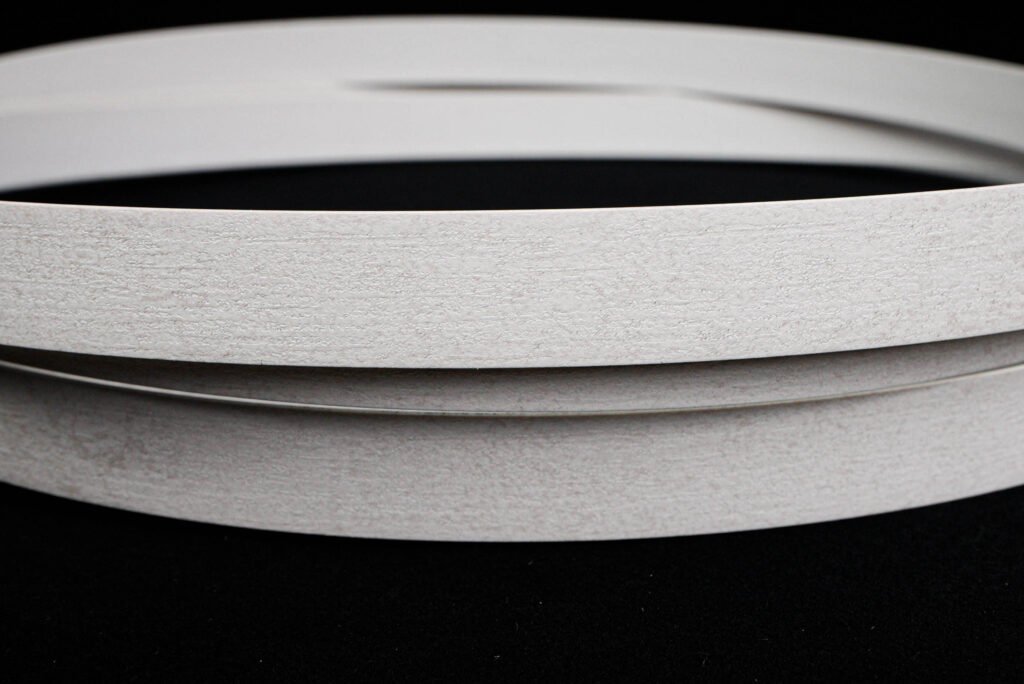
I see standard edge banding as the starting point for most distributors. These products usually cover common colors, sizes, materials, and finishes. Depending on the supplier, they may be available from existing stock or through regular production schedules.
Standard products work well when customers need common white, black, gray, woodgrain, or other frequently ordered colors. They also help distributors serve smaller orders without committing to a large quantity of one custom specification.
I value standard products because they can make inventory planning easier. A distributor can review past sales, identify fast-moving items, and replenish stock based on demand. However, I would not assume that every standard product is always available. Buyers still need to confirm the supplier’s stock levels, production schedule, and actual delivery time.
What Makes Custom Edge Banding Different?
Custom edge banding is useful when a customer needs a product that does not fit the distributor’s existing range. The request may involve a special color, a closer match to a decorative panel, a specific width or thickness, a surface finish, or a material such as PVC, ABS, or acrylic.
I would not assume that every custom request requires a completely new product. Some requests may involve an existing product with a different size or color. Other requests may need new color matching, sample approval, tooling, or a separate production setup. I would ask the supplier to explain which steps apply before confirming the order.
Compare the Main Differences
| Factor | Standard edge banding | Custom edge banding |
|---|---|---|
| Product range | Common colors and specifications | Customer-specific colors or specifications |
| Availability | May be in stock or regularly produced | May require sample approval and production |
| Order quantity | May support smaller orders, depending on stock | May have a higher minimum order quantity |
| Lead time | Often shorter when stock is available | May be longer due to preparation and production |
| Unit cost | May benefit from established production runs | Depends on quantity, setup, materials, and complexity |
| Inventory risk | Can be spread across common products | Can be higher if demand comes from one customer |
| Sales opportunity | Supports broad, repeat demand | Can help win specific or higher-value orders |
I use this comparison as a guide, not as a fixed rule. Some standard products may have long lead times if they are out of stock. Some custom products may be produced quickly if the supplier already has the right materials and production setup.
I would ask the supplier to confirm the actual conditions for each product. I would also compare the expected sales value with the extra cost and time of customization. This helps me decide whether the custom option solves a real customer problem or simply adds complexity to the order.
When Does Custom Edge Banding Create More Value for Distributors and Their Customers?
I believe custom edge banding creates the most value when it solves a problem that standard products cannot solve well. If a furniture manufacturer needs a closer color match or a special specification for a project, a standard product may not be a suitable replacement.
I would consider custom edge banding when the customer has a clear requirement, the order has enough value to justify the extra work, and the supplier can meet the agreed quality and delivery conditions.
When Color Matching Affects the Final Product
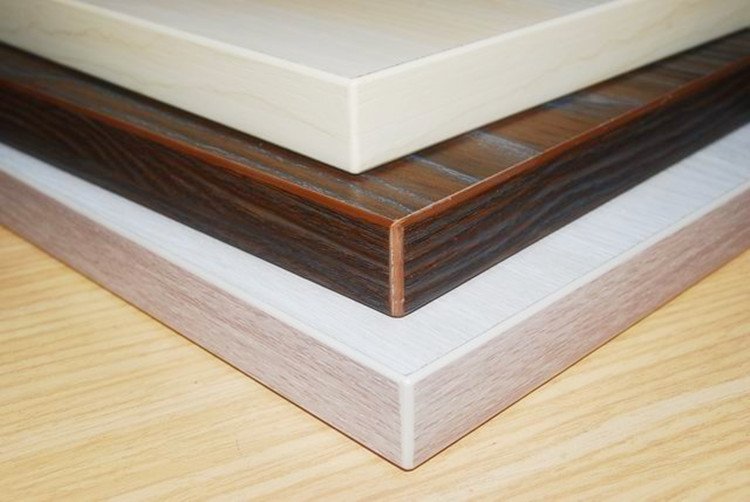
I would consider custom edge banding when customers need to match a particular decorative panel, laminate, or furniture finish. A close match can help create a more consistent appearance across the finished product. This matters to cabinet makers, panel processors, furniture factories, and distributors that supply specific furniture projects.
However, I would not promise a perfect match based only on a photograph or a screen color. Lighting, surface texture, gloss, and the materials being compared can affect how a color looks. I would ask the customer for a physical reference when the application requires a close match. I would then arrange sample approval under agreed conditions.
For example, a furniture manufacturer may use a particular woodgrain panel across a cabinet range. If the available standard edge banding looks noticeably different from the panel, the manufacturer may need a closer color and texture match. In this case, custom edge banding can help the distributor meet a specific need and reduce the risk of losing the order to another supplier.
When Customers Need Special Sizes or Finishes
I also see an opportunity when customers use specifications that are not common in the distributor’s existing stock. A customer may need a particular thickness, width, surface texture, or finish to suit its production process or product design.
For example, a manufacturer producing a specific cabinet range may need the same edge banding specification across a large batch. A distributor that can source the correct product may win the order and build a longer-term relationship with that manufacturer.
I would still check whether the requested specification is technically suitable for the application. The supplier should confirm production feasibility, available materials, dimensional tolerances, and relevant quality requirements before the distributor commits to delivery.
When Custom Products Can Support a Stronger Customer Relationship
Custom edge banding can also help a distributor offer a more complete service. Instead of selling only common stock items, the distributor can help customers source products for special projects and repeat production needs.
I would look for evidence that the customer has a real business reason to order a custom product. For example, the customer may have a confirmed project, a recurring production schedule, or a clear forecast for future orders. These signals are stronger than a general statement that the customer might buy the product someday.
| Customer situation | My preferred approach | Reason |
|---|---|---|
| Customer needs a common color quickly | Standard stock | Speed and availability matter most |
| Customer needs a specific panel color match | Custom sample and approval | The appearance requirement may be difficult to meet with stock |
| Customer has a confirmed large project | Evaluate a custom order | The volume may justify production and setup costs |
| Customer asks about a custom product without a forecast | Test demand first | The order may not justify inventory risk |
| Customer repeats the same special specification | Consider a planned supply arrangement | Repeat demand may support better purchasing and stock planning |
I would also consider whether customization creates enough value for the customer to accept a longer lead time or a higher price. A custom product is not automatically more profitable. It creates value when the customer needs the difference and is willing to pay for it, or when the product helps the distributor secure repeat business that would otherwise be lost.
How Do Minimum Order Quantities, Lead Times, and Costs Affect the Choice?
I never treat a custom product’s unit price as the full cost of the decision. A lower price per roll may still lead to a poor result if the minimum order quantity is too large or the distributor cannot sell the remaining stock.
I recommend checking the full order cost, the supplier’s minimum order quantity, and the expected lead time before accepting a custom order. These factors show whether the order fits the distributor’s cash flow and the customer’s schedule.

Understand the Minimum Order Quantity
A minimum order quantity, or MOQ, is the smallest quantity a supplier is willing to produce or sell under the stated conditions. For custom edge banding, the MOQ may depend on color matching, production setup, material availability, order size, and the supplier’s manufacturing process.
I would ask whether the MOQ applies to the total order or to each color, size, thickness, or finish. This difference matters. A distributor may be able to order a large total quantity but still struggle if the supplier requires a large quantity for every individual color.
For example, a customer may request four custom colors in small quantities. The supplier may have a minimum quantity for each color, which could make the total purchase much larger than the customer needs. I would ask whether the supplier can offer a smaller trial order, combine production where technically possible, or use an existing color that is close to the requested match.
I would not assume that a supplier can reduce the MOQ without affecting the price. The supplier may need to recover setup costs across the order. I would compare the cost of a smaller batch with the cost and risk of holding more inventory.
Calculate the Full Cost
I compare more than the quoted price per roll. I also consider sample development, setup fees, packaging, freight, import charges, storage, and the cost of unsold stock. The exact costs depend on the supplier, trade terms, destination, and order structure.
I would use this simple calculation:
Estimated total cost = Product cost + Setup and sample costs + Freight and import costs + Storage costs + Expected cost of unsold inventory
I would then divide the estimated total cost by the quantity I reasonably expect to sell. This gives me a more useful view of the effective cost per sold unit than the factory price alone.
| Cost factor | What I would confirm |
|---|---|
| Product price | Price per roll or agreed unit |
| MOQ | Minimum quantity per order and per specification |
| Sample or setup fee | Whether fees apply and whether they are refundable or credited |
| Freight and import costs | Estimated transport, customs, and related charges |
| Storage | Space and handling costs while stock remains unsold |
| Unsold inventory | Likely remaining quantity and possible resale value |
I would not assign a fixed percentage to these costs without actual supplier and logistics data. A small custom order may have a high effective cost, while a larger confirmed order may spread setup costs across more units.
Match Lead Time to Customer Demand
I also compare the supplier’s production lead time with the customer’s required delivery date. Custom products may need time for color matching, sample approval, raw material preparation, production, inspection, and shipment. If the buyer confirms the order before these steps are understood, the delivery promise may be unrealistic.
I would ask the supplier to separate sample time, production time, and shipping time. I would also confirm when the lead time starts. Some suppliers may count from deposit receipt, while others may count from final sample approval or written confirmation of specifications.
When the customer’s deadline is fixed, I would check whether the custom product can arrive in time before accepting the order. If the schedule is too tight, I would discuss a suitable standard alternative or another realistic delivery plan with the customer.
I would also look at the cost of delay. If the customer is waiting for material to complete a production run, a late custom order may create problems beyond the cost of the edge banding itself. In that case, I would compare the benefit of customization with the risk of missing the customer’s deadline.
How Can Distributors Evaluate Customer Demand Before Investing in Custom Edge Banding?
I believe distributors should test demand before they commit cash to custom inventory. A customer request is useful information, but it does not always mean that the customer will place an order. Distributors need to understand the expected quantity, buying frequency, target price, and level of commitment.
I would use customer conversations, past sales, sample feedback, and confirmed orders to decide whether a custom product deserves investment. This approach helps reduce the chance of buying stock that sits in the warehouse for months.

Start With Customer Evidence
When a customer asks for a custom color or specification, I would ask a few direct questions. Is the request for a confirmed project or a future possibility? How much material does the customer expect to use? Will the same product be needed again? What delivery date does the customer require?
I would also review the customer’s past purchases. If the customer has repeatedly purchased similar products or has a clear production plan, the request may have a stronger basis. If the customer has never bought the product and cannot estimate demand, I would be more cautious.
I would not treat informal interest as guaranteed sales. A customer may request a sample and later decide not to proceed. I would therefore separate sample requests, quotations, purchase commitments, and completed sales in my records.
I would also ask whether other customers have similar requirements. If several customers need the same color or specification, the distributor may be able to combine demand and reduce the risk of holding stock for only one buyer. I would still confirm that their specifications match before placing a combined order.
Use a Small Test Before Building Stock
I would consider a sample or pilot order when the product is new to the distributor’s customer base. The purpose is to confirm that the product meets the customer’s needs and that the customer is willing to pay the expected price.
A pilot order can also help reveal issues with color matching, packaging, dimensions, or processing. I would collect feedback before deciding whether to place a larger order. The sample process should be agreed with the supplier so that the distributor understands the cost and lead time involved.
For a product with a high MOQ, I would explore whether several customers have the same requirement. I would only combine their demand when the specifications are truly compatible and the delivery schedules can be managed. Similar-looking colors or dimensions should not be treated as interchangeable without customer approval.
Build a Simple Demand Forecast
I would use a basic forecast to compare expected sales with the supplier’s MOQ. I do not need a complex forecasting system for every custom product. I need a clear estimate that I can update when new information becomes available.
| Demand signal | What it tells me | How I would use it |
|---|---|---|
| Confirmed purchase order | Strong evidence of current demand | Check margin and delivery feasibility |
| Repeat purchase history | Evidence of ongoing demand | Estimate future replenishment needs |
| Written customer forecast | A useful planning signal, but not always a commitment | Discuss forecast accuracy and timing |
| Sample request | Early interest | Test fit before investing in stock |
| General inquiry | Limited evidence of purchase intent | Gather more information before ordering |
I would compare the expected demand with the MOQ and calculate how much inventory may remain if sales are lower than expected. I would also consider whether another customer could use the same product if the first customer cancels or changes their plans.
I would avoid setting a forecast from one unusually large order unless I have evidence that the order reflects repeat demand. A custom product can be a good investment, but I want the decision to be based on customer evidence rather than optimism.
I would also record the assumptions behind the forecast. If the estimate depends on one customer, one project, or one expected contract, I would make that risk clear. This makes it easier to update the decision when the customer’s plans change.
How Can Distributors Balance Custom Edge Banding and Standard Stock to Improve Profitability?
I do not think distributors need to choose only custom products or only standard products. A balanced product range can help them serve regular customers quickly while still meeting special requirements when the opportunity is worth the investment.
I would keep standard products for proven, repeat demand and use custom products for clear customer needs. The right balance depends on sales history, available cash, supplier performance, warehouse space, and the type of customers the distributor serves.

Use Standard Stock for Fast-Moving Products
I would identify the standard colors and specifications that customers order most often. These products are good candidates for regular inventory when sales history supports the investment and the supplier can replenish them reliably.
I would review sales by product, color, size, and customer group. A product with many sales may still have low total volume, while another product with fewer orders may account for a large share of demand. I would use actual sales and replenishment time to decide which items deserve more stock.
I would also avoid treating every standard product as equally important. Too many slow-moving colors can tie up cash and warehouse space. A focused range of proven products may serve customers better than a very large catalog that is difficult to manage.
I would set a reorder point for important standard products based on expected demand during replenishment and the amount of safety stock the business needs. I would review the settings when sales patterns or supplier lead times change. This helps reduce the risk of running out of popular items without buying more stock than necessary.
Use Custom Products for Qualified Opportunities
I would consider custom products when a customer has a clear specification, a reasonable order volume, and a workable delivery schedule. I would also look at the potential for repeat sales and whether the product could serve more than one customer.
For new custom products, I would prefer a confirmed order or a clear purchasing commitment before buying stock beyond the agreed requirement. If the distributor decides to hold extra inventory, the decision should be supported by a demand forecast and an acceptable risk level.
I would also negotiate with suppliers about sample approval, production scheduling, MOQ, and replenishment arrangements. A supplier that can explain these conditions clearly can help the distributor plan the product range more effectively.
Review Profitability and Inventory Regularly
I would review custom and standard products using the same basic business measures. The goal is not simply to find the product with the highest gross margin. I also want to know how quickly the product sells, how much cash it ties up, and how often it creates extra costs.
| Measure | Why I would track it |
|---|---|
| Gross margin | Shows the difference between sales revenue and product cost |
| Sales volume | Shows how much product customers actually buy |
| Inventory turnover | Helps show how quickly stock moves |
| Lead-time reliability | Helps assess whether the supplier meets agreed dates |
| Repeat purchase rate | Shows whether customers return for the product |
| Unsold stock value | Shows how much cash remains tied up in inventory |
I would not use one universal target for every distributor. A business with many small customers may need a different product mix from one that serves a few large furniture manufacturers. I would set targets based on the business model and review the results over time.
I would also keep a clear distinction between gross margin and net profit. A custom product may have a higher selling price, but extra sample costs, freight, storage, and unsold stock can reduce the final return. Standard stock may have a lower margin per unit but sell more quickly and require less special handling.
I would review the product mix on a regular schedule. If custom products generate repeat orders and stable margins, I may increase their share of the range. If a custom item sells slowly or requires repeated discounts, I would reconsider how much stock I hold. I would make these decisions using sales records and actual costs rather than relying only on the original sales forecast.
My approach is to use standard products to support stable daily sales and custom products to meet specific, valuable needs. I would expand the custom range when customer evidence supports it, not simply because customization sounds more attractive.
Conclusion
I choose custom edge banding when proven customer needs justify its cost, MOQ, and lead time. I use standard stock for repeat demand, fast delivery, and lower inventory risk.
Data Sources
- U.S. Small Business Administration (SBA) — Market Research and Competitive Analysis
https://www.sba.gov/business-guide/plan-your-business/market-research-competitive-analysis
Explains how businesses can assess customer demand, market conditions, and competitors before making business decisions. - U.S. Small Business Administration (SBA) — Manage Your Finances
https://www.sba.gov/business-guide/manage-your-business/manage-your-finances
Provides general guidance on business finances, cost management, and cash flow. - U.S. Small Business Administration (SBA) — Calculate Your Startup Costs
https://www.sba.gov/business-guide/plan-your-business/calculate-your-startup-costs
Explains how businesses can identify and estimate costs before making an investment. - International Chamber of Commerce (ICC) — Incoterms® Rules
https://iccwbo.org/business-solutions/incoterms-rules/
Explains how buyers and sellers allocate delivery responsibilities, costs, and risks in international trade. - U.S. Census Bureau — Monthly Retail Trade
https://www.census.gov/retail/index.html
Provides retail sales data and related economic information. This source may help with broader market context, but it does not provide specific demand figures for custom edge banding.