Seasonal demand can increase sales quickly, but poor stock planning can leave distributors with slow-moving products, tied-up cash, and rising storage costs.
I believe distributors can manage seasonal demand by combining historical sales data, product-level stock planning, flexible purchasing, and reliable supplier support. The goal is to keep fast-moving edge banding available without buying too much inventory before demand is confirmed.

Seasonal demand is not always easy to predict. Furniture manufacturers may increase production before major holidays, during construction seasons, or when local furniture markets become more active. As a result, their demand for PVC edge banding, ABS edge banding, and other materials can change within a short period.
For distributors, the main challenge is not simply preparing more products. It is deciding which products deserve additional stock, how much inventory is enough, and when to place the next purchase order. I have seen that a large inventory does not always mean a strong supply position. Sometimes, the right stock mix is more valuable than a large warehouse.
Why Does Seasonal Demand Make Inventory Management Difficult for Edge Banding Distributors?
Seasonal demand creates pressure because distributors must prepare inventory before they know the exact number of customer orders. If I purchase too much, I risk holding products that may not sell for several months. If I purchase too little, I may lose customers when they need fast delivery.
I believe the real difficulty comes from the combination of demand changes, product variety, and purchasing lead times.
Why Is Seasonal Demand Difficult to Control?
Furniture production does not follow the same schedule in every market. Some furniture manufacturers increase production before holidays. Others prepare materials before construction projects or large retail orders begin. These changes can create short periods of higher demand for edge banding.
However, the demand increase does not affect every product in the same way.
For example, a distributor may see higher orders for white and wood-grain PVC edge banding during one season. At the same time, special colors and unusual thicknesses may have very little movement. If I increase the stock of every product by the same percentage, I may create more inventory problems instead of solving them.
There is also a difference between customer demand and actual purchasing behavior. Some customers place large orders early because they want to secure materials. Others wait until they receive confirmed furniture orders. This makes it difficult to use a single sales trend to predict the next few months.
How Do Product Varieties Increase Inventory Pressure?
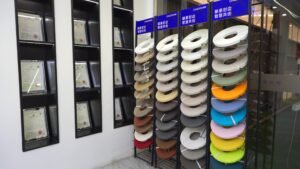
Edge banding is not a product with only one specification. Distributors usually manage several materials, colors, thicknesses, widths, roll lengths, and surface finishes.
Each combination can become a separate inventory item. Even when two products look similar, they may not be interchangeable in the customer’s production process.
| Inventory factor | Possible problem for distributors |
|---|---|
| Material type | PVC and ABS may serve different customer requirements |
| Thickness | Customers may need specific thicknesses for different panels |
| Width | Non-standard widths may have lower turnover |
| Color | Similar colors may not meet exact matching requirements |
| Surface finish | Matte, glossy, and textured finishes may have different demand |
| Roll length | Different packing units may affect customer purchasing decisions |
I should also consider the cost of holding these products. Inventory takes up warehouse space and uses working capital. Some products may remain in storage long after the seasonal demand period has ended.
Why Can Long Purchasing Lead Times Make the Problem Worse?
A distributor that purchases from overseas manufacturers must consider production time, shipping time, customs clearance, and local delivery. The complete purchasing cycle may be much longer than the time customers are willing to wait.
This creates a difficult choice. If I wait for confirmed orders, the products may arrive too late. If I purchase too early, I may have to hold stock without knowing whether customers will buy it.
The U.S. Census Bureau provides monthly manufacturing data through its Manufacturers’ Shipments, Inventories, and Orders survey. Its furniture and related products data can help businesses observe wider industry changes. However, I would not use national manufacturing figures as a direct forecast for an individual distributor. My own customer orders and product-level sales records are more useful for daily stock decisions.
I believe distributors should first understand these risks before increasing seasonal purchases. More inventory is not always the correct answer.
How Can Distributors Forecast Seasonal Demand More Accurately?
A distributor cannot make good purchasing decisions without a reasonable demand forecast. I prefer to use historical sales, customer purchasing plans, and current market information together. No single data source can explain every change in demand.

How Can Historical Sales Data Help?
The first step is to review sales records from the previous two or three years, if those records are available. I would compare the same months instead of looking only at the previous month.
For example, if a distributor usually sells more PVC edge banding between September and November, this pattern may help identify a possible busy period. But I would not assume that every year will follow the same pattern.
I would separate the sales data by product specification. Total monthly sales can hide important differences between individual products.
A practical forecast can use the following formula:
Forecast Demand = Average Historical Demand × Seasonal Adjustment Factor
For example, if a distributor normally sells 1,000 rolls of a particular product per month and its historical seasonal factor is 1.3, the estimated demand becomes 1,300 rolls.
This is only a starting point. I would adjust the result when customer orders, market conditions, or production plans change.
How Should Distributors Use Customer Information?
Historical data shows what customers purchased in the past. Direct communication can help explain what they may purchase in the future.
I would contact important customers before the expected busy season. I would ask about their production plans, upcoming projects, preferred colors, and estimated purchasing quantities.
I would also separate customer information into three groups:
- Confirmed demand: Orders that customers have already placed or formally approved.
- Expected demand: Purchasing plans that customers have shared but not confirmed.
- Potential demand: Possible orders based on previous buying patterns or market activity.
These groups should not receive the same weight in a purchasing forecast. Confirmed orders need immediate attention. Expected demand can support preparation. Potential demand should be treated more carefully.
Which Data Should Distributors Track?
I recommend building a simple monthly forecasting sheet. It does not need expensive software at the beginning. A well-maintained spreadsheet can already provide useful information.
| Data category | What I would record | Why it matters |
|---|---|---|
| Historical sales | Monthly sales by SKU | Identifies seasonal patterns |
| Customer demand | Expected quantity and delivery date | Shows possible future orders |
| Order pipeline | Confirmed and pending orders | Separates real demand from estimates |
| Current inventory | Available stock by specification | Prevents unnecessary purchases |
| Supplier lead time | Production and shipping days | Helps calculate reorder timing |
| Market changes | New projects and customer activity | Identifies demand changes |
I would update this information every month. During a busy season, I would review it every week.
One important point is that distributors should not confuse a large inquiry with actual demand. A customer may request a quotation for several colors but only purchase one or two. I would use confirmed purchasing behavior to improve future forecasts.
For distributors serving the U.S. market, the U.S. Census Bureau’s furniture manufacturing statistics can provide additional industry context. I would use these figures to understand the wider market, while keeping customer-level records as the main basis for purchasing decisions.
How Should Distributors Adjust Stock Levels for Different Edge Banding Products?
I do not recommend increasing every product’s inventory by the same percentage. Different edge banding products have different sales speeds, customer requirements, and replenishment risks. A distributor should give more attention to products that generate regular sales and have a clear customer base.

How Can ABC Analysis Improve Stock Planning?
ABC analysis is a useful way to divide inventory according to its business importance. I would not classify products only by their sales volume. I would also consider their sales value, profit contribution, turnover, and customer importance.
A practical classification could look like this:
| Category | Product characteristics | Stock strategy |
|---|---|---|
| A | High sales value or frequent demand | Maintain reliable safety stock |
| B | Medium sales and stable demand | Keep moderate inventory |
| C | Low sales or irregular demand | Purchase mainly against customer orders |
For example, a distributor may sell standard white PVC edge banding every week. This product could belong to Category A. A special decorative color that sells only a few rolls every few months may belong to Category C.
However, I would not automatically remove every low-volume product. Some special colors may be important for long-term customers. Losing the ability to supply these products could damage customer relationships.
How Much Safety Stock Is Enough?
Safety stock protects distributors when actual demand is higher than expected or suppliers deliver later than planned.
I would calculate safety stock based on demand variation and replenishment time instead of choosing an arbitrary quantity.
A simple formula for a stable-demand situation is:
Reorder Point = Average Daily Demand × Lead Time + Safety Stock
For example, if a distributor sells 20 rolls per day, and the total replenishment lead time is 30 days, the expected demand during lead time is 600 rolls.
If the distributor keeps 150 additional rolls as safety stock, the reorder point becomes 750 rolls.
This example is only a basic planning model. If demand changes significantly during seasonal periods, I would use seasonal demand estimates instead of the annual daily average.
I would also review supplier lead times regularly. A manufacturer that normally delivers in 20 days but sometimes needs 35 days creates a different inventory risk from a supplier with a stable 25-day lead time.
How Should Distributors Manage Special Colors and Specifications?
Special colors and non-standard specifications are common sources of slow-moving inventory. I would be careful when purchasing these products in large quantities.
Before placing an order, I would check whether the color has repeat customers, whether the specification can serve multiple customers, and whether the supplier can produce a smaller batch.
For products with uncertain demand, I prefer to use customer confirmation or sample approval before committing to a large purchase.
I would also review stock age. Products that have not moved for several months should receive attention. I may offer them to suitable customers, combine them with other orders, or stop replenishing them until demand returns.
The important point is that stock levels should reflect product-level demand. A warehouse full of the wrong colors and specifications cannot help a distributor respond to seasonal orders.
Have a spec or project to discuss?
Send your panel, thickness, finish and volume. Our engineers reply with a matched color, sample plan and price — usually within 24 hours.
Request a Quote1,000+ stock colors · Swatches on request
How Can Flexible Purchasing Strategies Reduce the Risk of Overstocking?
Forecasting can reduce uncertainty, but it cannot remove it completely. I believe distributors also need flexible purchasing strategies. The purchasing plan should allow them to respond when actual demand is different from the original forecast.
Why Should Distributors Avoid Buying Everything at Once?
Large purchases may reduce the unit price, but they also increase inventory costs and financial pressure. A lower purchase price does not always mean a higher profit.
For example, a distributor may receive a better price by ordering 5,000 rolls instead of 2,000 rolls. However, if customers only purchase 2,500 rolls during the expected season, the remaining products may stay in the warehouse for months.
I would compare the purchase discount with the total cost of holding additional stock. This includes warehouse space, insurance, financing costs, handling, and the risk of products becoming difficult to sell.
For uncertain demand, I prefer to divide purchases into several batches. The first batch can cover confirmed orders and basic expected demand. Later batches can depend on actual sales and new customer orders.
How Can Rolling Purchasing Plans Work?
A rolling purchasing plan means that distributors update their purchase decisions regularly instead of following one fixed order plan for the entire season.
For example, I may prepare a three-month demand forecast and review it every two weeks. If customer orders increase, I can raise the next purchase quantity. If demand becomes weaker, I can reduce or delay the next order.
| Purchasing stage | Main action | Purpose |
|---|---|---|
| Before the season | Purchase confirmed and fast-moving products | Prepare basic inventory |
| Early season | Review actual sales and customer orders | Check forecast accuracy |
| Peak season | Replenish products with strong turnover | Avoid unnecessary stock |
| After the season | Reduce new purchases and review remaining stock | Prevent inventory buildup |
This method requires regular communication with manufacturers. Distributors need to understand production capacity, minimum order quantities, and the time needed to arrange new production.
Can Supplier Agreements Make Purchasing More Flexible?
I believe supplier cooperation is one of the most important parts of seasonal inventory management.
A distributor may discuss several purchasing arrangements with its manufacturer:
- Smaller and more frequent purchase batches.
- Reserved production capacity during busy periods.
- Agreed lead times for standard products.
- Combined production for different colors and specifications.
- Clear minimum order quantities for special products.
- Flexible delivery schedules when production conditions allow.
These arrangements can reduce the need to hold every product in large quantities.
However, I would not assume that every manufacturer can provide unlimited flexibility. Production schedules, raw material availability, and minimum production quantities still matter. Both sides need to agree on realistic order conditions.
I would also compare suppliers based on delivery reliability, product consistency, communication, and their ability to handle specification changes. A slightly lower purchase price may not be worth the risk of repeated delivery delays.
How Can Distributors Build a More Responsive Supply Chain for Seasonal Demand Changes?
Inventory management is not only an internal warehouse issue. It also depends on how well distributors work with manufacturers, logistics providers, and customers. A responsive supply chain can help distributors reduce the amount of stock they need to hold while still meeting customer delivery requirements.

How Does Manufacturer Reliability Affect Inventory Levels?
I would pay close attention to manufacturer delivery performance. If a supplier frequently changes delivery dates, distributors may feel they need to purchase more products in advance.
This creates a difficult cycle. Unstable supply leads to higher safety stock, and higher safety stock leads to more working capital being tied up.
A reliable manufacturer should provide clear information about production schedules, order progress, product specifications, and expected shipping dates.
For edge banding distributors, product consistency is also important. Color differences, thickness changes, and surface quality problems may cause customers to reject a batch. This can create additional replacement orders and unexpected inventory pressure.
I would evaluate manufacturers using several practical indicators:
| Supplier performance factor | What distributors should check |
|---|---|
| On-time delivery | Percentage of orders delivered as agreed |
| Product consistency | Color, thickness, width, and surface quality |
| Production capacity | Ability to handle seasonal order increases |
| Sampling speed | Time needed to prepare and approve samples |
| Communication | Speed and accuracy of order updates |
| Specification control | Ability to maintain approved product standards |
A manufacturer that can provide stable quality and predictable delivery gives distributors more confidence when planning smaller and more frequent purchases.
How Can Better Communication Reduce Emergency Orders?
I would not wait until the warehouse is nearly empty before contacting the manufacturer.
Instead, I would share seasonal forecasts with important suppliers in advance. Even if the quantities are not confirmed, early communication can help manufacturers understand possible demand changes.
For example, if several customers are expected to purchase more wood-grain PVC edge banding next month, I can inform the manufacturer early. The manufacturer can then review raw materials, production schedules, and available capacity.
This does not mean I need to place a large order immediately. It means both sides have more time to prepare.
I would also set clear communication points for important orders. These may include order confirmation, production start, quality inspection, packing, and shipment. This makes it easier to identify delays before they affect customer delivery dates.
How Can Distributors Use Local Stock and Overseas Supply Together?
For distributors importing edge banding from overseas manufacturers, I believe a mixed supply model can work well.
The distributor can keep common colors and standard specifications in local stock. Special colors, unusual widths, and low-demand products can be purchased from the manufacturer when customers confirm their requirements.
This approach helps balance delivery speed and inventory costs.
For example, a distributor may keep popular white, black, and common wood-grain PVC edge banding in its local warehouse. It can arrange special colors and custom specifications through its manufacturing partner.
However, this model only works when the manufacturer has clear production and delivery arrangements. Distributors should confirm sample approval, minimum order quantities, packaging requirements, and lead times before promising delivery to customers.
I would also review the supply chain after every busy season. I would compare forecast demand with actual sales, check which products caused shortages, and identify which products remained unsold. These records can help both the distributor and manufacturer improve the next seasonal purchasing plan.
- Top 10 Edge Banding Products Every Distributor Should Stock in 2026 (Complete Selection & Inventory Guide) →
- PVC Edge Banding Quality Checklist: 10 Things Distributors Should Inspect Before Importing →
- The significance of the INTERZUM exhibition for Chinese edge banding strip factories →
- Global Edge Banding Market Size and Forecast (2025–2032) →

PVC Range With Stock-Friendly Packing
Standard colours, thicknesses and roll lengths listed with packing options, so a seasonal order can be sized before anything is confirmed.
View the PVC Range
Conclusion
Seasonal planning is less about buying more and more about knowing which SKUs earn their space in the warehouse. Historical sales, confirmed customer orders, and realistic lead times give distributors a forecast they can defend, while split purchasing and flexible supplier terms keep the risk small when demand does not arrive as expected.
Reviewing the season afterwards matters as much as preparing for it. The products that ran short and the products that stayed on the rack both tell you how to size the next order.