Introduction
Choosing the right edge banding material is an important decision for furniture manufacturers, distributors and panel processors.
Although PVC and ABS edge banding look similar in appearance, they have differences in material performance, production cost, durability, environmental characteristics and application scenarios.
When manufacturers compare ABS vs PVC edge banding, the right choice depends on factors such as furniture positioning, production volume, budget requirements and final product expectations.
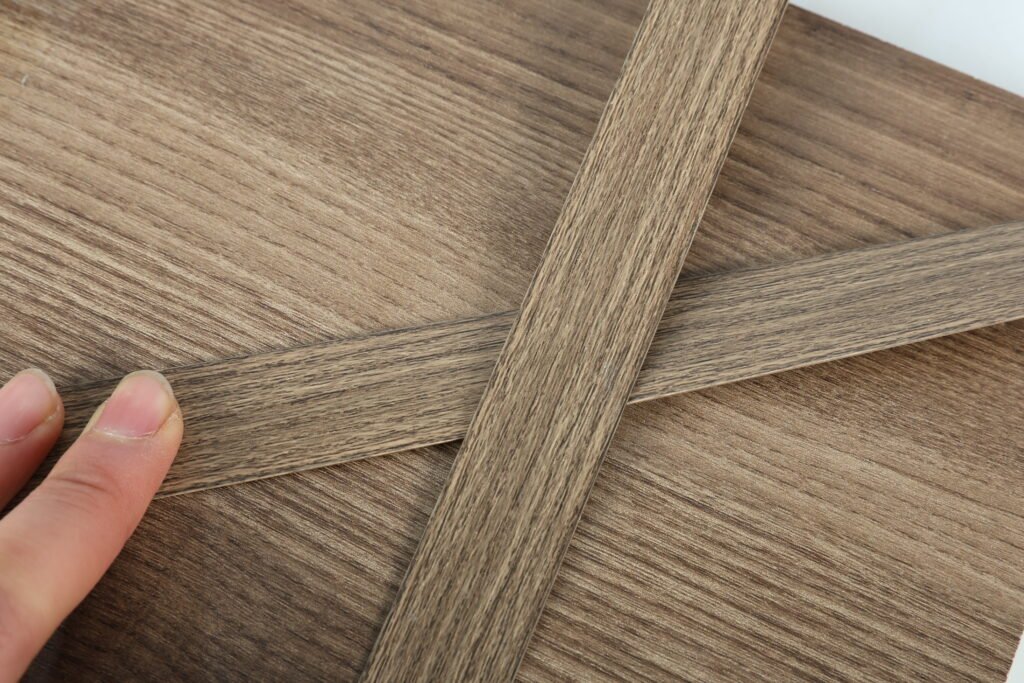
Choosing the wrong edge banding material may lead to problems such as:
- Higher production costs
- Poor edge finishing quality
- Color inconsistency
- Customer complaints after delivery
In this article, we will compare PVC vs ABS edge banding from a manufacturer’s perspective and explain which material is more suitable for different furniture applications.
What Is PVC Edge Banding?
PVC edge banding is one of the most widely used edge finishing materials in furniture manufacturing.
Made from polyvinyl chloride (PVC), it provides excellent flexibility, stable processing performance and a wide range of design options.
For large-scale furniture production, PVC edge banding is often preferred because it offers a good balance between cost, performance and appearance.
Advantages of PVC Edge Banding
1. Cost-Effective Solution
One of the biggest advantages of PVC edge banding is its competitive price.
For furniture manufacturers producing large quantities of cabinets, office furniture and residential furniture, controlling material cost is important.
PVC provides reliable performance while keeping production costs manageable.
2. Wide Color and Texture Selection
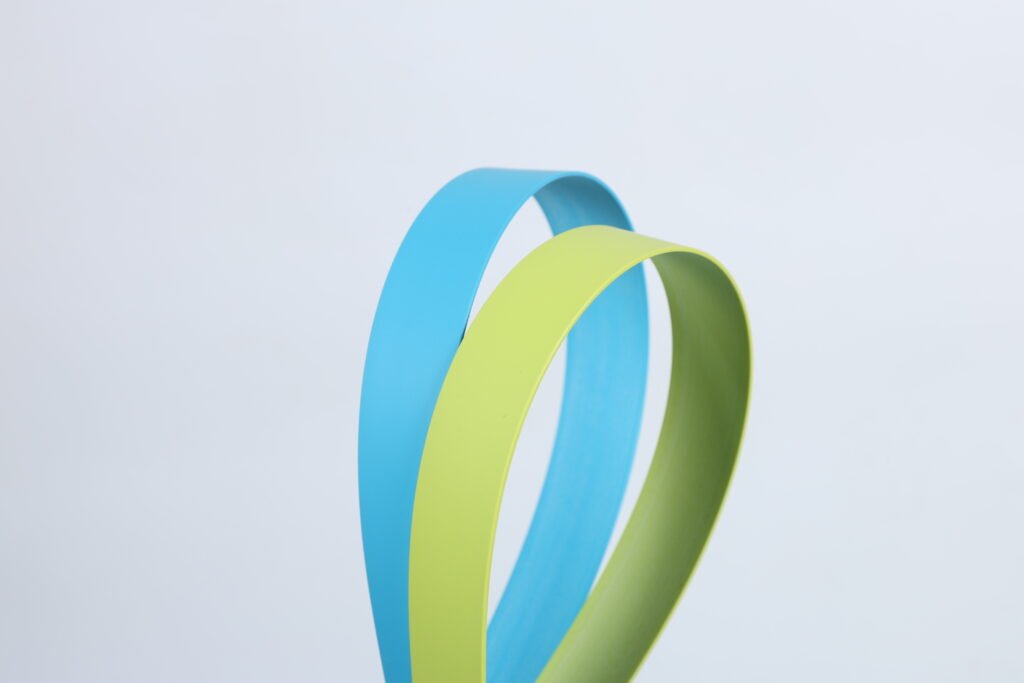
PVC edge banding is available in thousands of colors, wood grains, solid colors and customized finishes.
This makes it easier for manufacturers to match:
- MDF boards
- Particle boards
- Melamine panels
- Laminated furniture surfaces
A reliable PVC edge banding supplier should provide stable color matching capabilities to avoid differences between batches.
3. Easy Processing Performance
PVC has good flexibility and processing adaptability.
It works well with:
- Automatic edge banding machines
- Manual edge banding operations
- Different adhesive systems
This makes PVC suitable for high-volume furniture manufacturing.
What Is ABS Edge Banding?
ABS edge banding is made from acrylonitrile butadiene styrene, a thermoplastic material known for its durability and impact resistance.
Compared with PVC, ABS is generally considered a more premium edge banding solution.
It is often used in furniture projects where appearance, durability and environmental requirements are more important.
Advantages of ABS Edge Banding
1. Better Impact Resistance
ABS edge banding provides excellent resistance against impact and mechanical stress.
This makes it suitable for:
- High-end furniture
- Public furniture
- Commercial interiors
- Frequently used surfaces
2. Premium Appearance
ABS edge banding usually provides a high-quality surface finish.
It can achieve:
- Better visual consistency
- Smooth surface appearance
- Premium furniture aesthetics
3. Environmental Advantages
In some markets, especially Europe, ABS is preferred because it is considered a more environmentally friendly alternative compared with traditional PVC materials.
For manufacturers targeting premium customers, ABS edge banding can become a competitive advantage.
PVC vs ABS Edge Banding: Key Differences Comparison
| Feature | PVC Edge Banding | ABS Edge Banding |
|---|---|---|
| Material | Polyvinyl Chloride | Acrylonitrile Butadiene Styrene |
| Cost | More economical | Higher cost |
| Durability | Good | Excellent |
| Impact Resistance | Medium | High |
| Flexibility | Excellent | Good |
| Processing Performance | Easy processing | Good processing |
| Application | Mass furniture production | Premium furniture |
| Color Matching | Wide selection | Excellent appearance |
| Market Position | Cost-effective solution | Premium solution |
PVC vs ABS Edge Banding: Which One Should Furniture Manufacturers Choose?
There is no universal answer when choosing between PVC and ABS edge banding.
The right material depends on your production requirements.
Choose PVC Edge Banding If:
PVC is a better choice when you need:
High Volume Production
For manufacturers producing thousands of furniture units monthly, PVC offers a better cost-performance balance.
Cost Control
If customers are sensitive to furniture prices, PVC provides reliable quality without significantly increasing production costs.
Wide Design Options
PVC is suitable when projects require:
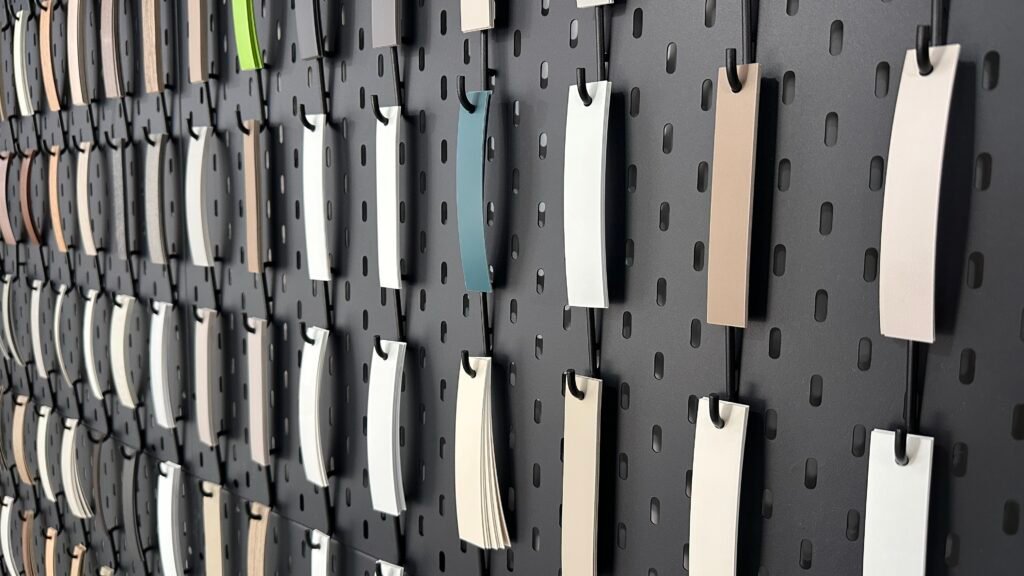
- Multiple colors
- Different textures
- Large inventory availability
Choose ABS Edge Banding If:
ABS is more suitable for:
Premium Furniture Projects
For luxury furniture, hotels, offices and customized projects, ABS provides a higher-end appearance.
Higher Durability Requirements
If furniture will face frequent impact or long-term usage, ABS offers better performance.
Environmentally Focused Markets
For customers with stricter environmental requirements, ABS may provide a better solution.
How to Choose a Reliable PVC & ABS Edge Banding Supplier?
Selecting the right material is important, but choosing the right supplier is equally important.
A reliable edge banding manufacturer should provide:
1. Stable Color Matching Capability
Color difference is one of the biggest problems in furniture production.
A professional supplier should have:
- Professional color matching systems
- Stable production processes
- Strict quality inspection
This helps avoid inconsistent appearance between different production batches.
2. Flexible Customization Options
Different furniture projects require different specifications.
A capable supplier should support:
- Customized colors
- Wood grain matching
- Different thickness options
- Different width requirements
For manufacturers looking for special designs, custom edge banding solutions can help achieve better product differentiation.
3. Consistent Quality Control
The supplier should control:
- Thickness tolerance
- Surface finishing
- Gloss level
- Adhesion performance
- Production stability
A small quality problem in edge banding can create large losses during furniture production.
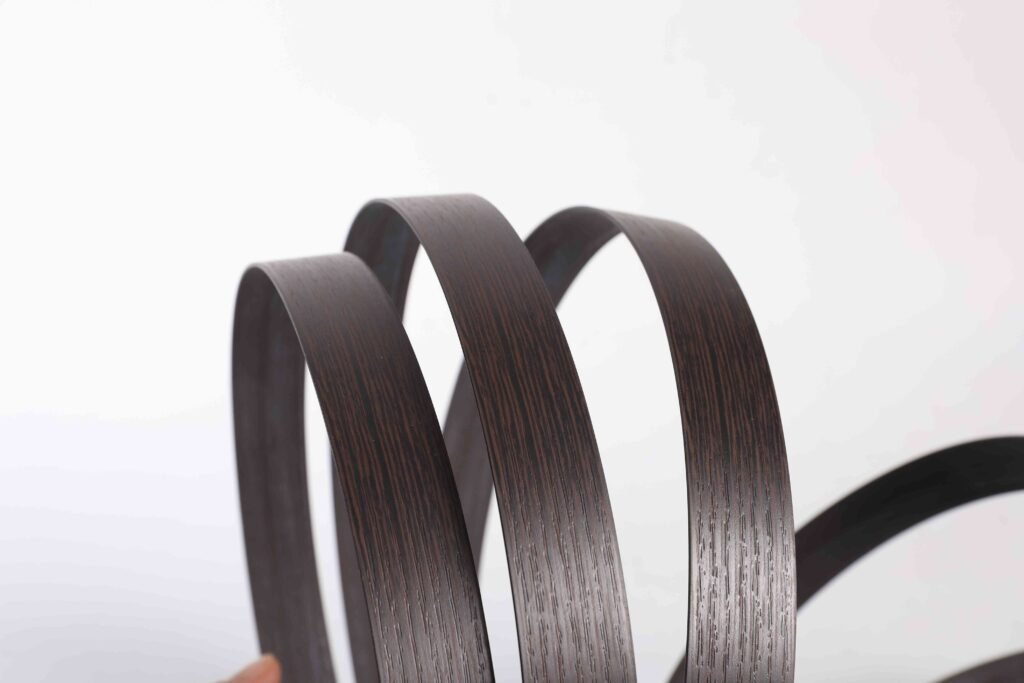
Why Choose Chaotai as Your PVC & ABS Edge Banding Partner?
As an experienced edge banding manufacturer, Chaotai provides customized solutions for furniture manufacturers and distributors worldwide.
Our advantages include:
- 10,000+ colors and patterns available
- PVC, ABS and other edge banding materials
- Thickness from 0.3mm to 3mm
- Customized color matching service
- Stable large-scale production capacity
Whether you need standard PVC edge banding or customized ABS edge banding solutions, Chaotai helps customers achieve stable quality and efficient production.
Conclusion: PVC or ABS Edge Banding?
PVC and ABS edge banding both have their advantages.
PVC is ideal for manufacturers who need:
- Cost efficiency
- Large-scale production
- Flexible design choices
ABS is better for manufacturers who focus on:
- Premium furniture
- Higher durability
- Better appearance
Before choosing a material, manufacturers should consider production requirements, target customers and supplier capabilities.
Working with an experienced PVC and ABS edge banding supplier can help reduce production risks and improve furniture quality.
If you still have trouble deciding between PVC edge banding and ABS edge banding after reading this article, you can click the links below for more details:
PVC Edge Banding: https://edgebandct.com/products/pvc/
ABS Edge Banding: https://edgebandct.com/products/abs/