I have seen the same PVC edge banding produce clean edges on one machine but show lifting, poor trimming, or uneven bonding on another.
The same PVC edge banding can perform differently because machine speed, temperature, pressure, adhesive system, and processing conditions change how the material is applied.
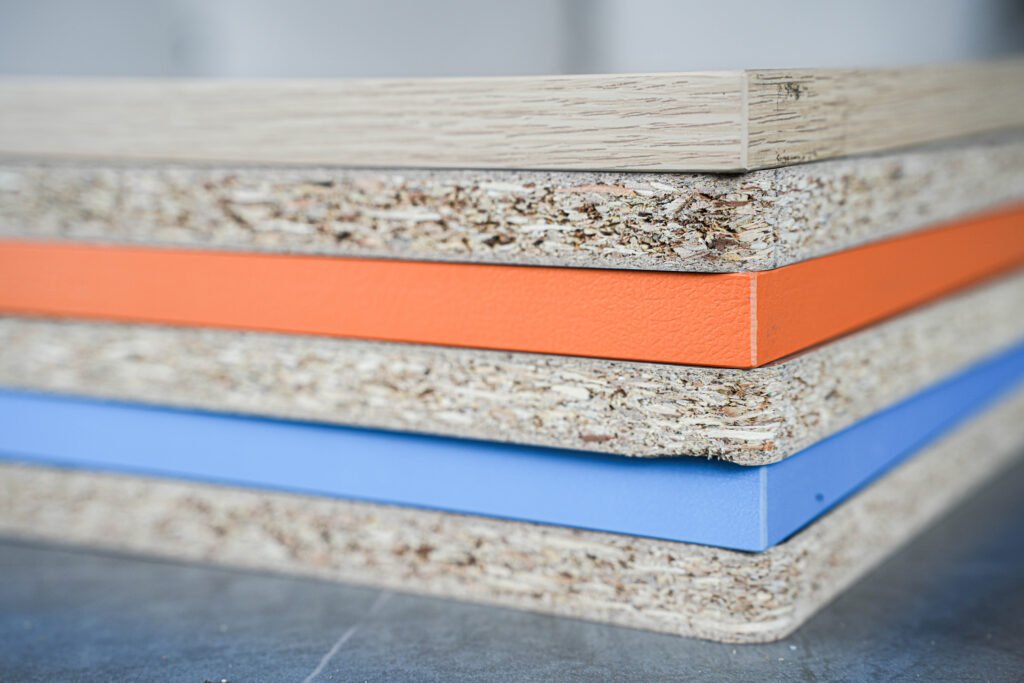
When I work with furniture manufacturers, I do not treat the PVC edge banding and the edge banding machine as two completely separate things. The material has its own properties, but the machine decides how those properties are used. A PVC edge band that works well on one production line may need different settings on another line. This does not always mean that the PVC edge banding has a quality problem. In many cases, the real issue is the match between the material and the machine.
What Machine Parameters Can Make the Same PVC Edge Banding Perform Differently?
I often see manufacturers change the PVC edge banding first when the real problem comes from machine settings. Small parameter changes can affect bonding, trimming, appearance, and production stability.
Machine speed, temperature, glue amount, pressure, and trimming settings can all change the final performance of the same PVC edge banding. The correct settings depend on the machine, adhesive, edge thickness, panel, and production conditions.
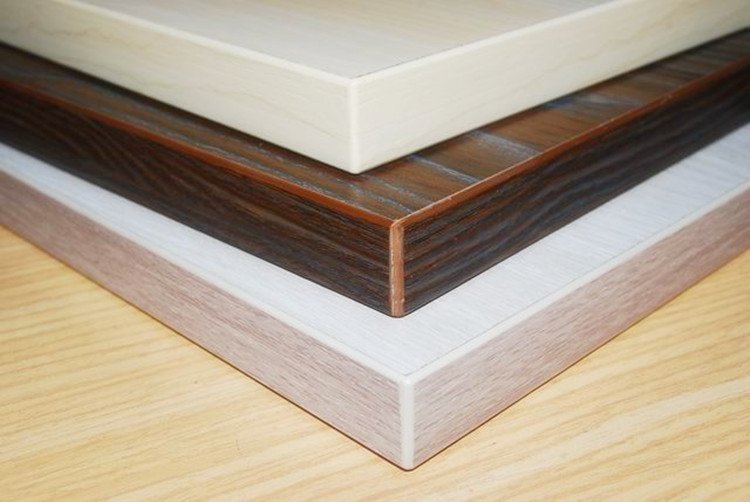
I start with the machine before I judge the material. This approach helps me separate a material problem from a processing problem.
Feed speed changes the processing window
Different machines can run at very different feed speeds. For example, HOMAG lists different feed-speed ranges for different edge banding machines. Its EDGETEQ S-356, for example, has a feed speed of 16–25 m/min, while another HOMAG model for smaller operations has a variable range of 3–9 m/min.
I do not use one fixed speed for every PVC edge banding application.
When the machine moves faster, the available time for heating, adhesive application, pressing, and other processes becomes shorter. When the machine moves slower, the material may receive more heat or adhesive exposure.
This means I need to look at the complete process instead of asking whether the PVC edge banding itself is “good” or “bad.”
Temperature can change bonding behavior
Temperature is another important variable. REHAU’s technical information shows that different hot-air systems can use very different nozzle temperatures and air quantities depending on the machine.
I therefore avoid copying a temperature setting from another machine without checking the equipment and material requirements.
Pressure also changes the final edge
The pressure rollers need to maintain stable contact between the edge band and the panel.
If the pressure is too low, the edge band may not contact the panel evenly. If the pressure is too high, the material can be pushed or deformed.
I usually check these parameters together rather than changing only one number.
| Machine parameter | What I check | Possible effect |
|---|---|---|
| Feed speed | m/min | Heating and bonding time |
| Heating temperature | Machine-specific setting | Softening or functional-layer activation |
| Glue amount | Application consistency | Bonding strength and glue line |
| Roller pressure | Contact stability | Edge lifting or deformation |
| Trimming speed | Cutting stability | Surface quality |
| Buffing setting | Contact and direction | Final edge appearance |
This is why I do not expect the same PVC edge banding to produce exactly the same result on every machine. The machine creates a different processing environment.
How Do Heating and Adhesive Systems Affect PVC Edge Banding Performance?
I pay close attention to the heating and adhesive system because the same PVC edge banding can behave very differently when the bonding method changes.
A PVC edge banding line may use different adhesive or zero-joint technologies. Each system has its own processing conditions. The PVC edge banding must be compatible with that process.
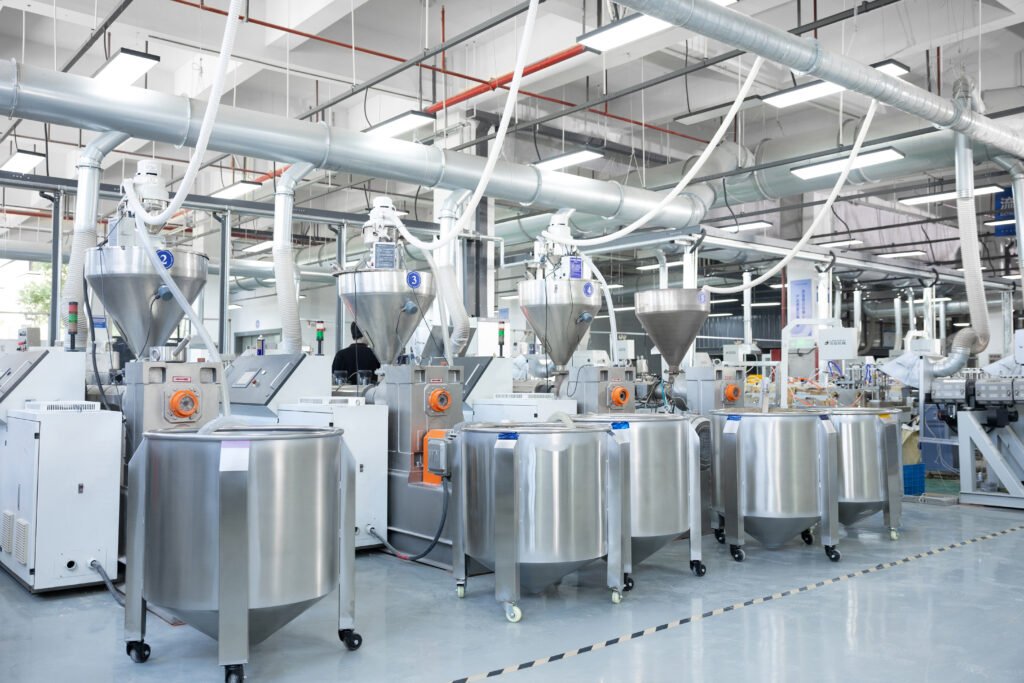
I think this is one of the most misunderstood parts of edge banding production. Some manufacturers assume that the edge band only needs to match the panel. In reality, the edge band also needs to match the bonding system.
Conventional hot-melt systems need controlled glue application
With a conventional hot-melt system, the adhesive is applied to the board or edge band before the pressure rollers bring the materials together.
The adhesive temperature matters. The amount of adhesive matters. The roller condition matters. The machine speed also matters.
REHAU notes that adhesive processing temperature depends on the adhesive type. Its PVC technical information also warns that melt-container thermostats can be inaccurate and that applicator roller temperatures can vary.
I therefore do not recommend using one universal temperature value for every EVA or PUR application.
PUR and EVA do not behave in exactly the same way
PUR and EVA hot-melt adhesives have different properties and processing requirements.
HOMAG describes PUR as offering strong resistance to humidity and heat, which makes it useful for applications such as kitchens, bathrooms, and laboratories. EVA can be a better choice when those additional properties are not required.
I see this as a practical purchasing issue as well as a technical issue.
If a manufacturer changes the adhesive system but keeps exactly the same machine settings, the result may change.
Zero-joint systems create another type of matching problem
Laser and hot-air systems are different from conventional glue application.
For example, REHAU’s zero-joint technical information provides different hot-air parameters for different machines, including different nozzle temperatures, air quantities, and feed speeds.
This is a very clear example of why I do not treat “PVC edge banding” as a single universal processing condition.
The material, machine, and process have to work together.
| Bonding system | Main variable | What I pay attention to |
|---|---|---|
| EVA hot melt | Adhesive temperature | Glue flow and application |
| PUR hot melt | Processing temperature and handling | Bond strength and process control |
| Hot air | Nozzle temperature and air quantity | Functional-layer activation |
| Laser | Laser energy and machine settings | Functional-layer activation |
| Pre-coated/functional layer | Machine-specific activation | Material-machine compatibility |
When I test a new PVC edge banding, I prefer to record the complete processing setup. That information is much more useful than simply recording the material name.
Why Do Feed Speed and Pressure Matter When Applying PVC Edge Banding?
I consider feed speed and pressure two of the easiest machine settings to overlook because manufacturers often focus more on temperature and adhesive.
In reality, speed and pressure decide how much contact time and mechanical force the PVC edge banding receives during application.
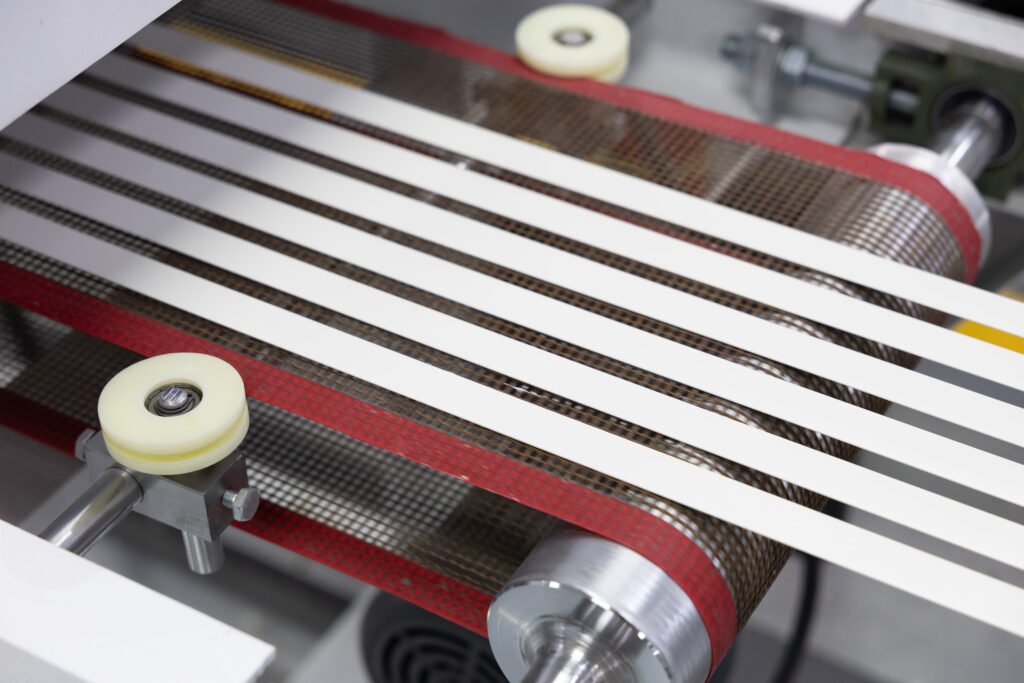
I have found that many edge problems become easier to understand when I stop asking “Is the glue strong enough?” and start asking “Did the edge band have enough time and pressure to bond correctly?”
Feed speed affects more than production output
Feed speed is not only a productivity number.
When the machine runs faster, the edge band passes through each processing unit more quickly. The heating system has less time to transfer energy. The adhesive system also has less time to create the required contact.
This does not mean that a lower speed is always better.
A machine is designed to operate within a specific processing range. HOMAG provides different feed-speed ranges across its edge banding machines, which shows why I need to consider the machine model when discussing production settings.
Pressure creates physical contact
Adhesive needs contact between the PVC edge band and the panel.
If the edge band does not stay firmly against the panel, the adhesive cannot create a stable bond across the entire surface.
I check the pressure roller when I see problems such as:
- Edge lifting
- Small gaps
- Uneven bonding
- Localized glue failure
- Poor results around corners or curves
I also check whether the panel edge itself is straight and clean. A perfect pressure setting cannot completely fix a poor substrate.
Speed and pressure should be tested together
I prefer a controlled test instead of changing five parameters at the same time.
For example, I can keep the material and panel unchanged and test several machine settings:
| Test | Feed speed | Pressure | What I observe |
|---|---|---|---|
| A | Lower | Standard | Bonding and surface |
| B | Medium | Standard | Bonding and production speed |
| C | Higher | Standard | Edge stability |
| D | Medium | Slightly adjusted | Contact quality |
| E | Medium | Final setting | Repeatability |
I then inspect the edge after processing instead of judging the result immediately.
I look at the glue line, edge lifting, trimming quality, surface damage, and consistency along the complete panel.
This approach is important because a setting that looks good on one short sample may not remain stable during a long production run.
The panel also matters
I never blame the PVC edge banding before checking the board.
Dust, moisture, poor edge preparation, uneven board edges, and temperature can all affect the result.
REHAU recommends processing boards and edgebands at room temperatures above 18°C for its PVC application guidance and warns that drafts can cause adhesive to set too quickly.
So I treat speed and pressure as part of a larger production system.
How Can Furniture Manufacturers Match PVC Edge Banding With Different Edge Banding Machines?
I do not think manufacturers should choose PVC edge banding only by color, thickness, or price. I also want to know how the material will be processed.
A good match depends on the edge band’s thickness, width, flexibility, surface, adhesive system, machine technology, and production speed.
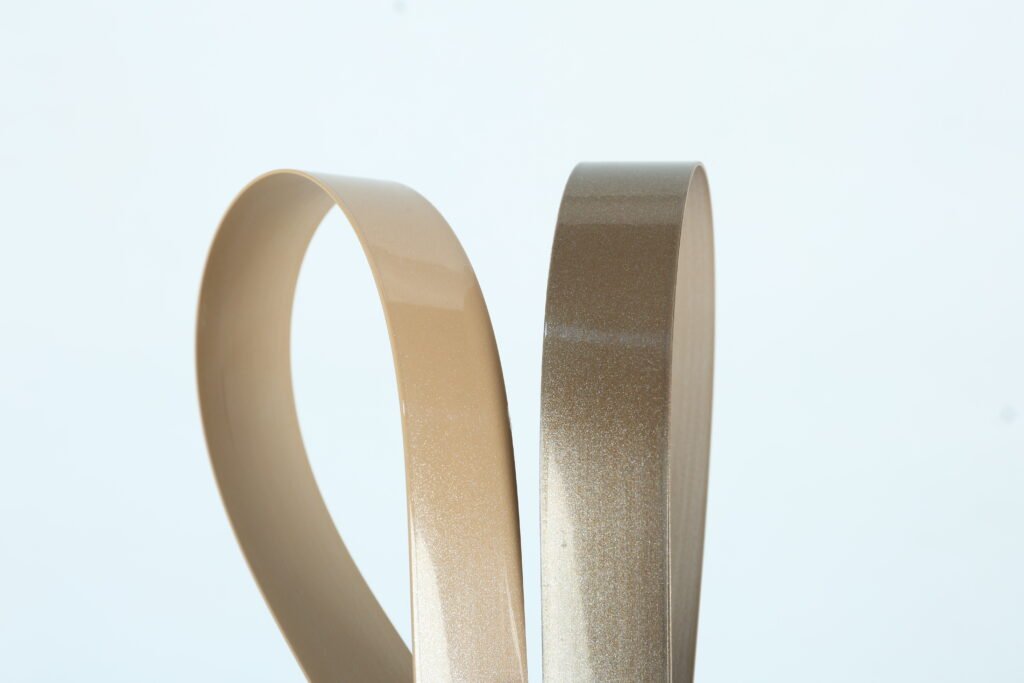
This is especially important for furniture manufacturers that use several machines or purchase the same PVC edge banding for different production lines.
I start with the material specification
Before testing the machine, I check the basic material data.
For example, Chaotai’s PVC edge banding information lists thickness tolerance of ±0.02 mm and width tolerance of ±0.2 mm. The company also states that its PVC edge banding can be processed on manual and automatic machines and used for straight and curved applications.
These specifications matter because the machine needs a stable material to produce a stable result.
I also check:
- PVC thickness
- PVC width
- Surface finish
- Flexibility
- Roll condition
- Color and gloss
- Functional layer, if applicable
- Adhesive compatibility
I then match the material to the machine
Different machines have different processing capabilities.
HOMAG, for example, lists machines with different feed-speed ranges and different edge thickness capabilities.
REHAU also provides machine-specific processing information for zero-joint edge banding rather than giving one universal setting.
I use this information as a starting point.
| Factor | Material question | Machine question |
|---|---|---|
| Thickness | What thickness is required? | Can the machine process it? |
| Width | What width covers the panel? | Can the machine guide it correctly? |
| Adhesive | Which adhesive is suitable? | Which adhesive system is installed? |
| Functional layer | Is special activation required? | Does the machine support it? |
| Feed speed | What processing range is recommended? | What speed range is available? |
| Surface | Is the finish sensitive to heat? | How is trimming and buffing controlled? |
| Application | Straight or curved? | Can the machine handle the profile? |
I recommend testing before a large order
When I help a manufacturer select a new PVC edge banding, I prefer a real machine test.
The test should use the actual panel, actual machine, actual adhesive, and a realistic production speed.
A supplier sample alone cannot tell me everything.
The same PVC edge banding may look perfect in a laboratory or supplier sample but behave differently after it enters a customer’s production line.
That is why I prefer suppliers and manufacturers to record the test conditions. A useful test record should include the machine model, edge thickness, panel material, adhesive, temperature, speed, and pressure.
This record becomes very valuable when the same product is later used on another production line.
How Can You Troubleshoot PVC Edge Banding Problems Across Different Machines?
When I see a PVC edge banding problem, I do not immediately change the material. I first separate the possible causes and test them one by one.
The fastest way to solve machine-related edge problems is to compare the material, machine, adhesive, panel, and processing settings instead of guessing.

I use a simple rule: change one major variable at a time and record the result.
Step 1: Check whether the problem follows the machine
I first run the same PVC edge banding on another machine.
If the material performs well on Machine A but poorly on Machine B, I become more interested in the machine settings and processing system.
This does not automatically prove that Machine B is defective. The two machines may simply use different settings or technologies.
Step 2: Check the material
I measure the thickness and width at several points.
I also inspect the roll for curling, surface damage, deformation, or other visible problems.
Stable dimensions matter because even small changes can affect processing.
Chaotai states a thickness tolerance of ±0.02 mm and width tolerance of ±0.2 mm for its PVC edge banding.
Step 3: Check the adhesive and heating system
If the problem is poor adhesion, I check the adhesive type first.
I then check the actual processing temperature instead of relying only on the machine display.
REHAU specifically notes that adhesive temperature can vary and that machine temperature readings may not always represent the exact temperature at the applicator.
For hot-air or zero-joint systems, I check the machine-specific temperature and air quantity requirements.
Step 4: Check speed and pressure
I reduce the problem to controlled tests.
I keep the material and panel unchanged. Then I adjust the feed speed within the recommended machine range.
After that, I check the pressure rollers.
I look for consistent contact along the complete edge.
Step 5: Check the final edge instead of only the machine
I inspect the finished panel from several points.
| Problem | What I check first | Possible direction |
|---|---|---|
| Edge lifting | Pressure and adhesive | Check contact and bonding |
| Poor bonding | Adhesive and temperature | Verify actual process conditions |
| Uneven trimming | Edge thickness and machine setup | Check material and cutters |
| Surface damage | Trimming and buffing | Adjust tool settings |
| Inconsistent results | Material and machine stability | Check batch and machine repeatability |
| Problems only at high speed | Feed speed and heating | Test a lower controlled speed |
| Problems only on one machine | Machine settings | Compare machine parameters |
I also keep the test records because repeatability is more important than one successful sample.
If the same PVC edge banding performs well for five minutes but produces defects after several hours, I do not consider the problem solved.
For me, a good PVC edge banding process should remain stable under normal production conditions.
Conclusion
The same PVC edge banding can perform differently because every machine creates a different processing environment. Material, machine, adhesive, speed, temperature, and pressure must work together.
Data source
- HOMAG — EDGETEQ S-356 Edge Banding Machine:Provide technical parameters such as the feeding speed and edge band thickness of different machines, which can be used to illustrate the differences in the processing range of various equipment. HOMAG EDGETEQ S-356
- HOMAG — EDGETEQ T-100/T-200:Provide the feed speed, edge banding thickness and processing parameters of the small edge banding machine. HOMAG EDGETEQ T-100/T-200 Technical Data
- REHAU — RAUKANTEX Zero-Joint Technical Information:It contains parameters such as temperature, air volume and feeding speed corresponding to hot air edge banding equipment of different brands, which serves as an important basis for the discussion in this paper that “the same edge banding strip requires different settings on different machines”. REHAU RAUKANTEX Zero-Joint Technical Information
- REHAU — RAUKANTEX PVC Technical Information:It involves the processing temperature, adhesive, ambient temperature and processing conditions of PVC edge banding strips. REHAU RAUKANTEX PVC Technical Information
- CHAOTAI — PVC Edge Banding:Provide product information of PVC edge banding, such as thickness, width, tolerance and machine compatibility. CHAOTAI PVC Edge Banding