Curved furniture looks better, but edge finishing becomes harder. A wrong edge band can crack, lift, or lose its shape during production.
Yes. PVC edge banding can be used on curved furniture panels when the edge band thickness, flexibility, bending radius, adhesive, and processing method match the panel design.
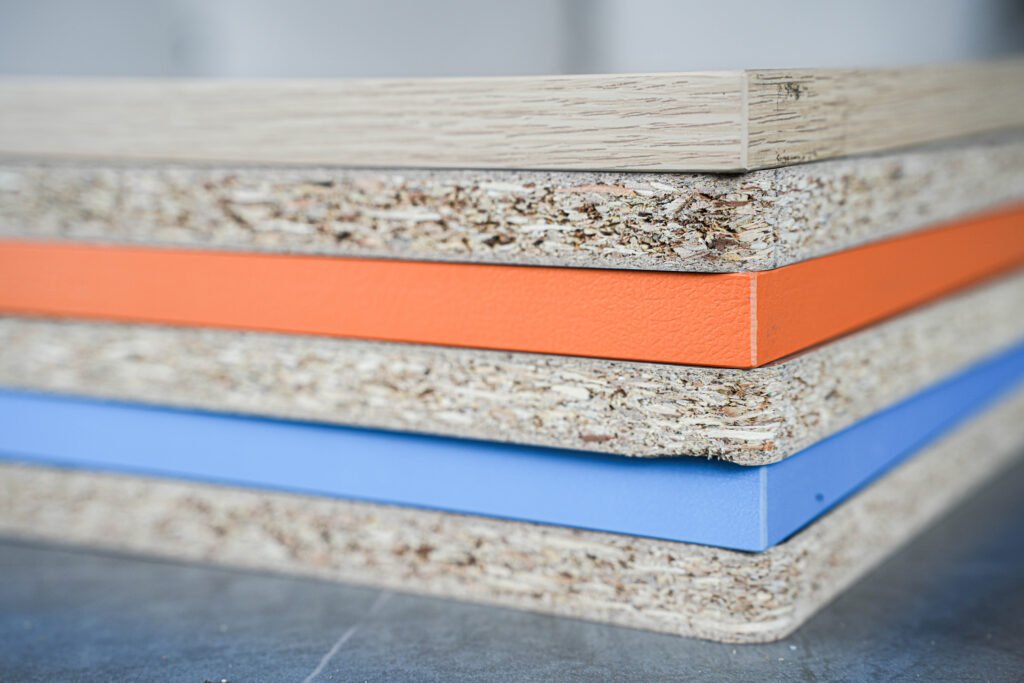
When I talk with furniture manufacturers and distributors about curved panels, I find that the main question is usually not whether PVC can bend. The real question is whether the selected PVC edge banding can bend enough, stay stable, and still produce a clean finished edge. These three points determine whether a curved application will work in real production.
Can PVC Edge Banding Be Used on Curved Furniture Panels?
Curved panels create more stress on edge banding than straight panels. If the material cannot follow the curve, the finished edge can quickly become a production problem.
PVC edge banding can be used on curved furniture panels because PVC is flexible and can be processed on both straight and curved applications. However, the result depends on the bending radius, material thickness, edge profile, adhesive, and machine settings.

The key is not simply flexibility
When I evaluate a PVC edge band for a curved application, I do not look at flexibility alone. I also look at how the material behaves after bending and bonding.
A material may bend easily by hand but still perform poorly during production. It may return to its original shape after application. It may also create stress at the glue line.
This is why I prefer to treat curved edge banding as a combination of material performance and processing conditions.
| Factor | Why it matters on curved panels |
|---|---|
| PVC thickness | Thicker material usually requires more force to follow a tight curve |
| Bending radius | A smaller radius creates more stress on the edge band |
| Material flexibility | Flexible PVC can follow curved profiles more easily |
| Adhesive | The adhesive must maintain a stable bond during bending |
| Edge shape | Rounded and irregular profiles can require different processing methods |
| Machine setup | Pressure, temperature, speed, and trimming affect the final result |
| Panel quality | Uneven or damaged panel edges can make bonding difficult |
I also need to separate large-radius curves from tight-radius curves. A gentle curve may be easy for a standard PVC edge band. A very tight curve may require a thinner or specially formulated product.
For example, REHAU states that its FlexEdge semi-rigid PVC edgeband can handle a radius as small as 12 mm under its specified application conditions. This shows that curved applications are technically possible, but the usable radius is a product-specific specification rather than a universal PVC standard.
For distributors, I think this distinction is important. I would never tell a customer that “PVC edge banding works on all curves.” I would ask for the panel shape, edge radius, thickness, application method, and expected production volume first.
That approach gives the customer a more realistic answer and reduces the risk of selling a product that looks suitable on paper but fails during production.
What Types of Curved Furniture Panels Are Suitable for PVC Edge Banding?
Not every curved panel creates the same processing challenge. I normally separate curved furniture panels by their radius, edge shape, and production method before choosing the edge banding.
PVC edge banding is commonly suitable for rounded cabinet doors, curved furniture panels, rounded corners, and other shaped board applications. The tighter the curve becomes, the more important flexibility and thickness become.
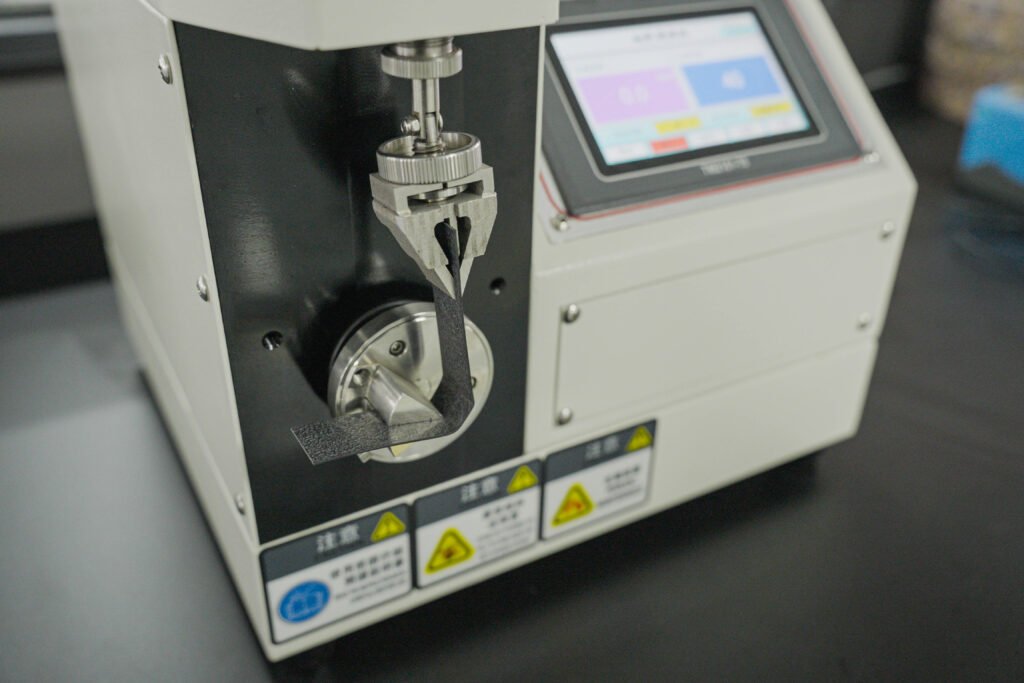
Gentle curves are usually easier to process
A large-radius curve usually creates less stress on the edge banding. The material has more space to follow the panel shape, so standard flexible PVC can often perform well.
A tight curve is different. The edge band has to deform more over a shorter distance. A thick or rigid material may resist the curve and create tension at the glue line.
I use the following basic classification when discussing curved applications:
| Curved application | Typical difficulty | Main concern |
|---|---|---|
| Large-radius curved panel | Low | Adhesion and appearance |
| Rounded cabinet corner | Low to medium | Smooth wrapping |
| Curved cabinet door | Medium | Consistent pressure and trimming |
| Tight-radius edge | High | Flexibility and cracking |
| Complex multi-direction curve | High | Material recovery and machine capability |
| Irregular custom profile | Very high | Product and process matching |
Panel thickness also changes the requirement
The panel itself matters. A thicker panel can create a different edge geometry from a thin panel. The edge band width must cover the exposed edge with enough material for trimming.
The panel substrate also needs to be stable. MDF, particleboard, and plywood can all be used in furniture applications, but their edge condition may differ.
I pay particular attention to the machined edge. A curved panel with a rough or uneven edge can create problems even when the PVC edge band itself is good.
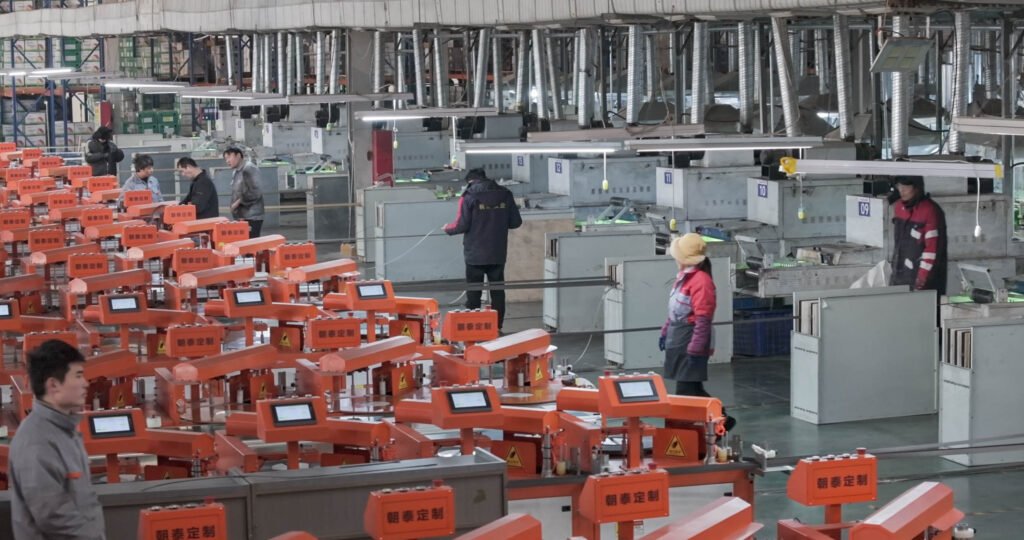
Curved furniture is not always the same as a rounded corner
This point is easy to miss.
A cabinet with a simple rounded corner may only require the edge band to follow one short curve. A fully curved cabinet door may require the material to follow a much longer radius.
A complex chair-side panel or custom reception desk can be even more demanding because the curve may change along the panel.
For this reason, I would not use the word “curved” as the only specification when ordering edge banding.
I would ask the buyer for a drawing, panel sample, radius measurement, or photo with dimensions. A physical sample is even better when the application is critical.
Some manufacturers publish specific bending-radius figures. For example, REHAU lists a 12 mm radius capability for a specific FlexEdge product, while other PVC products may have different limits. The number therefore needs to be treated as a product specification, not a general rule for every PVC edge band.
This is also where distributors can add value. Instead of selling the same PVC edge banding to every customer, a distributor can ask a few technical questions before recommending a product. That simple step can prevent many avoidable complaints.
How Should PVC Edge Banding Be Applied to Curved Panels?
Curved edge banding requires more control than straight-panel application. I focus on the material, adhesive, pressure, temperature, speed, and trimming process before starting production.
PVC edge banding should be applied according to the product and machine specifications, with special attention to bending radius and bonding conditions. Tight curves may require more flexible material and controlled processing to avoid lifting, cracking, or deformation.
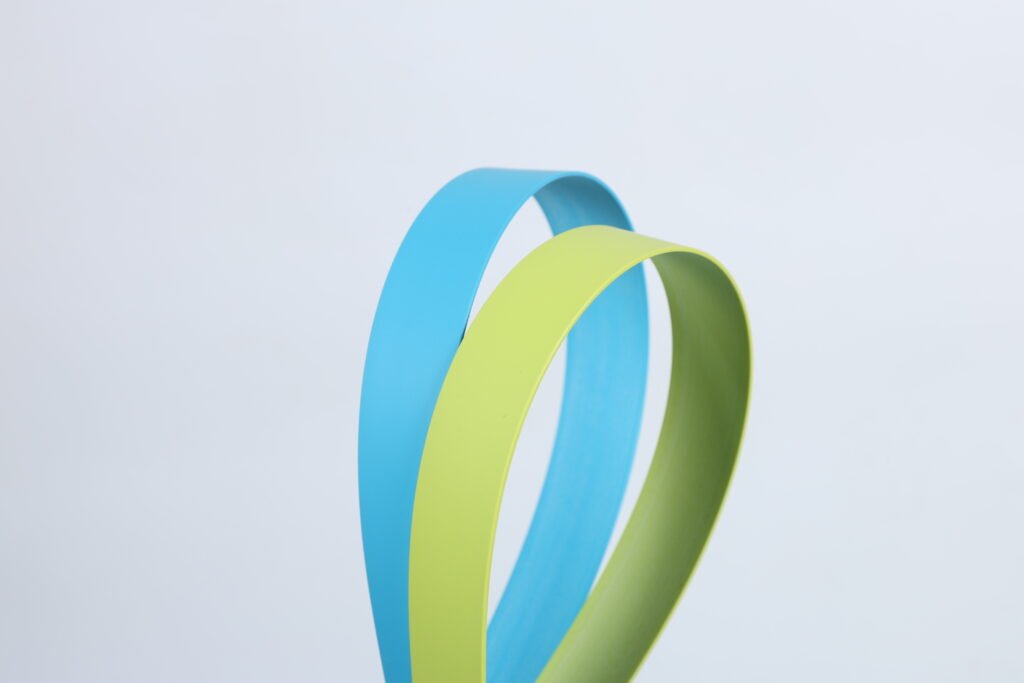
Start with the material, not the machine
I would first confirm the edge banding specification.
The supplier should provide the thickness, width, material characteristics, and recommended processing conditions. If the supplier has tested the product for curved applications, I would also ask for the recommended minimum radius.
Chaotai’s PVC edge banding range is described as suitable for both straight and curved applications, with thickness and width tolerances controlled for production use. The company lists thickness tolerance at ±0.02 mm and width tolerance at ±0.2 mm.
Those numbers matter because inconsistent thickness can affect trimming and the visual appearance of the finished edge.
Adhesive control is equally important
The edge band must not only follow the curve. It must stay attached to the curve.
The adhesive system therefore becomes important.
The correct adhesive depends on the machine, substrate, edge banding material, and production conditions. EVA and PUR hot melt systems can have different processing requirements, so I would always follow the adhesive supplier’s recommended temperature and application settings instead of using one fixed number for every production line.
I also pay attention to pressure.
The pressure roller needs to maintain contact between the PVC and the panel edge. If the pressure is not stable around a curve, the edge band can lift in the areas where the curvature changes.
A practical process
For a new curved application, I would use this sequence:
| Step | What I check |
|---|---|
| 1. Confirm panel shape | Measure the curve and identify the smallest radius |
| 2. Select edge band | Check thickness, flexibility, width, and surface |
| 3. Test adhesive | Confirm compatibility with the substrate and PVC |
| 4. Run a sample | Test the actual curve before mass production |
| 5. Check pressure | Make sure the band stays in contact with the panel |
| 6. Check trimming | Look for burrs, marks, or uneven edges |
| 7. Inspect after cooling | Check whether the band stays stable after processing |
| 8. Start mass production | Keep the approved parameters consistent |
I strongly prefer sample testing before a large order. A sample can show problems that a product specification cannot show.
For example, the material may meet the thickness requirement but still have too much recovery force for a particular tight curve. A sample can expose that problem before hundreds or thousands of meters are processed.
Curved furniture does not need a completely different edge banding philosophy. It needs tighter control of the normal process.
What Problems Can Occur When Applying PVC Edge Banding to Curved Panels?
Most curved edge banding problems do not come from one factor alone. I usually look at the interaction between material flexibility, radius, adhesive, pressure, temperature, and panel quality.
The most common problems include lifting, cracking, whitening, wrinkling, uneven trimming, and visible glue-line defects. These problems often appear when the selected edge banding cannot comfortably follow the required radius or when processing conditions are not properly controlled.
A small radius can expose material weaknesses
When the curve becomes tighter, the PVC has to deform more.
If the material is too rigid, it may crack or show whitening during bending. If it has strong shape memory, it may try to return toward its original form after application.
That recovery can place additional stress on the adhesive bond.
I therefore consider minimum bending radius one of the most important specifications for curved applications.
Common problems and possible causes
| Problem | Possible cause | What I would check |
|---|---|---|
| Edge band lifts | Weak bonding or insufficient pressure | Adhesive, temperature, roller pressure |
| PVC cracks | Radius too tight or material too rigid | Product flexibility and minimum radius |
| White marks appear | Excessive bending stress | Material formulation and curve radius |
| Wrinkles appear | Uneven feeding or pressure | Machine alignment and application speed |
| Uneven trimming | Poor panel machining or unstable feeding | Panel edge and trimming tools |
| Glue line becomes visible | Poor bonding or excessive adhesive | Adhesive amount and pressure |
| Edge band springs back | Material recovery is too high | Flexibility and radius suitability |
| Surface gets damaged | Excessive pressure or poor handling | Roller condition and machine settings |
The panel edge can be the hidden problem
I have seen situations where the edge band is blamed first, but the real problem is the panel.
If the curved panel edge is uneven, the PVC cannot create a clean finish. The edge band will follow the defects of the substrate.
The same problem can happen when the panel radius changes slightly from one batch to another. A product that works on one batch may show more stress on another.
This is why quality control should include both sides of the application.
I would check the PVC edge banding and the panel together.
Production conditions matter more than many buyers expect
Temperature can affect PVC flexibility and adhesive behavior. Machine pressure can affect bonding. Processing speed can affect how much time the adhesive has to form a stable bond.
I would not copy processing parameters from another factory without testing them.
Instead, I would use the supplier’s recommended range as the starting point. Then I would adjust the machine based on the actual panel and production line.
This is especially important for distributors.
If I sell curved-application PVC edge banding, I should not only provide the roll. I should also understand the application conditions well enough to help the customer select the right specification.
That support can be more valuable than a small difference in product price.
How Can Distributors Choose PVC Edge Banding for Curved Furniture Applications?
Distributors should not choose PVC edge banding for curved furniture based only on color, price, or standard thickness. I recommend matching the product to the actual panel radius, processing method, and customer application.
For curved furniture applications, distributors should check minimum bending radius, flexibility, thickness, adhesive compatibility, processing conditions, sample performance, and supplier technical support before placing a bulk order.
Ask the customer five questions first
When a customer asks me for PVC edge banding for curved furniture, I would start with five questions.
1. What is the smallest radius?
This is the first question because “curved” does not tell me how difficult the application is.
2. What is the panel material?
I need to know whether the customer is using MDF, particleboard, plywood, or another substrate.
3. What thickness does the customer need?
Thickness affects both appearance and flexibility.
4. Which machine and adhesive are being used?
The same edge band can behave differently under different processing conditions.
5. Can the customer provide a sample or drawing?
A sample gives me much more information than a general product description.
Build a product selection checklist
I would use a simple checklist before recommending a product:
| Selection point | Question for the supplier |
|---|---|
| Material | Is the PVC formulation suitable for curved applications? |
| Thickness | Is this thickness flexible enough for the required radius? |
| Radius | What is the tested minimum bending radius? |
| Width | Is the width suitable for the panel thickness and trimming allowance? |
| Adhesive | Which EVA or PUR system is recommended? |
| Processing | What temperature, pressure, and speed are recommended? |
| Surface | Will the surface remain stable after bending? |
| Sample | Can the supplier provide a sample for testing? |
| Quality control | Are thickness and width tolerances controlled? |
| Supply | Can the supplier maintain the same specification across repeat orders? |
Distributors should sell a solution, not only a roll
This is the part I think many distributors overlook.
A customer who buys PVC edge banding for a curved panel is not only buying a decorative strip. The customer is buying a production result.
If the material looks good but cannot follow the customer’s radius, the customer does not see the problem as a material specification issue. The customer sees it as a failed purchase.
That is why I think distributors should keep several flexible PVC specifications for different applications rather than trying to use one product for everything.
Standard products can cover common large-radius applications. More flexible products can cover tighter curves. Custom products can be considered when the application has unusual requirements.
Chaotai’s PVC edge banding product information states that its PVC range is suitable for straight and curved applications and supports manual and automatic processing. The product range also includes different surface finishes and OEM options.
For a distributor, that type of supplier support can make a real difference. I would rather work with a manufacturer that can discuss radius, thickness, processing, and samples than a supplier that only gives me a price list.
Curved furniture is not an impossible application for PVC edge banding. It simply requires more accurate product selection.
The safest approach is simple: measure the curve, select the material, test the application, and only then move to bulk production.
Conclusion
PVC edge banding can work well on curved furniture panels, but success depends on matching flexibility, radius, thickness, adhesive, and processing conditions.