
A low price per meter can look attractive, but high waste and poor production efficiency can make the real cabinet cost much higher.
I calculate PVC edge banding cost by multiplying the total edge length by the actual cost per meter, then adding waste and processing costs. For example, 12 meters at $0.20/m costs $2.40 before waste and processing.
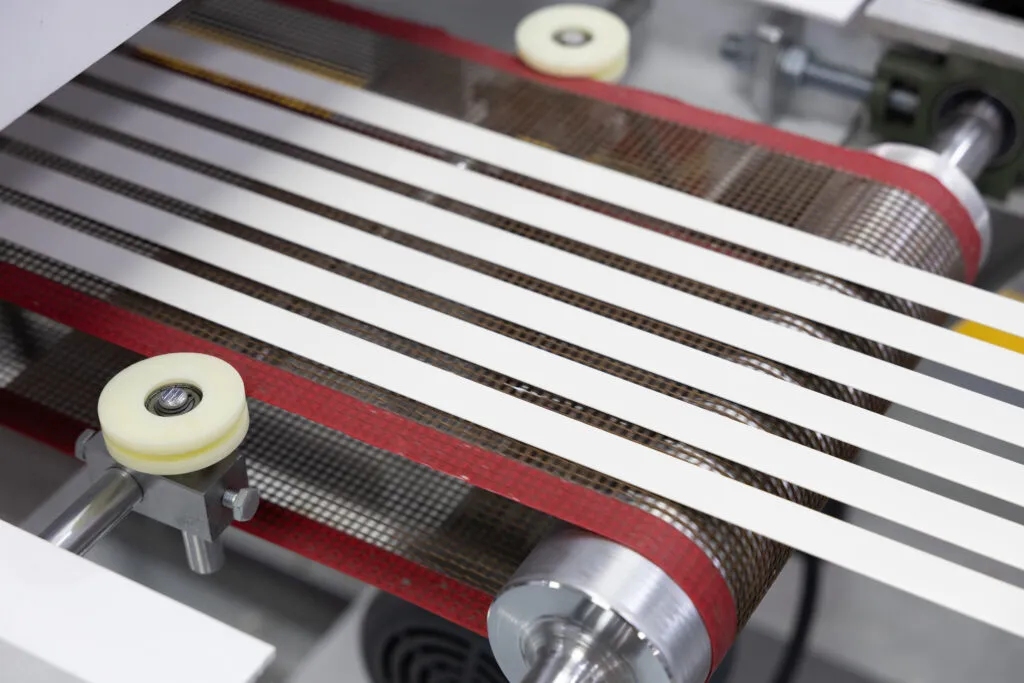
When I calculate the cost of PVC edge banding for a cabinet, I do not look at the supplier’s price alone. I first look at how much edge banding the cabinet actually needs. Then I check the edge banding specification, material price, waste rate, machine efficiency, and production method. This gives me a much more useful number for purchasing and production decisions.
What Factors Determine the PVC Edge Banding Cost per Cabinet?
Many furniture manufacturers look at the price per meter first. I think this is only the starting point. The real cost depends on how many meters I use and how efficiently I use them.
The cost can change even when two manufacturers buy the same PVC edge banding at the same price per meter.
PVC edge banding cost per cabinet mainly depends on edge length, edge banding specification, unit price, waste, processing efficiency, and production volume.
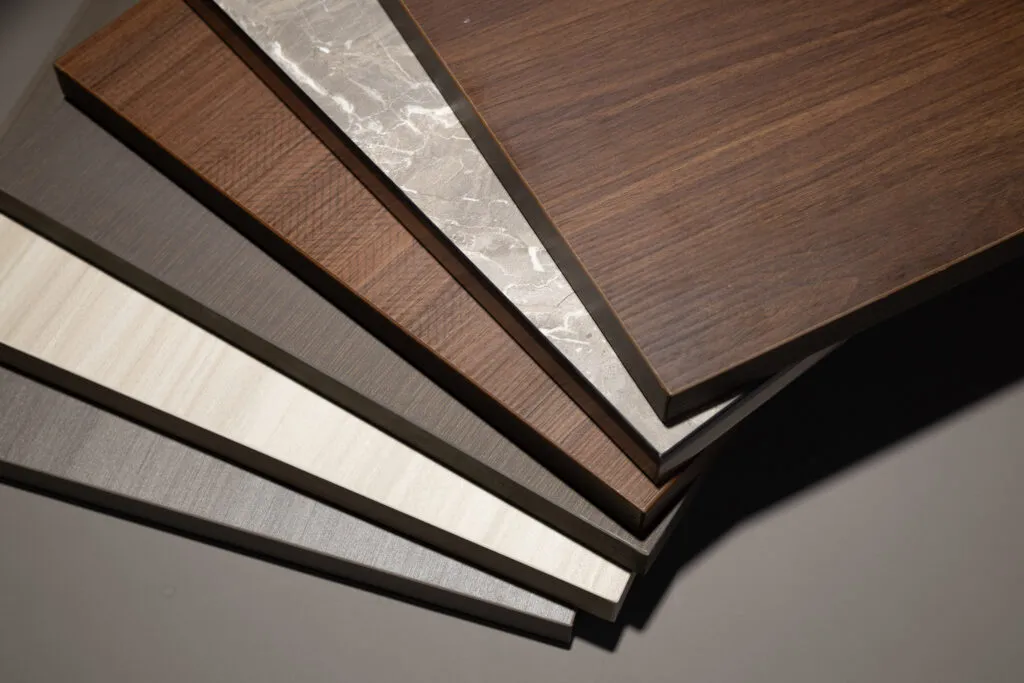
I Start With the Edge Banding Specification
I first identify the width and thickness of the edge banding. These dimensions are not only design choices. They can also affect purchasing cost and processing requirements.
REHAU, for example, lists furniture edgebands in different widths and thicknesses, including products from 12 to 55 mm in width and 0.4 to 3.0 mm in thickness. REHAU also provides technical specifications for PVC, ABS, PP, and other edgeband materials.
EGGER also provides technical data for PVC edge banding, including properties such as hardness, impact strength, shrinkage, and processing characteristics.
I therefore avoid comparing two products only by their price per meter. A 1 mm edge band and a 2 mm edge band may serve different applications and may have different processing requirements.
I Then Look at the Cabinet Structure
The cabinet design determines the total edge length.
A simple cabinet may require edge banding on only the visible front edges. Another cabinet may require edging on both sides of many panels.
I normally separate the calculation into individual components.
| Cabinet component | Length to calculate | Example |
|---|---|---|
| Cabinet side panel | 2 × height | 2 × 720 mm |
| Top/bottom panel | 2 × width | 2 × 600 mm |
| Shelf | 1 × front edge | 600 mm |
| Door | 2 × height + 2 × width | 2 × 700 + 2 × 450 mm |
| Drawer front | 2 × height + 2 × width | Depends on design |
This approach helps me avoid using one rough number for the whole cabinet.
I Also Separate Material Cost From Processing Cost
The PVC edge banding itself is only one part of the cost.
I can define the basic model as:
Cabinet edge banding cost = Material cost + Waste cost + Processing cost
The material cost comes from the actual edge banding length. Waste comes from cutting, trimming, setup, leftover rolls, and production mistakes. Processing cost includes labor, machine time, electricity, maintenance, and other production expenses.
This is why a supplier offering a lower meter price does not always give me the lower final cabinet cost.
How to Calculate the Required PVC Edge Banding Length for One Cabinet?
If I do not know the required length, I cannot calculate the real cost. This is the first calculation I make before comparing suppliers.
I calculate every edge that actually receives PVC edge banding, then add a realistic allowance for production waste.
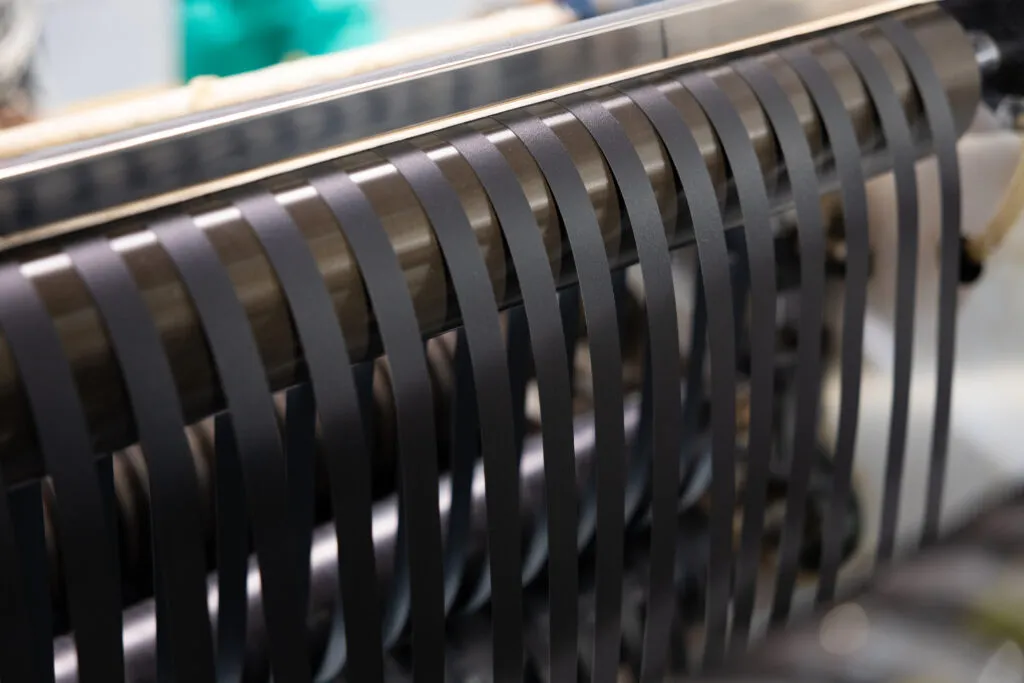
I Calculate Each Panel Separately
For example, I can use a simple cabinet as an example.
Assume the cabinet has:
- Two side panels: 720 × 560 mm
- One top panel: 600 × 560 mm
- One bottom panel: 600 × 560 mm
- One shelf: 600 × 500 mm
- Two doors: 700 × 300 mm
I should not automatically edge every side of every panel. I need to identify which edges are actually exposed and require edge banding.
For example, if both vertical edges of each side panel need edging:
2 side panels × 2 edges × 720 mm = 2,880 mm
If the front edge of the top, bottom, and shelf needs edging:
600 + 600 + 600 = 1,800 mm
If both doors require all four sides:
2 × (700 × 2 + 300 × 2) = 4,000 mm
The theoretical total is therefore:
2,880 + 1,800 + 4,000 = 8,680 mm
That means I need:
8.68 meters of edge banding before waste.
I Add Waste After the Theoretical Calculation
The 8.68 meters is not the same as my purchasing requirement.
I still need to account for cutting and trimming.
For example, if I use a hypothetical 5% production allowance:
8.68 × 1.05 = 9.114 meters
I would therefore plan for about 9.11 meters per cabinet in this example.
I use 5% here only as an example. I do not treat 5% as a universal furniture-industry standard. The actual allowance should come from production data.
| Calculation stage | Result |
|---|---|
| Theoretical edge length | 8.68 m |
| Example waste allowance | 5% |
| Waste quantity | 0.434 m |
| Planned consumption | 9.114 m |
I Use Production Data Instead of Guessing Waste
For regular production, I think historical data is more useful than a fixed industry percentage.
If a factory produces 1,000 identical cabinets and consumes 9,300 meters of edge banding, while the theoretical requirement is 8,680 meters per 1,000 cabinets, the actual consumption is:
9,300 ÷ 1,000 = 9.3 meters per cabinet
The real waste factor is:
9.3 ÷ 8.68 − 1 = 7.14%
This number is much more useful for future purchasing because it comes from the factory’s own process.
How to Calculate PVC Edge Banding Material Cost per Cabinet?
Once I know the actual consumption, the material calculation becomes simple.
I multiply the required edge banding length by the supplier’s actual price per meter.
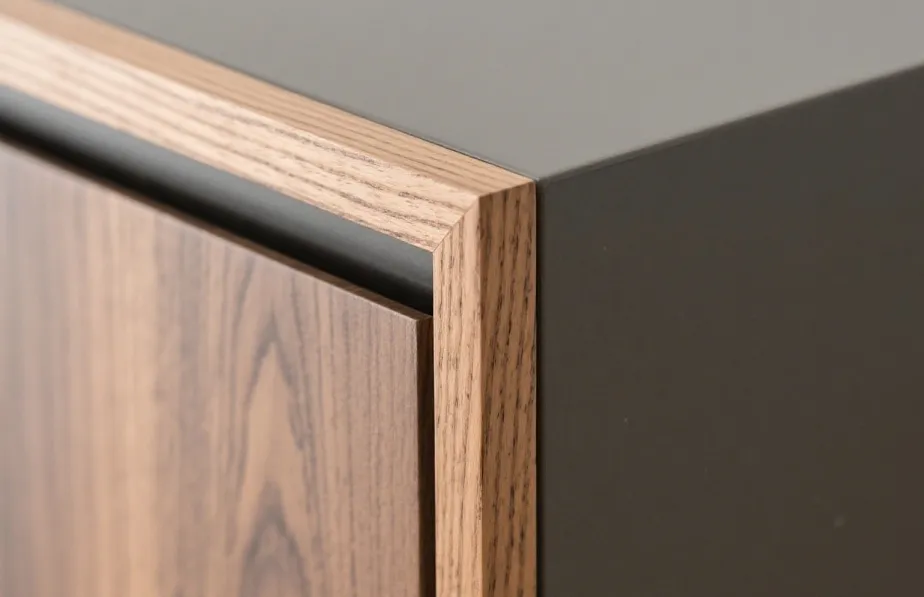
I Use a Simple Formula
My basic formula is:
PVC edge banding material cost per cabinet = Required edge banding length × Price per meter
Using the previous example:
- Theoretical requirement = 8.68 m
- Example waste allowance = 5%
- Planned consumption = 9.114 m
- PVC edge banding price = $0.20/m
The material cost is:
9.114 × $0.20 = $1.8228
So I would estimate about $1.82 of PVC edge banding material per cabinet.
This is a material-cost calculation. It is not the complete edge-banding production cost.
I Need to Compare Prices on the Same Basis
When I compare suppliers, I make sure that the products are comparable.
I check:
| Cost factor | Supplier A | Supplier B |
|---|---|---|
| Width | 22 mm | 22 mm |
| Thickness | 1 mm | 1 mm |
| Material | PVC | PVC |
| Color/decor | Same | Same |
| Price per meter | $0.20 | $0.19 |
| Estimated consumption | 9.11 m | 9.11 m |
| Material cost/cabinet | $1.82 | $1.73 |
The $0.01 difference per meter looks small. However, at 100,000 cabinets, the difference becomes:
100,000 × 9.114 × $0.01 = $9,114
This is why I always connect the meter price with annual production volume.
I Also Check Whether the Quoted Price Includes Other Costs
A quoted price may not always represent my final purchasing cost.
I may need to consider:
- Packaging
- Freight
- Import costs
- Taxes
- Minimum order quantities
- Special color charges
- Custom embossing
- Custom width or thickness
- Sample development
- Inventory cost
For international purchasing, I therefore prefer to compare the landed cost, not only the factory quotation.
The formula can become:
Landed edge banding cost = Product price + Freight + Duties/Taxes + Other purchasing costs
This number gives me a better basis for comparing suppliers.
How Do Waste and Edgebanding Machine Efficiency Affect Cabinet Cost?
I can have a competitive PVC price and still have a high production cost. Waste and machine efficiency can create this difference.
I pay special attention to this when I compare suppliers or calculate the cost of a large furniture order.
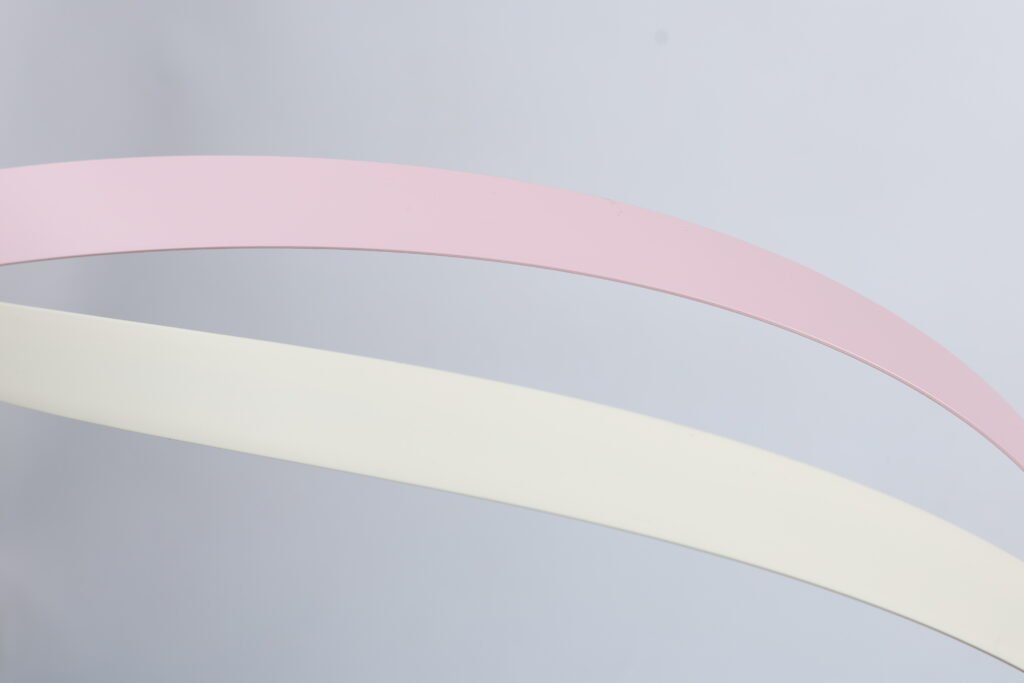
I Separate Material Waste From Machine Efficiency
Material waste means I buy or consume more edge banding than the theoretical requirement.
Machine efficiency is different. It affects how quickly and consistently I can process the material.
For example, HOMAG lists different edge banding machines with different feed speeds. Its EDGETEQ S-240 has an 11 m/min feed speed, while the EDGETEQ S-380 can operate from 8 to 20 m/min, depending on the configuration. Its S-500 series can reach 16–20, 25, 30, or 35 m/min.
I should not assume that a higher feed speed automatically means a lower cabinet cost. Actual production also depends on workpiece size, machine setup, trimming, operator handling, material changes, and downtime.
I Calculate Waste With Actual Consumption
Suppose I theoretically need 8.68 meters per cabinet.
If my production process has 5% waste:
8.68 × 1.05 = 9.114 m
If my process has 10% waste:
8.68 × 1.10 = 9.548 m
At a price of $0.20/m:
| Waste rate | Consumption/cabinet | Material cost/cabinet |
|---|---|---|
| 0% | 8.680 m | $1.736 |
| 5% | 9.114 m | $1.823 |
| 10% | 9.548 m | $1.910 |
| 15% | 9.982 m | $1.996 |
The difference between 5% and 15% waste is about $0.17 per cabinet in this example.
That may look small for one cabinet. At 50,000 cabinets, it becomes about $8,680.
I Also Measure Setup and Changeover Time
I do not only count the meters of wasted material.
Frequent color changes can also increase production time. Different edge thicknesses may require different machine settings. Small production batches can create more setup work.
HOMAG also highlights functions such as multiple edging feeds, material management, and faster edge changes on some of its machines. These functions show why production organization can affect the real cost, not just the nominal machine feed speed.
I therefore use this broader formula when I need a more complete production estimate:
Total edge-banding cost per cabinet = Material cost + Waste cost + Labor + Machine time + Energy + Maintenance
This calculation gives me a much clearer picture of the actual cost.
How Can Furniture Manufacturers Reduce PVC Edge Banding Cost per Cabinet?
I do not try to reduce cabinet cost by choosing the cheapest PVC edge banding immediately. I first look for waste that I can remove from the process.
A small improvement in consumption can create a larger saving when the annual production volume is high.
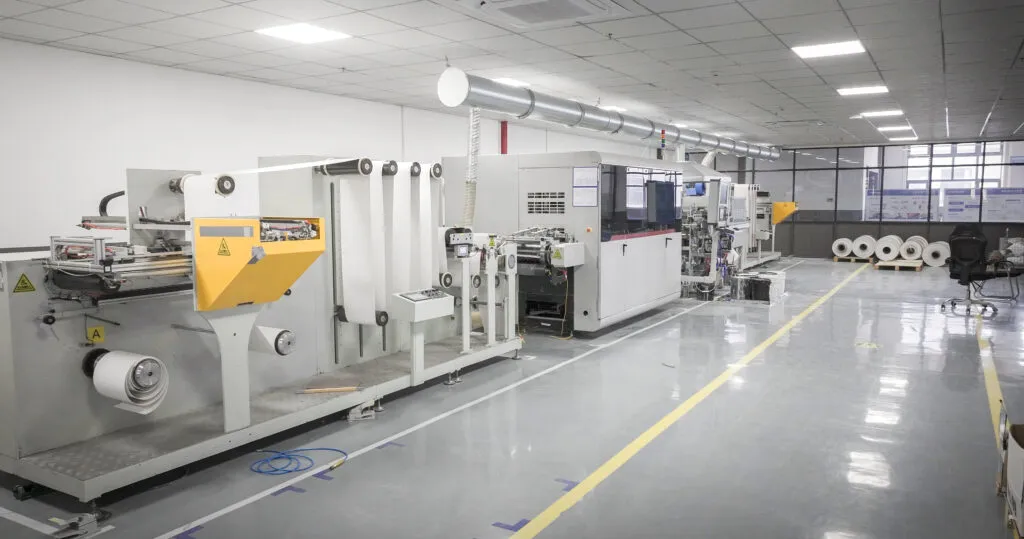
I Start With Material Utilization
The first step I take is to measure actual consumption.
I record:
- Theoretical edge length
- Actual edge length consumed
- Waste length
- Number of cabinets produced
- Edge banding specification
- Production batch size
I can then calculate:
Waste rate = (Actual consumption − Theoretical consumption) ÷ Theoretical consumption × 100%
This gives me a production-specific number.
I prefer this approach because I can see where the money is actually going.
I Avoid Using One Specification for Every Application
I also check whether every cabinet component needs the same edge banding specification.
Some applications may need a thicker edge. Others may not.
REHAU’s technical information shows that edge banding products are available in different thicknesses and widths, while HOMAG machines are designed to process different edge thickness ranges depending on the machine configuration.
I therefore match the edge specification to the application instead of choosing the thickest product by default.
I Focus on Total Cost Instead of Meter Price
Suppose Supplier A offers $0.20/m and Supplier B offers $0.19/m.
At first, Supplier B looks cheaper.
But if Supplier A gives me 5% waste and Supplier B gives me 10% waste, the calculation changes.
Using the same 8.68-meter theoretical requirement:
Supplier A:
8.68 × 1.05 × $0.20 = $1.82
Supplier B:
8.68 × 1.10 × $0.19 = $1.82
The two suppliers have almost the same material cost per cabinet.
This example shows why I do not use the quotation price as the only purchasing criterion.
I Use Annual Volume to Make Better Decisions
The last step is to connect the calculation with annual production.
If I produce 100,000 cabinets per year and save only $0.05 per cabinet, the annual saving is:
100,000 × $0.05 = $5,000
If I save $0.10 per cabinet, the annual saving becomes:
100,000 × $0.10 = $10,000
This is why I think furniture manufacturers should evaluate PVC edge banding from a production-cost perspective.
The best supplier is not always the supplier with the lowest meter price. I look for the supplier that gives me a suitable specification, stable quality, predictable consumption, and a competitive total cost.
Conclusion
I calculate PVC edge banding cost by measuring real consumption, adding waste and processing costs, and comparing the total cabinet cost rather than the meter price alone.
Data Sources
- REHAU — What are edgebands and why are they used in furniture?
REHAU Edgeband Information - REHAU — RAUKANTEX Furniture Edgebands
REHAU Furniture Edgebands - EGGER — Technical Datasheet: EGGER PVC Edge Banding
EGGER PVC Edge Banding Technical Datasheet - HOMAG — EDGETEQ S-240 Edge Banding Machine
HOMAG EDGETEQ S-240 Technical Data - HOMAG — EDGETEQ S-380 Edge Banding Machine
HOMAG EDGETEQ S-380 Technical Data - HOMAG — EDGETEQ S-500 Edge Banding Machine
HOMAG EDGETEQ S-500 Technical Data