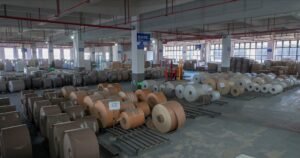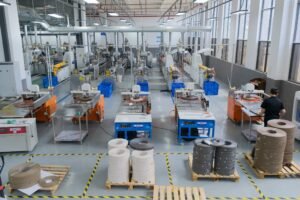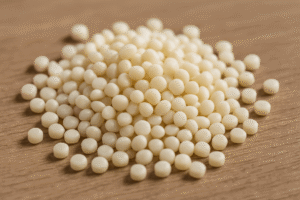
PP edge banding is polypropylene furniture edging that is chlorine-free, recyclable and more flexible than most PVC or ABS strips of the same thickness. Furniture factories and cabinet shops choose it when they need soft-forming or curved edges, lower VOC materials, or a halogen-free specification that still runs on a standard edgebander with hot-melt adhesive.
This guide is for buyers who already know PVC and ABS and want a clear answer on when polypropylene makes sense, how it bonds, and what to check before ordering.
Key takeaways
- PP (polypropylene) edge banding is halogen-free and fully recyclable, which helps projects with strict VOC or chlorine-free rules.
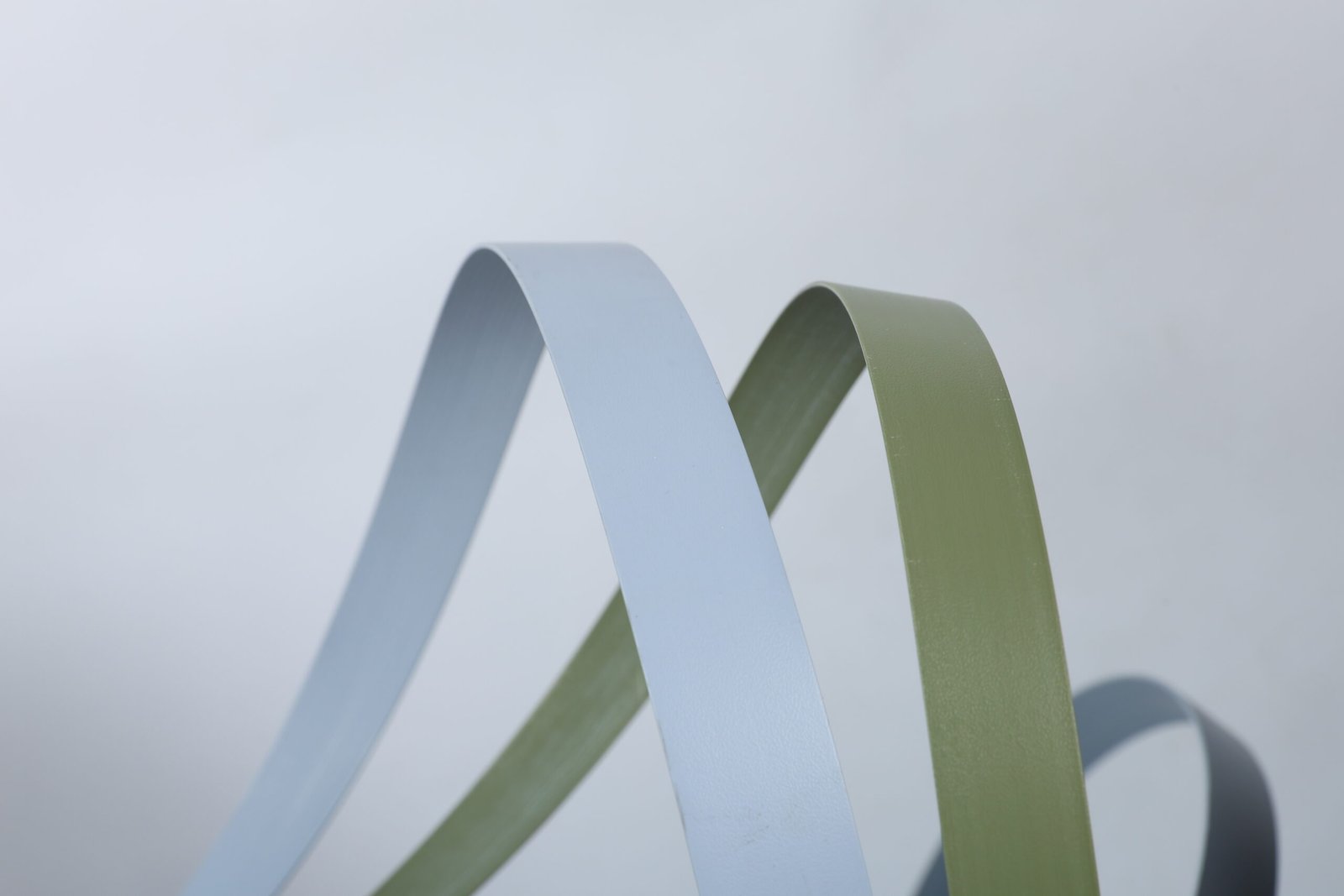
- PP is more flexible than typical PVC or ABS of the same thickness, so it suits soft-forming, tight radii and contour edges with less whitening or cracking.
- It runs on standard edgebanders with hot-melt adhesive; a PP-specific primer improves bond strength on flat, high-speed lines.
- PVC remains the everyday choice for stock colors and general furniture; ABS is the common chlorine-free alternative when impact resistance is the priority.
- Approve a physical PP sample on your own machine and board before a bulk order, because bonding and trim behaviour differ from PVC.
What is PP edge banding?
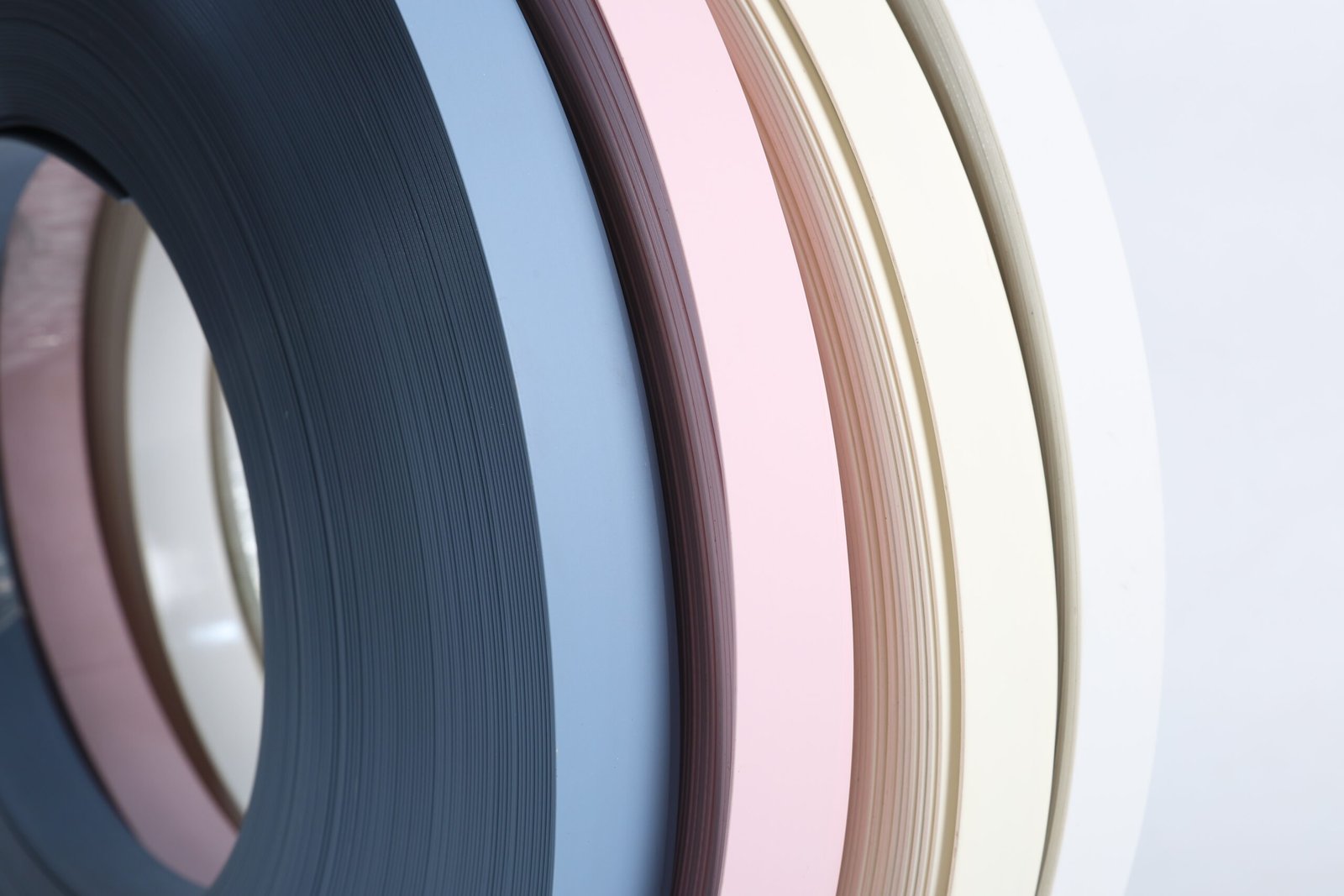
PP edge banding is a thermoplastic edge strip made from polypropylene. On the finished furniture it covers the raw edge of a particleboard, MDF or plywood panel the same way PVC or ABS does, but the polymer itself contains no chlorine and can be recycled with other polypropylene streams.
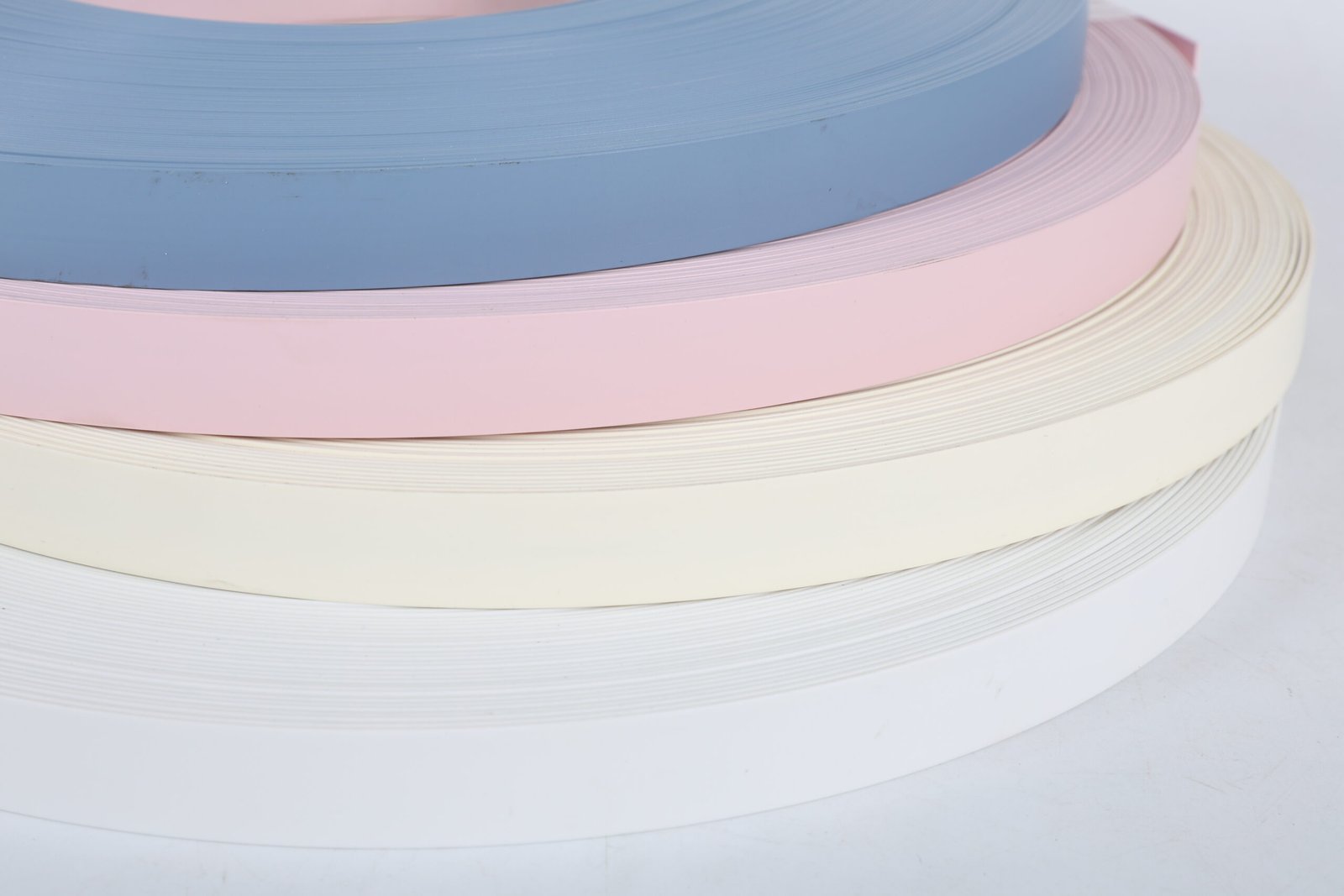
Factories order it in solid colors, woodgrains and textured surfaces, in a range of thicknesses and widths. Rolls are commonly packed at 100 to 400 meters per carton, depending on thickness, as listed on our PP edge banding product page.
How does PP compare to PVC and ABS?
The three materials cover different priorities. PVC is the volume workhorse, ABS is the usual chlorine-free option for impact-prone edges, and PP sits where flexibility and halogen-free specs matter most.
The table below summarizes the practical differences buyers ask about when specifying material.
| Point | PP | PVC | ABS |
|---|---|---|---|
| Polymer | Polypropylene | Polyvinyl chloride | Acrylonitrile butadiene styrene |
| Chlorine / halogen | Chlorine-free, halogen-free | Contains chlorine | Chlorine-free |
| Recyclability | Fully recyclable | Widely used; recycling depends on local stream | Recyclable in dedicated streams |
| Flexibility / soft-forming | High; good for curves and contours | Good in thinner gauges | Stiffer than PP at the same thickness |
| Typical use case | Green specs, kitchens/baths, curved parts | General furniture and cabinetry | High-traffic edges, desks, tables |
| Bonding note | Hot-melt OK; PP primer recommended | Standard EVA / PO / PUR hot-melt | Standard hot-melt on most lines |
For a deeper PVC-versus-ABS buying view, see our distributor guide to PVC vs ABS edge banding. Product details for each material are on the PVC and ABS pages.
When should a factory specify PP instead of PVC or ABS?
Specify PP when at least one of these conditions is true on the project brief. If none apply, PVC or ABS is usually the simpler choice.
- Chlorine-free or halogen-free requirement. Some commercial and export projects ban PVC for this reason. PP and ABS both meet a chlorine-free ask; PP also markets as halogen-free and non-toxic on our product page.
- Soft-forming or tight radii. PP keeps stability during bending and is less prone to whitening or cracking under stress, which helps 3D contour edges and soft-forming applications.
- Low-VOC or green furniture programs. PP is positioned for environments with strict VOC rules and for buyers who want a recyclable edge material.
- Wet or chemical exposure. PP resists water and common household chemicals, so it is often considered for kitchens, bathrooms and commercial furniture in those spaces.
Keep PVC when you need the widest stock of woodgrain decors at short lead time, and keep ABS when the edge will take repeated impacts, such as desk and table corners.
How do you apply PP edge banding on a standard edgebander?
PP edge banding can be applied with standard hot-melt adhesives and is compatible with most edge banding machines. For the best bond on flat panels and high-speed lines, use a PP-specific primer before gluing.
- Confirm the edgebander can feed the ordered thickness and width without crushing the strip.
- Apply a PP-compatible primer on the reverse of the band when the supplier recommends it for your adhesive system.
- Run a short test strip on the same board you will use in production and check peel, trim quality and corner whitening.
- Lock temperature, feed speed and pressure to the settings that passed the test, then start the production batch.
PP also works with energy-saving, lower-temperature glue systems on some lines. Always follow the adhesive maker’s temperature window; do not copy PVC settings blindly.
What sizes, tolerances and order details should buyers confirm?
Confirm thickness, width, surface texture and gloss on the sample, then write those values into the purchase order. On Chaotai PP rolls, thickness tolerance is ±0.02 mm and width tolerance is ±0.2 mm, with color fastness rated class 5–6.
- MOQ: usually 3,000 meters per color and size after sample approval.
- Lead time: about 10 to 15 working days after the sample is approved.
- Custom colors: send a decor sample or reference code for a match, the same way as PVC and ABS custom programs.
- Packing: typically 100 to 400 meters per roll in carton, or as agreed for export packing.
Frequently asked questions
Is PP edge banding the same as ABS?
No. Both are chlorine-free plastics used for furniture edges, but they are different polymers. PP is generally more flexible for soft-forming; ABS is usually chosen when impact resistance on desks and tables is the main requirement.
Can PP replace PVC on every job?
Not always. PVC still offers the broadest everyday decor range and is familiar to most operators. Switch to PP when the project needs chlorine-free material, better flexibility, or a recyclable halogen-free edge.
Does PP need special glue?
Standard hot-melt adhesives used on edgebanders can bond PP, but a PP-specific primer is recommended for stronger adhesion, especially on flat surfaces and high-speed lines.
What MOQ should distributors expect?
For Chaotai PP edgebanding the usual minimum is 3,000 meters per color and size, with sampling and technical support available before the bulk run.
Need help choosing between PP, PVC and ABS for a project? Contact our team with your board type, edge radius and material requirement, and we can suggest a sample set.