
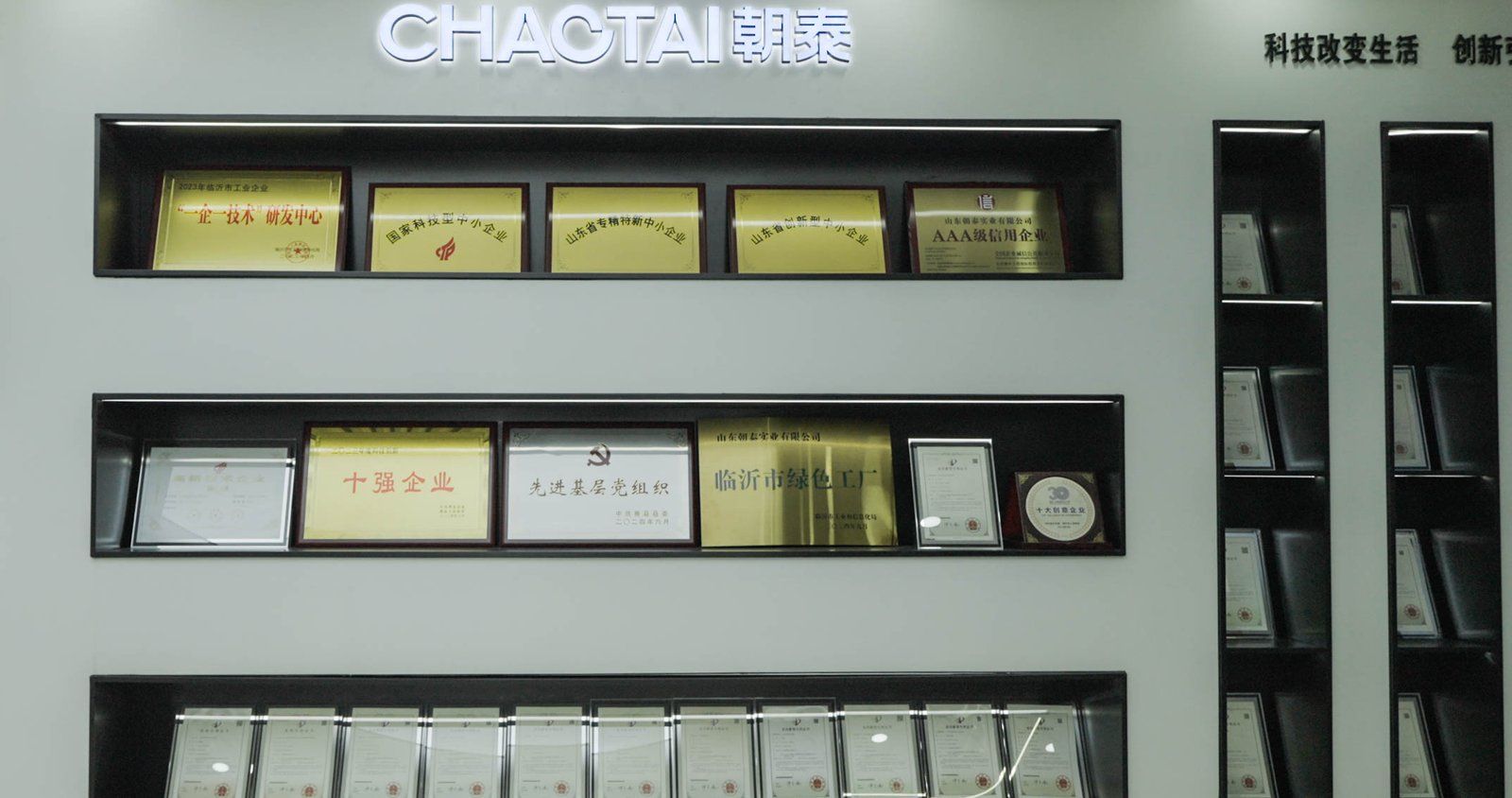
Choosing an edge banding supplier based only on price can be risky. Missing technical documents may hide quality problems, unclear specifications, and compliance issues.
Buyers should request technical data sheets, quality inspection reports, relevant test reports, material declarations, and applicable compliance documents. These records help buyers verify product specifications, evaluate quality, and confirm whether a supplier can meet their purchasing requirements.

When I communicate with overseas distributors and furniture manufacturers, I find that many buyers focus on samples and quotations first. These are important, but they do not provide a complete picture of a manufacturer’s capabilities. A sample only shows one product at one point in time. A quotation only shows the commercial terms of an order. Technical documents provide more information about product specifications, inspection methods, and quality management. I believe buyers should review these documents before confirming important orders. They can use them to ask better questions and make more informed purchasing decisions.
What Technical Documents Should an Edge Banding Supplier Provide?
A supplier may offer several documents, but buyers need to understand what each document can actually prove. A long list of certificates does not automatically mean that a manufacturer has strong product quality.
I recommend requesting documents that are directly related to the products and the intended application.
An edge banding supplier should provide relevant technical data sheets, product specifications, quality inspection records, applicable test reports, and material information. Buyers can also request company quality management certificates and compliance declarations when these are relevant to the order.

1. Technical Data Sheet (TDS)
A Technical Data Sheet is one of the first documents I recommend buyers request.
It describes the main characteristics of a product. For edge banding, this information may include material, thickness, width, surface finish, color reference, and other agreed technical properties.
For example, a buyer who purchases PVC edge banding needs to know whether the quoted product matches the required dimensions and material specifications.
I believe a useful TDS should provide enough information for buyers to compare products from different manufacturers.
A product name alone is not enough. Two suppliers may both offer 1 mm PVC edge banding, but their material characteristics and product specifications may still differ.
2. Certificate of Analysis (COA)
A Certificate of Analysis is used to report the results of specified tests or analyses for a product or production batch.
I suggest buyers request a COA when the supplier has an established batch testing process and the product requirements make this document useful.
For example, a COA may include test items, measured results, acceptance criteria, batch identification, and inspection dates.
However, buyers should understand that a COA is not automatically a third-party certificate. It may be issued by the manufacturer’s own quality control department.
I recommend checking who issued the document and whether the reported results are supported by actual inspection records.
3. Quality Inspection Reports
A quality inspection report provides information about the inspection activities carried out during production or before shipment.
For edge banding, the report may cover:
- Thickness and width measurements.
- Surface appearance.
- Color comparison.
- Roll length or packaging quantity.
- Product identification.
- Inspection results and nonconformities.
I believe these records are particularly useful for distributors who purchase products regularly.
A product sample may pass an initial inspection, but buyers also need to understand how the manufacturer checks regular production batches.
4. Product Test Reports
A test report provides evidence of specific tests performed on a product.
Depending on the product and application, buyers may request reports related to physical properties, bonding performance, surface resistance, or other agreed characteristics.
I do not recommend requesting every possible test report without considering the intended application.
A furniture factory producing kitchen cabinets may have different requirements from a company producing office furniture.
The buyer should first identify the performance requirements and then request the relevant test evidence.
If an independent laboratory performs the tests, I recommend checking the laboratory’s qualifications and the scope of its accreditation.
5. Company Quality Management Certificates
Buyers can also request company-level quality management documents.
For example, ISO 9001 certification can provide information about a manufacturer’s quality management system.
However, I want to make one distinction clear: ISO 9001 certification does not mean that every individual edge banding product has passed every possible performance test.
It concerns the organization’s quality management system.
I suggest buyers check the certificate holder, certification scope, issuing certification body, and validity information.
The following table summarizes the documents I would prioritize.
| Document | Main purpose | What buyers should check |
|---|---|---|
| TDS | Product specifications | Material, dimensions, finish |
| COA | Test or analysis results | Batch, test items, results |
| Inspection Report | Production quality records | Inspection items and acceptance criteria |
| Test Report | Specific product performance | Test method and laboratory |
| ISO 9001 Certificate | Quality management system | Company name and scope |
| Material Declaration | Material information | Declared material and product reference |
I do not believe buyers need every document for every order. The right documents depend on the product, destination market, customer requirements, and intended application. My recommendation is to request documents that can answer specific purchasing questions.
How Can Buyers Use Technical Data Sheets to Verify Edge Banding Specifications?
A technical data sheet is only useful when buyers know how to read it. A document may contain many technical terms, but some important product details can still be missing.
I recommend comparing the TDS with the actual purchasing requirements before approving a quotation or sample.
Buyers can use a technical data sheet to verify material type, thickness, width, surface finish, color reference, and other agreed properties. They should compare every listed specification with the purchase requirements and approved sample.

1. Check the Material Type
The first item I would check is the material.
Edge banding products can use PVC, ABS, acrylic, PP, wood veneer, and other materials. These products do not have identical characteristics or production requirements.
For example, a buyer who requests PVC edge banding should make sure the TDS identifies PVC as the product material.
I would not accept a general description such as plastic edge banding when the order requires a specific material.
The buyer should also check whether the product is intended for the required furniture application.
This is important because a similar appearance does not mean two materials have the same processing or performance characteristics.
2. Verify Thickness and Width
Thickness and width are two basic specifications that buyers should never overlook.
For example, a product described as 22 mm × 1 mm usually refers to a width of 22 mm and a thickness of 1 mm.
However, buyers should also confirm the measurement unit and any agreed tolerances.
I recommend asking the supplier to state the following information clearly:
- Nominal thickness.
- Nominal width.
- Permitted dimensional tolerance.
- Measurement method.
- Whether the dimensions refer to the finished product.
A TDS that only provides nominal dimensions may not be enough for a buyer with strict manufacturing requirements.
The buyer should ask for the actual tolerance range when dimensional accuracy is important.
3. Check Surface Finish and Color References
Surface finish is another important part of the TDS.
A buyer may need matte, gloss, embossed, or another decorative finish. The supplier should identify the requested finish clearly.
Color information also needs attention.
For standard colors, a supplier may use an internal product code. For customized colors, the buyer may need a panel reference, physical sample, or approved color specification.
I recommend buyers connect the TDS with the approved sample.
The TDS identifies the product specifications, while the sample helps confirm the actual appearance.
Neither one should replace the other.
4. Compare the TDS with the Actual Purchase Order
One mistake I often see in international purchasing is that buyers approve a technical document but do not make sure the same specifications appear in the purchase order.
This can create confusion during production.
For example, the buyer may approve 1 mm thickness in the sample stage but later send a purchase order that only states PVC edge banding.
The production team may not have enough information to identify the exact approved product.
I recommend using a simple comparison sheet.
| Specification | TDS | Purchase Order | Buyer Action |
|---|---|---|---|
| Material | PVC | PVC | Confirm |
| Thickness | 1 mm | 1 mm | Confirm |
| Width | 22 mm | 22 mm | Confirm |
| Surface | Matte | Matte | Confirm |
| Color | Custom code A01 | Custom code A01 | Confirm |
| Tolerance | Defined range | Same range | Confirm |
5. Ask Questions When Technical Information Is Missing
I do not expect every buyer to understand all technical terms in a TDS.
However, I do expect buyers to ask questions when important information is missing.
For example, if a document provides the nominal thickness but does not mention tolerance, the buyer should ask for clarification.
If the supplier provides a color code without a physical reference, the buyer should request a sample.
If the document lists a performance value, the buyer should ask how that value was measured.
A reliable supplier should be able to explain its specifications and provide supporting information where appropriate.
I believe a technical data sheet should make communication easier, not create more uncertainty.
What Compliance Documents Should Buyers Check Before Importing Edge Banding?
Importing edge banding involves more than checking product dimensions and prices. Buyers may also need to consider chemical regulations, material declarations, and requirements in their target markets.
I recommend identifying the applicable regulations before requesting compliance documents from a supplier.
Buyers should check relevant material declarations, REACH or other applicable regulatory information, restricted substance test reports, and safety documentation when required. The exact documents depend on the product composition, destination market, and applicable regulations.
1. Understand the Difference Between Compliance Declarations and Test Reports
A compliance declaration and a test report are not the same document.
A declaration is generally a statement made by a manufacturer or responsible company about the product’s compliance with specified requirements.
A test report provides results from a particular testing process.
For example, a manufacturer may provide a material declaration that identifies the materials used in a product. A separate laboratory report may provide test results for specific restricted substances.
I recommend buyers check what each document actually covers.
A declaration should identify the relevant product and regulatory requirement. A test report should identify the tested sample, method, results, and laboratory.
Buyers should not assume that a general compliance statement proves that every possible substance or product characteristic has been tested.
2. Check REACH Information When Selling into the European Market
For distributors importing edge banding into the European Union, REACH requirements may be relevant.
REACH is the EU regulation concerning the Registration, Evaluation, Authorisation and Restriction of Chemicals.
I recommend buyers ask suppliers for relevant information about substances of very high concern (SVHCs) and applicable restrictions.
However, the exact obligations depend on the product’s legal classification and chemical composition.
For example, an edge banding product may be treated as an article under REACH. Suppliers of articles containing a Candidate List substance above 0.1% weight by weight have specific information communication obligations under Article 33.
This does not mean that every edge banding product automatically requires the same REACH certificate.
Buyers should request product-specific information and check the current regulatory requirements.
Official reference: European Chemicals Agency (ECHA), Guidance on Articles.
3. Understand When an SDS Is Required
A Safety Data Sheet provides information about chemical hazards, safe handling, storage, transport, and emergency measures.
Some buyers request an SDS for every product, but this is not always the correct approach.
According to ECHA, an SDS must be provided for certain hazardous substances and mixtures, as well as specified PBT, vPvB, and Candidate List substances under REACH.
A finished edge banding article does not automatically require an SDS simply because it is made from plastic.
However, related chemical products, such as adhesives, primers, or other chemical mixtures, may have their own SDS requirements.
I recommend buyers identify the exact product before requesting an SDS.
For example:
| Product | Document to consider | Important point |
|---|---|---|
| PVC edge banding | Material declaration and applicable test reports | Confirm product composition |
| ABS edge banding | Material declaration and applicable test reports | Confirm material identity |
| Hot melt adhesive | SDS and relevant technical documents | Check chemical classification |
| Primer or coating | SDS and relevant technical documents | Check handling requirements |
| Finished decorative article | Applicable compliance information | Check product classification |
Official reference: ECHA – Safety Data Sheets.
4. Verify Third-Party Laboratory Reports
When buyers need evidence of product performance or restricted substance testing, they may request third-party test reports.
I recommend checking whether the laboratory has the right technical competence for the requested test.
ISO/IEC 17025:2017 is an international standard for the competence, impartiality, and consistent operation of testing and calibration laboratories.
However, buyers should not only look for an ISO/IEC 17025 logo.
They should also check whether the laboratory’s accreditation scope covers the specific test method and activity shown in the report.
A laboratory may be accredited for some tests but not every test it performs.
I would check the following details:
- Laboratory name and address.
- Report number and issue date.
- Product and sample identification.
- Test method and standard.
- Test results and units.
- Accreditation status and relevant scope.
Official reference: ISO – ISO/IEC 17025:2017.
5. Confirm Which Regulations Apply to the Destination Market
Different markets may have different product and chemical requirements.
I do not recommend using one general compliance document for every country.
For example, a buyer importing into the European Union may need to review REACH-related requirements. A buyer selling in the United States may need to consider different federal or state requirements depending on the product and its intended use.
The supplier should provide accurate product information, but the importer should also confirm its own legal responsibilities.
I suggest preparing a market-specific compliance checklist before placing a large order.
This approach helps buyers avoid requesting irrelevant certificates while missing documents that are actually required.
How Can Buyers Evaluate an Edge Banding Supplier Through Technical Documentation?
Technical documents can tell buyers a lot about a supplier, but buyers need to examine the documents as a complete system.
I recommend checking document accuracy, consistency, traceability, and the supplier’s ability to explain technical information.
Buyers can evaluate an edge banding supplier by checking document authenticity, product traceability, testing methods, quality records, certificate validity, and the supplier’s ability to answer technical questions.

1. Check Whether All Documents Refer to the Same Product
The first thing I would check is product consistency across documents.
A supplier may provide a TDS, test report, inspection report, and company certificate. However, these documents may refer to different products or different production periods.
For example, a test report may describe a PVC sample, while the quotation refers to an ABS product.
The buyer should not assume that a test result for one material automatically applies to another.
I recommend checking the following information:
- Product name and material.
- Product code.
- Sample identification.
- Thickness and width.
- Report date.
- Batch or production reference.
- Manufacturer information.
If the documents do not clearly identify the product, I would ask the supplier for clarification.
2. Check Document Dates and Validity
A technical document may have been correct when it was issued but may no longer reflect the current product.
For example, a manufacturer may update its material formulation, production process, or product specifications.
An older test report may not represent the current product if important changes have occurred.
I recommend buyers check the issue date, revision date, validity period where applicable, and product version.
Company certificates also need attention.
Buyers should verify the certificate holder, scope, certification body, and current validity. They should not rely only on a certificate image sent by a salesperson.
When possible, buyers can use the certification body’s official verification system.
3. Evaluate the Supplier’s Quality Control Records
I believe quality inspection records are more useful when they show a consistent process.
A single inspection report cannot prove that every future shipment will meet the same requirements.
However, regular inspection records can help buyers understand how a manufacturer monitors production.
For example, buyers can ask whether the factory records:
- Incoming raw material inspections.
- Production process inspections.
- Finished product inspections.
- Nonconforming product records.
- Corrective actions.
- Batch identification.
ISO 9001 provides a framework for quality management systems and the control of externally provided products and services.
The ISO 9001 Auditing Practices Group also provides guidance on evaluating external providers and checking documented information related to supplier control.
Reference: ISO 9001 Auditing Practices Group – External Providers.
I recommend buyers ask how the supplier uses inspection results to identify and correct production problems.
This question can reveal more than simply asking whether the factory has a quality certificate.
4. Check Whether the Supplier Can Explain Its Own Documents
A supplier should understand the documents it provides.
If I send a buyer a TDS, I should be able to explain the specifications. If I provide a test report, I should be able to explain the test method and the meaning of the results.
I do not think buyers should accept documents that the supplier cannot explain.
For example, if a report shows a particular test value, the supplier should explain what was tested and whether the result meets the agreed product requirement.
The buyer should also ask whether the report applies to the current product.
A supplier’s technical knowledge is important because purchasing questions do not always follow a standard format.
Some buyers may need custom specifications. Others may need documents for a specific import market.
The supplier should be able to communicate clearly and identify when additional testing or professional regulatory advice is necessary.
5. Use a Document Evaluation Checklist Before Placing an Order
I suggest buyers create a simple document evaluation checklist.
This helps the purchasing team review suppliers using the same criteria.
| Evaluation item | What buyers should confirm |
|---|---|
| TDS | Product specifications are complete |
| COA | Results are linked to the relevant batch |
| Inspection report | Inspection items and results are clear |
| Test report | Test method and sample are identified |
| ISO certificate | Company and certification scope are correct |
| Compliance documents | Relevant to the destination market |
| Document traceability | Product codes and dates are consistent |
| Technical support | Supplier can explain the documents |
I would also recommend keeping the approved documents together with the quotation, sample approval, and purchase order.
This creates a clear reference for future orders.
For distributors who purchase regularly, the same document review process can also help compare new suppliers with existing suppliers.
6. My View: Documents Should Support Real Manufacturing Capability
From my experience in the edge banding industry, I do not believe a supplier becomes reliable simply by providing a large number of documents.
Documents need to reflect actual production and inspection activities.
A company may have an impressive certificate collection, but buyers still need to understand how the factory controls raw materials, monitors production, checks finished products, and handles quality problems.
I would rather show a buyer relevant product specifications and real inspection records than provide documents that do not answer the buyer’s questions.
For CHAOTAI, I believe technical communication should begin with the actual product requirements.
If a distributor needs PVC edge banding in a specific thickness, width, and finish, we should first make sure the specifications are clear. If the buyer needs a special test report or compliance information, we should confirm the applicable requirements and identify which documents are available.
I also believe buyers should distinguish between standard product information and customer-specific requirements.
A standard TDS may cover regular product specifications. A special application may require additional testing or a separate technical agreement.
When suppliers and buyers understand this difference, technical documents become useful tools for long-term cooperation instead of just attachments in an email.
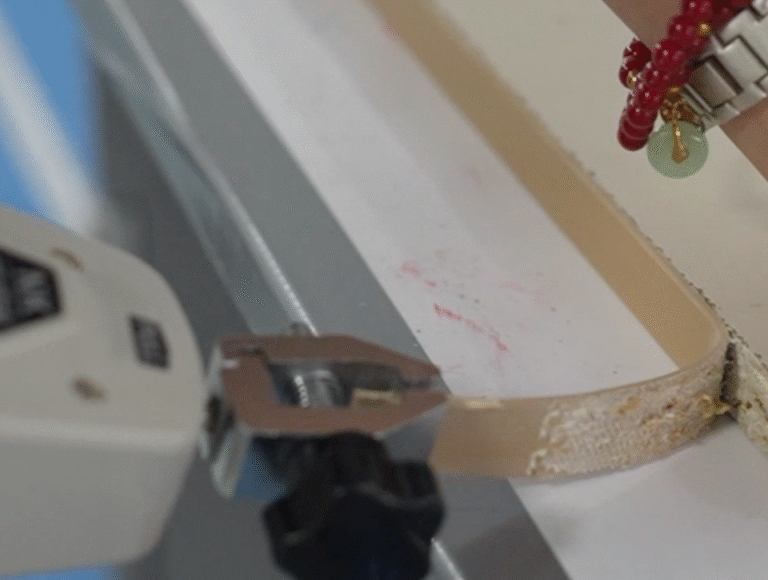
See the Records Behind the Certificates
TDS, COA, batch inspection sheets and laboratory reports — tell us the product, thickness and destination market, and we send the exact documents that match your order.
Inside Chaotai Quality Control
Conclusion
Buyers should review technical specifications, quality records, test reports, and applicable compliance documents to evaluate an edge banding supplier before placing orders.
References and Data Sources
- International Organization for Standardization (ISO) – ISO 9001 Quality Management Systems: ISO 9001 Quality Management Systems
- ISO 9001 Auditing Practices Group – Guidance on External Providers: Guidance on External Providers
- International Organization for Standardization (ISO) – ISO/IEC 17025:2017, General Requirements for the Competence of Testing and Calibration Laboratories: ISO/IEC 17025:2017
- European Chemicals Agency (ECHA) – Safety Data Sheets: Safety Data Sheets
- European Chemicals Agency (ECHA) – Candidate List of Substances of Very High Concern: Candidate List of Substances of Very High Concern
- European Chemicals Agency (ECHA) – Guidance on Articles: Guidance on Articles
- European Chemicals Agency (ECHA) – Guidance on the Compilation of Safety Data Sheets: Guidance on the Compilation of Safety Data Sheets