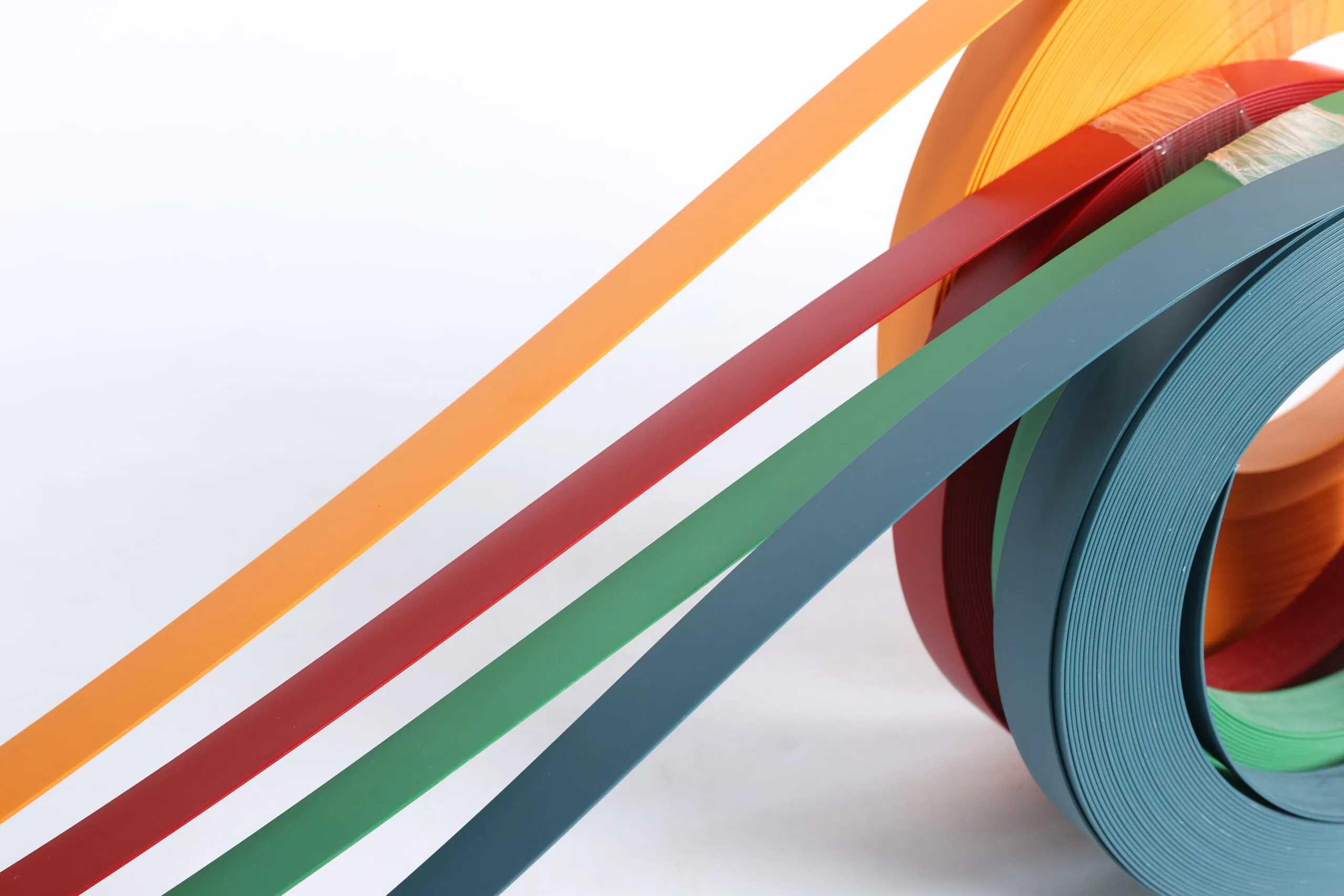
Choosing the wrong edge banding technology can increase equipment costs without improving the furniture your customers actually buy.
Laser, hot air, and PUR can all produce high-quality edges, but the right choice depends on production scale, appearance requirements, budget, and furniture application.

When I discuss edge banding technology with furniture manufacturers, I try not to start with the question, “Which technology is the best?” I start with a different question: “What does your factory actually need?”
A high-end kitchen manufacturer may care most about an almost invisible joint. A medium-sized furniture factory may care more about investment and production flexibility. A manufacturer serving kitchens, bathrooms, or laboratories may put more weight on moisture and heat resistance.
The three technologies can solve similar edge-finishing problems, but they do not make the same business sense for every factory.
What Are the Differences Between Laser, Hot Air, and PUR Edge Banding?
Laser, hot air, and PUR edge banding all aim to create a clean connection between the edge band and the furniture panel, but they use different bonding methods and require different edge materials or processing systems.
Laser and hot air can create zero-joint edges by activating a functional layer on specially designed edge banding, while PUR uses reactive hot-melt adhesive to bond the edge to the panel.
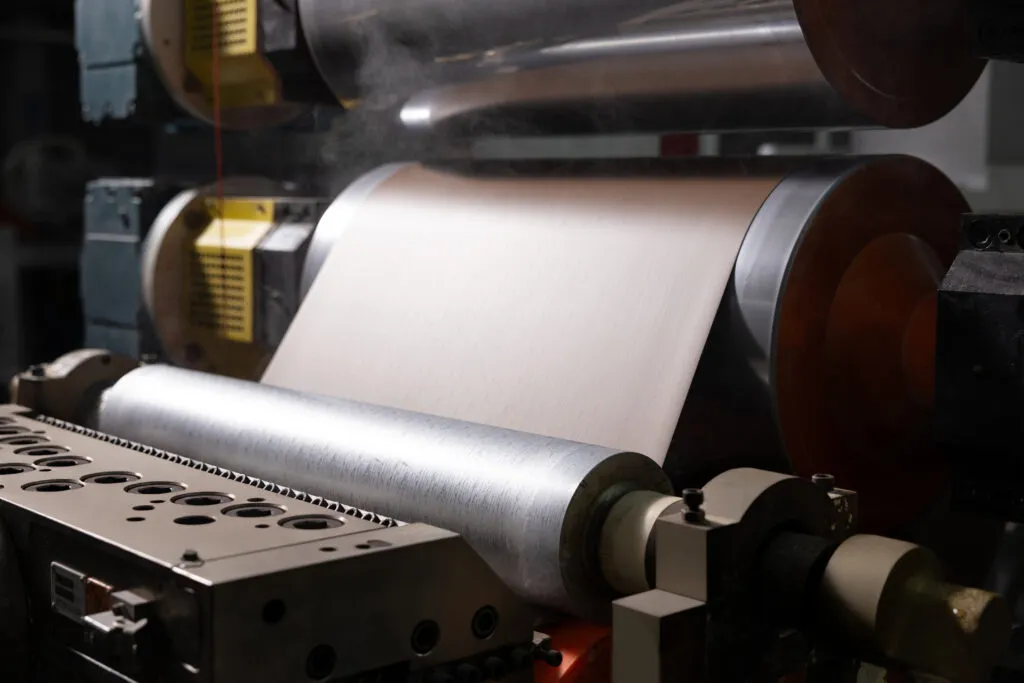
The main difference is how the bond is created
I see the easiest way to understand these technologies as three different routes to the same production goal.
With laser edge banding, a laser activates a functional layer on the edge band. HOMAG describes its laserTec process as melting a special adhesive coating on the edging with a laser beam before pressing the edge onto the workpiece. The process can be used with common materials such as PVC, ABS, PP, and PMMA when the appropriate laser-active edge is used.
With hot air edge banding, hot air activates the functional layer on a special edge. HOMAG’s airTec system uses a controlled hot-air flow to melt the functional layer before the edge is pressed onto the panel.
With PUR edge banding, the machine applies PUR hot-melt adhesive between the panel and the edge. The adhesive then forms a strong bond as it reacts with moisture. PUR is especially useful when resistance to moisture and heat is important.
The three technologies are not direct substitutes
I would not treat laser, hot air, and PUR as three versions of the same machine.
The edge material can be different. The equipment can be different. The adhesive system can be different. The maintenance requirements can also be different.
| Factor | Laser | Hot Air | PUR |
|---|---|---|---|
| Main bonding method | Laser activates functional layer | Hot air activates functional layer | PUR hot-melt adhesive |
| Visible glue line | Very low when properly processed | Very low when properly processed | Very low when properly processed |
| Special edge required | Yes | Yes | Standard edge can be used with suitable adhesive system |
| Main strength | High-end appearance and zero-joint quality | Zero-joint quality with lower investment in suitable applications | Strong moisture and heat resistance |
| Equipment investment | Usually high | Usually lower than laser | Moderate, depending on system |
| Typical target | Premium and automated production | Flexible and cost-conscious production | Performance-focused furniture |
| Main consideration | Capital investment and suitable edge material | Special edge and process control | PUR handling and adhesive management |
I also need to be careful with simple statements such as “laser is more advanced” or “PUR is cheaper.”
Those statements can be misleading.
A technology can be technically advanced but still be a poor investment for a factory that does not need its full capability.
HOMAG itself presents laserTec, airTec, and PUR as different solutions that can be selected according to production requirements. Its current machine portfolio also includes systems that can process PUR, EVA, airTec, or laserTec depending on configuration.
That tells me something important.
The right question is not only about edge quality. I also need to consider what the factory produces, how much it produces, how often it changes products, and what customers are willing to pay for the finished furniture.
Which Furniture Manufacturers Are Best Suited to Laser Edge Banding?
I would normally consider laser edge banding when a furniture manufacturer has high appearance requirements, stable production demand, and enough volume or product value to justify a more advanced investment.
Laser technology makes the most sense for manufacturers that need highly consistent zero-joint appearance and want to integrate edge processing into a modern automated production line.
Premium appearance is the main reason
The biggest reason I would consider laser technology is appearance.
A traditional glue line can remain visible after edge banding. Laser technology is designed to create a very clean joint by activating the functional layer on the edge material.
HOMAG describes laserTec as a zero-joint process and says it can process PVC, ABS, PP, PMMA, veneer, and melamine when the appropriate edge material is used.
This matters more when the edge is highly visible.
For example, I would give laser technology more attention for:
- premium kitchens
- high-end wardrobes
- luxury cabinetry
- branded furniture
- premium office furniture
- architectural furniture
- products with strong visual requirements
I would be less interested in laser technology if the furniture is sold mainly on low price.
Production scale also matters
A laser system requires a serious investment in equipment and compatible edge materials. I would therefore expect a manufacturer to have enough production demand to use the equipment effectively.
HOMAG’s current laser edge banding systems include industrial machines designed for flexible production, with some models supporting feed speeds from 15 to 40 m/min and batch-size-one production.
That does not mean every manufacturer should buy a laser machine.
It means the technology can fit both high-volume and flexible automated production when the machine configuration matches the factory’s needs.
The better question is whether the factory can recover the investment.
I would use this basic test
| Factory condition | My view on laser |
|---|---|
| Premium furniture | Strong fit |
| Very high appearance requirements | Strong fit |
| Large automated factory | Strong fit |
| Stable production volume | Strong fit |
| Batch-size-one production | Possible fit with suitable equipment |
| Small workshop with low output | Often difficult to justify |
| Low-price furniture | Usually weaker business case |
| Customers do not care about visible glue lines | Limited value |
I also think distributors should understand this point.
If a customer says, “I want laser edge banding,” I would not immediately recommend a laser-compatible edge.
I would first ask what furniture they produce.
If the customer produces premium kitchens for a market where appearance matters, the request makes sense.
If the customer produces low-cost flat-pack furniture where the edge is not a major selling point, the customer may be paying for technology that does not create enough additional value.
That is where technical knowledge becomes useful in B2B sales.
When Does Hot Air Edge Banding Make More Sense for Furniture Manufacturers?
Hot air edge banding can make more sense when a manufacturer wants a very clean zero-joint appearance but does not want to make the same level of investment associated with a large laser system.
I see hot air as a useful middle option for manufacturers that need high visual quality, shorter production runs, or more controlled investment.
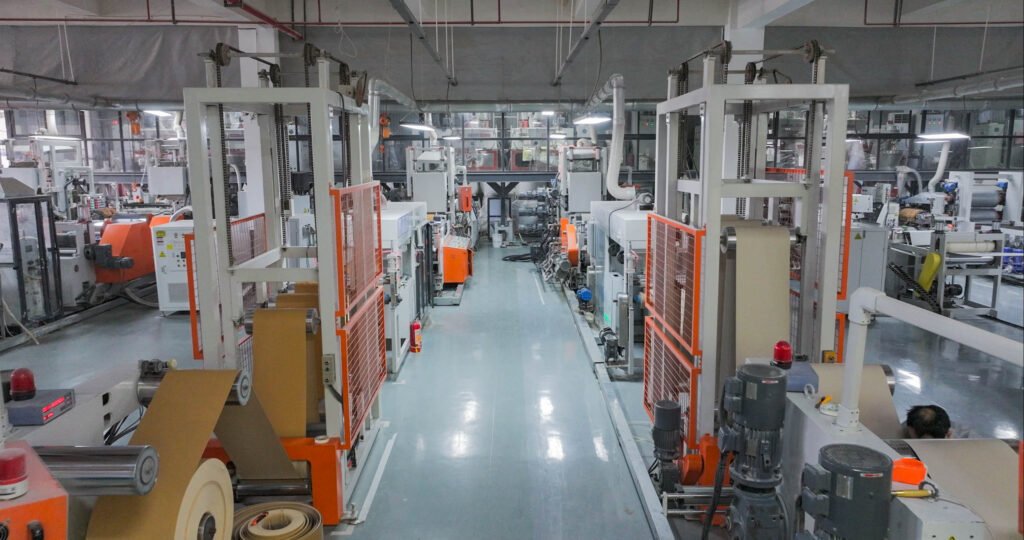
Hot air is not simply a cheaper laser
I think this is an important distinction.
Hot air and laser can both produce zero-joint results, but the process is different.
HOMAG states that airTec uses hot air to melt the functional layer of a special edge band. The company also describes airTec as an entry to zero-joint technology and says it can offer a more cost-effective solution for woodworking shops and medium-sized companies.
So I would look at hot air when the factory wants the appearance of a zero-joint edge but has a different production and investment profile.
Shorter runs can change the calculation
A large industrial laser system can make sense when the machine is heavily utilized.
But some furniture manufacturers have mixed orders.
One customer may want white cabinets. Another may want woodgrain panels. Another may need a different edge color.
The factory may change materials frequently.
In that situation, the manufacturer may care more about flexibility and total investment than maximum processing capability.
A HOMAG case study provides a useful example. Herman Miller used a machine with a hot-air facility to apply standard edging and described the hot-air option as having lower running costs than its larger, high-volume laser edging machines.
I would not turn that case into a universal cost claim. Running costs depend on the exact machine, production volume, energy use, maintenance, edge material, and factory setup.
But it shows why technology selection should be based on the factory’s actual production model.
When I would consider hot air
| Factory condition | My view on hot air |
|---|---|
| Medium-sized furniture factory | Strong fit |
| Zero-joint appearance required | Strong fit |
| Short or mixed production runs | Strong fit |
| Investment needs to stay controlled | Strong fit |
| High-end appearance with moderate volume | Good fit |
| Very large automated production | Depends on utilization |
| Extremely high production demand | Laser may deserve comparison |
| Customer requires strong moisture resistance | Compare with PUR |
Another point is material availability.
Hot air requires specially designed edge banding with a functional layer. That means the manufacturer needs to make sure the required colors, finishes, materials, and sizes are available.
For distributors, this creates a practical question.
I would not only ask, “Can you supply the color?”
I would ask, “Can you supply the correct hot-air-compatible structure in the color and finish the customer needs?”
That question can prevent a common sourcing mistake.
A visually correct edge band is not necessarily the correct edge band for a hot-air machine.
When Should Furniture Manufacturers Choose PUR Edge Banding?
I would choose PUR when the furniture manufacturer needs strong bonding performance and especially when the finished furniture will face moisture, heat, or demanding service conditions.
PUR is a practical choice for kitchens, bathrooms, laboratories, commercial furniture, and other applications where long-term bond performance can be more important than using a zero-joint technology based on a functional edge layer.
PUR solves a different problem
I often see PUR compared directly with laser because both can produce a very clean edge.
But their value is not exactly the same.
Laser mainly changes how the functional layer of the edge is activated.
PUR changes the adhesive system used to bond the edge to the panel.
HOMAG states that PUR has resistance to humidity and heat and identifies it as particularly suitable for furniture in humid environments such as bathrooms, kitchens, and laboratories.
That gives PUR a clear place in furniture production.
Application environment matters
I would ask where the furniture will be used.
A bedroom cabinet may not need the same adhesive performance as a bathroom vanity.
An office desk may not face the same conditions as laboratory furniture.
A kitchen cabinet may be exposed to moisture, heat, cleaning products, and repeated daily use.
The application changes the value of the adhesive.
| Furniture application | PUR suitability |
|---|---|
| Standard bedroom furniture | Depends on requirements |
| Office furniture | Good when durability is important |
| Kitchen cabinets | Strong fit |
| Bathroom furniture | Strong fit |
| Laboratory furniture | Strong fit |
| Commercial interiors | Often a good fit |
| Premium furniture | Good when durability is a priority |
| Low-cost furniture | May not justify the additional process cost |
PUR also requires process discipline
PUR is not automatically better simply because it has strong performance.
The factory still needs proper equipment and process control.
The adhesive needs to be stored and handled correctly. The application unit needs to be maintained. The factory also needs to control the amount of adhesive applied and the processing conditions.
HOMAG notes that its machines can process EVA and PUR using the same application unit on compatible configurations, and it highlights the need for appropriate glue management when changing between systems.
I therefore look at PUR as a performance decision, not just a product upgrade.
If the customer does not need high moisture or heat resistance, the extra cost and process requirements may not create enough value.
If the customer sells furniture into demanding environments, the calculation can be very different.
That is why I would not ask only, “Which adhesive gives the best edge?”
I would ask, “What will happen to this edge after five years of actual use?”
That question gives the manufacturer a much better basis for making the decision.
How Should Furniture Manufacturers Choose Between Laser, Hot Air, and PUR Edge Banding?
I would choose the technology only after looking at production volume, furniture positioning, appearance requirements, operating environment, equipment investment, and material supply.
Laser is usually attractive for high-end automated production, hot air can fit manufacturers seeking zero-joint quality with controlled investment, and PUR is especially useful when moisture and heat resistance are important.
Start with the product, not the machine
I think many factories make the decision in the wrong order.
They first look at machines.
Then they ask what products the machine can make.
I would reverse the process.
I would first define the furniture.
Then I would define the quality requirement.
Then I would define production volume.
Only after that would I compare technologies.
The following framework is the one I would use:
| Decision factor | Laser | Hot Air | PUR |
|---|---|---|---|
| Premium appearance | Excellent | Excellent | Very good |
| Zero-joint requirement | Excellent | Excellent | Very good |
| Moisture resistance | High with suitable system | Depends on edge system | Excellent |
| Heat resistance | High with suitable system | Depends on edge system | Excellent |
| Initial investment | Usually high | Usually lower than laser | Medium, depending on equipment |
| Production flexibility | High | High | High |
| Special edge material | Required | Required | Usually not in the same way |
| Best reason to choose | Premium appearance and automation | Zero-joint quality with controlled investment | Adhesive performance and demanding environments |
These are not universal performance ratings. I use them as a decision framework. Actual results depend on the machine, edge material, adhesive, substrate, production speed, and process settings.
Calculate total cost instead of machine price
A factory should not compare only the purchase price.
I would use a simple model:
Total Cost = Equipment + Edge Material + Adhesive + Maintenance + Energy + Labor + Downtime + Quality Risk
This model can change the final decision.
A laser system may cost more at the beginning but create value through automation and high-quality output.
A hot-air system may provide a lower investment path for a manufacturer that needs zero-joint appearance but does not need a large laser installation.
PUR may require more attention to adhesive handling, but it can create strong value when the furniture must resist moisture and heat.
Match the technology to the manufacturer
I would divide manufacturers into four simple groups.
Group 1: Premium furniture manufacturers
These companies usually care strongly about appearance. Laser should be seriously considered.
Group 2: Medium-sized manufacturers
These companies often need quality and flexibility while keeping investment under control. Hot air can be attractive.
Group 3: Kitchen and bathroom manufacturers
These companies need to think about both appearance and environmental resistance. PUR should be part of the comparison.
Group 4: High-volume automated manufacturers
These companies should calculate equipment utilization carefully. Laser, hot air, and PUR can all be considered depending on product mix and production line design.
HOMAG’s current equipment range itself shows that different technologies can be integrated into different machine configurations. Some systems can process PUR, EVA, airTec, or laserTec depending on configuration.
That supports the point I keep coming back to.
There is no universal winner.
The best technology is the one that fits the factory’s products, production process, customers, and economics.
For distributors and edge banding suppliers, this also changes how I would recommend products.
I would not ask a furniture manufacturer only which color or thickness they need.
I would also ask:
- What edge banding machine are you using?
- Are you using laser, hot air, EVA, or PUR?
- What furniture do you produce?
- What is your production volume?
- What surface quality do your customers expect?
- Where will the furniture be used?
- Do you need a standard edge or a technology-specific edge?
- Do you need samples before bulk production?
These questions help me match the edge banding to the process.
That is much safer than recommending a product based only on price.
Conclusion
Laser suits premium automated production, hot air suits flexible zero-joint production, and PUR suits applications where strong moisture and heat resistance matter most.
Data Sources
The technical judgments and key data in this paper are mainly referenced from the following public materials:
- HOMAG — EDGETEQ S-800 profiLine / laserTec
HOMAG EDGETEQ S-800 profiLine - HOMAG — airTec Hot Air Edge Banding
HOMAG airTec Hot Air Edge Banding - HOMAG — PUR and EVA Hot-Melt Glue
HOMAG PUR Hot-Melt Glue Information - HOMAG — Herman Miller Case Study
HOMAG Herman Miller Edge Banding Case Study - HOMAG — Edge Banding Technology Overview
HOMAG Edge Banding Technology Overview