A tiny edge joint can be easy to ignore on a light matte panel, but the same joint can become very obvious on a dark or high-gloss panel.
Zero-joint edge banding is difficult on dark and high-gloss panels because these surfaces reveal small differences in color, gloss, texture, pressure, and machining quality. The material, functional layer, panel surface, and machine settings must work together.

I have found that the idea of “zero-joint” is often misunderstood. Some buyers think the technology itself can solve every visual problem. I see it differently. Zero-joint technology removes or greatly reduces the traditional glue-line effect, but the final visual result still depends on the whole production process. Dark and high-gloss panels simply make small problems easier to see.
Why Is Zero-Joint Edge Banding More Difficult to Achieve on Dark Panels?
Dark panels can make very small changes in the edge area visible. A small color difference, a slight machining mark, or a weak visual transition can stand out against a black or dark-gray surface.
Dark panels are difficult because the human eye can notice small differences when the surrounding surface has a strong and uniform color. I also pay more attention to the edge banding material itself because its color and functional layer need to work with the panel.
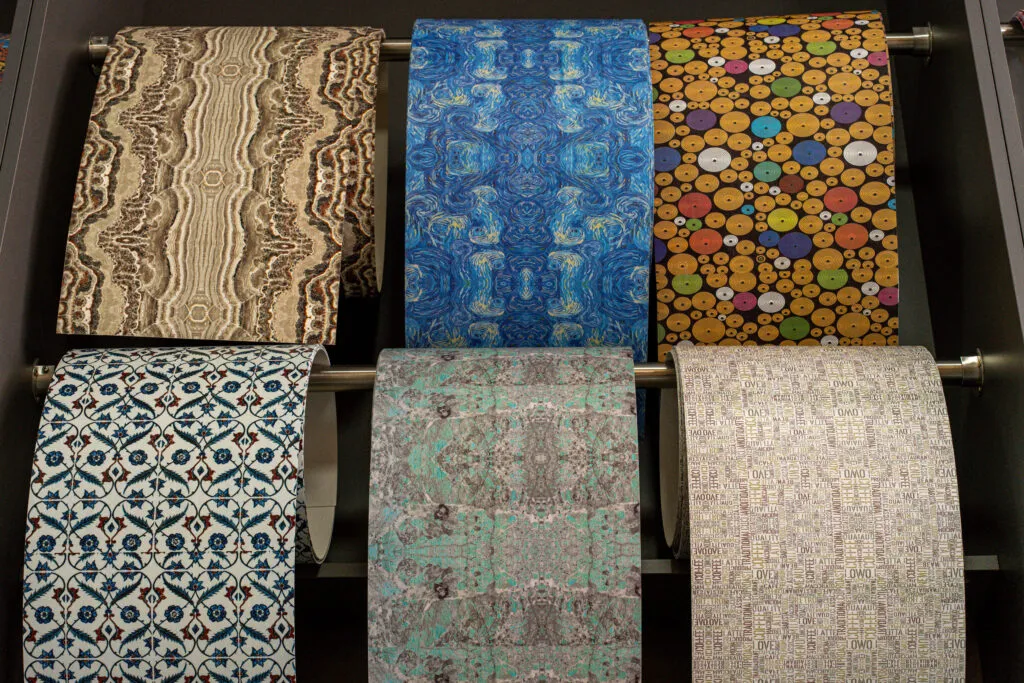
Dark colors leave less room for visual errors
I do not think the main problem is simply that dark colors are harder to produce. The bigger problem is that dark furniture surfaces can make small visual differences easier to notice.
For example, a black panel and a black edge band may look similar under one light source. They may look slightly different under another angle. The same issue can happen with dark gray, navy, deep brown, and other strong colors.
EGGER notes that color-matching selections should be made using original samples because reproduced colors cannot fully represent the actual finish. This point matters when I evaluate edge banding for a dark panel.
The edge is not only about color
I usually look at more than the basic color. I also look at:
| Factor | What I check | Why it matters |
|---|---|---|
| Color | Basic visual match | Prevents obvious color contrast |
| Gloss | Surface reflection | Changes how the edge looks under light |
| Texture | Grain or surface pattern | Affects visual continuity |
| Thickness | Edge profile | Changes the overall appearance |
| Functional layer | Joint area | Supports the zero-joint effect |
| Machining | Trimming and polishing | Can create visible marks |
REHAU describes zero-joint edgebanding as using a pre-applied functional layer instead of traditional glue. The company also emphasizes color coordination between the functional and decorative layers.
This tells me that zero-joint performance is not only about removing glue. The functional layer itself becomes part of the visual system.
Dark panels also expose machining problems
A small trimming mark may look acceptable on a textured surface. The same mark can become obvious on a dark, smooth panel.
I therefore do not treat the edge banding material and machining process as two separate issues. I treat them as one system.
If the cutter is not suitable, if the pressure is unstable, or if the final surface is not properly finished, the zero-joint effect can lose part of its visual value.
This is why I prefer to test the actual panel, actual edge band, and actual machine together before mass production.
How Do High-Gloss Surfaces Make Small Edge Banding Defects More Visible?
High-gloss panels reflect light strongly, so small surface changes can create different reflections. A joint that looks acceptable under normal light can become visible under strong or angled light.
High-gloss surfaces make defects more visible because reflection increases the visual contrast created by small changes in surface shape, gloss, texture, or machining quality.
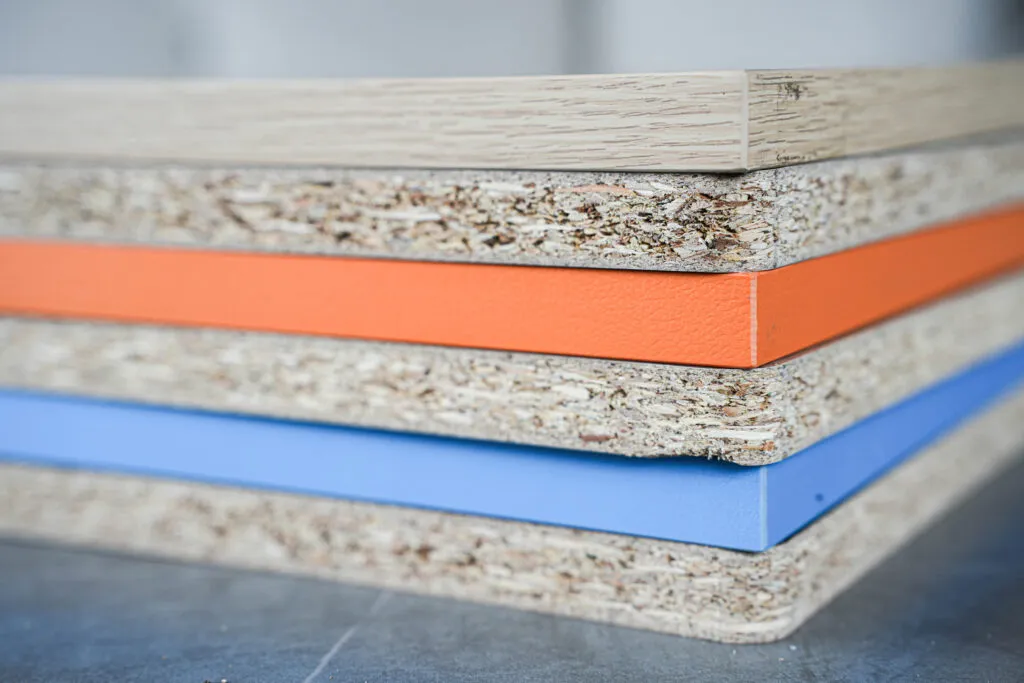
Reflection changes the way I judge an edge
When I inspect a matte panel, I can focus mainly on color and physical quality. When I inspect a high-gloss panel, I also need to look at how light moves across the surface.
A high-gloss surface can show:
- Small scratches
- Uneven polishing
- Tool marks
- Surface waviness
- Gloss differences
- Small changes in the transition between panel and edge band
REHAU describes mirror-gloss edgebands as products designed for shiny, reflective surfaces and reports a gloss level above 85 gloss points for one of its mirror-gloss products. This shows how strongly surface gloss can become part of the edge design.
The edge and panel should create one visual system
I do not think a high-gloss panel should be matched only by its color.
I would check the following:
| Matching point | Question I ask |
|---|---|
| Color | Does the edge have the same basic color? |
| Gloss | Does the edge reflect light in a similar way? |
| Texture | Does the surface feel and look similar? |
| Transition | Is the connection visually smooth? |
| Machining | Are there marks after trimming? |
| Lighting | Does the result remain consistent under different light? |
EGGER also provides edge banding products that are coordinated with board decors, textures, and gloss levels. Its PerfectSense ABS edge banding, for example, is offered for both matt and high-gloss surfaces.
This is important because I would not describe “color matching” as enough for a high-gloss project. The gloss level and surface effect also need attention.
High gloss makes quality control more demanding
I see high-gloss furniture as a stricter test of the complete edge banding process.
If the panel surface is highly reflective, I need to inspect the component from several angles. I also need to use the same lighting conditions when comparing samples.
A sample that looks perfect on a workbench may show a problem after installation under showroom lighting. This is why I prefer real production samples over digital images when the visual requirement is high.
The final decision should come from the actual board, actual edge band, and actual processing method.
Which Material and Processing Factors Affect Zero-Joint Edge Banding Quality?
Zero-joint quality depends on both the edge banding material and the way the material is processed. I cannot separate material performance from machine settings when I evaluate the final result.
The main factors include the functional layer, edge banding material, panel quality, activation technology, application pressure, feed speed, machining tools, and final surface treatment.
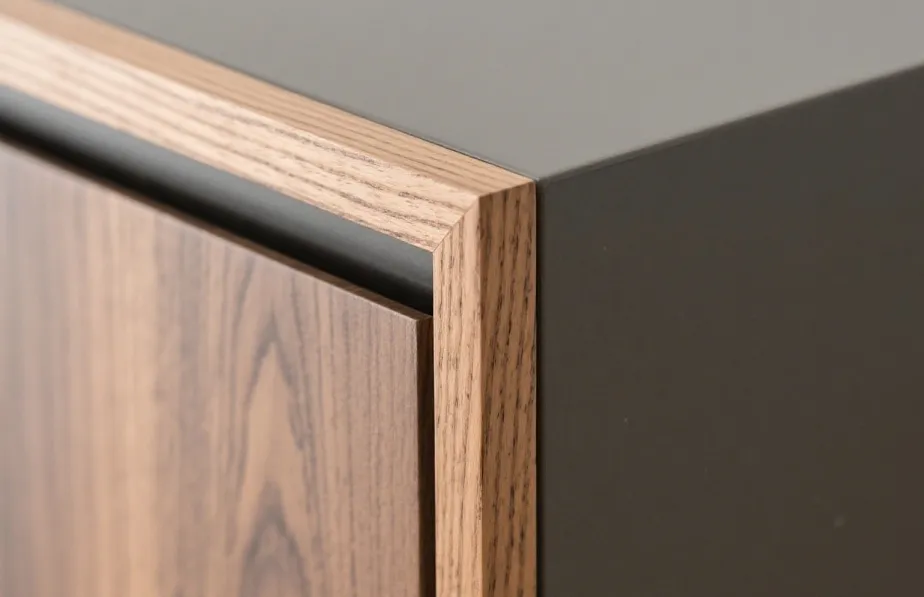
The functional layer is one of the key factors
Traditional edge banding normally depends on an adhesive system. Zero-joint systems use a functional layer that is activated by a specific technology.
REHAU explains that laser technology activates the functional layer with a laser beam, while hot-air technology uses compressed hot air and NIR uses near-infrared energy.
This difference matters because the machine must provide the right energy to activate the layer.
I would therefore ask the supplier:
- What material is the edge band made from?
- What functional layer does it use?
- Which zero-joint technologies support it?
- What machine conditions are recommended?
- Has the material been tested on the target panel?
Machine parameters can change the final result
REHAU’s technical guide for a high-quality surface specifically states that component quality depends on machine settings and board quality. It also recommends establishing machine parameters, tool configuration, and cutting speeds through sample testing before production.
I consider this a very important point.
There is no reason to assume that one parameter set will work perfectly for every machine and every panel.
| Processing factor | Possible effect |
|---|---|
| Activation energy | Functional layer may not activate correctly |
| Feed speed | Changes processing time |
| Pressure | Affects contact between materials |
| Cutter condition | Affects edge appearance |
| Tool geometry | Affects trimming quality |
| Board quality | Affects bonding and appearance |
| Edge band tolerance | Affects processing stability |
The panel itself also matters
I sometimes see buyers focus heavily on the edge banding and ignore the board.
That approach can create confusion.
EGGER’s processing instructions state that PVC edge banding is processed on commercial machines and that processes include gluing, cutting, milling, scraping, and buffing. The instructions also emphasize suitable adhesive systems and processing conditions.
For zero-joint applications, I would go one step further. I would check the panel edge before blaming the edge banding.
The panel needs to provide a suitable and stable surface. If the board edge is damaged, uneven, contaminated, or poorly machined, the edge banding system cannot simply hide every problem.
This is one reason why I prefer a production trial before a large order.
Why Can Color, Texture, and Gloss Differences Still Appear Even with Zero-Joint Technology?
Zero-joint technology can greatly reduce the traditional visible glue line, but it does not mean that every visual difference between the panel and edge band automatically disappears.
Color, texture, gloss, lighting, material structure, and machining can still create a visible transition. I see zero-joint as a joint technology, not as a guarantee that two different surfaces will become optically identical.

Zero-joint solves one problem, not every problem
This distinction is important.
The traditional glue line can create a visible boundary between the panel and the edge band. Zero-joint technology is designed to reduce this boundary.
REHAU describes its zero-joint systems as using a polymer functional layer to replace traditional glue and create a permanent optical and functional zero joint.
But the panel and edge band are still two materials.
Their surface structures may differ.
Their gloss may differ.
Their color may react differently to light.
Their texture may not have exactly the same depth.
So I would not judge a zero-joint sample only by looking for a glue line.
Visual matching needs several dimensions
I use a wider view when I evaluate a high-end panel.
| Visual factor | What can happen |
|---|---|
| Color | The edge can look warmer or cooler |
| Gloss | The edge can reflect more or less light |
| Texture | The edge can look smoother or deeper |
| Grain direction | The pattern may not continue perfectly |
| Lighting | Different angles can change perception |
| Surface geometry | Small changes can create reflections |
| Material | Different polymers can have different visual behavior |
EGGER’s product information repeatedly stresses matching not only decor but also texture and gloss level for certain edge banding products.
I think this is especially important for dark and high-gloss furniture because these surfaces have less visual tolerance.
Sample approval should use real materials
I would never approve a difficult zero-joint application only from a screen image.
I would ask for a real panel sample.
I would use the actual edge band.
I would use the intended machine process.
I would then inspect the result under the lighting conditions that matter for the final product.
This approach takes more time at the beginning, but it can prevent a much larger problem during mass production.
For a manufacturer, the real question is not:
“Does this edge band look good?”
The better question is:
“Does this edge band still look right after the actual production process?”
That question changes the entire quality-control process.
How Can Furniture Manufacturers Improve Zero-Joint Results on Dark and High-Gloss Panels?
I improve zero-joint results by controlling the complete process instead of focusing only on the edge band. I start with matching, then test the material, confirm machine settings, and inspect the finished panel under realistic conditions.
Furniture manufacturers can improve results by selecting a suitable edge banding system, using original samples, testing machine parameters, checking panel quality, and applying a strict sample-approval process before mass production.
Step 1: Start with the actual panel
I would first obtain the real decorative panel.
A digital color code is useful, but it should not replace a physical sample for a demanding visual application. EGGER specifically notes that color-matching finish selections are only possible on the original sample.
I would compare:
- Color
- Gloss
- Texture
- Pattern
- Edge appearance
- Lighting response
Step 2: Select the right zero-joint system
The edge band needs to match the processing technology.
REHAU states that its zero-joint edgebands can be used with laser, hot-air, and NIR technologies, while the activation method differs between these technologies.
I would therefore confirm machine compatibility before purchasing the material.
Step 3: Run a real production trial
I would not jump directly from sample approval to a large production order.
I would run a trial with the actual:
Panel + Edge Band + Machine + Tools + Parameters
Then I would inspect the result.
| Trial stage | What I would check |
|---|---|
| Material | Color, texture, thickness |
| Panel | Edge quality and surface |
| Activation | Functional layer performance |
| Pressure | Contact and joint appearance |
| Trimming | Cutting marks and geometry |
| Scraping | Surface transition |
| Polishing | Gloss consistency |
| Final inspection | Overall visual effect |
REHAU’s technical documentation supports this type of approach by recommending sample series to establish suitable machine parameters and tool configurations before production.
Step 4: Inspect under realistic lighting
I think this step is often underestimated.
A high-gloss dark panel can look different under factory lighting, showroom lighting, daylight, and angled light.
I would inspect the edge from different directions.
I would also compare the panel and edge from normal viewing distance.
The goal is not to find an imaginary perfect surface. The goal is to confirm that the finished product meets the customer’s actual visual requirement.
Step 5: Control the process after approval
A good sample does not automatically mean every production batch will be good.
I would keep an approved reference sample and use it for production checks.
I would also record important machine parameters and material batches. If a problem appears later, the production team can compare the new result with the approved condition.
This is where I see the real value of working with a capable edge banding manufacturer. The manufacturer should not only supply the roll. The manufacturer should also understand how the material behaves during production.
For dark and high-gloss furniture, I would treat zero-joint quality as a complete system:
Material → Panel → Machine → Parameters → Machining → Inspection
When these parts work together, the zero-joint effect becomes much more reliable.
Conclusion
Zero-joint technology can reduce visible joints, but dark and high-gloss panels require closer control of material, matching, machining, machine settings, and final inspection.
Data Sources
- REHAU — LaserEdge Zero-Joint Edgeband
REHAU LaserEdge Zero-Joint Edgeband - REHAU — RAUKANTEX Processing Technologies
REHAU RAUKANTEX Processing - REHAU — RAUVISIO Technical Guide
REHAU RAUVISIO Technical Guide - EGGER — PVC Edge Banding Processing Instructions
EGGER PVC Edge Banding Processing Instructions - EGGER — PVC Edge Banding
EGGER PVC Edge Banding - EGGER — PerfectSense ABS Edge Banding
EGGER PerfectSense ABS Edge Banding